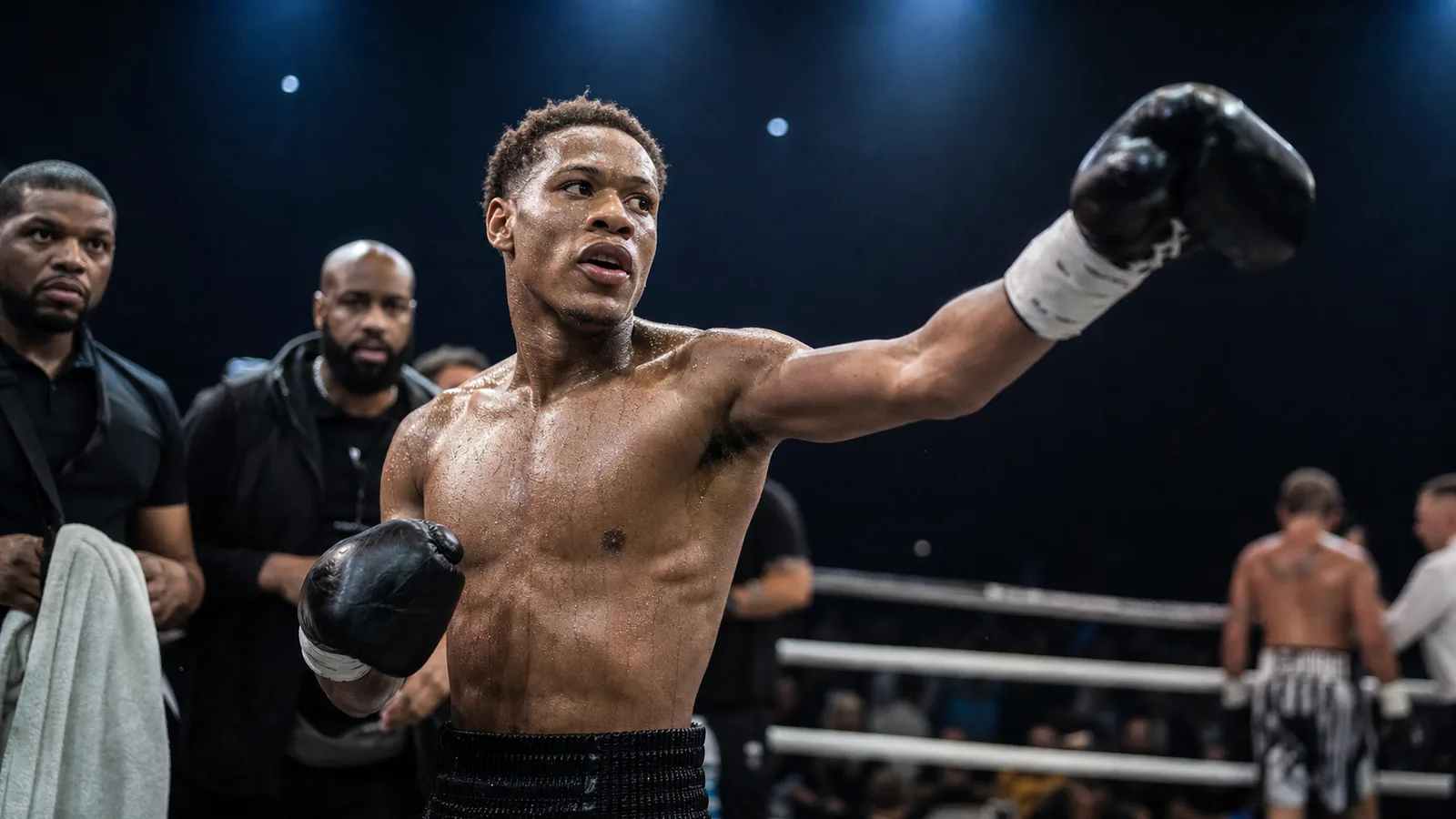
Tiger Johnson Called For Devin Haney, But The Real Win Was The Timing
Delante “Tiger” Johnson did the right thing in the right order.
First, he won. Then he talked.
That sounds obvious, but in modern boxing it is not always how prospects behave. Too many fighters try to speak themselves into position before their work has put them there. Johnson, at least, gave himself a proper platform before aiming higher. In Cleveland, he beat Christopher Guerrero over ten rounds, stayed unbeaten, moved to 18-0, and then used the microphone to call for Devin Haney.
“Tell Devin Haney to come see me,” Johnson said, according to World Boxing News.
That is a big name to say out loud. Haney is not just a famous fighter. He is the WBO welterweight champion, The Ring’s No. 1 welterweight and No. 8 pound-for-pound fighter. Johnson is still a prospect moving towards contention. That gap is exactly why the call-out matters.
Not because the fight is likely next. It probably is not.
It matters because Johnson showed how an unbeaten fighter starts turning clean professional progress into public pressure: win clearly, improve visibly, name a bigger target, then get back in the gym before the talk starts owning you.
Johnson Won First, Which Is The Part People Should Not Skip
The headlines after the fight naturally jumped to Haney. That is how boxing works. A recognised champion’s name travels further than a prospect’s scorecards.
But the scorecards still matter.
Johnson beat Guerrero by unanimous decision on the Cleveland card, with DAZN’s live coverage listing the result as 100-92, 99-91 and 99-91. The Ring reported that Johnson established his jab early, landed the sharper punches, and took firmer control in the second half when he let the straight right go more and attacked the body.
That is good professional work. Not spectacular. Not frightening. Good.
There is a difference, and it matters.
Johnson did not flatten Guerrero. He did not produce the kind of finish that makes a champion’s team suddenly nervous. Guerrero stayed upright, had moments, and landed a flush right hand late in the fourth round that forced Johnson to hold and box on the back foot, according to The Ring’s ringside report.
That does not make the win weak. It makes it honest. Prospects need nights like this because they reveal what still has to be built. Johnson’s jab and control were there. His distance management was there. His ability to bank rounds was there. The finishing threat, the spite and the instant separation from another unbeaten man were less obvious.
That is the real picture. He won clearly, but not completely.

A Call-Out Is Not A Fight Contract
Boxing fans often treat call-outs as if they are negotiations. They are not. They are signals.
Johnson’s signal was simple: I am unbeaten, I am ranked, I have just won at home, and I want my name placed near the champion.
That is smart business if it does not distort the boxing.
Boxing News 24 reported that Haney gave a dismissive response on X, referring to an ongoing legal dispute involving Johnson and Bill Haney rather than treating the call-out as a serious sporting proposal. That is important because it reminds us how much of boxing happens outside the ropes. Relationships, disputes, promoters, timing, rankings and perceived value all decide whether a fight moves from a sentence into a contract.
Johnson cannot control all of that. What he can control is whether each performance makes the next call-out sound more reasonable.
Right now, Haney can brush him off. Johnson is unbeaten and ranked, but he is not yet unavoidable. The aim for a prospect is to make the champion’s dismissal look less convincing every time out.
That is done by winning, yes, but also by asking new questions of opponents. Can you hurt them? Can you adjust when the first plan is not enough? Can you keep your shape after being clipped? Can you raise the tempo without getting reckless? Can you make a good fighter look ordinary?
Johnson answered some of those against Guerrero. He still has others to answer.
This Is How Unbeaten Prospects Build Bargaining Power
There are three stages to this kind of rise.
The first is credibility. You beat the opponent in front of you. Johnson did that. Guerrero came in unbeaten, confident, and with enough ambition to make the fight meaningful. In a pre-fight piece, Guerrero said Johnson would bring out his best, and The Ring framed it as a battle of undefeated welterweights. Johnson handled that pressure and left with his record intact.
The second is visibility. You win in a place and on a platform where the result travels. This was not a small hall result buried on a quiet weekend. It was part of a Cleveland card that also featured Abdullah Mason and Bruce Carrington, with the new DAZN and TNT-backed “The Fight” series giving the show extra attention. NY FIGHTS noted that Johnson was part of a wider night of unbeaten fighters and title-level stories, which helped his moment reach more than the usual prospect audience.
The third is ambition. Once the win is banked, you name the bigger target. That is where Haney comes in.
The mistake would be confusing stage three for the whole job. A call-out is only powerful if stage one and stage two support it. Without the performance, it is noise. Without the platform, it disappears. Without the next improvement, it becomes a clip people laugh at later.
Johnson has given himself a useful line in the story. Now he has to keep writing the harder part.
The Haney Name Is Useful Because It Raises The Standard
Calling out Haney is dangerous in one sense. It invites comparison with a fighter who has operated at world level, won titles, boxed under enormous pressure and dealt with the ugly business of big-fight attention.
That is also why it is useful.
If Johnson wants to be discussed near Haney, then the standard changes immediately. It is no longer enough to be tidy. It is no longer enough to be unbeaten. The question becomes whether he can show the kind of authority that makes people believe he belongs near a champion.
Haney is not an easy fighter to sell as an opponent for a developing welterweight because he brings problems that punish impatience. He understands distance. He can slow a fight down. He can make an opponent reach. He can take the heat out of a moment that the other side wants to turn into drama.
That is why Johnson’s development matters more than the call-out itself.
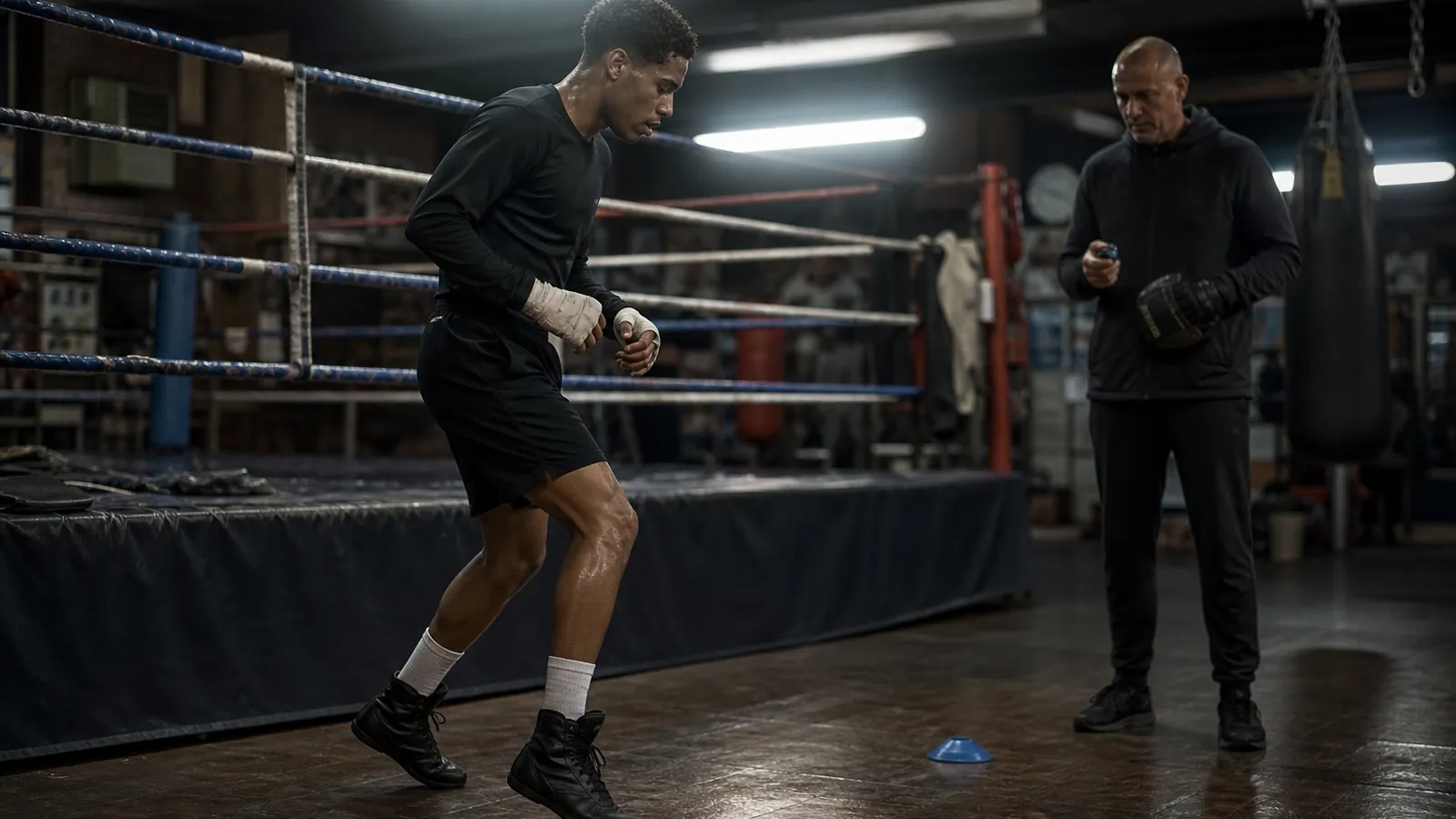
He has good tools. The jab is real. The amateur background is real. Working with Brian “BoMac” McIntyre, as The Ring noted, is interesting because BoMac’s fighters tend to value composure, positioning and smart pressure rather than empty aggression. But Johnson still needs to show that he can turn control into damage more often.
Against Guerrero, he controlled long stretches. Against a champion, control without threat can become permission for the other man to take turns.
The Lesson For Young Boxers Is Not “Call Everyone Out”
This is where club fighters should pay attention.
At Honour & Glory in Kidbrooke, we see the same pattern in a smaller, healthier way with beginners, juniors aged 7+ and competitive boxers in our boxing classes. Everyone wants the exciting part. The sparring. The recognition. The next level. The moment where people notice.
But boxing does not reward wanting. It rewards proof.
Johnson’s call-out only had value because he had just done the work. He fought ten rounds, kept his composure, used his jab, dealt with Guerrero’s resistance and left with a clear decision. Then he spoke. That order matters.
For a young boxer, the same rule applies before any step up. Win the round in front of you. Improve the weakness your coach keeps pointing out. Learn to jab when tired. Learn to defend after landing. Learn to stay calm when someone hits you clean. Only then does the next target become a serious target rather than a fantasy.
Talk can help a fighter. It can create attention. It can give a career direction. It can make promoters, broadcasters and opponents react.
But talk is also a trap if it makes a boxer skip the stage he is actually in.
Johnson is not Haney’s equal yet in status. That is not an insult. It is the whole point of prospect development. You aim at the bigger name while building the evidence that makes the aim harder to dismiss.
My Verdict
Tiger Johnson’s win over Christopher Guerrero was not a superstar announcement. It was something more useful: a solid step with a clear message attached.
He stayed unbeaten. He beat another unbeaten fighter. He showed enough skill to control the fight and enough ambition to ask for a champion. He also showed, by not getting Guerrero out of there, that there is still work to do before the biggest names have to take him seriously.
That is not a problem if Johnson understands it.
The best prospects do not hide from big names, but they do not let big names distract them from the next honest improvement. Johnson’s route is obvious now. Keep winning. Add more authority. Turn clean boxing into sharper punishment. Make each opponent feel less comfortable than the last. If he does that, the Haney call-out will age well.
If he only repeats the name without raising the level, it will not.
For now, Johnson did what an unbeaten prospect should do. Performance first. Bigger target second. Back to development immediately after. That is the grown-up version of ambition, and in boxing it lasts longer than noise.
H&G Team
Writer at Honour & Glory Boxing Club, a community boxing gym in Kidbrooke, South East London.
KEEP READING

Tank Davis vs Devin Haney: online row lessons
Use the fresh Davis-Haney exchange to explain how public pressure, rivalry talk and discipline outside the ring can affect fighters before any bout is made.
Shakur Stevenson vs Devin Haney: the update behind the talk
A fresh update on a potential elite lightweight meeting provides a clear chance to distinguish reported progress from a confirmed fight, then explain why the matchup is compelling if it becomes official.

Cherneka Johnson vs Dina Thorslund: what an undisputed win changes
A fresh undisputed bantamweight title result, with the focus on how the winner can turn four belts into meaningful fights rather than a promotional holding pattern.
Was this page helpful?
It takes one tap, and it genuinely helps.
Choose your next step
Turn this article into the right action
Some readers are ready to book. Some need the class route first. Pick the route that matches what you actually want.