Boxing Slang: The Complete Glossary from Jab to Southpaw
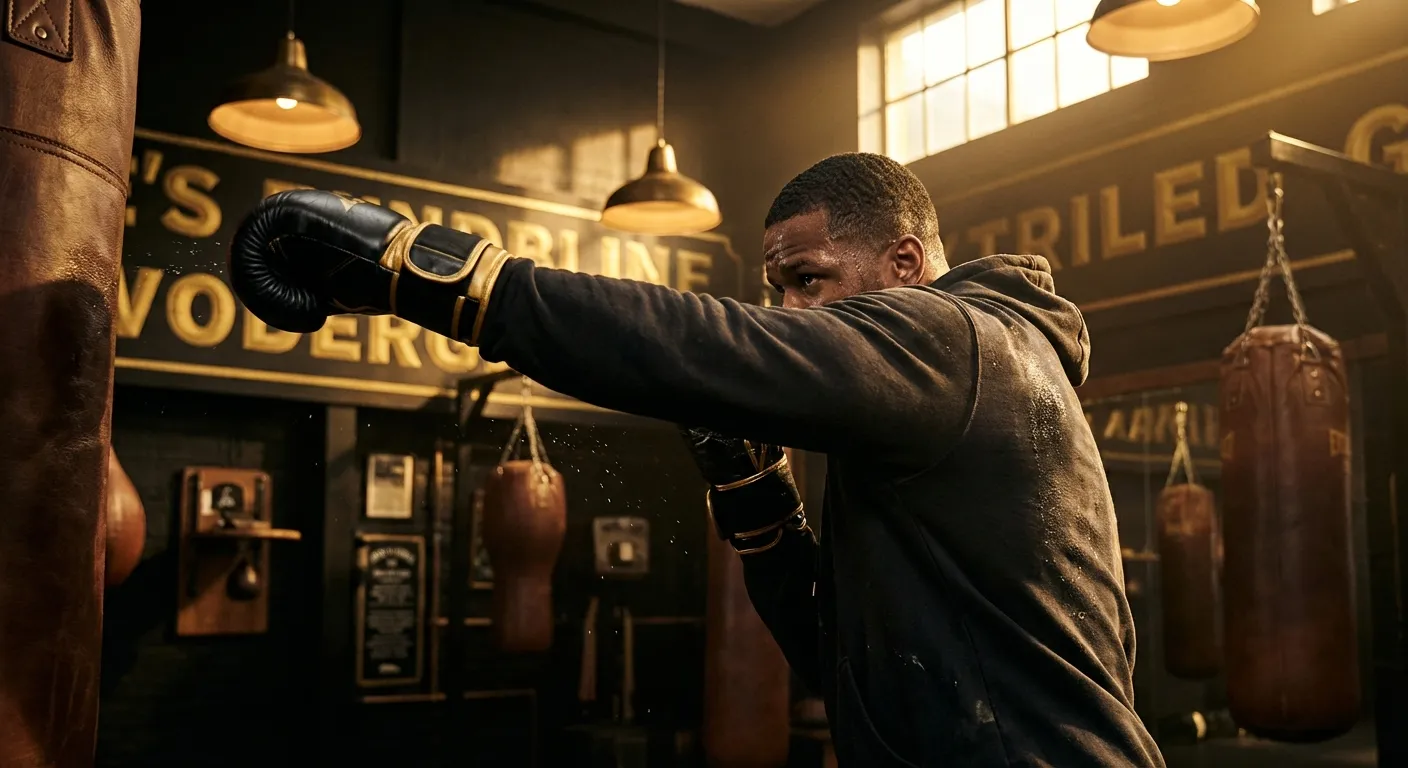
Official boxing terminology covers the standard terms used across the sport. Wikipedia's boxing terminology article documents the etymology of common boxing language.
Walk into a boxing gym for the first time and you will hear a language that sounds almost like English but is not quite. Coaches call numbers. They talk about shells and guards and philly-shells. They use words like southpaw and orthodox as if everyone knows what they mean.
This glossary covers the terminology you will encounter, from the basic technical terms to the gym slang that never appears in any beginner's guide.
Stances and Guards
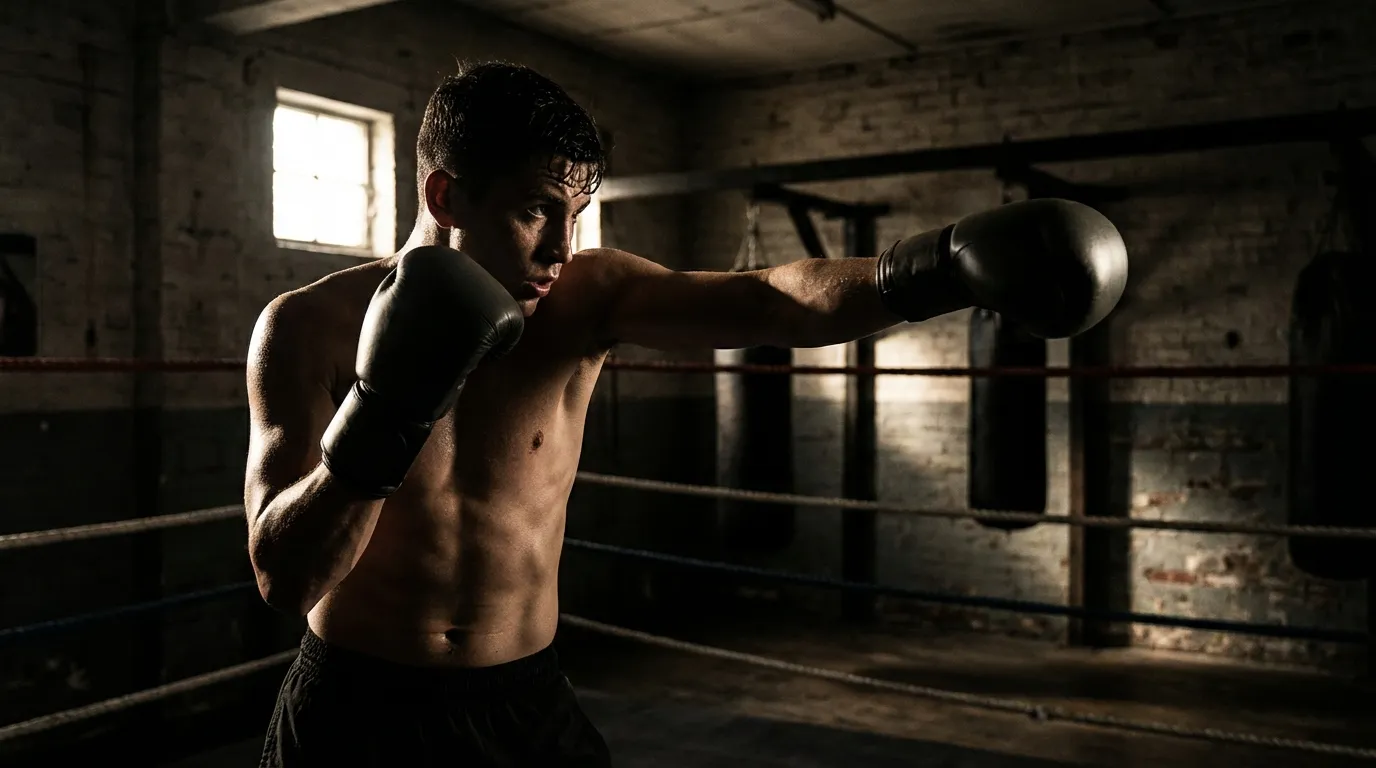
Orthodox - Fighting stance for a right-handed person. Left foot forward, left hand lead, right hand power. The standard stance.
Southpaw - Fighting stance for a left-handed person. Right foot forward, right hand lead, left hand power. The mirror image of orthodox.
Square stance - Standing with both feet level rather than one forward. Leaves you more exposed but allows power from both hands. Some fighters use it tactically.
High guard - Both hands held up near the face with elbows tight to the body. Protective but limits visibility.
Peek-a-boo - The style developed by Cus D'Amato and used by Mike Tyson. Hands held very high, head movement between punches, moving forward constantly. Highly effective for a smaller fighter moving into a larger one.
Philly shell / shoulder roll - Lead hand held low across the stomach, rear hand near the chin, using the lead shoulder to deflect punches. Associated with Floyd Mayweather. Difficult to execute correctly.
Cross-arm guard - Both arms crossed in front of the face. Very defensive, used briefly by some fighters when under sustained pressure.
The Punches
Jab - The lead hand thrown in a straight line at the target. The most important punch in boxing. Sets up everything else.
Cross - The rear hand thrown in a straight line. The power punch. Also called the straight right (for orthodox) or straight left (for southpaw).
Hook - A bent-arm punch coming from the side at roughly a 90-degree angle. Can target head or body.
Uppercut - An upward punch targeting the chin. Thrown with bent elbow, rising up through the guard.
Overhand - A looping punch that travels in an arc from high to low, going over the opponent's guard. Not textbook but very effective for some fighters.
Body shot - Any punch targeted below the ribs and above the belt. Boxing's most underused weapon in beginners' training.
The one-two - Jab followed immediately by cross. The foundation combination.
Numbers System
Most coaches use a numbered system. These are not universal - gyms vary - but this is the most common version:
1 - Jab
2 - Cross
3 - Left hook (for orthodox fighter)
4 - Right hook
5 - Left uppercut
6 - Right uppercut
A combination called as "one-two-three" means jab, cross, left hook.
Footwork and Movement
Slip - Moving your head offline to avoid a punch without using your hands.
Roll - Ducking and moving your upper body in a U-shape under a punch.
Pivot - Rotating on your front foot to change your angle relative to the opponent.
Lateral movement - Moving sideways rather than in or out. Used to control ring position and avoid being trapped on the ropes.
In and out - Moving forward to land and immediately moving back out of range.
Cut off the ring - Using footwork to limit the opponent's movement options, forcing them towards a corner or the ropes.
Ring generalship - The ability to control where in the ring the fight happens. A fighter with good ring generalship makes their opponent fight in unfavourable positions.
Training Terms
The heavy bag / bag - The large static bag for developing power and combinations.
The speed bag - Small bag mounted on a platform, used for timing and hand speed.
Double-end bag - Ball mounted on bungee cords between floor and ceiling. Bounces unpredictably when hit - excellent for developing accuracy, timing, and defence simultaneously.
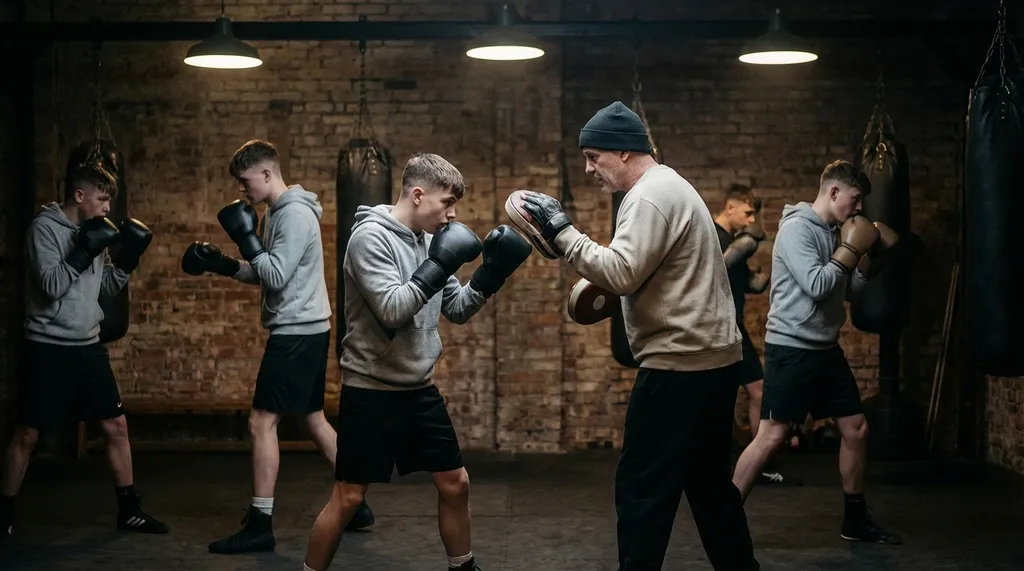
Pads / mitts - Hand pads worn by a coach or training partner who holds combinations for you to hit. Pad work is where most skill development happens.
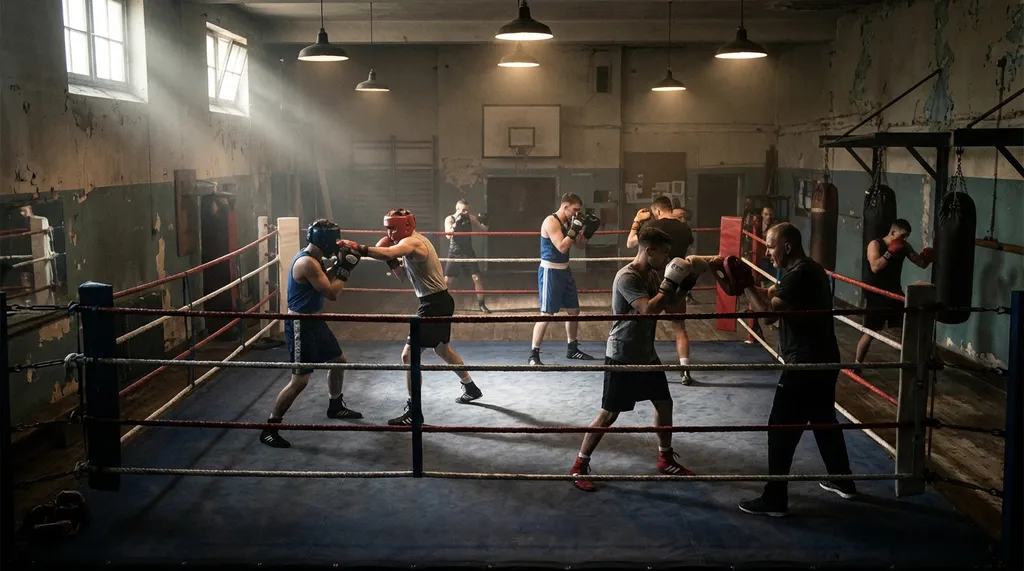
Sparring - Controlled fighting with a partner. The intent is development, not damage. Should always be supervised and at an appropriate level.
Shadow boxing - Practising movement, punches, and combinations without a partner or equipment. Underrated, essential.
Clinch - Holding the opponent to stop their punches. Legal briefly. When a referee calls "break," both fighters must step back.
Corner / coaching corner - The area between rounds where the coach gives instruction. A good corner makes a difference.
Cut man - The person in the corner trained to treat cuts between rounds. Different from the main coach.
Wraps / hand wraps - Cloth wrapped around the hands before putting on gloves. Protects the small bones and supports the wrist.
Sparring partner - A training partner for sparring. Different in tone from a competitive opponent. The relationship is collaborative, not adversarial.
Positions and Tactics
Working off the back foot - Fighting in a way that prioritises movement and counter-punching over forward pressure.
Pressure fighter - A fighter who advances constantly, cutting off the ring and forcing exchanges at close range.
Counter-puncher - A fighter who waits for the opponent to commit to an attack, then hits while they are over-extended.
In-fighter - A fighter who prefers close range, inside the opponent's jab. Often shorter fighters who can get under longer punches.
Out-boxer / boxer - A fighter who prefers distance, using footwork and the jab to keep the opponent at range.
The jab-and-move - Using the jab to establish range, score points, and immediately moving before the opponent can reply.
Pulling - Moving your upper body backwards at the waist to pull your head out of range. Often leaves the counter hook open.
Parry - Deflecting a punch with your hand rather than taking it or slipping it.
Draw - Deliberately inviting a punch in order to create a counter-punching opportunity.
Competition Terms
Amateur - Competing under Amateur Boxing Alliance (ABA) rules. Points-based scoring by judges. Protective equipment including headguards (source).
Professional - Competing under professional boxing rules. No headguards. Judged on different criteria.
White collar boxing - Non-competitive event format where adults with no boxing background train for several weeks and fight once before an audience. Not amateur competition.
Weigh-in - The official weight check before a bout. Fighters must make their agreed weight class.
Weight class - The division within which a fighter competes, determined by body weight.
Technical knockout (TKO) - When the referee stops the fight because one fighter cannot safely continue, without a count.
Knockout (KO) - When a fighter is knocked down and cannot rise before the count of ten.
Split decision - When judges' scorecards disagree on the winner.
Unanimous decision - When all judges score the fight for the same fighter.
Gym Culture Terms
The gym - Self-explanatory but the word carries weight in boxing. "The gym" means the community and the culture, not just the building.
Spar up - The instruction or invitation to begin a sparring round.
Time - Called by the coach to start a round.
Break - Called to separate clinching fighters.
Switch - Instruction to change partners or positions.
Work - The general instruction to start throwing punches during drills.
If you start training at Honour and Glory and hear terms that are not on this list, ask. There is no such thing as a stupid question in a good gym, and coaches who cannot explain their terminology clearly are not as good as they think they are.
H&G Team
Writer at Honour & Glory Boxing Club, a community boxing gym in Kidbrooke, South East London.
KEEP READING
Southpaw Stance in Boxing: Footwork, Angles and Drills
A practical southpaw stance guide for beginners and improving boxers: foot position, the right jab, the straight left, orthodox matchups, common mistakes and coach-led drills.
Boxing Stance and Guard Basics
Learn the proper boxing stance for beginners and how to hold your guard. Get these foundations right and everything else becomes easier.
How to Hold Pads for a Southpaw Boxer
A practical guide to pad position, stance and clear calls when your partner boxes southpaw.
Was this page helpful?
It takes one tap, and it genuinely helps.
Choose your next step
Turn this article into the right action
Some readers are ready to book. Some need the class route first. Pick the route that matches what you actually want.