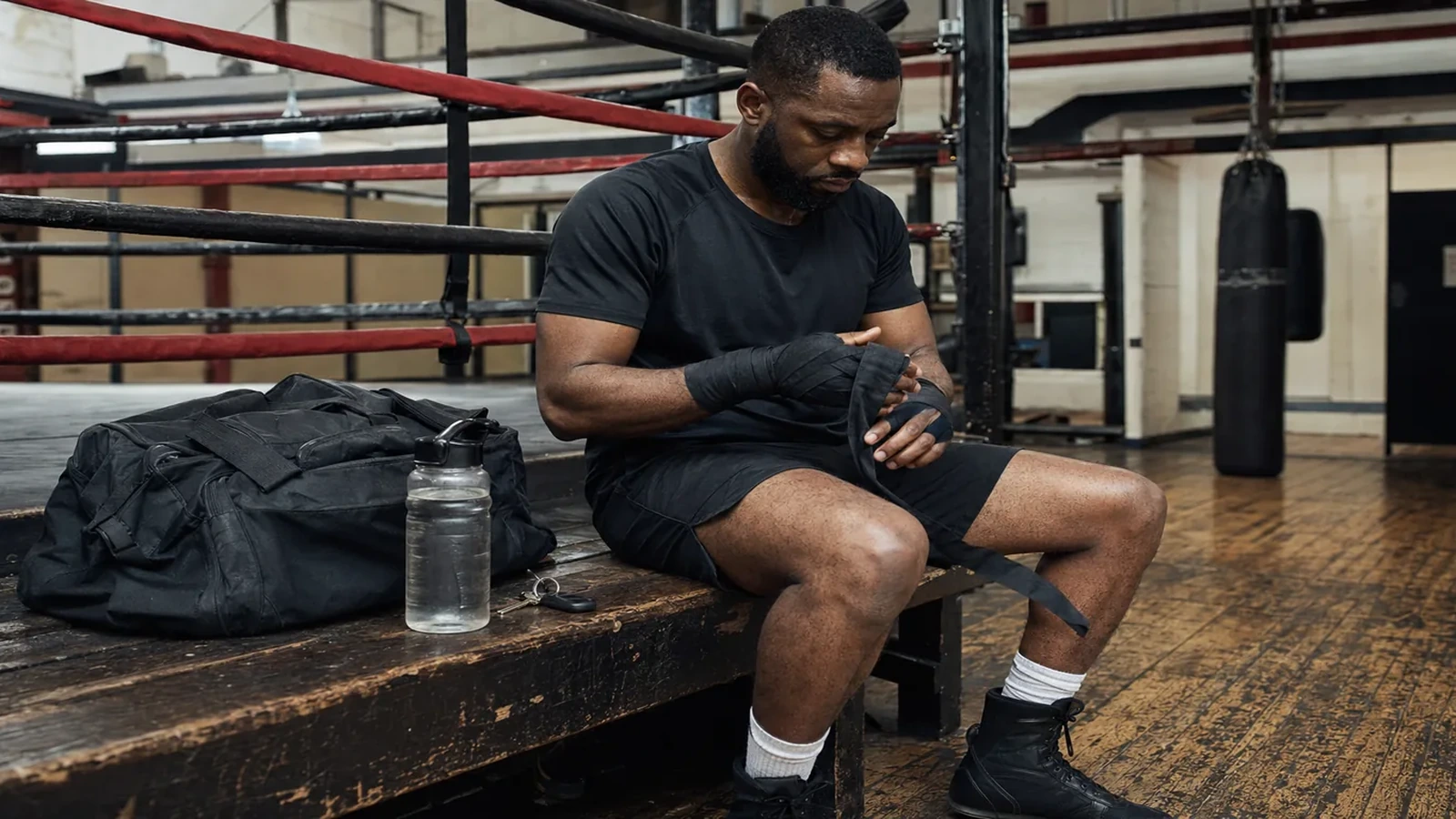
Best exercise for LGV drivers and van drivers? Boxing is a strong answer because it gives drivers the movement that the job takes away.
Driving for work is tiring, but it is not the same as training. Long hours in the cab can leave your hips stiff, your back tight, your shoulders tense and your head full. You can finish a shift feeling worn out without feeling fitter.
Boxing works because it changes the pattern. You stand up. You move your feet. You rotate. You breathe properly. You use your legs, trunk, shoulders, hands and eyes together. For drivers who spend too much of the week fixed in one position, that matters.
Driving work makes the body stiff in predictable ways
LGV and van driving asks the body to hold position for long periods.
That means sitting, bracing, steering, checking mirrors, managing vibration, loading, unloading, climbing in and out, then doing it again. The work may feel active in parts, but the movement is often narrow and repeated.
Research on occupational drivers has linked driving work with musculoskeletal problems, especially low back pain. A 2022 review found long sitting, poor ergonomics and vehicle vibration to be recurring risk factors for drivers (occupational driving review). A study of heavy goods vehicle drivers also found links between musculoskeletal conditions, prolonged sitting and long working hours (HGV driver health study).
That does not mean every driver will end up injured. It means the job has a shape, and the body notices.
Boxing is useful because it asks for the opposite shape: upright posture, hip movement, rotation, footwork and controlled effort.

Boxing gives drivers a full-body reset
The best exercise for drivers should not simply add more strain.
It should undo the locked-in feeling from the cab. Boxing does that better than most standard gym plans because it combines conditioning with skill. You are not just sitting on a bike after sitting all day. You are learning to move again.
A good boxing class gets your feet working, your hips rotating and your shoulders moving through a wider range. Bag rounds and pad work build stamina without copying the posture of the job. Footwork drills wake up balance and coordination. Defensive movement gets you bending and turning rather than staying fixed.
That is why boxing can feel so good after driving. The body finally gets a different job.
If the stress side is part of it, boxing for stress relief explains why the focus of boxing helps many adults switch off.
The mental load is different from office stress
Drivers know the road keeps taking little bites out of attention.
Traffic. Tight delivery windows. Loading delays. Other drivers. Roadworks. Parking. Tachograph pressure. Route changes. The need to stay alert when the body would rather shut down.
A UK truck-driver study describes HGV drivers as being exposed to stressors including tight delivery schedules, road delays and unpredictable working patterns (UK truck driver fatigue study). The Department for Transport has also published research on drivers' hours and working time, including fatigue concerns in the sector (drivers' hours and working time research).
Boxing helps because it is absorbing. You cannot half-focus on pads. You cannot worry about a route while learning a combination. For an hour, the work is simple: stance, guard, breathing, timing, effort.
That mental switch is a big part of the value.

It builds fitness without needing a perfect routine
Drivers often need training that is realistic, not ideal.
Shift patterns change. Some days run long. Food timing can be poor. Sleep can be patchy. A training plan that only works in a perfect week is not much use.
Boxing suits this because a coached class gives structure the moment you arrive. You do not need to design the whole workout. The warm-up, technical work, bag rounds, conditioning and cool-down are already there.
That matters when work has drained your decision-making. You can turn up tired, follow the coach and still get a proper session.
The NHS advises adults to do at least 150 minutes of moderate activity a week, or 75 minutes of vigorous activity, plus strengthening work on two days (NHS adult activity guidelines). Boxing can help drivers cover both because it mixes cardio, strength, coordination and movement under fatigue.
Boxing is better than more passive recovery
After a long drive, the easy option is more sitting.
That is understandable. It is also limited. Passive rest can help tiredness, but it will not always clear stiffness, tension or the wired feeling that comes from a long day of road focus.
Boxing gives a harder reset. Not reckless. Not punishment. Just enough movement and attention to shift the body out of driving mode.
That is the difference. You leave feeling tired from training, not just drained by work.
If you are comparing boxing with a normal gym membership, boxing vs gym: why people switch is worth reading next.
What kind of boxing should LGV and van drivers start with?
Start with coached recreational boxing.
You do not need sparring. You do not need to be fit already. You do not need to train like a fighter. You need a class where adults can learn stance, footwork, bag work, pad work and conditioning at a sensible pace.
Our Adult Recreational boxing classes are built for adults who want proper boxing training without needing previous experience.
If you work or live around Greenwich, Kidbrooke, Woolwich, Blackheath or nearby parts of south east London, the club is practical for evening training after a route or a long day behind the wheel.
If you have back pain, shoulder problems, knee pain, old injuries or fatigue that does not feel normal, get it checked properly. Tell the coach what needs managing. Good training should build capacity, not reward stubbornness.
The honest answer
Boxing will not fix poor vehicle ergonomics, unrealistic schedules, bad sleep, road stress or long hours by itself.
It will not make a dangerous workload safe. It will not replace rest, medical advice, decent food or proper recovery.
But as exercise, it fits LGV and van drivers well. It gives the body movement after hours of sitting. It gives the mind a clear task after hours of road focus. It builds useful fitness without needing another self-managed plan.
For drivers who feel stiff, tired and mentally crowded after work, that is a good trade.

How to start if you do this job
For most lgv drivers, the best first step is a normal coached group class, not a complicated programme. Start with Adult Recreational boxing or the broader adult beginner boxing guide if you want to understand what happens first.
If your rota, clients or working hours make set classes hard, use boxing personal training or private boxing lessons as the paid route. The free trial is for scheduled group classes.
Book a free trial session at Honour and Glory Boxing Club.
More job-specific boxing guides
This page is for LGV, HGV and van drivers whose main issue is long cab time and road stress. If your work is more stop-start parcel delivery, read the separate delivery driver boxing guide.
If this article fits your work pattern, the full boxing for workers guide links the rest of the job-specific series, including desk workers, shift workers, trades, carers, drivers, teachers and busy professionals.
H&G Team
Writer at Honour & Glory Boxing Club, a community boxing gym in Kidbrooke, South East London.
KEEP READING

Boxing Fitness for Delivery Drivers: When It Fits
Boxing can be a useful training option for delivery drivers when you want coached movement, conditioning and a clear break from work. It is not the only answer, but it can fit well.
Boxing Fitness for HR Professionals: When It Fits
Boxing can be a useful training option for hr professionals when you want coached movement, conditioning and a clear break from work. It is not the only answer, but it can fit well.

Lower Back Pain in Boxing: Rotation, Bag Work and Return to Training
A careful boxing guide to lower back pain: why rotation, fatigue, hip stiffness and load spikes can irritate the back, NHS red flags, rehab phases and return to boxing.
Was this page helpful?
It takes one tap, and it genuinely helps.
Choose your next step
Turn this article into the right action
Some readers are ready to book. Some need the class route first. Pick the route that matches what you actually want.