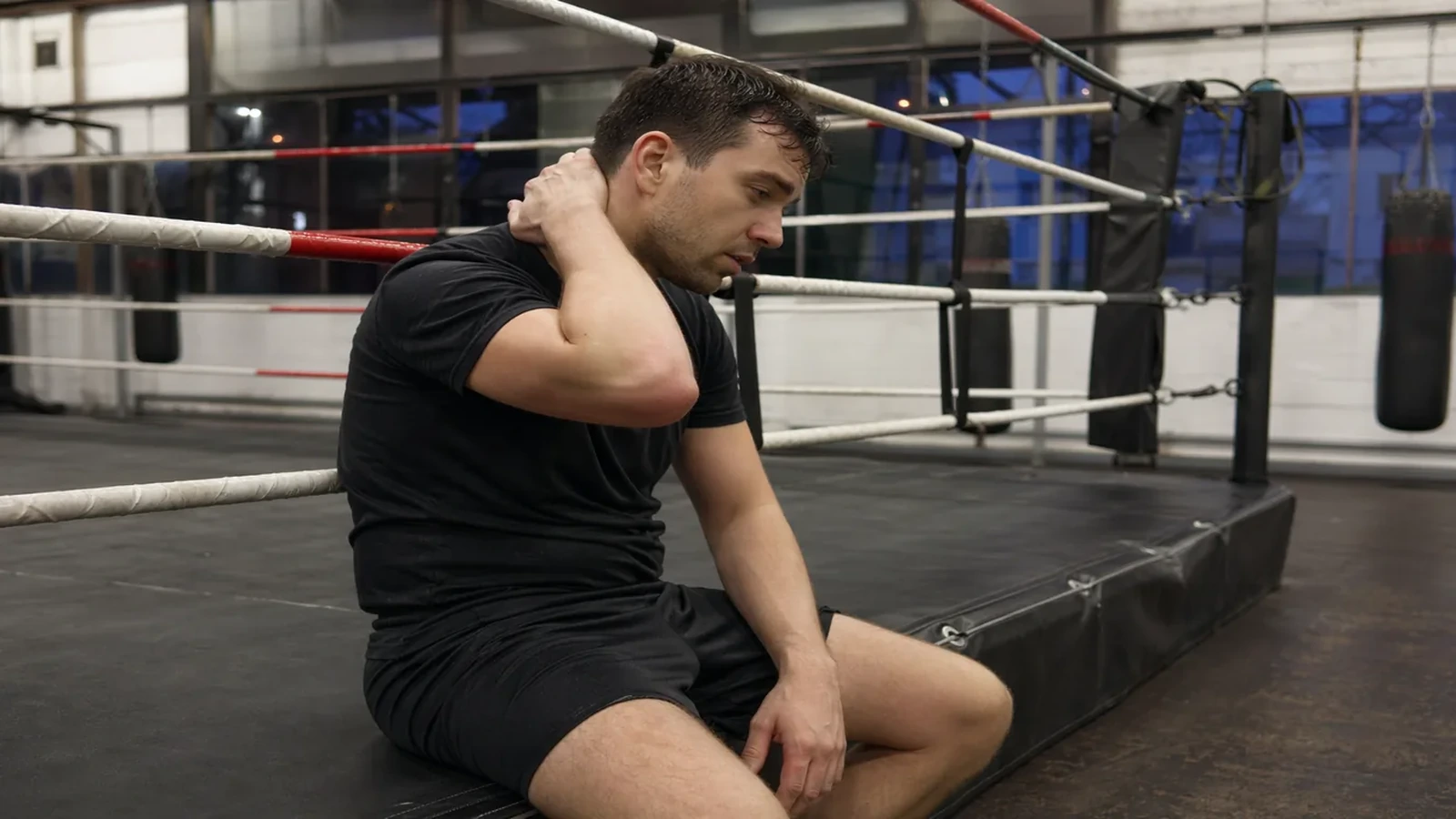
Best exercise for lawyers? Boxing is a better answer than most legal professionals expect.
The reason is not macho nonsense. It is simpler than that. Legal work creates a very specific mix of strain: long sitting, high cognitive load, deadline pressure, poor switching-off, and too much time carrying tension in the neck, jaw, shoulders and upper back. A lot of lawyers do not need more activity in theory. They need an exercise format that actually cuts through the way the job leaves them feeling.
That is where boxing fits.
Why lawyers need more than general fitness advice
A lot of legal work is physically static and mentally noisy.
You can spend a whole day at a desk, in calls, in meetings, drafting, reviewing, emailing, preparing bundles, or reacting to somebody else's urgency. Then you finish tired without feeling properly used. That is a miserable combination. The NHS says many adults in the UK spend around nine hours a day sitting and that reducing health risk means both exercising regularly and sitting less (NHS guidance). Lawyers can end up right at the sharp end of that pattern.
The legal profession also has a stress problem that is not exactly hidden anymore. LawCare's 2025 Life in the Law research found that 59.1% of respondents had poor mental wellbeing, 50.0% experienced anxiety often or more over the previous 12 months, and 78.7% were working beyond contracted time (LawCare Life in the Law). That does not sound like a group who merely need a few more daily steps.
The best exercise for lawyers has to do more than burn calories. It should help with:
- physical stiffness from too much sitting
- mental decompression after long days of concentrated work
- shoulder, trunk and hip movement
- consistency, because a clever plan you never do is worthless
That is why boxing makes sense.
Boxing solves the lawyer problem from more than one angle
Boxing is physical, technical and immersive at the same time.
That matters because many lawyers already live in their heads all day. A standard gym session can still leave enough mental bandwidth for you to keep replaying the hearing, the negotiation, the client call or tomorrow's deadline. Boxing does not really allow that. Pads, footwork, bag rounds and combinations drag your attention back into the body.
It also gets you moving in ways desk-heavy work does not. You rotate, brace, step, breathe, recover and coordinate under effort. That is different from spending all day folded toward a screen and then trying to solve the problem with another seated machine or a half-interested treadmill walk.
There is also a buy-in advantage. Plenty of legal professionals are disciplined enough to work hard, but not necessarily excited by generic fitness. Boxing works because it feels like a skill, not punishment.
Long sitting and posture drift are real parts of the problem
Lawyers are not weak because they sit. They are patterned because they sit.
An observational study of young adults in a UK university setting found reduced thoracic mobility in people who spent more than seven hours a day sitting and did less than 150 minutes of weekly physical activity (thoracic mobility study). That matters because thoracic stiffness travels. It affects rotation, upper-back movement, shoulder mechanics and how your neck ends up doing far too much.
A lot of lawyers know the feeling already. Tight upper traps. Jaw clenching. Rounded shoulders. Low back that feels cooked by the end of the day. Hips that have barely opened since breakfast.
Boxing helps because it is not just exercise layered on top. It is repeated integrated movement. The hips have to work. The trunk has to rotate. The shoulders have to carry effort without freezing. The feet actually matter again.
That is more useful than trying to posture-correct yourself by willpower for six minutes at a time.
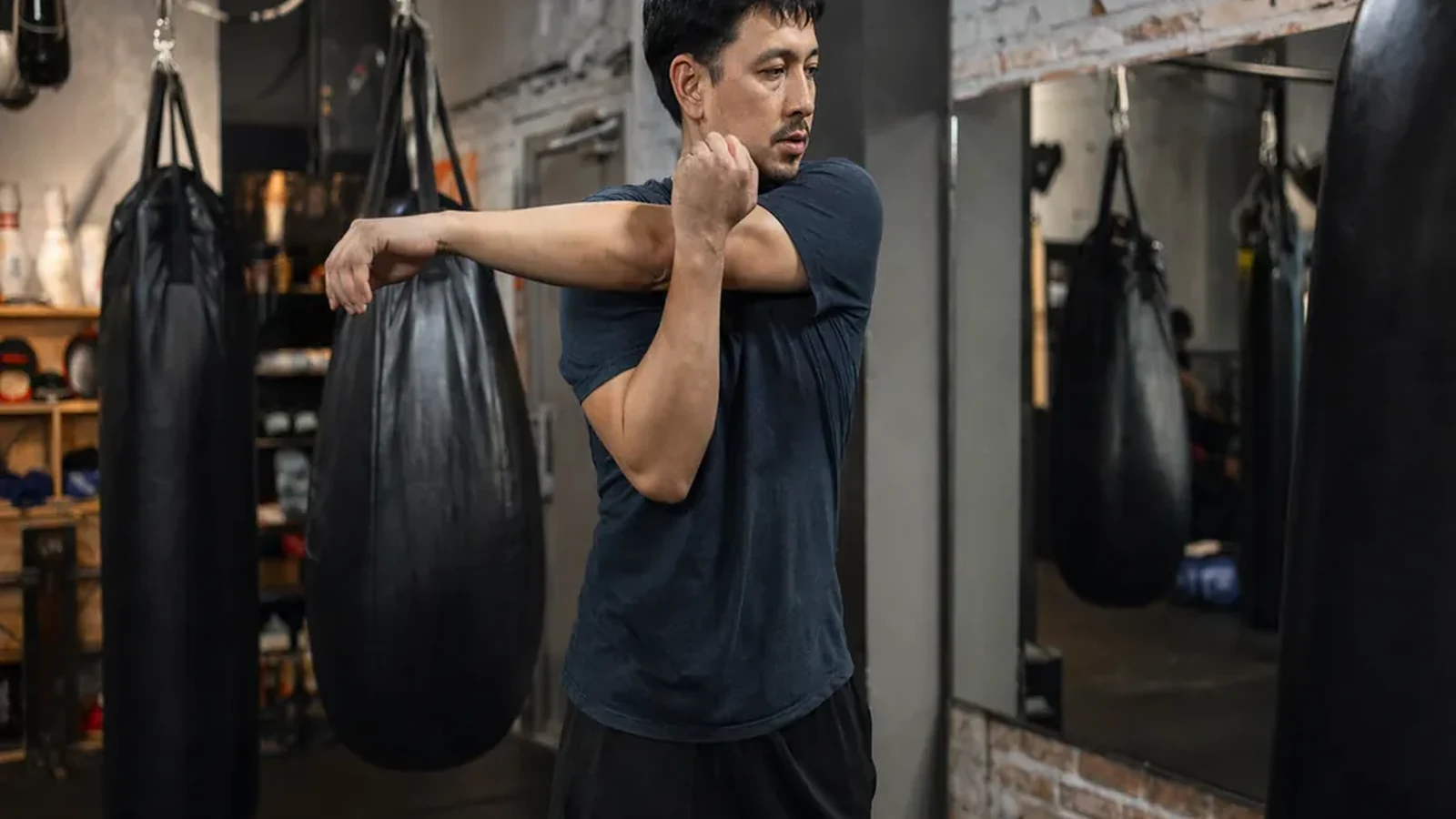
Boxing gives lawyers something many workouts do not: a hard mental stop
This is the part that makes it stick.
Legal work has a habit of leaking into the evening. You leave the office but the job comes with you. The body is static, but the mind keeps drafting, replaying and second-guessing. Exercise helps with stress in general. Mayo Clinic puts it plainly: exercise in almost any form can act as a stress reliever by boosting mood, raising feel-good brain chemicals and giving you a break from daily worries (Mayo Clinic on exercise and stress).
Boxing often works especially well because it is not passive and it is not backgroundable. You have to be present. If your footwork is wrong, you know. If your breathing goes, you know. If your hands drop, you know.
That forced presence is useful for lawyers because the usual problem is not a lack of thought. It is too much of it.
If the stress side is what is pushing you toward training, boxing for stress relief is the obvious companion read.
Why boxing can beat more "sensible" options for legal professionals
Running, lifting and Pilates can all be excellent.
But lawyers often need one activity that does several jobs at once rather than a neat stack of separate fixes.
Running can clear the head, but it does not do much for upper-back engagement, coordination or shoulder endurance. Lifting is valuable, but for some people it turns into one more optimisation project at the end of an already over-optimised day. Pilates has a strong case, especially for control and movement quality, but plenty of lawyers will simply show up more consistently for boxing because it feels less remedial and more alive.
The adherence point is not small. The best exercise for lawyers is not the theoretically perfect one. It is the one that still happens in a week full of court dates, transactions, billing pressure and late client emails.
The Law Society recently highlighted legal-sector evidence showing widespread anxiety, a long-hours culture and the risk that stress, pressure and fatigue feed basic human error inside firms (Law Society wellbeing article). That alone should make the case for exercise that really resets you rather than simply adding another obligation.
What kind of boxing suits lawyers best?
For most solicitors and barristers, the sweet spot is coached recreational boxing two or three times a week.
Not hard sparring. Not pretending you are preparing for York Hall. Just proper sessions that make you move, sweat, think less for an hour and leave feeling more like a person again.
That is why our Adult Recreational boxing classes are the obvious entry point. You get conditioning, structure and real coaching without needing to build your life around the sport.
If you are based around Greenwich or Kidbrooke, it is also practical enough to fit after work. That matters. A training plan that takes ninety extra minutes of cross-London friction is not much use to anyone with billing targets.

The honest caveat
Boxing is not a cure for broken working culture.
It will not fix impossible client expectations, poor sleep, unrealistic billing pressure or a manager who emails like a fire alarm. It will not undo every desk-built ache if the rest of the week is a mess.
But if the practical question is what exercise gives lawyers better movement, a proper mental stop and enough interest to keep showing up, boxing is one of the strongest answers on the table.
It is hard enough to feel real, structured enough to reward attention, and absorbing enough to shut the legal noise off for a while.
If you want the broader comparison with general fitness culture, boxing vs gym: why people switch is worth reading next.

How to start if you do this job
For most lawyers, the best first step is a normal coached group class, not a complicated programme. Start with Adult Recreational boxing or the broader adult beginner boxing guide if you want to understand what happens first.
If your rota, clients or working hours make set classes hard, use boxing personal training or private boxing lessons as the paid route. The free trial is for scheduled group classes.
Book a free trial session at Honour and Glory Boxing Club.
More job-specific boxing guides
If this article fits your work pattern, the full boxing for workers guide links the rest of the job-specific series, including desk workers, shift workers, trades, carers, drivers, teachers and busy professionals.
H&G Team
Writer at Honour & Glory Boxing Club, a community boxing gym in Kidbrooke, South East London.
KEEP READING
Boxing Fitness for Students: When It Fits
Boxing can be a useful training option for students when you want coached movement, conditioning and a clear break from work. It is not the only answer, but it can fit well.
Boxing Fitness for Nurses: When It Fits
Boxing can be a useful training option for nurses when you want coached movement, conditioning and a clear break from work. It is not the only answer, but it can fit well.

Boxing, Exercise and Low Mood: What to Know
Exercise can support mood for some people, but boxing is not a treatment for depression. Here is a careful guide to where training may help and where professional support matters.
Was this page helpful?
It takes one tap, and it genuinely helps.
Choose your next step
Turn this article into the right action
Some readers are ready to book. Some need the class route first. Pick the route that matches what you actually want.