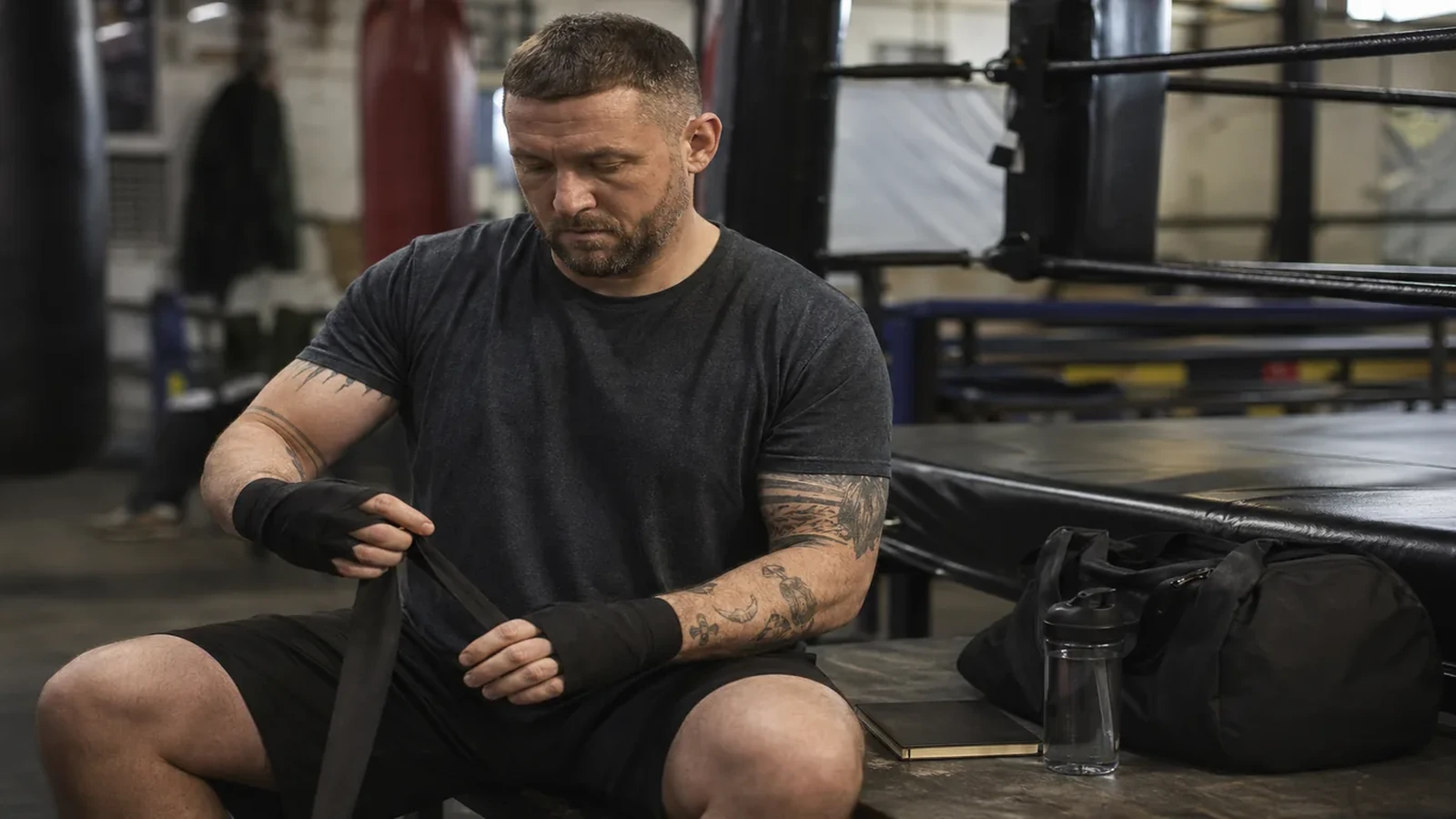
Best exercise for ex-military people and veterans? Boxing is a strong answer because it gives structure without pretending civilian life is simple.
Leaving the armed forces can change more than the job title. Routine changes. Fitness habits change. Social circles change. The sense of role can change. Some people miss the structure. Some miss the team. Some want to keep training hard, but without the same command environment or pressure to prove anything.
Boxing works because it gives ex-military adults a disciplined physical reset: movement, focus, conditioning, confidence and a room where effort still means something.
Ex-military fitness is not just about staying fit
People leaving the armed forces often already know how to work hard.
The issue is not usually a lack of discipline. It is that the old structure disappears. Training used to sit inside a wider routine: time, team, standards, accountability and a reason to show up. Civilian life may have more freedom, but it can also have less shape.
Research has looked at the military-to-civilian transition and the effect that service can have on physical health later in life. Not everyone has the same experience of leaving service, but the shift can be real: identity, routine, fitness and social support all need somewhere to go.
Boxing helps because it gives training a clear frame again. You turn up. You warm up. You learn. You work rounds. You recover. You come back next week and improve.
That structure matters because fitness is easier to maintain when the session has a clear start, middle and finish.
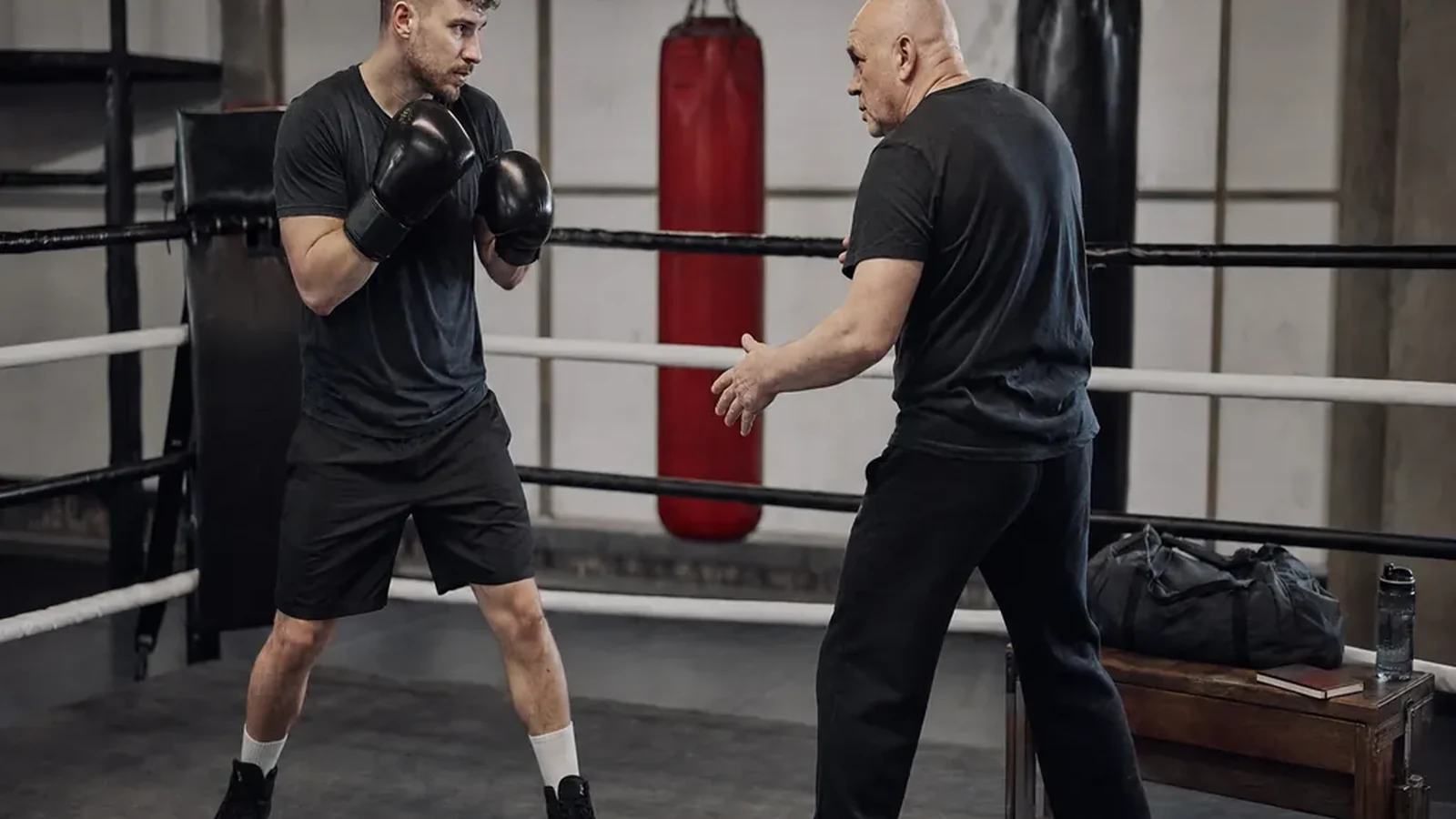
Boxing gives intensity without the old baggage
Some ex-military people want exercise that still feels serious.
A light jog or standard gym plan can work, but it may not scratch the same itch. Boxing has intensity, skill, rhythm and standards. It asks you to focus properly. It gives you something to get better at, not just calories to burn.
But good recreational boxing should not recreate the worst parts of pressure culture.
You do not need to be shouted at. You do not need to spar on day one. You do not need to prove that you can suffer. You need a coached class where the work is hard enough to matter and controlled enough to be useful.
That is the balance. Boxing can feel disciplined without becoming performative.
If stress relief is one of the reasons you are looking, boxing for stress relief is the obvious next read.
It builds calm confidence without aggression
Boxing has a reputation problem among people who have never trained properly.
They assume it is about anger. It is not. Good boxing is about control.
You learn to stand well, keep your guard up, breathe when tired and reset after mistakes. You learn that panic wastes energy. You learn that tension makes you slower. You learn that discipline matters more than force.
That can suit ex-military adults well because the training feels purposeful without needing bravado. The aim is not to become aggressive. The aim is to become steadier, fitter and more capable.
That is useful whether you left service last month or years ago.
It gives people a team without forced intensity
One thing many people miss after service is not the uniform. It is the people.
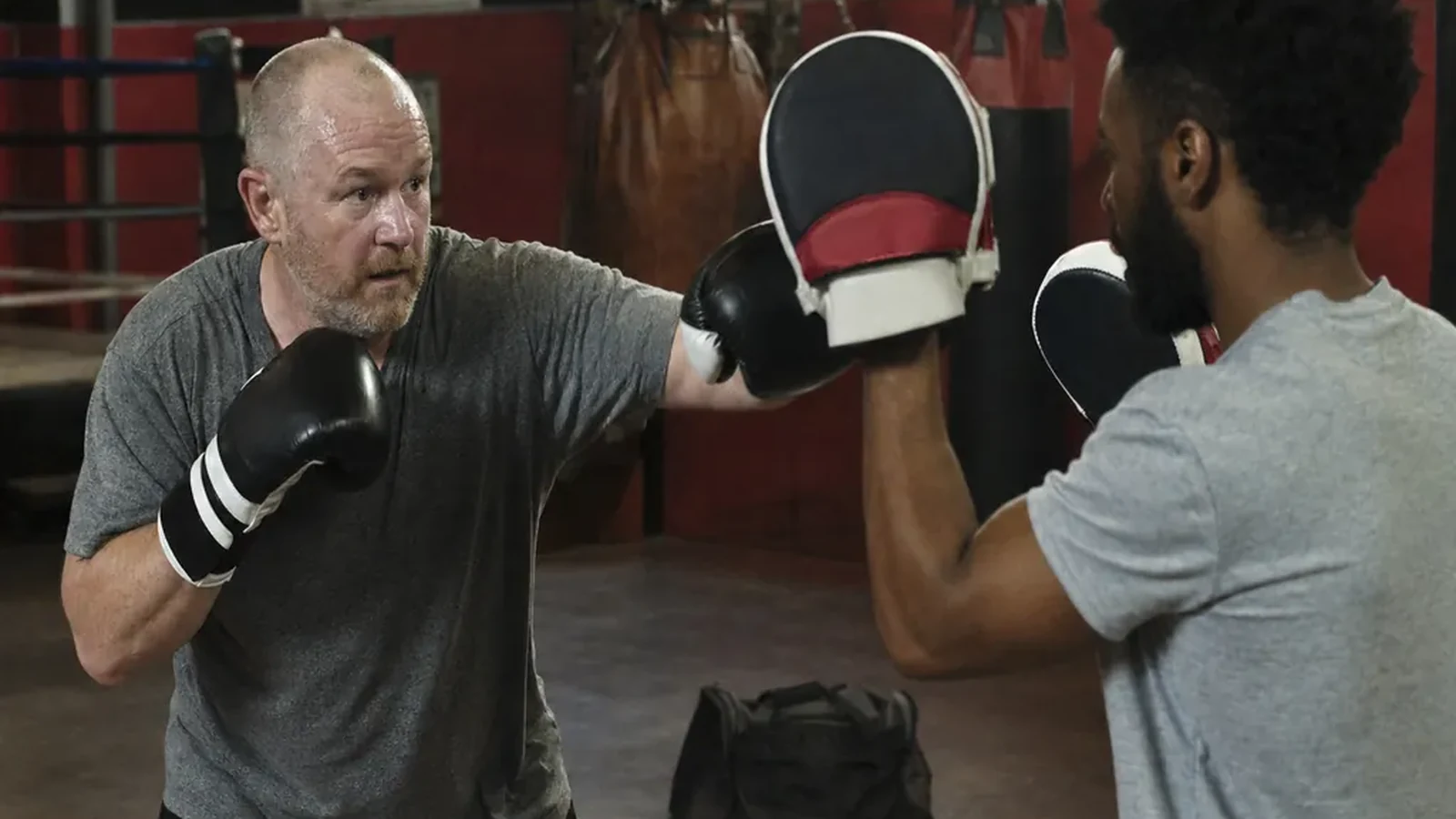
Shared effort changes how a room feels. You do not have to explain everything when everyone is working through the same rounds. You warm up, train, get tired, recover and improve around other adults who are also trying to get better.
Boxing can give that sense of shared work without forcing false intimacy.
You can be social if you want to be. You can also keep your head down and train. Either way, the class gives a rhythm and a group around the effort.
That matters because civilian fitness can feel oddly isolated: headphones in, machine chosen, set done, leave. Boxing is still individual in some ways, but the room has energy. You are training alongside people, not just near them.
Boxing fixes the wrong kind of tired
Ex-military adults can end up tired in a way that standard rest does not fix.
The body may feel under-used compared with service. Or it may carry old aches from years of load, impact, sleep disruption and repetitive training. The head may be busy with work, family, transition, money, identity or the simple grind of building a different life.
Boxing works because it gives the body a clear job.
It uses the legs, hips, trunk, shoulders, hands, eyes and lungs. It asks for rhythm, timing, balance and attention. You get tired in a cleaner way: not because the day has drained you, but because you moved, learned and worked.
The NHS advises adults to aim for at least 150 minutes of moderate activity each week or 75 minutes of vigorous activity, plus strengthening work on two days (NHS adult activity guidelines). Boxing can help cover both because it mixes conditioning, coordination and strength under fatigue.
The NHS also says being active can help people switch off from worries and support mental wellbeing (NHS mental wellbeing and activity advice). That does not make boxing a treatment for trauma, anxiety or depression, but it can be a useful part of a healthy week.
It is better than another self-managed gym plan
A normal gym plan can work. The problem is drift.
Without a clear structure, training can become too easy to skip or too easy to overdo. Some people lose momentum. Others go too hard too quickly because that feels more familiar. Neither pattern is ideal.
Boxing gives structure without needing you to design the whole session yourself.
You turn up. The coach runs the class. You warm up, learn, hit bags, work pads, move your feet and finish. You still have to put the effort in, but you do not have to build the whole plan from scratch.
If you are comparing it with a normal gym membership, boxing vs gym: why people switch explains why structured sessions keep many adults more consistent.
What kind of boxing should ex-military adults start with?
Start with coached recreational boxing.
You do not need sparring on day one. You do not need to be at service-level fitness. You do not need expensive kit or a fighting mindset. You need a class where adults can learn stance, footwork, punching mechanics, bag work, pad work and conditioning at a sensible pace.
Our Adult Recreational boxing classes are built for adults who want proper boxing training without needing previous boxing experience.
If you work or live around Greenwich, Kidbrooke, Blackheath, Woolwich or nearby parts of south east London, the club is practical for after-work training, reset sessions or rebuilding a consistent fitness routine.
Bring normal gym kit, water and patience. If you have old injuries, joint pain, back pain, shoulder issues or service-related medical concerns, get those checked properly and tell the coach what needs managing. Boxing should build you up, not become another thing you force through.
The honest answer
Boxing will not fix a difficult transition, poor sleep, old injuries, isolation, work stress or mental health problems by itself.
It will not replace medical support, therapy, proper rest, good relationships or practical help with housing, work and money.
But as exercise, it fits many ex-military adults well. It gives structure without a uniform. It gives intensity without chaos. It builds calm confidence and gives the body a clear job again.
For ex-military people and veterans, that is not vanity. It is maintenance.
How to start if you do this job
For most ex-military, the best first step is a normal coached group class, not a complicated programme. Start with Adult Recreational boxing or the broader adult beginner boxing guide if you want to understand what happens first.
If your rota, clients or working hours make set classes hard, use boxing personal training or private boxing lessons as the paid route. The free trial is for scheduled group classes.
Book a free trial session at Honour and Glory Boxing Club.
More job-specific boxing guides
If this article fits your work pattern, the full boxing for workers guide links the rest of the job-specific series, including desk workers, shift workers, trades, carers, drivers, teachers and busy professionals.
H&G Team
Writer at Honour & Glory Boxing Club, a community boxing gym in Kidbrooke, South East London.
KEEP READING
Boxing Fitness for HR Professionals: When It Fits
Boxing can be a useful training option for hr professionals when you want coached movement, conditioning and a clear break from work. It is not the only answer, but it can fit well.
Boxing Fitness for Students: When It Fits
Boxing can be a useful training option for students when you want coached movement, conditioning and a clear break from work. It is not the only answer, but it can fit well.

Boxing Training for British Army Fitness: What the SCA Tests
The British Army introduced a new Soldier Conditioning Assessment in 2025. Here is how boxing training maps to every component of it.
Was this page helpful?
It takes one tap, and it genuinely helps.
Choose your next step
Turn this article into the right action
Some readers are ready to book. Some need the class route first. Pick the route that matches what you actually want.