Boxing vs Wrestling
The two oldest combat sports on earth. Boxing is the art of hitting without being hit. Wrestling is the art of controlling someone without striking at all. Both are Olympic sports, both produce extraordinary athletes, and both have legitimate self-defence applications. Here is a fair comparison from a boxing gym that respects wrestling deeply.

Striking vs Grappling: The Fundamental Split
Boxing
Striking art. Four punches, infinite combinations. Stand-up distance management.
- • Punches: jab, cross, hook, uppercut
- • Footwork and distance control
- • Head movement and defensive slipping
- • Ring craft and angles
- • Rounds-based competition
Wrestling
Grappling art. Takedowns, control, and pins. Close-range physical dominance.
- • Single and double leg takedowns
- • Clinch work and throws
- • Ground control and pinning
- • Scrambles and escapes
- • Period-based competition
As Top End Sports analysis detailed, boxing ranks higher in aerobic endurance demands, while wrestling requires greater anaerobic power and raw strength. Both develop exceptional cardiovascular fitness, but the energy systems are loaded differently.
Self-Defence: A Genuine Debate
This is one of the most debated topics in martial arts. As the Martial Arts Stack Exchange community discussed extensively, both boxing and wrestling have genuine self-defence value but in different situations.
Boxing gives you the ability to end a confrontation quickly from distance. A well-placed punch from someone who knows how to throw one is a decisive advantage. Boxing also trains your defensive instincts: slipping, blocking, and evading attacks becomes automatic. The key advantage is that boxing works at range, which is where most street confrontations begin.
Wrestling gives you the ability to control someone without striking. Takedowns, clinch control, and pinning are devastatingly effective, particularly against untrained people. As one r/martialarts commenter observed, wrestling allows you to control a situation without necessarily causing serious harm, which has legal and ethical advantages.
Fitness Demands
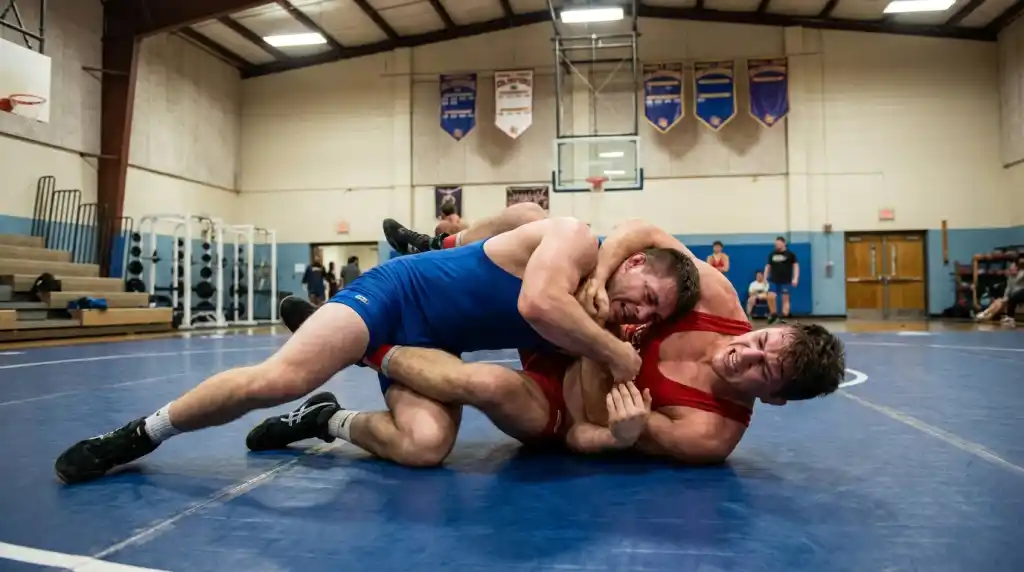
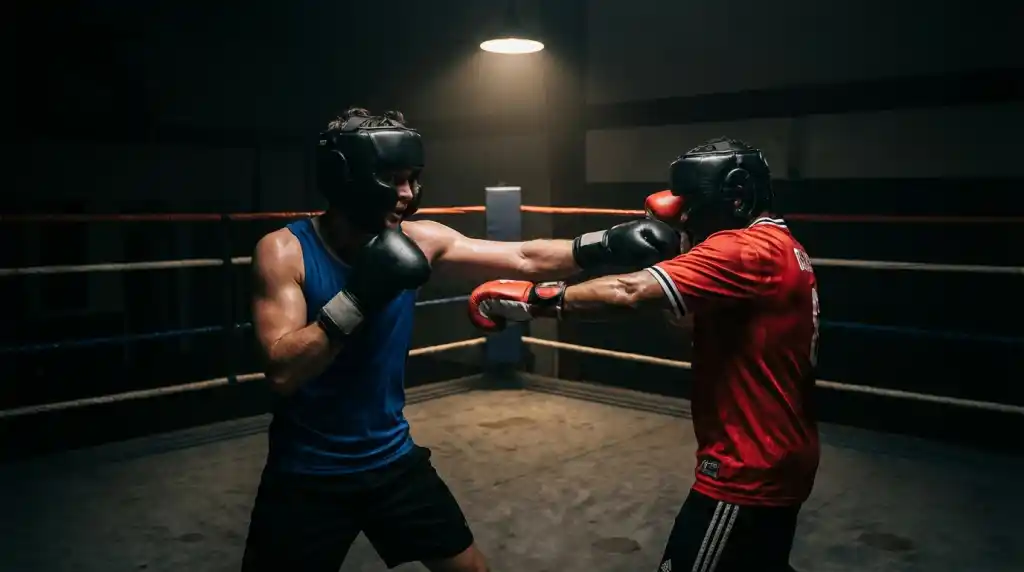
Both sports produce extraordinary fitness, but the demands differ. Boxing emphasises aerobic endurance, hand speed, and reactive coordination. A boxer needs to maintain output over 12 three-minute rounds (in professional competition), requiring sustained cardiovascular fitness.
Wrestling emphasises anaerobic power, grip strength, and raw muscular endurance. The physical intensity of a wrestling match is extreme. Two minutes of hard wrestling is more physically demanding than almost any other sporting activity. Wrestlers develop extraordinary functional strength, particularly in the posterior chain, neck, and grip.
Calorie Burn Comparison
Availability in London
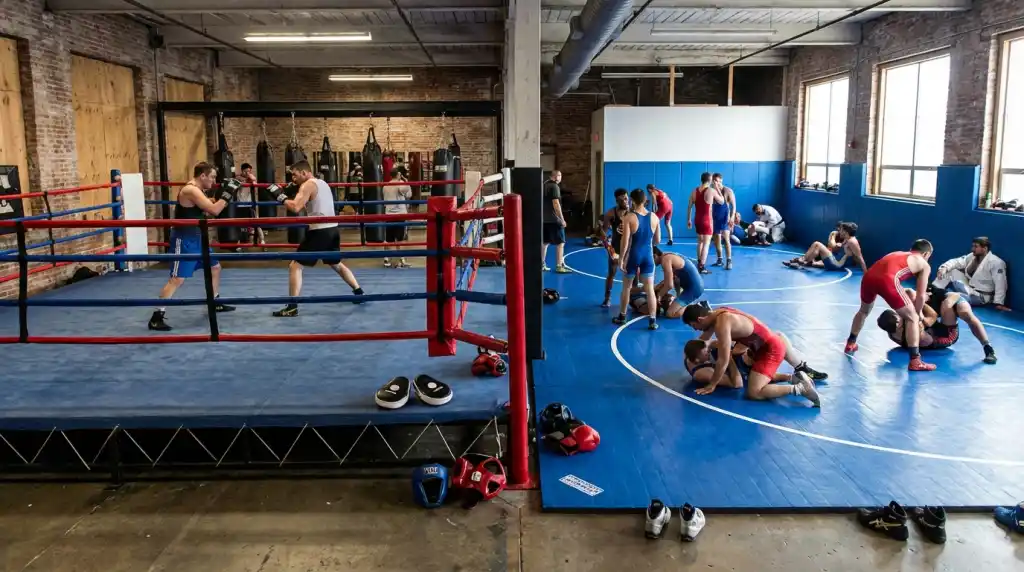
This is where the comparison becomes practical. London has hundreds of boxing gyms. You can find one in virtually every borough, from community clubs charging £5 per session to boutique studios at ten times the price. Boxing is accessible. At Honour and Glory in Greenwich, we welcome complete beginners at £5 to £10 per session with no contracts.
Wrestling clubs in London are far fewer. Freestyle and Greco-Roman wrestling is primarily an Olympic development pathway sport, with most training happening through university clubs and a small number of dedicated wrestling academies. Finding a wrestling class that accepts adult beginners with no experience is significantly harder than finding a boxing gym that does the same.
If wrestling interests you but availability is limited, consider that boxing develops complementary skills. Many successful MMA fighters started in boxing before adding grappling disciplines later.
Injury Profiles
Both combat sports carry injury risk, but the profiles differ significantly. Boxing injuries are predominantly to the hands, wrists, and (in sparring) the face. Chronic injuries tend to be cumulative brain trauma from repeated head impacts, which is why sparring frequency and intensity matter, and why recreational boxing without sparring carries minimal injury risk.
Wrestling injuries affect the joints more broadly: shoulders, knees, and elbows are the most commonly injured areas. Cauliflower ear is an iconic wrestling injury caused by repeated friction and compression. The chronic injury profile includes neck and spine issues from years of takedowns and being taken down.
For recreational practitioners, both sports can be trained safely with proper instruction and sensible progressions. Non-sparring boxing has one of the lowest injury rates of any fitness activity. Recreational wrestling with controlled drilling is also relatively safe, though the physical contact is inherently closer and more intense from the beginning.
Training Culture
Boxing gyms and wrestling rooms have different cultures, though both share the fundamental values of hard work, respect, and humility. Boxing gyms tend to be more individual-focused. You work your own rounds on the bag, you get your own feedback from the coach, and you measure your own progress. The community forms naturally through shared hardship.
Wrestling rooms are inherently partner-based. You cannot drill without a partner. You cannot practice takedowns alone. This creates an immediate, physical bond between training partners that is different from the boxing gym dynamic. Wrestling culture also tends to be more directly competitive, with live sparring (rolling) being a core part of most training sessions from relatively early on.
For someone nervous about starting a combat sport, boxing offers a gentler entry point. You can train for months without any physical contact with another person. In wrestling, you will be in close physical contact from your first session. Neither is wrong, but they suit different personalities.
Transferability to MMA
If your long-term interest is mixed martial arts, both boxing and wrestling are foundational skills. Many MMA coaches consider wrestling the single most important base for MMA, because the ability to control where the fight takes place (standing or on the ground) is the most strategically valuable skill in a mixed-rules fight.
Boxing provides the striking foundation that every MMA fighter needs. Clean punching, defensive head movement, and distance management are boxing skills that transfer directly into MMA. The combination of wrestling's control and boxing's striking is what makes fighters like Khabib Nurmagomedov and Kamaru Usman so effective.
If MMA is the eventual goal, starting with either boxing or wrestling is a strong foundation. Starting with boxing is more practical in London given the much greater availability of clubs and classes.
Was this page helpful?
It takes one tap, and it genuinely helps.
The Verdict
Choose boxing if:
- • You want widely available, affordable training
- • Stand-up striking and distance management appeal to you
- • Aerobic endurance is a priority
- • You want clear competition pathways from amateur to pro
- • Self-defence at range matters most
Choose wrestling if:
- • You want unmatched functional strength
- • Close-range control interests you more than striking
- • You want the grappling foundation for MMA
- • You can find a good wrestling club near you
- • You prefer controlling opponents without striking
Our honest take: We respect wrestling enormously. It produces some of the most complete athletes in sport. But for most people in London looking to start a combat sport, boxing is the more practical choice: far more accessible, more affordable, and with a lower barrier to entry for adult beginners. If you want both striking and grappling, start with boxing, build your foundation, and add wrestling or BJJ later. Want to see for yourself? Book a free session and find out.
See also: Boxing vs MMA | Boxing vs Judo | Boxing vs Krav Maga | Boxing vs Taekwondo | Boxing vs Aikido | Boxing vs Capoeira
The best way to decide? Come and try it.
Your first session is free. No contract, no commitment.
Book Your Free Boxing Session
Your first session is free. No contract, no joining fee, no catches.
📍 122 Broad Walk, SE3 8ND · Pay as you go from £5