Boxing vs Calisthenics
Two disciplines that require minimal equipment and maximum dedication. Calisthenics uses your bodyweight for resistance training. Boxing uses your bodyweight to hit things. Both build impressive physiques, both teach skills that deepen over years, and both have passionate communities. Here is how they compare.
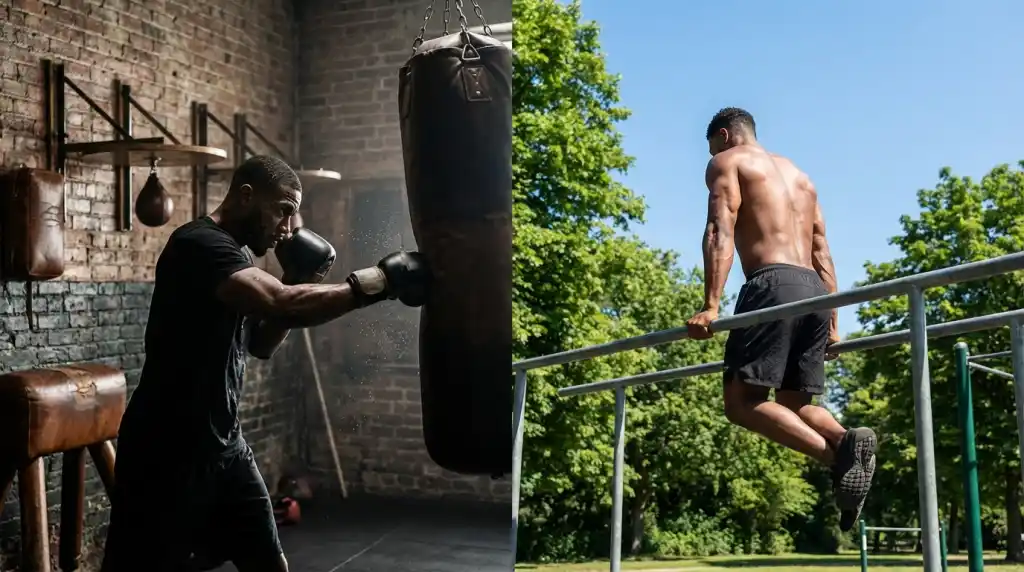
The Core Difference
Boxing
A combat skill built around punching, movement, and defence. High cardio demand with skill development at its centre.
- • Primarily cardiovascular with muscular endurance
- • Coach-led group sessions
- • Equipment: gloves, wraps, bags, pads
- • Builds lean, athletic physique
- • £5-£10 per session at community clubs
Calisthenics
Bodyweight strength training with progressive skill unlocks. Pull-ups, dips, handstands, muscle-ups, and beyond.
- • Primarily strength with flexibility
- • Often self-directed or peer-taught
- • Equipment: pull-up bar, parallel bars (or a park)
- • Builds strong, defined upper body
- • Free to near-free (outdoor parks)
Boxing is a combat skill that happens to make you fit. Calisthenics is a strength discipline that happens to teach impressive body control. One prioritises cardio and reactive coordination. The other prioritises strength and static control. Both develop skills that take years to master.
Cost and Accessibility
Calisthenics has the edge here, and it is a significant one. You can train calisthenics for free in any park with a pull-up bar. London has hundreds of outdoor calisthenics stations, from Primrose Hill to Greenwich Park. Your only cost is getting there.
Boxing at a community club costs £5-£10 per session. Not expensive by any measure, but not free. You also need gloves (£25-£50) and wraps (£5-£10). However, boxing gives you something calisthenics typically does not: a coach. Having someone correct your technique, push your intensity, and programme your training is worth the modest cost, especially when you are learning.
For people who need structure and accountability to train consistently, boxing's coached group format is an advantage. Calisthenics' self-directed nature suits disciplined, self-motivated individuals.
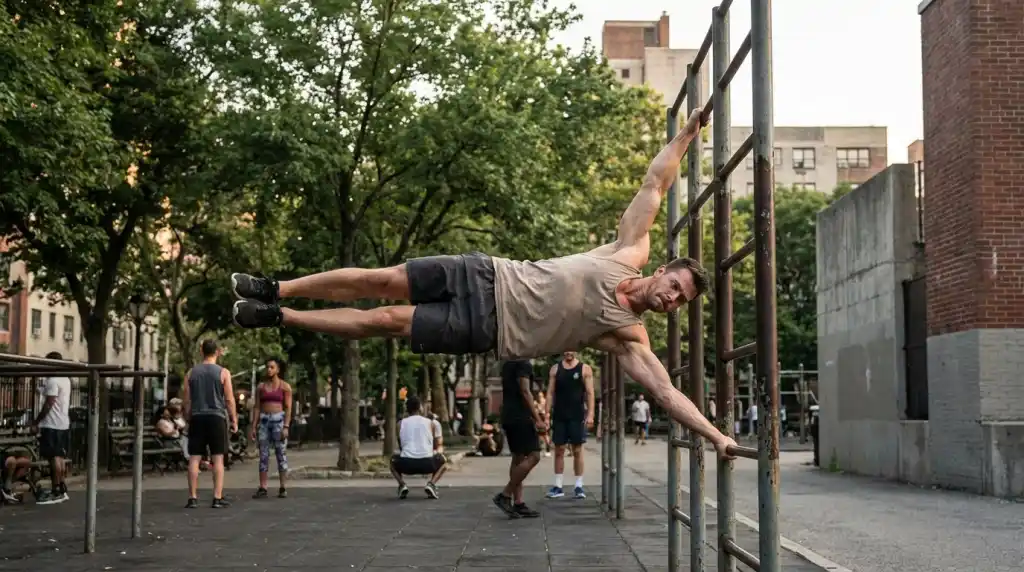
Strength vs Cardio
This is the clearest difference. Calisthenics is fundamentally a strength discipline. Progressive overload comes from harder variations: regular press-ups to archer press-ups to one-arm press-ups. Pull-ups to muscle-ups to impossible dips. The strength gains are real, measurable, and impressive.
Boxing is fundamentally cardiovascular. A typical session keeps your heart rate high for 60-90 minutes, with calorie burn varying by session. The muscular endurance from thousands of punches is significant, but boxing does not build the raw pulling and pressing strength that calisthenics does.
As several experienced trainers on Quora noted, the ideal approach for a fighter or complete athlete is to do boxing training first and calisthenics afterwards. Boxing when fresh for technique, calisthenics for supplementary strength. The two complement each other better than either competes with the other.
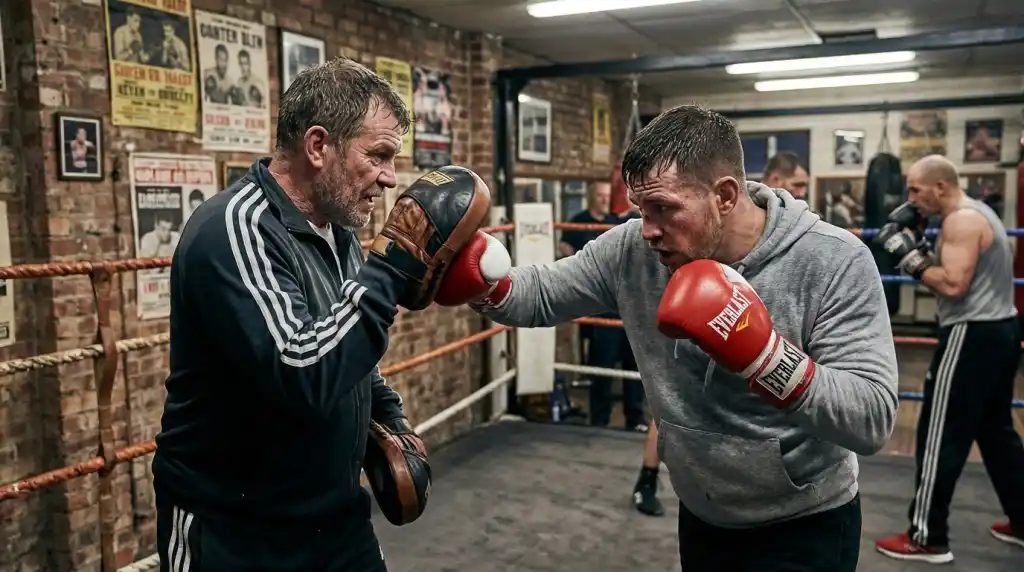
The Skill Curve
Both disciplines have a long and satisfying skill curve, which is what makes them sustainable long-term. In calisthenics, you are always working towards the next progression: from a tuck planche to a straddle planche to a full planche. These milestones provide clear goals and a sense of achievement that keeps people training for years.
In boxing, the skill curve is less visible but equally deep. Timing, rhythm, defensive reading, counter-punching, and ring craft all develop over years. The difference between a beginner throwing a jab and an experienced boxer throwing the same jab is invisible to most observers but enormous in effectiveness. At Honour and Glory, we see members still making breakthroughs in their technique after years of training.
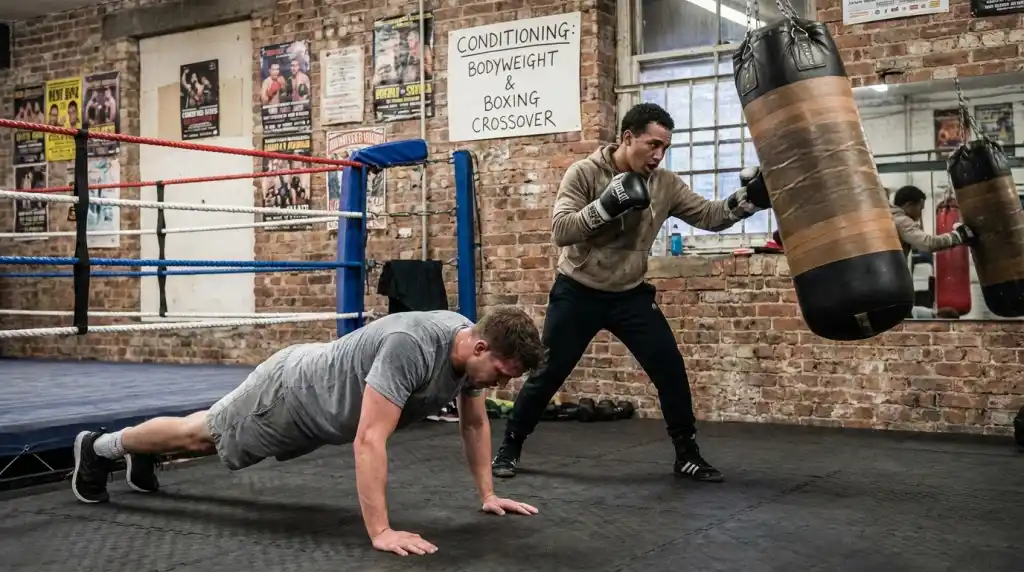
The Physique Comparison
Both boxing and calisthenics build impressive physiques, but the shapes differ. Calisthenics builds a V-shaped upper body dominated by lats, shoulders, and arms. The pulling movements (pull-ups, muscle-ups, front levers) develop the back and biceps particularly well. The pushing movements (dips, push-ups, handstand push-ups) build chest, triceps, and shoulders.
Boxing builds a leaner, more evenly distributed physique. The shoulders and core are the standout areas, with defined arms from repetitive punching. The legs are strong but lean from footwork rather than squats. The overall look is more athletic than muscular, more functional than aesthetic, though the aesthetic results are significant.
If you want to look like a gymnast, train calisthenics. If you want to look like a fighter, train boxing. Both physiques are impressive. Both are built through genuine skill rather than isolated machine exercises. For a fuller look at what boxing does to your body, see Boxing Body Transformation.
Mental Health and Stress Relief
Boxing has a significant advantage for stress relief. The cathartic release of hitting a heavy bag, combined with the forced focus of combination work and the high-intensity endorphin release, makes boxing one of the most effective workouts for managing stress and anxiety. See our stress relief comparison for the full analysis.
Calisthenics offers a different kind of mental benefit. The meditative quality of working on a single skill (holding a handstand, practising a muscle-up) provides focused calm. The outdoor training aspect adds the well-documented mental health benefits of time spent in nature and sunlight. The progressive achievement of unlocking new skills builds genuine confidence.
Both activities build self-confidence through competence. There is nothing performative about either: the confidence comes from genuinely developing a difficult skill over time. That kind of earned confidence transfers to every other area of life.
The Case for Combining Both
Boxing and calisthenics are natural training partners. Many boxers already use bodyweight exercises (press-ups, pull-ups, dips, sit-ups) as conditioning work. Calisthenics simply formalises and deepens this.
A practical weekly schedule might look like: boxing three times per week (Monday, Wednesday, Friday) for cardio, skill, and community; calisthenics two times per week (Tuesday, Thursday) for strength and body control. The total cost is approximately £30-£40 per week for boxing, plus £0 for calisthenics in the park. For under £200 per month, you have a complete training programme that covers cardio, strength, skill, and flexibility.
Was this page helpful?
It takes one tap, and it genuinely helps.
The Verdict
Choose boxing if:
- • Cardiovascular fitness is the priority
- • You want coached, structured sessions
- • You want self-defence ability
- • You value community and social training
- • Stress relief is important to you
Choose calisthenics if:
- • Raw bodyweight strength is the goal
- • You want to train for free, anywhere
- • You are self-motivated and self-directed
- • Impressive body control skills appeal to you
- • You prefer training outdoors
Our honest take: These two are better together than apart. Boxing for cardio, skill, and stress relief. Calisthenics for strength and body control. But if you only pick one, boxing gives you more: a skill, a community, a coach, and a workout that covers cardio and muscular endurance in every session. Want to see for yourself? Book a free session and find out.
See also: Boxing vs Gym | Boxing vs Weightlifting | Boxing vs CrossFit | Boxing vs Kettlebells
The best way to decide? Come and try it.
Your first session is free. No contract, no commitment.
Book Your Free Boxing Session
Your first session is free. No contract, no joining fee, no catches.
📍 122 Broad Walk, SE3 8ND · Pay as you go from £5