Boxing vs Kettlebells
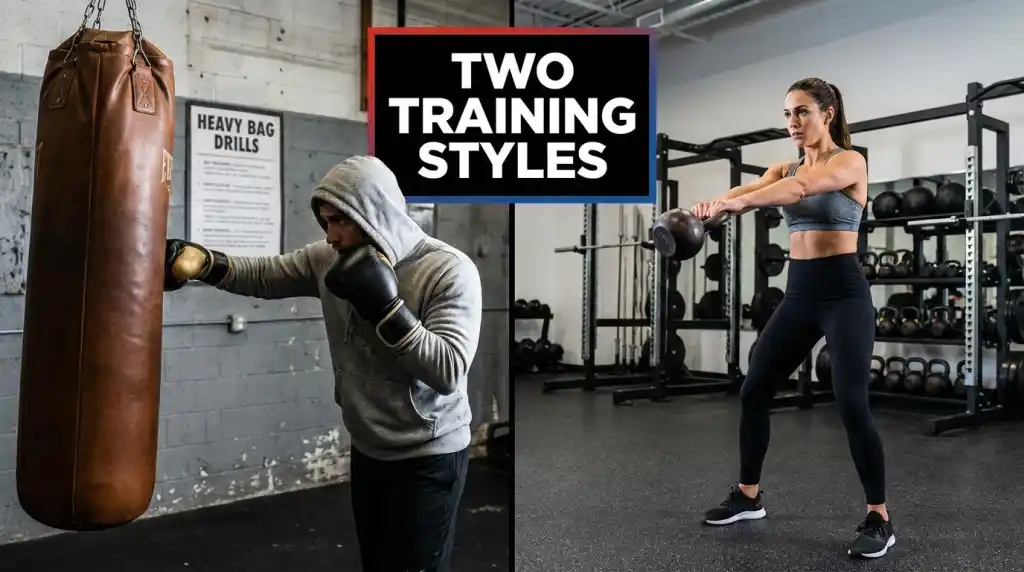
Kettlebell training has a devoted following, and for good reason. A single kettlebell in your living room can deliver a complete workout. But so can a pair of boxing gloves and a gym that costs £5 per session. Both are efficient, both develop functional fitness, and both have surprisingly deep skill curves. Here is how they compare.
The Core Difference
Boxing
A combat skill with coaching, community, and structured sessions. High cardio, full-body engagement, learned at a gym.
- • calorie burn varies by body size, intensity and session format
- • Coach-led technique development
- • Community and social training
- • Self-defence skill
- • Requires a gym (£5-£10/session)
Kettlebells
A resistance training tool with a deep movement practice. Can be done at home, in a park, or at a gym. Self-directed.
- • 400-600 calories per hour
- • Self-directed or class-based
- • Train anywhere with one kettlebell
- • Functional strength and power
- • One-time equipment cost (£30-£80)
As experienced practitioners in r/kettlebell have noted, the two complement each other exceptionally well. Kettlebell training builds the explosive hip power and shoulder endurance that directly improves boxing performance. And boxing develops the cardiovascular fitness and coordination that kettlebells alone cannot match.
Convenience: The Kettlebell Advantage
This is where kettlebells have a clear advantage. You can buy a 16 kg kettlebell for £30-£50, put it in your living room, and you have a gym. No commute, no class times, no membership. Training at 6am or 11pm is equally possible.
Boxing requires a gym. You need bags, pads, and ideally a coach. The structured environment is part of what makes boxing effective (you train harder with a coach pushing you and a group around you), but it does mean you need to travel to a specific location at a specific time.
For people with irregular schedules, frequent travel, or young children at home, kettlebells offer flexibility that boxing cannot match. For people who need external accountability to train consistently, boxing's scheduled classes are the better choice.
Calorie Burn and Fitness
Boxing and kettlebell training can both be demanding; calorie burn depends on intensity and session structure. A typical boxing session burns a variable number of calories in 60-90 minutes, while a kettlebell session of similar duration burns 400-600 calories. The difference is that boxing maintains higher sustained heart rates due to the continuous movement, combination work, and conditioning elements.
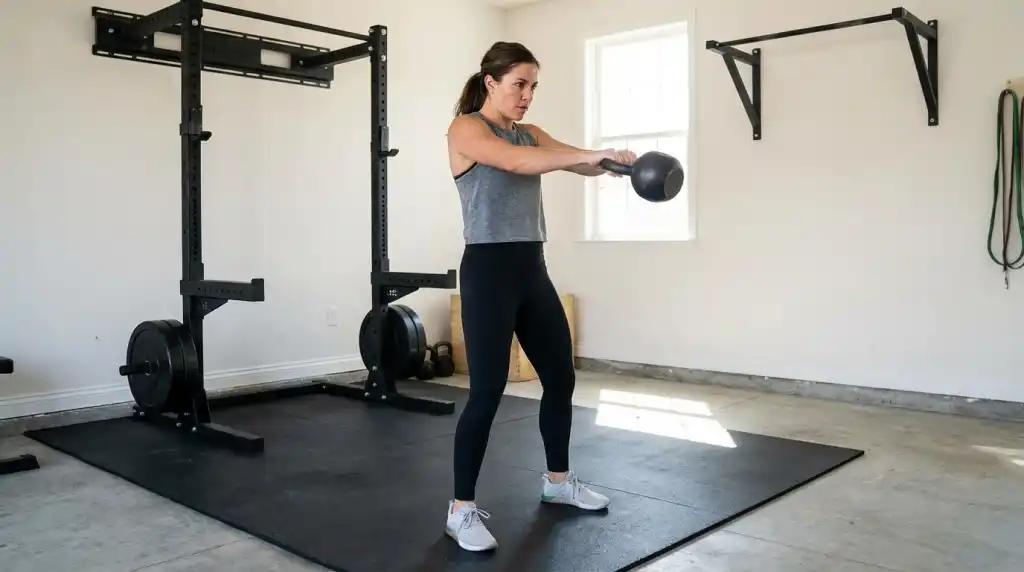
Kettlebells excel at building strength and power. The swing alone trains the entire posterior chain (glutes, hamstrings, lower back) while developing explosive hip extension. The Turkish get-up builds full-body stability. The snatch builds cardiovascular endurance alongside power. According to Expert Boxing, kettlebells are the most suitable tool for increasing power output in boxing-specific movements.
For pure fat loss, boxing has the edge. For building functional strength alongside conditioning, kettlebells are outstanding. The combination of both, as RDX Sports documented, is particularly effective for building the explosive power and endurance that boxing demands.
Skill Development and Community
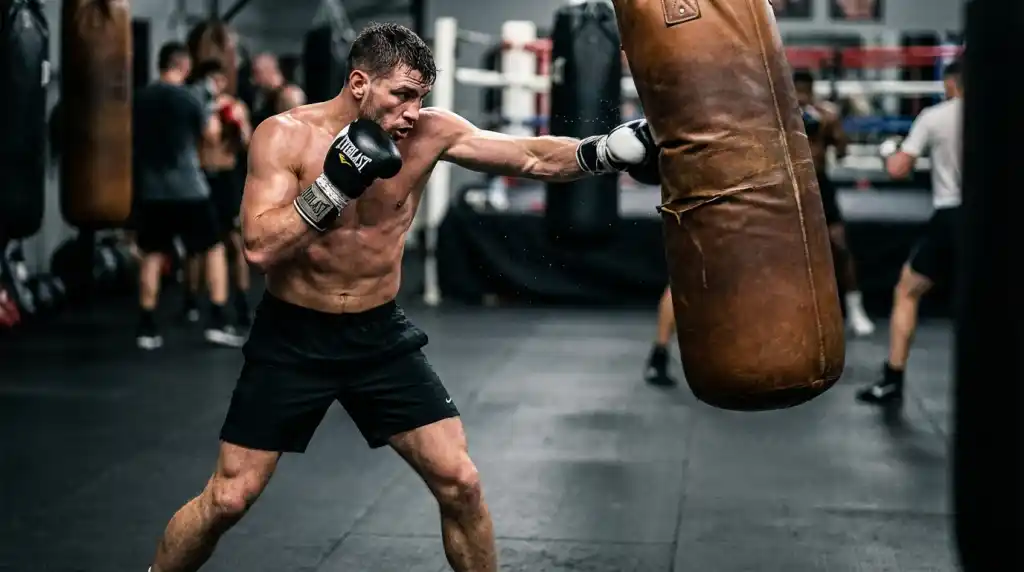
Both boxing and kettlebells have surprisingly deep skill curves. Kettlebell enthusiasts following the StrongFirst or hardstyle methodology treat the basic lifts (swing, get-up, clean, press, snatch) with the same attention to detail that a boxing coach gives to the jab. The simple and sinister programme of swings and get-ups can occupy a dedicated practitioner for years.
Boxing's skill depth is perhaps even greater, given the reactive, unpredictable element of working with a partner. But kettlebell training is not just mindlessly swinging a weight. The technique is precise, the progressions are structured, and the community (particularly the online community) is knowledgeable and supportive.
Where boxing wins decisively is in-person community. Training alongside others, sharing the intensity of a hard session, and building relationships with coaches and training partners is a fundamental part of the boxing experience. Kettlebell training, while it has classes and groups, is more commonly done alone. At Honour and Glory, the community is as much a reason people keep coming back as the training itself.
Why Boxers Use Kettlebells
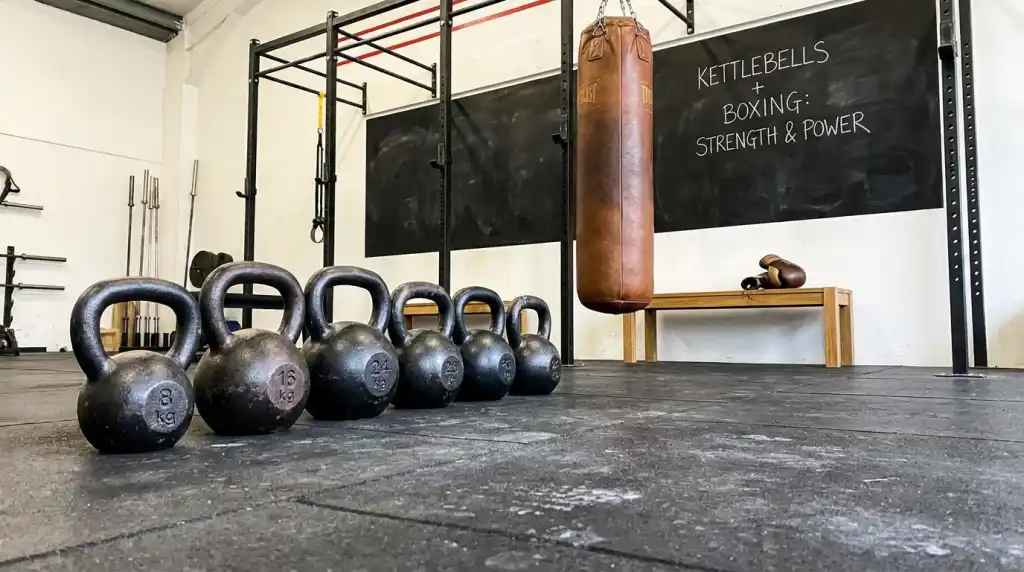
The relationship between boxing and kettlebells is not just theoretical. Many boxing coaches incorporate kettlebell work into their training programmes because the movement patterns complement each other so well.
The kettlebell swing mimics the hip drive that generates punching power. The Turkish get-up builds the shoulder stability needed to maintain a guard for 12 rounds. The clean and press develops the explosive shoulder endurance that pad work demands. As Expert Boxing notes, kettlebells are specifically suited to increasing power output in boxing-specific movements.
If you already box and want to add supplementary training on your off-days, kettlebells are arguably the single best addition you can make. One 16 kg kettlebell, a simple programme of swings and get-ups, and 20 minutes three times a week will noticeably improve your boxing performance within a month.
A Practical Combined Programme
Here is a realistic weekly programme combining both, designed for someone training at Honour and Glory:
Total weekly cost: £30-£40 for boxing, £0 for kettlebells (one-time purchase of £30-£80). Total weekly time: approximately 5-6 hours of training. Result: a complete fitness programme covering cardio, strength, skill, and power for less than many people spend on coffee.
Long-Term Sustainability
Both boxing and kettlebell training are activities you can pursue for decades. There is no age at which you become too old for either, provided you train sensibly. Kettlebells can be scaled down in weight as needed. Boxing intensity can be adjusted by the coach. Both provide progressive challenge that keeps training interesting year after year.
The skill depth of both activities prevents the boredom that kills most fitness routines. You are never "done" learning to box, just as you are never "done" perfecting your kettlebell technique. This is what separates genuine disciplines from fitness trends: the depth keeps you engaged long after the novelty of a new activity would have faded.
For more on training longevity, see our Boxing Over 40 guide.
Was this page helpful?
It takes one tap, and it genuinely helps.
The Verdict
Choose boxing if:
- • You want maximum calorie burn per session
- • Community and coached training matter to you
- • You want to learn a combat skill
- • External accountability keeps you consistent
- • Stress relief through physical release is important
Choose kettlebells if:
- • You need to train at home or while travelling
- • Building functional strength is the priority
- • You are self-motivated and disciplined
- • Minimal equipment and maximum flexibility appeal
- • You want a one-time equipment cost, not ongoing fees
Our honest take: Buy a kettlebell and join a boxing gym. Seriously. Boxing two or three times a week for cardio, skill, and community, plus kettlebell work at home on off-days for strength and power. That combination covers every fitness base for under £200 upfront and £30-£40 per month. It is the most cost-effective, complete training programme available. Want to see for yourself? Book a free session and find out.
See also: Boxing vs Weightlifting | Boxing vs CrossFit | How Many Calories Does Boxing Burn? | Boxing vs Calisthenics
The best way to decide? Come and try it.
Your first session is free. No contract, no commitment.
Book Your Free Boxing Session
Your first session is free. No contract, no joining fee, no catches.
📍 122 Broad Walk, SE3 8ND · Pay as you go from £5