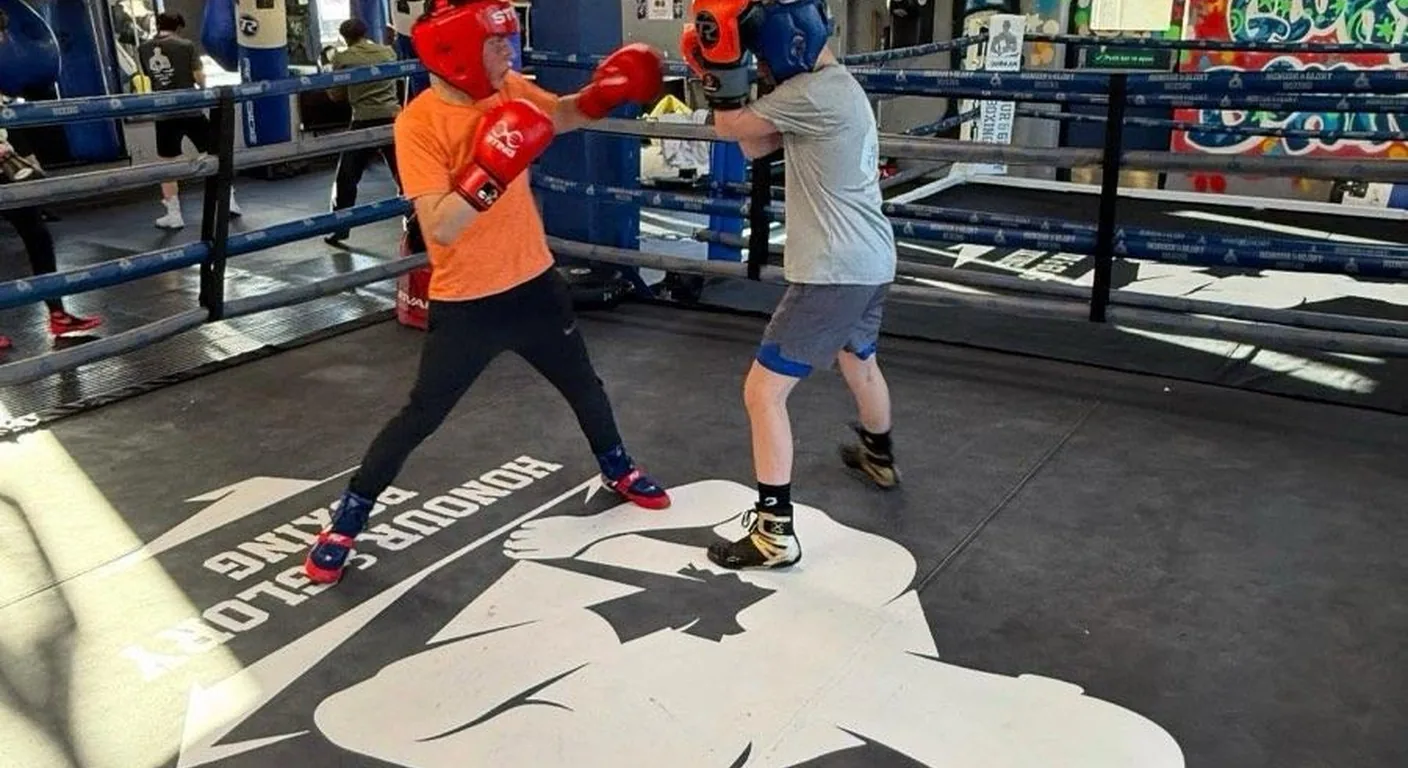
Heavy legs are one of the fastest ways to make a boxing round miserable.
People usually describe it the same way. The first minute feels manageable, then the feet stop listening. You feel rooted to the floor, your stance gets lazy, and every jab starts arriving a beat late. A lot of beginners think this means their legs are weak. Usually it means something more specific. They are wasting energy, moving badly, or trying to fight the round at a pace their current conditioning cannot support.
That matters because boxing really is demanding on the body. In a simulated Olympic bout, athletes spent about 60 per cent of the contest above ventilatory threshold 2, which is a fancy way of saying the work sat in a very hard zone for a lot of the round (Open Access Journal of Sports Medicine). Your legs are part of that story, not passengers.
If your legs keep feeling dead in class, here is what usually sits behind it.
Your legs drive more of your boxing than you think
People talk about boxing as if it is all shoulders, hands, and lungs. It is not. If the floor connection is poor, everything above it gets worse.
A 2025 biomechanics study on amateur boxers found lower-limb force generation, especially rear-leg drive, was critical to punch effectiveness, and punch force dropped after a lower-body fatigue protocol (Bioengineering). That fits what coaches see every week. When the legs go, the punch does not just lose sting. Timing gets ragged, balance gets messy, and defence starts arriving late.
So if your legs feel heavy, do not treat that as some separate annoyance from the rest of your boxing. It is the centre of the problem.
Bad stance makes the round more expensive than it should be
This is the first thing to look at.
A lot of beginners spend the whole round in a stance that looks active but feels awful. They stand too square, keep too much weight on the front foot, or sit too high and bounce around for no reason. It does not look dramatic, but it turns simple movement into expensive movement.
If your weight is too far forward, the calves and quads never really get a break. If your feet are too wide, every small adjustment becomes a mini lunge. If you are crossing your feet or reaching after punches, you have to recover balance before you can attack or defend again. That is where the heavy-leg feeling often starts.
Good footwork is not about dancing around the ring to impress people. It is about arriving in position without burning through your battery.
If you are still building that base, our piece on why beginners gas out in boxing explains why so much early fatigue is really about efficiency, not toughness.
Too much bouncing is a beginner habit
Some people come into boxing thinking the feet should never settle.
So they bounce constantly. Tiny hops, twitchy resets, nervous movement between every exchange. It feels athletic for about thirty seconds. After that, it just cooks the calves.
There is a place for rhythm and a place for lively feet. There is also a point where you are doing unpaid extra work. Better boxers look lighter partly because they move with a reason. They are not spending the whole round auditioning as a metronome.
The practical test is simple. Ask yourself whether each movement helps you get into range, out of range, or into a safer angle. If the answer is no, it is probably just costing you legs.
You are probably trying to throw too hard too early
Heavy legs do not only come from the legs. They often come from trying to force the round.
When beginners load up on every cross and every hook, the lower body has to brace harder, push harder, and recover harder. You are not just tiring the upper body. You are asking the legs to keep launching punches at a pace that makes no sense for your current skill level.
This is why tired legs often show up alongside bad breathing and tight shoulders. The whole system is overworking. If your upper body is what gives out first, our piece on why your shoulders burn in boxing explains the usual technical reasons.
A cleaner round usually looks less dramatic. Jab with intent, not panic. Step properly. Turn the hip when the shot actually calls for it. Then reset instead of trying to prove a point with every combination.
If you are constantly red-lining in round one, heavy legs in round three are not bad luck. They are the bill arriving.
Roadwork and skipping still matter
There is a reason boxing gyms keep coming back to boring basics.
Skipping and roadwork are not old habits that survived by accident. They help build the kind of repeat effort your legs need when rounds start stacking up. The same simulated boxing study above showed the sport sits in a seriously demanding zone, so it makes sense that your conditioning has to cover repeated hard efforts, not just one sharp burst (Open Access Journal of Sports Medicine).
That does not mean you need to turn into a mileage obsessive. It does mean you should stop acting surprised when your legs fade after skipping warm-up, ducking roadwork, and training once a week.
Our guide to boxing roadwork and why every boxer still runs gets into this properly. The short version is simple: if your aerobic base is weak, your feet tell on you before your ego does.
Recovery problems show up in the legs fast
Sometimes heavy legs have less to do with the session itself and more to do with what you brought into it.
Poor sleep, back-to-back hard sessions, and low fluid intake all make the feet feel slower. ACSM notes that being well hydrated makes exercise feel easier and that dehydration reduces muscle, heart, lung, and brain efficiency (ACSM hydration guidance). In gym language, that means the same rounds can feel oddly harder when recovery is off.
This is where people get caught out. They blame the coach, the floor, the class structure, or the gloves. Sometimes the answer is just that they showed up half-recovered and expected the legs to hide it.
If that sounds familiar, read our guide on hydration for boxing. It is not glamorous, but it matters.
What to fix first if your legs keep dying
Start with the obvious things before you start inventing exotic explanations.
1. Tighten your stance
Get the feet under you. Not too square, not too wide, not permanently leaning over the front knee.
2. Remove wasted movement
Stop bouncing when nothing is happening. Step when you need to step. Set when you need to set.
3. Lower the power a notch
If every shot is a power shot, your legs will feel cooked long before your technique improves.
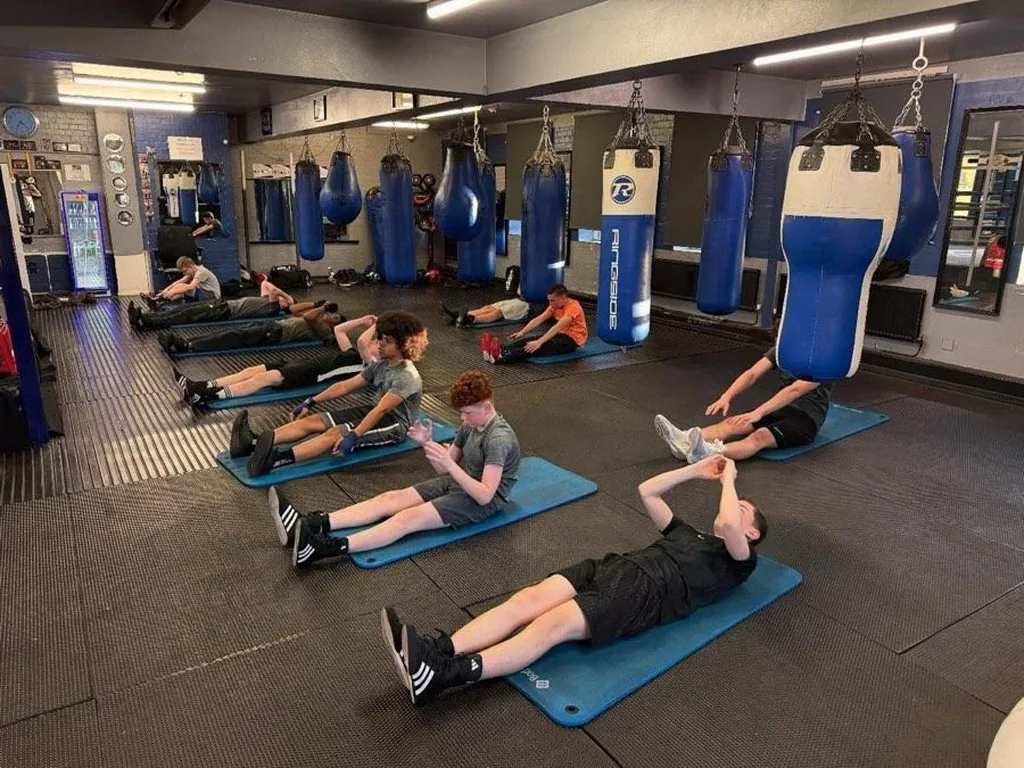
4. Build simple conditioning honestly
Skipping, short runs, and consistent class attendance do more for heavy legs than random heroic circuits done once every ten days.
5. Turn up recovered
If your sleep, food, and hydration are poor, do not act shocked when your feet feel awful.
The useful benchmark for beginners
A rough first few weeks do not mean you are bad at boxing. They mean boxing is exposing the parts of your movement and conditioning that still need work.
What matters is whether the pattern improves. Are your feet staying organised later in the session? Are you able to punch and move without feeling cemented to the floor? Are you recovering better between rounds? Those are the signs that your legs are catching up with the sport.
If you are in Greenwich or nearby and want proper coaching instead of guesswork, our Recreational Adults boxing classes are built for beginners who need clean fundamentals, sensible pacing, and rounds that actually teach something.
Heavy legs are not a personality trait. They are usually a fixable training problem.

H&G Team
Writer at Honour & Glory Boxing Club, a community boxing gym in Kidbrooke, South East London.
KEEP READING
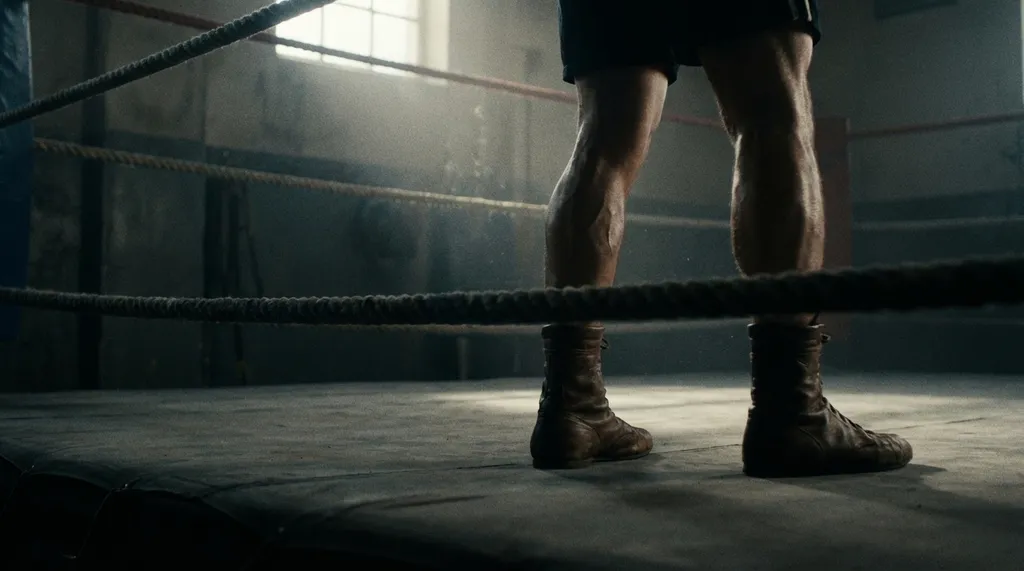
Boxing and Legs: Quads, Calves and Glutes
Boxing is built from the ground up. Your legs generate the power, control the distance, and determine how long you last. Here is what happens to them.
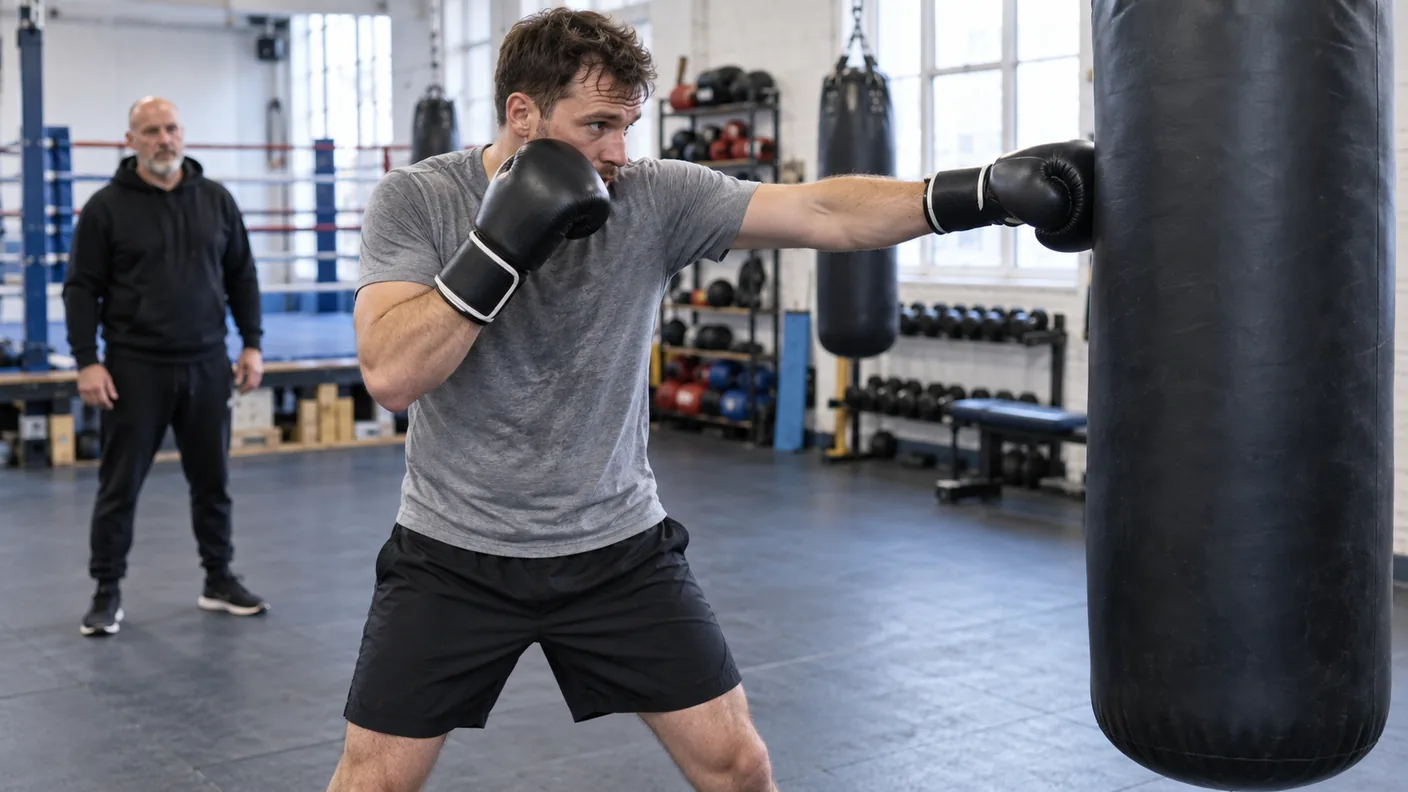
Three-Line Jab Drill for Better Heavy Bag Range
Use three simple floor markers to build a cleaner lead hand, steadier range and a more useful exit from the heavy bag.
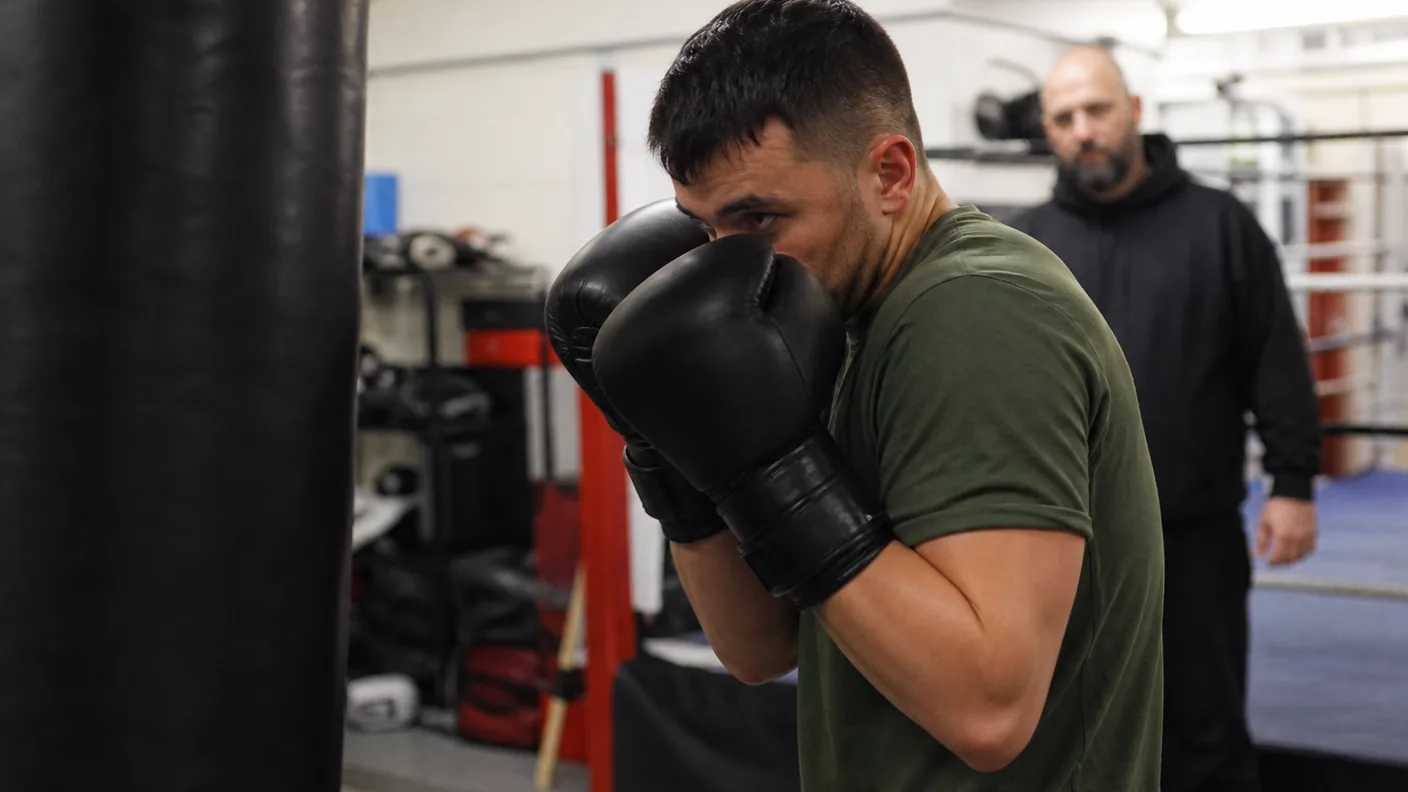
Stop Smothering Your Punches on the Heavy Bag
A close-range heavy bag drill for finding punching room, keeping your guard useful and building compact power without pushing.
Was this page helpful?
It takes one tap, and it genuinely helps.
Choose your next step
Turn this article into the right action
Some readers are ready to book. Some need the class route first. Pick the route that matches what you actually want.