Dave Allen vs Johnny Fisher 2: archive fight lessons
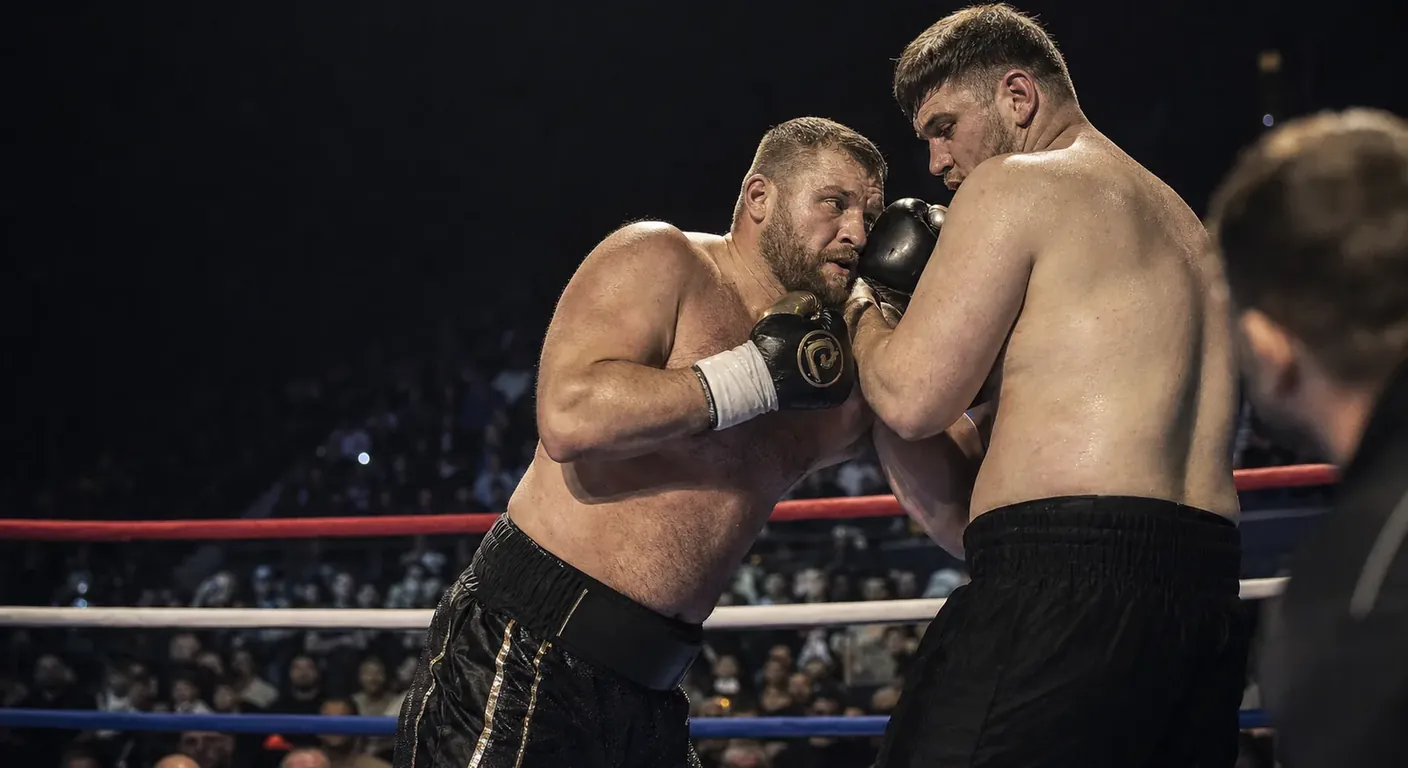
Dave Allen vs Johnny Fisher 2: Archive Lessons From The Full Fight
Matchroom uploaded the full Dave Allen vs Johnny Fisher 2 rematch on 30 June 2026, but the fight itself was not new. It took place at the Copper Box Arena on 17 May 2025.
That matters. This is not a fresh result piece, and it should not be read as one. It is an archive fight study: useful because the full footage lets you watch the small tactical choices that turned a domestic heavyweight rematch, not because the result has just happened.
Dave Allen did not beat Johnny Fisher in the rematch because he found a magic punch.
He beat him because he made small, grown-up heavyweight adjustments and trusted them for long enough. Pressure without panic. Clinching when he needed it. Better pacing. Less emotional noise. More patience in the pocket. Then, when Fisher’s shape started to loosen, Allen punished him like a seasoned professional should.
The full-fight footage from Matchroom is useful because it strips away the hot takes. You can see the fight breathe. You can see Fisher start brightly, you can hear the Copper Box crowd trying to drag him forward, and you can see Allen refusing to be rushed into the wrong kind of battle.
The headline is simple: Allen stopped Fisher in the fifth round. BBC Sport reported that Fisher suffered the first defeat of his professional career, with Allen dropping him before a final attack forced the stoppage as the towel came in. The Independent described two knockdowns in the fifth, with the second coming right at the end of the round.
But the lesson is not just “Allen hits hard”.
The lesson is that domestic heavyweight fights often swing on details that look boring until they decide everything.
The First Fight Left A Question. The Rematch Gave An Answer
Their first meeting in Saudi Arabia left nobody fully satisfied. Fisher got the split decision, but Allen had dropped him and many felt the wrong man had his hand raised. BBC Sport’s build-up noted Fisher’s own reflection that he had been “too pally” with Allen first time around, and that he wanted to “tone down the niceties” for the rematch.
That matters because a rematch is not only technical. It is psychological.
Fisher had to prove the first result was not a gift. Allen had to prove the first performance was not a one-off. The crowd had to be managed. The friendship had to be put aside. The score had to be settled in a room that felt far more alive than their Saudi meeting.
That is where the rematch became interesting. Fisher came with intent. Allen came with composure.
Only one of those held up.
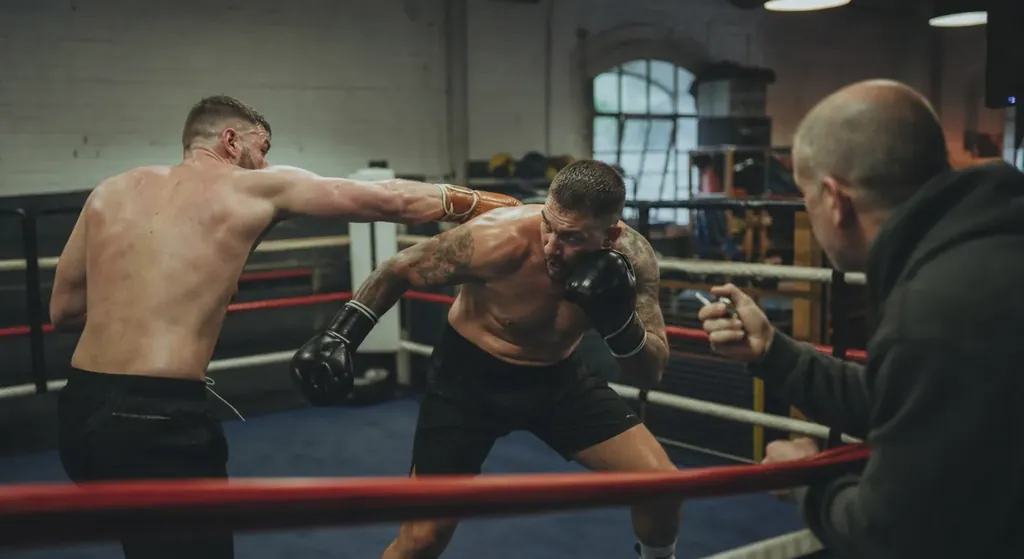
Fisher Started With The Right Idea, But The Wrong Economy
Fisher’s early work was not foolish. He jabbed, stepped in, pushed the pace and looked to make Allen feel old. That is the obvious plan against a 33-year-old heavyweight with miles on the clock. Make him work. Make him reset. Make him cover up. Use youth, crowd energy and volume to create a lead before he finds rhythm.
For a while, it worked well enough.
Yahoo Sports’ round-by-round report had Fisher controlling the early rounds with the jab, body shots and combinations, and even briefly rocking Allen in round three. That matches the feel of the footage. Fisher was active, confident and physically present.
The problem was cost.
Not every punch has the same price. A jab thrown from balance is cheap. A body attack that leaves your head on line is expensive. A burst that makes the crowd roar can still drain your legs, tighten your shoulders and pull your breathing forward.
Fisher looked like a fighter trying to win the story of the fight early. Allen looked like a fighter trying to win the fight late.
That difference became decisive.
Allen’s Pressure Was Quiet, Then Sudden
Allen’s pressure in the rematch was not a bulldozer. It was closer to a man slowly moving furniture into the right place.
He did not chase wildly. He did not empty the tank when Fisher gave him movement. He let Fisher lead, touched him back, leaned, held, reset and kept turning up. That is frustrating pressure. It does not always win the first minute of a round, but it starts asking questions of the opponent’s composure.
Can you keep throwing with the same shape?
Can you work when the other man is not going away?
Can you stay disciplined when your own fans want every exchange to become a bosh moment?
Allen’s answer was to stay heavy without being frantic. When he got close, he made Fisher feel his weight. When Fisher tried to work, Allen did not always try to win the whole exchange. Sometimes he only needed to spoil it, smother it or make Fisher restart.
For beginners in our Recreational Adults boxing classes, this is an important distinction. Pressure is not just walking forward. Good pressure takes away comfort. It makes the other boxer punch at the wrong time, breathe at the wrong time and rush the reset. If you train near Greenwich, that is the kind of practical lesson you can actually feel in a coached session rather than just admire on a screen.
Allen did that better in the rematch.

The Clinch Was Not Pretty, But It Was Important
Nobody buys a ticket to watch clinching. Coaches still watch it closely.
In heavyweight boxing, the clinch is often where a fight’s tempo is stolen. A young, explosive fighter wants clear space. He wants to jab, step in, throw combinations and hear the room respond. A seasoned fighter can break that rhythm by closing the space, tying up an arm, leaning just enough, making the referee reset them, then starting again on his own terms.
Allen used those rougher moments well.
He did not need every clinch to be dominant. He only needed them to interrupt Fisher’s flow. When Fisher worked himself close, Allen made the exchanges messier. When Fisher’s combinations began, Allen often tried to collapse the space before Fisher could finish cleanly.
That sounds minor. It is not.
A young heavyweight who is used to opponents falling over can become frustrated when a man absorbs, holds, leans and makes the fight ugly. The puncher wants confirmation. He wants the big reaction. If he does not get it, he can start forcing the finish rather than building it.
Allen forced Fisher to work in a less comfortable fight than he wanted.
Crowd Energy Helped Fisher, Then Hurt Him
The Copper Box was not neutral in feeling. BBC Sport described a raucous atmosphere at the 8,000-capacity arena, with Team Fisher turning it into “Copper Bosh”. That kind of support is real power. It can lift a fighter. It can make a jab feel like a statement and a flurry feel like a turning point.
It can also lie to you.
Crowd noise rewards visible effort. It does not always reward efficient boxing. Fisher’s support created heat, and early on that heat suited him. Every forward step felt important. Every attack carried emotion. The danger was that Fisher started fighting at the crowd’s speed rather than the fight’s speed.
Allen, by contrast, has always had a strange calm about him. Sometimes that calm has looked like underachievement. In this fight, it looked like experience. He did not let the crowd tell him he was losing control simply because Fisher was busier. He stayed in the argument until Fisher gave him the kind of opening heavyweights cannot afford to give.
That is composure.
Round Five Was Built Before Round Five
The finish came suddenly, but it was not random.
By the fifth, Fisher was still dangerous, but the exchanges had changed. Allen was no longer just surviving the early energy. He was landing heavier, cleaner, more meaningful shots. The Standard reported that Allen sent Fisher down after a clean one-two combination, while Yahoo’s live report described a right hand that badly hurt Fisher before Allen followed up with left hooks and the towel came in.
That is the kind of ending that looks brutal because it is brutal. But the mechanics behind it were simple.
Fisher’s guard was no longer as organised. His reactions were not as fresh. The distance he had managed earlier was less reliable. Allen’s shots, which had felt like warnings in the earlier rounds, started landing like consequences.
Heavyweight boxing is unforgiving because the margin is so small. A tired step. A loose right hand. A clinch missed by half a second. A reset taken with the chin still available. At lighter weights, you might get away with it. At heavyweight, you wake up on the canvas.
Fisher found that out.
Why Allen Ruled Out A Trilogy Says Something Too
After the fight, Allen did not sound like a man desperate to keep squeezing the rivalry. The Standard reported Allen saying he would not allow a trilogy because Fisher is his friend and it was “not in his best interests”.
That might sound odd in a sport built on rematches, sellable grudges and unfinished business. But it also fits what the footage shows. This did not end as a narrow debate about cards. It ended with Fisher face down after a heavy stoppage, needing a rebuild rather than another immediate answer to the same question.
There is no shame in that. Fisher is still young for a heavyweight and has always been learning in public. The issue is not heart. He has plenty. The issue is whether his pacing, defence under pressure and inside composure can catch up with the size of his support.
Allen exposed those gaps clearly.
The Real Rematch Lesson
This fight should be watched by anyone who thinks boxing is only about speed, power or who “wants it more”.
Fisher wanted it. Allen wanted it too. The difference was that Allen knew how to let the fight come to the boil without throwing himself into the fire first.
He accepted the early activity. He slowed the tempo when he could. He used the clinch. He stayed patient under crowd pressure. He made Fisher keep answering small questions until the big one arrived.
That is why this is a proper domestic heavyweight lesson. At this level, the difference between winning and being stopped is not always a huge technical gulf. Sometimes it is one man pacing himself better. One man staying calmer in the clinch. One man understanding that pressure does not have to be loud to be effective.
For more on the same idea, read our guide to ring generalship and controlling a fight and the breakdown of how to box against pressure fighters and out-boxers. They are different topics, but the message is the same: the flashy bit usually comes after the disciplined bit.
Dave Allen did not just get revenge.
He showed how small adjustments, made with nerve and patience, can turn a rematch into a completely different fight.
If you want to learn boxing with proper coaching rather than guessing from fight clips, book a free trial session at Honour and Glory Boxing Club.
H&G Team
Writer at Honour & Glory Boxing Club, a community boxing gym in Kidbrooke, South East London.
KEEP READING
Mayweather vs Pacquiao 2? Boxing Legends Eye 2026 Rematch!
Examine the possibility, hype, and potential implications of a Mayweather vs. Pacquiao rematch in 2026, focusing on the fighters' current forms and fan reactions. Is this a genuine fight or a money grab?
Tommy Fury vs Eddie Hall: Boxing Lessons
What the Manchester crossover bout showed about size, strength, distance and why proper boxing still matters.
Mayweather vs Pacquiao postponed: why rematches stall
Explain why huge-name rematches can still fall apart: timing, contracts, appetite, age, broadcast value and whether fans actually need the sequel.
Was this page helpful?
It takes one tap, and it genuinely helps.
Choose your next step
Turn this article into the right action
Some readers are ready to book. Some need the class route first. Pick the route that matches what you actually want.