Boxing and Weight Loss for Women: What Actually Happens vs

Boxing is sold to women, very often, with weight loss as the primary benefit. The marketing images show dramatic before-and-afters, calorie counts, and body transformation promises.
Here is what actually happens when women start boxing consistently, with the marketing claims and the reality compared honestly.
The Marketing Claim: Boxing Burns 600-1000 Calories Per Hour
The caloric expenditure claim is real, at the high end. High-intensity boxing training in a hard session burns significant calories. The range varies enormously based on intensity, body weight, and fitness level.
The marketing problem is that "boxing" in these claims usually means elite training at maximum intensity. A first-session beginner burns significantly fewer calories than an experienced boxer. The difference is not small.
A realistic estimate for a woman attending a one-hour recreational boxing class: 300-500 calories, depending on intensity, body weight, and fitness level. Meaningful, but not the 1000-calorie figure often advertised (source).
The Marketing Claim: You Will Lose Significant Weight Quickly
This is where the marketing is most misleading.

Weight loss requires sustained caloric deficit. One boxing session per week does not create a meaningful caloric deficit regardless of how hard the session is. Three sessions per week creates a meaningful deficit - but only if dietary intake does not increase to compensate.
Intense exercise stimulates appetite. This is not a moral failing. It is a physiological response designed to restore energy balance. Many women who start boxing and train consistently find they eat more, particularly in the early weeks, and that weight change is modest despite genuine training effort.
This is normal and expected. The body is adapting to new demands.
What Actually Happens to Body Composition
The change most women who train boxing consistently actually experience is not weight loss so much as body composition change.
Muscle mass increases. Fat mass decreases. Total weight may change little but the proportion of muscle to fat changes significantly.
This produces a body that looks and feels different from the same weight before training - more defined, stronger, better postured. The clothes fit differently. The physical feeling is different.
Women who weigh themselves and see little change become discouraged. Women who measure or photograph themselves and see the composition change understand what is happening.
The scales are the wrong tool for evaluating boxing progress.
The Realistic Expectation
With three sessions of boxing per week and no compensatory increase in caloric intake:
At six weeks: measurable cardiovascular improvement, early signs of muscle definition, minor body composition changes.
At three months: noticeable muscle definition, clearer body composition change, significant cardiovascular improvement, clothes fitting differently.
At six months: meaningful body composition transformation, strong cardiovascular fitness, visible athletic physique.
Weight change: variable. Many women lose 2-5kg over six months. Some lose more. Some lose little but transform their composition significantly (source).
Why Training Anyway Is the Right Approach
The honest framing: boxing is excellent for health and fitness, enjoyable, community-based, and produces real body composition benefits over time. It is not a weight loss programme in the rapid-transformation sense that marketing claims.
Women who start boxing for weight loss and stay for everything else - for how it feels, for the community, for the skills - are the ones who get results. Women who start for weight loss, see modest early change, and give up have missed the timeline and the mechanism.
Consistent training over months and years produces cumulative benefits. The compounding effect of fitness improvements, skill development, and community is what makes boxing special.
If you want to find out what boxing does for your body specifically, the trial session is the starting point. Come in, experience it, and decide based on how it actually feels rather than what the marketing promises.
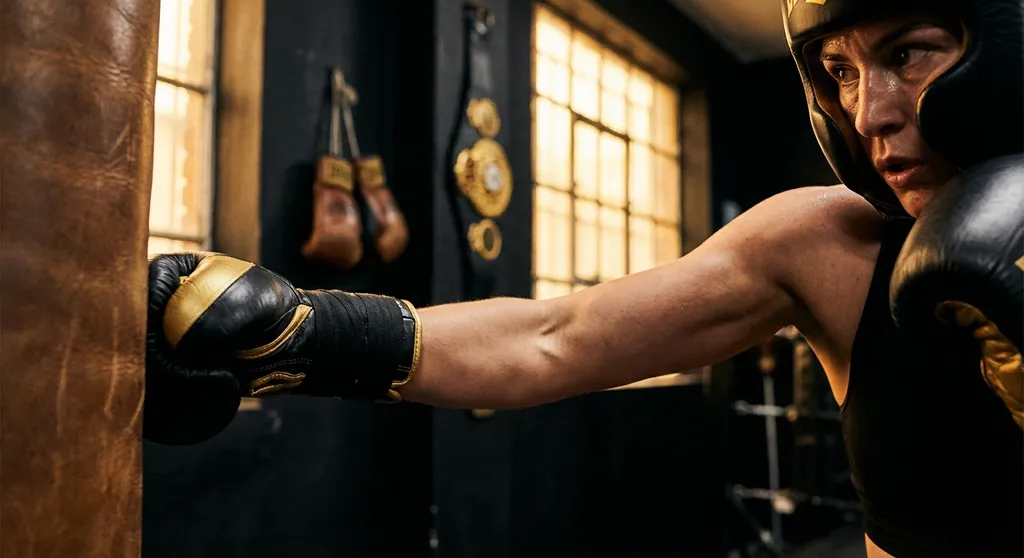
The Womens Boxing class is where most members begin.
Claim a free trial session at Honour and Glory Boxing Club.
Fitness and weight-loss route
If you want the main H&G route for this goal, start with boxing for weight loss. If you want a broader class-based workout, use fitness boxing. If you want paid one-to-one accountability, compare boxing PT for weight loss.
Women's boxing route
If you are comparing women-only classes, beginner support, fitness, stress relief and private coaching, start with the women's boxing hub. It explains which route fits your goal before you book.
H&G Team
Writer at Honour & Glory Boxing Club, a community boxing gym in Kidbrooke, South East London.
KEEP READING

Why Women-Only Boxing Classes Work
Women-only boxing classes are not segregation - they are a specific solution to specific barriers that mixed classes do not remove. Here is the psychology behind why they work.

Boxing for Women Who Have Never Exercised: Where to Start
Starting boxing with no exercise history is not an obstacle. It is actually a common starting point. Here is exactly what to expect and how to approach the first sessions.
Boxing for Women Over 40: Why It Fits So Well
For women over 40, boxing offers strength, confidence, conditioning and a serious mental reset. Here is why the sport fits this life stage.
Was this page helpful?
It takes one tap, and it genuinely helps.
Choose your next step
Turn this article into the right action
Some readers are ready to book. Some need the class route first. Pick the route that matches what you actually want.