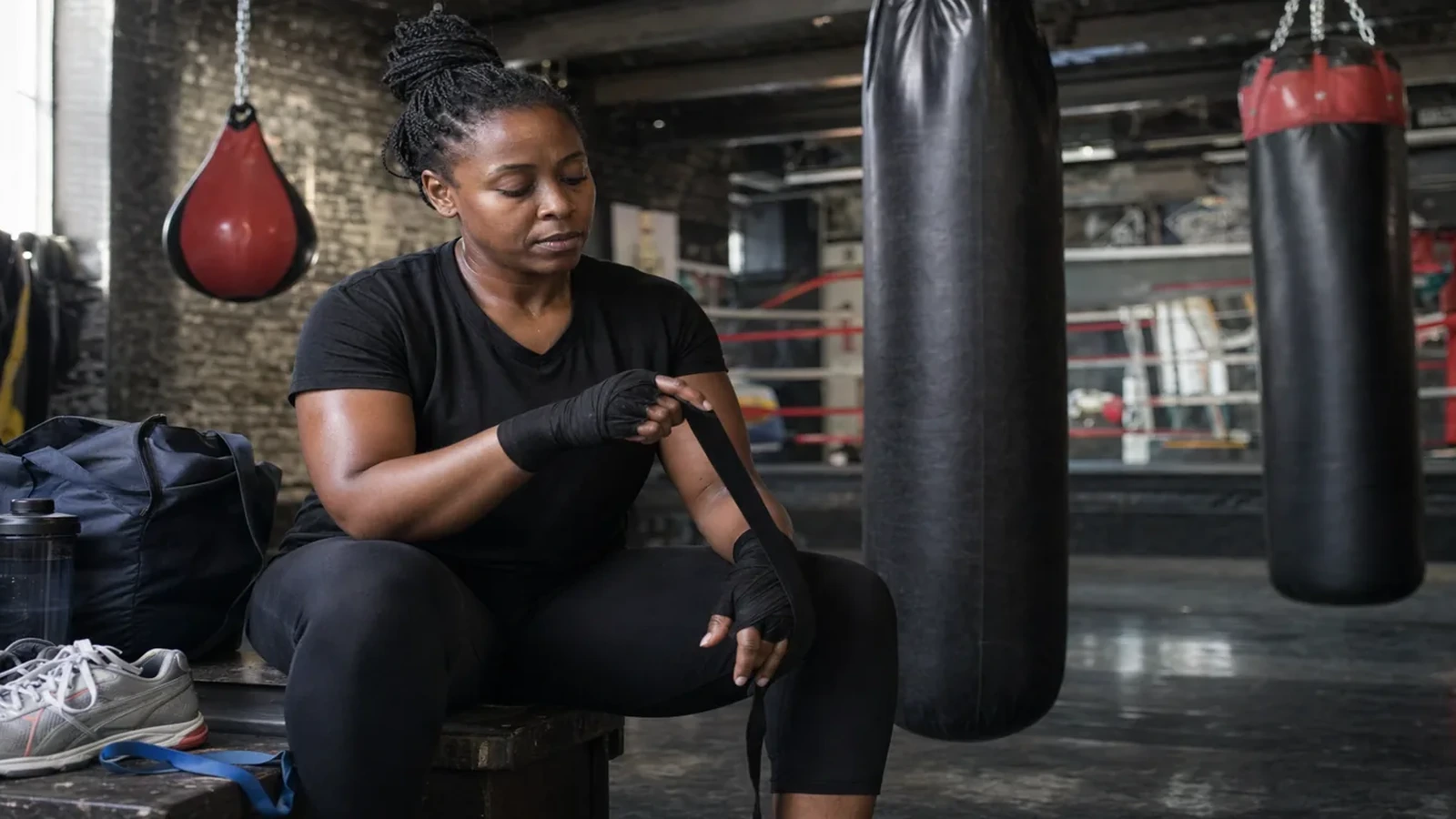
Best exercise for care workers? Boxing is hard to beat because it deals with the two sides of the job: the physical load and the emotional load.
Care work is not just being on your feet. It can mean helping people move, bending awkwardly, rushing between visits, staying calm with difficult behaviour, working late shifts and carrying other people's stress home with you. A quiet gym session on a treadmill may help, but it often misses the point.
Care workers need training that builds fitness, posture, confidence and a bit of mental release. Boxing does that without asking you to become a fighter.
Care work is harder on the body than people think
Care work has a physical rhythm that outsiders often underestimate.
You might spend hours standing, walking, bending, reaching, cleaning, supporting someone out of a chair or moving around tight rooms where nothing is set up like a gym. The work can be repetitive, but not in a neat way. It is stop-start, awkward and often done while tired.
The Health and Safety Executive treats musculoskeletal disorders as one of the major causes of work-related ill health in Britain, and its guidance on musculoskeletal disorders at work puts manual handling and awkward movement right in the danger zone. NHS Employers also notes that human health and social work has a high burden of work-related musculoskeletal problems (NHS Employers musculoskeletal health guidance).
Boxing helps because it trains the body as a whole system. You learn to use your feet, hips, trunk, shoulders and hands together, rather than loading the same tired bits over and over.
That does not make boxing a fix for bad manual handling or poor staffing. It just gives your body better tools.
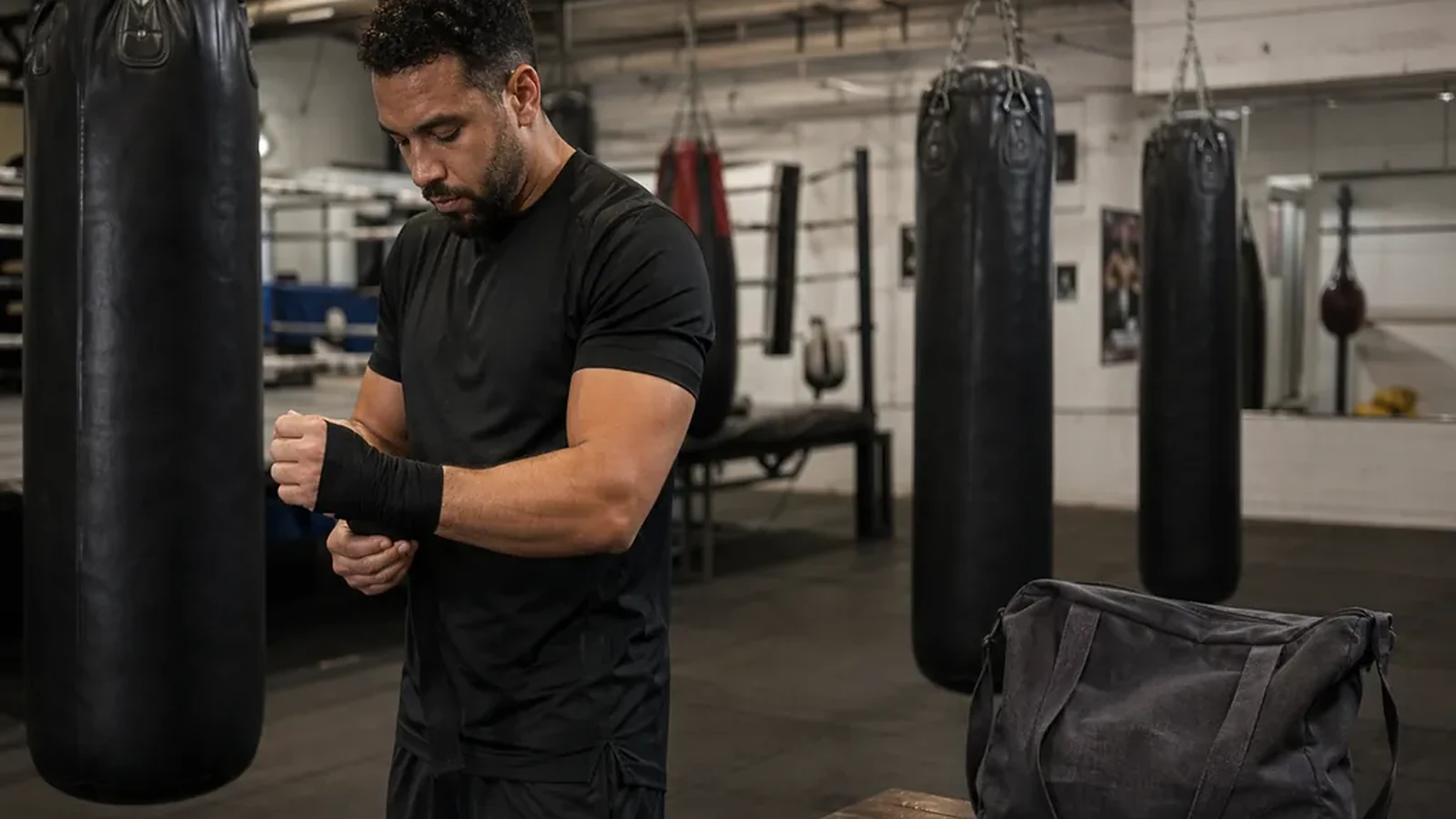
Boxing gives stress somewhere to go
Care work can be emotionally heavy.
Some days you are patient, kind and steady. Other days you are tired before the shift even starts. You may deal with grief, confusion, anger, loneliness, family pressure, medication routines and the constant need to keep your own feelings under control.
The social care workforce has long-standing pressure around pay, vacancies, sickness absence and burnout. A UK study on working conditions and wellbeing in social care discusses stress and mental health as major issues across the sector. The Health and Social Care Committee has also examined burnout and resilience in NHS and social care staff.
Boxing gives stress a clean outlet. You hit pads, move your feet, breathe hard and leave the room lighter than when you walked in. It is not therapy. It is not a substitute for proper support. But for many people, it is a much better reset than sitting in the car scrolling after a shift.
If that is the main reason you are looking, boxing for stress relief is worth reading next.
It builds confidence without turning training into ego
Care workers often need calm confidence, not loud confidence.
You need to hold your ground with difficult conversations, keep your voice steady and stay useful when someone else is upset. You also need enough physical confidence to feel safe moving through long shifts, public transport, late finishes and home visits.
Boxing is useful here because it teaches composure under pressure. You learn to keep your hands up, breathe, move, listen and reset when you get something wrong. That is a small thing in the gym, but it changes how you carry yourself outside it.
The point is not to become aggressive. A good recreational boxing class should do the opposite. It should make you calmer because you are less panicked by effort, noise and pressure.
That is why boxing often works for people who do caring, teaching, nursing or people-facing work. The training gives you a line between the job and the rest of your life.
Care workers need training that respects tiredness
A lot of fitness advice is written for people with tidy lives.
Care workers do not always have that. You may work split shifts, nights, weekends or unpaid overtime. You may finish a shift mentally cooked. You may have your own family responsibilities waiting at home.
That is why the best exercise is not the most complicated one. It is the one you can actually repeat.
Boxing works because the session is built for you. You do not need to arrive with a perfect plan. You warm up, learn technique, hit bags, work pads, do conditioning and leave. The coach controls the pace. You just have to turn up.
The NHS advises adults to aim for around 150 minutes of moderate activity a week or 75 minutes of vigorous activity, plus strengthening activity on two days (NHS adult activity guidance). Two or three boxing sessions can make that easier to reach without adding another boring task to the week.
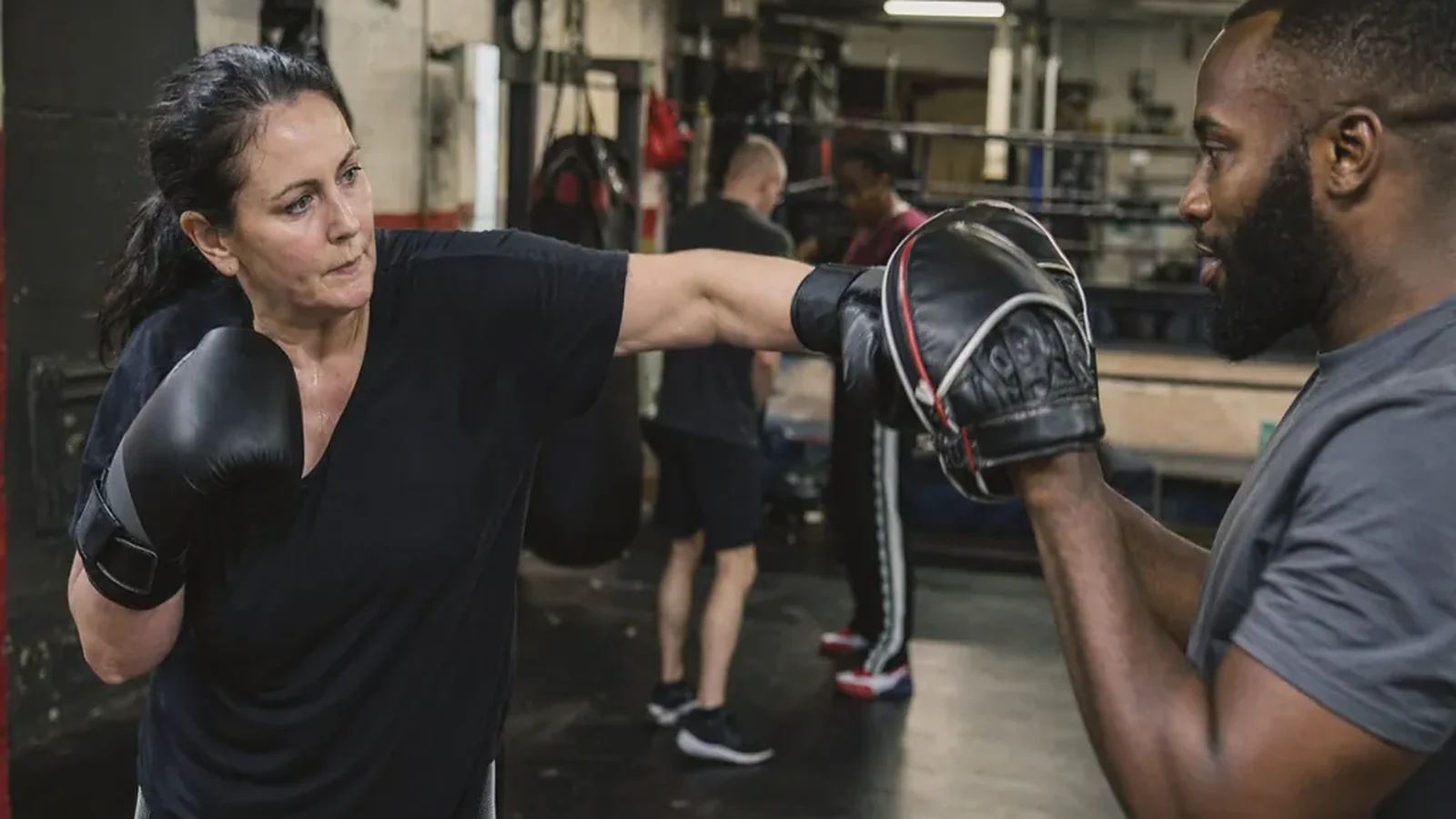
It is better than a normal gym for many care workers
The gym can work if you already know what you are doing. For many care workers, it becomes another place where you are left alone to figure things out.
After a long shift, that is not ideal. You do not want to design a workout, wait for machines, guess technique or feel watched by people filming themselves in mirrors.
Boxing gives you a job to do from the first minute. Move here. Jab there. Breathe. Reset. Try again. The session keeps your attention because there is always a skill to improve.
That skill element matters. It means you are not only exercising to burn calories. You are getting better at something. For people whose work can feel thankless, that can be a big reason to keep coming back.
If you are weighing it against a regular gym membership, boxing vs gym: why people switch explains the difference clearly.
What kind of boxing should care workers start with?
Start with coached recreational boxing.
You do not need sparring on day one. You do not need to be fit first. You do not need to arrive with expensive kit or a fighting mindset. The right first step is a class where beginners can learn footwork, punching mechanics, bag work, pad work and basic conditioning in a controlled setting.
Our Adult Recreational boxing classes are built for that. They suit adults who want proper boxing training without pretending they are already boxers.
If you work or live around Greenwich, Kidbrooke, Blackheath, Woolwich or nearby parts of south east London, the club is close enough to fit around awkward shifts and late finishes.
You will still need sensible recovery. If your back, shoulder or knee is already injured, get that checked properly. A good coach can adapt training, but boxing should not be used to ignore pain from work.
The honest answer
Boxing is not magic.
It will not fix poor rotas, low staffing, difficult clients or the emotional weight of care work. It will not replace good manual handling training, rest or proper workplace support.
But as exercise, it fits the job better than most options. It builds usable fitness, gives stress somewhere to go, improves confidence and creates a regular slot in the week that is about you for once.
For care workers, that is not a luxury. It is maintenance.

How to start if you do this job
For most care workers, the best first step is a normal coached group class, not a complicated programme. Start with Adult Recreational boxing or the broader adult beginner boxing guide if you want to understand what happens first.
If your rota, clients or working hours make set classes hard, use boxing personal training or private boxing lessons as the paid route. The free trial is for scheduled group classes.
Book a free trial session at Honour and Glory Boxing Club.
More job-specific boxing guides
If this article fits your work pattern, the full boxing for workers guide links the rest of the job-specific series, including desk workers, shift workers, trades, carers, drivers, teachers and busy professionals.
H&G Team
Writer at Honour & Glory Boxing Club, a community boxing gym in Kidbrooke, South East London.
KEEP READING
Boxing Fitness for Hospitality Workers: When It Fits
Boxing can be a useful training option for hospitality workers when you want coached movement, conditioning and a clear break from work. It is not the only answer, but it can fit well.
Boxing Fitness for Shift Workers: When It Fits
Boxing can be a useful training option for shift workers when you want coached movement, conditioning and a clear break from work. It is not the only answer, but it can fit well.

How to Clean Boxing Gloves (And Make Them Last)
Most beginners ignore this until the smell becomes unbearable. Here is how to clean boxing gloves properly and extend their lifespan significantly.
Was this page helpful?
It takes one tap, and it genuinely helps.
Choose your next step
Turn this article into the right action
Some readers are ready to book. Some need the class route first. Pick the route that matches what you actually want.