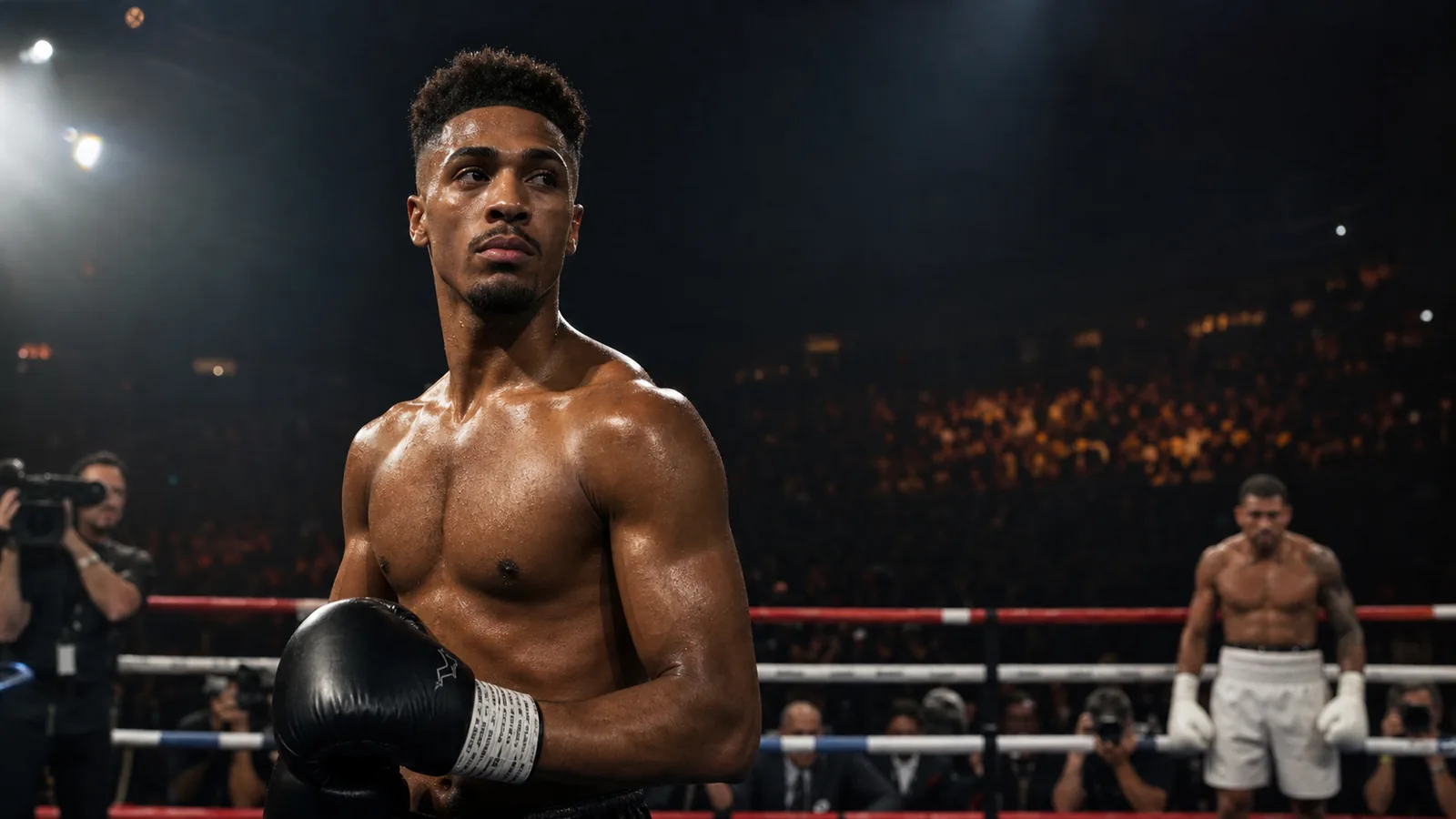
Ben Whittaker in America: What Changes Abroad?
Ben Whittaker going to America is not just a change of airport lounge.
For a British fighter with his style, his personality and his appetite for theatre, the United States is a different test altogether. Not because American boxing is automatically better. That is lazy talk. The test is sharper than that. It is about rhythm, tolerance, expectation, judging, pressure and how quickly a crowd decides whether your act is genius or irritation.
Whittaker has already shown that he can command attention at home. The walkouts, the shoulder rolls, the feints, the showmanship, the little moments where he looks as if he is boxing with the lights on and the music in his head. Against Braian Suarez, he did not need long to make the point. Sky Sports reported Whittaker stopping Suarez in the first round, then announcing the next step: America, on a card featuring Jaron Ennis and Xander Zayas.
That matters. It is not celebrity noise. It is matchmaking with a message.
The act travels, but the room changes
The Matchroom video, Ben Whittaker is Coming to America, is useful because it strips away some of the social media fog. You see the fighter in the gym, in transit, around the business of boxing. It is not a fight, but it shows the machine around the fight. That machine changes when a British boxer lands in the US.
At home, Whittaker is already a known product. British boxing crowds understand the amateur pedigree. They know the Tokyo silver medal. They know the domestic story. They have seen the viral clips and the Liam Cameron controversy. Even when they dislike the flash, they know what they are watching.
In America, the relationship starts colder. The US boxing crowd is used to showmen, but it is not easily impressed by performance without danger. A shoulder roll in Wolverhampton can read as swagger. The same move in front of a US crowd can read as a challenge: fine, now prove it against someone who is here to spoil the show.
That is the first change. The British crowd often judges Whittaker against the idea of what he might become. The American crowd judges him much faster against what is happening right now.
The Suarez finish bought him attention, not proof
The Suarez result was the right kind of result for a US launch. Quick, violent, clean enough to cut through the usual debate. ESPN’s fight information for Whittaker vs Braian Suarez and Wales Online’s viewing guide both treated it as an event with mainstream interest, not just a prospect’s routine outing. That is the Whittaker effect. He makes people look.
But a first round knockout does not answer the most interesting questions about him. It tells us he can hurt a man who gives him the opening. It does not tell us how he handles a hostile rhythm, a rough clinch, a cut, a referee who lets the inside work go, or a judge who prefers pressure to polish.
That is why the US move is interesting. Whittaker does not need more proof that he is talented. Nobody serious disputes that. He needs proof that his style has layers when the opponent refuses to be part of the highlight reel.
The American platform can expose that, for better or worse.
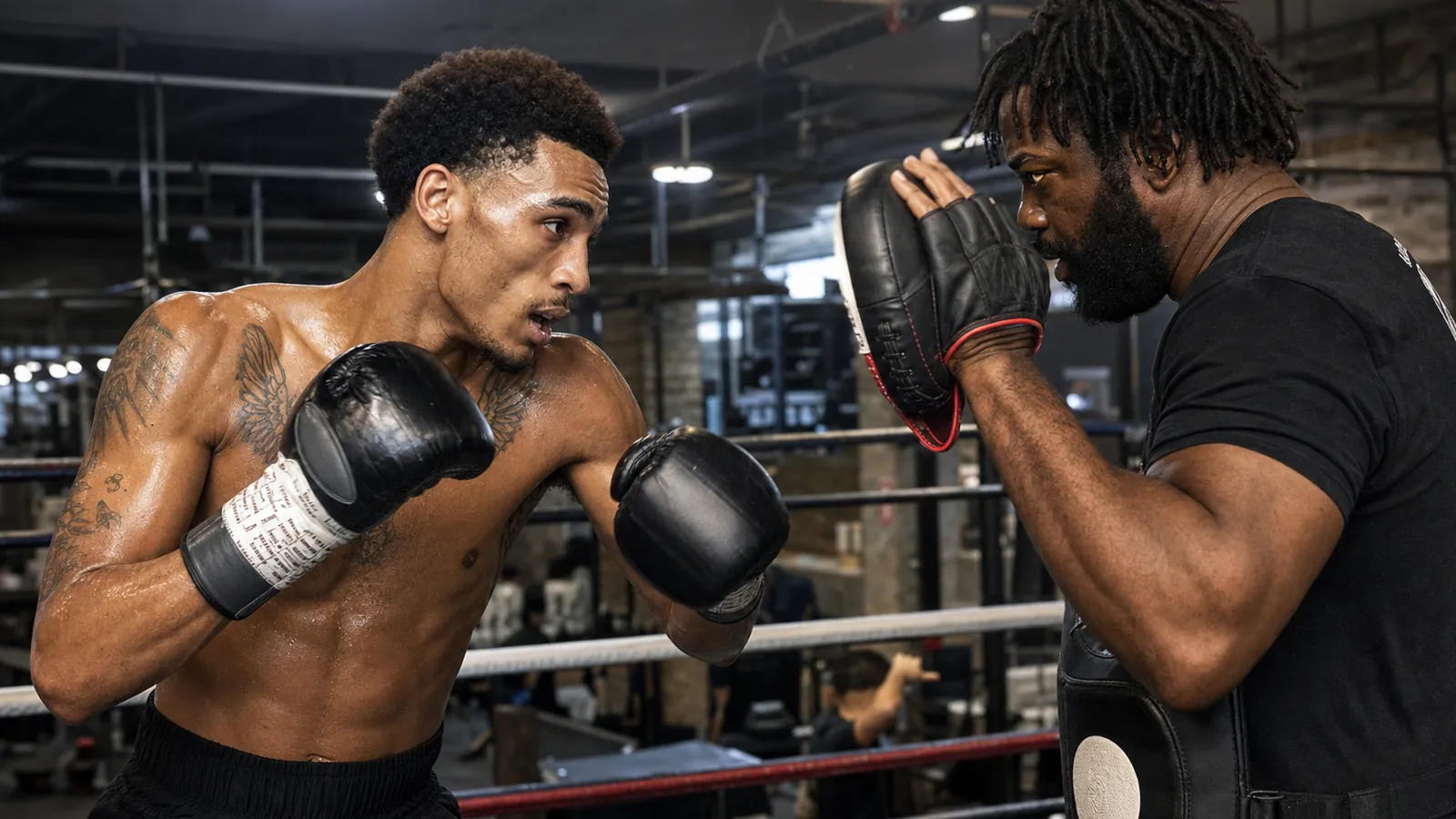
Judging abroad is not a conspiracy, but it is a different conversation
British fans can be too quick to cry robbery. American fans can be too quick to reward the fighter who looks like he is forcing the issue. Both things can be true.
Whittaker’s style creates judging questions because he often wins moments by making the opponent look silly. That is valuable. Making a fighter miss is boxing. Controlling distance is boxing. Showing that you are relaxed under fire is boxing. But judges still need scoring substance: clean punches, round structure, ring generalship, defensive responsibility, and clear work over three minutes.
In Britain, Whittaker’s reputation can frame the viewing. People expect the touches, the tricks, the switches. In America, especially lower on a major card, he may not get that same interpretive generosity. A judge who does not care about the theatre may ask a simpler question: who landed the more meaningful shots and who made the fight?
That does not mean Whittaker must become boring. It means he must make the scoring obvious. The show is fine. The scoreboard still has to be boringly clear.
The opponent pressure will feel different
Whittaker’s US debut being attached to the Jaron Ennis and Xander Zayas show is clever placement. Ennis brings world class menace. Zayas brings Puerto Rican support and US market energy. Whittaker gets to appear beside fighters whose careers are already framed in American terms.
That also raises the pressure. On a card like that, nobody gets much patience. A prospect has to sell himself quickly. A British boxer cannot assume the room will wait for a technical education. If Whittaker takes two rounds to play, pose and read the opponent, some viewers will enjoy it. Others will ask why he is not stepping on the gas.
The opponent knows this too. Fighting Whittaker in Britain can mean becoming part of his travelling circus. Fighting him in America can give an opponent a clear role: make him uncomfortable, rough him up, turn the crowd, force him to box in plain sentences.
That is the kind of pressure Whittaker needs. The light heavyweight division is not short of hard men. The Ring’s report on Whittaker returning on the Smith-Morrell undercard placed him near serious company. David Morrell is not a decorative name in this weight region. David Benavidez is not either. Even if Whittaker is not being thrown at that level tomorrow, proximity matters. It tells the audience what road he wants.
The Liam Cameron shadow still matters
Whittaker’s career did not become more interesting because everything went smoothly. It became more interesting because the Liam Cameron fight complicated the story.
Their first fight ended in the strange injury and technical decision mess that left nobody fully satisfied. The rematch coverage, including Birmingham Live’s guide to Whittaker vs Liam Cameron, showed how much attention that domestic storyline carried. It was not just about whether Whittaker could dance. It was about whether he could handle a fighter who would not admire him.
That is why the American move cannot be sold only as glamour. It has to be sold as examination. The question is not whether Whittaker can get attention in the US. Of course he can. The question is whether he can turn attention into authority.
Boxing News asked what comes next for Ben Whittaker, and the same piece was also carried by Yardbarker, which tells its own story. Whittaker has moved beyond the domestic prospect lane. People are watching the decisions around him now: trainer, platform, opponent, timing, risk.
That is when hype becomes a tax. Every fight has to pay it. We made a similar point in Zak Chelli vs Ben Whittaker sparring talk explained: gym talk is only useful when it teaches you what to watch once the bell rings.

The media rhythm is less forgiving
British boxing media can be harsh, but it is also small enough for a fighter’s story to be told with continuity. We remember the amateur background. We remember the interviews. We remember the previous card, the injury, the rematch talk, the home crowd response.
US boxing media is more fragmented. One week you are a curiosity. The next week you are a clip. Then you are a debate. Then someone has moved on to the next puncher, the next prospect, the next upset.
That suits Whittaker if he performs. His style is made for short attention spans because his best moments are visual. A feint, a slip, a counter, a bit of disdain. But it can also work against him. If a performance is flat, the same machine that spreads the highlight can spread the criticism.
Look at the range of public conversation around him. There are basic record and scheduling pages like Box.Live’s Ben Whittaker profile and broadcaster updates such as DAZN’s next fight guide. Then there are fan threads picking at everything from his Matchroom signing to his amateur past: Matchroom’s announcement discussed on Reddit, Whittaker’s fight with Imam Khataev in 2020, and discussion of his trainer change.
Those conversations are not all equal in value, and they should not drive matchmaking. But they show the reality of modern boxing. The fighter is not only judged on fight night. He is judged in the weeks between, often by people who have already decided whether they want him humbled or crowned.
The real question: can he impose without performing?
Here is the stance: America is good for Whittaker, but only if it forces him to become more severe.
He should not bin the showmanship. That would be cowardly and unnecessary. Boxing needs personality. A sport that complains about dull promotion should not then punish every fighter who brings colour. Whittaker’s looseness is part of his boxing, not a costume placed on top of it.
But the best showmen have a hard centre. Naseem Hamed had outrageous balance, power and timing. Roy Jones Jr had freakish speed and reflexes, but also years of elite schooling. Floyd Mayweather’s persona was built on control. The entertainment worked because the boxing held up under stress.
Whittaker’s US move should be judged by that standard. Can he make the tricks serve the win rather than decorate it? Can he win ugly if needed? Can he slow a pressure fighter with a jab to the chest, a clinch at the right second, a body shot when the crowd wants a flourish? Can he give judges three clean reasons to score every round his way?
If the answer is yes, America will not change Ben Whittaker. It will sharpen him.
What young boxers should watch
For young boxers at Honour and Glory in Kidbrooke, especially those coming through our Recreational Adults boxing classes, Whittaker is a useful study precisely because he divides opinion. If you are local to Kidbrooke, this is exactly the sort of fight-study conversation that belongs in a proper boxing gym rather than a comment thread.
Do not just watch the flashy bits. Watch when he sets his feet. Watch how he exits after making someone miss. Watch whether he finishes an exchange or admires his own work. Watch how he reacts when an opponent steps through the first layer of movement.
That is the lesson. Style is allowed. Personality is allowed. Enjoying yourself is allowed. But abroad, under new lights, against opponents with no interest in your story, the boxing has to be clear.
Whittaker in America is not about whether the crowd laughs, cheers or boos. It is about whether the act still works when the room changes.
If you want to train with the same kind of attention to timing, distance and discipline, book a free trial session at Honour and Glory Boxing Club.
H&G Team
Writer at Honour & Glory Boxing Club, a community boxing gym in Kidbrooke, South East London.
KEEP READING
Johnny Fisher leaving Matchroom: what a promotional move changes
Use Fisher’s candid interview to explain what changing promoters can alter for a developing heavyweight: matchmaking, activity, broadcast reach and career control.
British Boxing History: From Bare-Knuckle Fights to Olympic
British boxing did not begin with the Marquess of Queensberry. It began much earlier and stranger. Here is the full arc from prize fighting to Olympic champions.
Boxing Over 50: What Changes and What Still Works
Boxing over 50 needs sensible pacing, recovery and coaching, but the fundamentals still work. Here is what changes and what remains possible.
Was this page helpful?
It takes one tap, and it genuinely helps.
Choose your next step
Turn this article into the right action
Some readers are ready to book. Some need the class route first. Pick the route that matches what you actually want.