Boxing vs Reformer Pilates
Reformer Pilates has become one of the trendiest workouts in London, with studios charging £25-£40 per class. Boxing has been here for over a century and costs a fraction of that. Both build core strength. Both change your body. But they do it in fundamentally different ways.
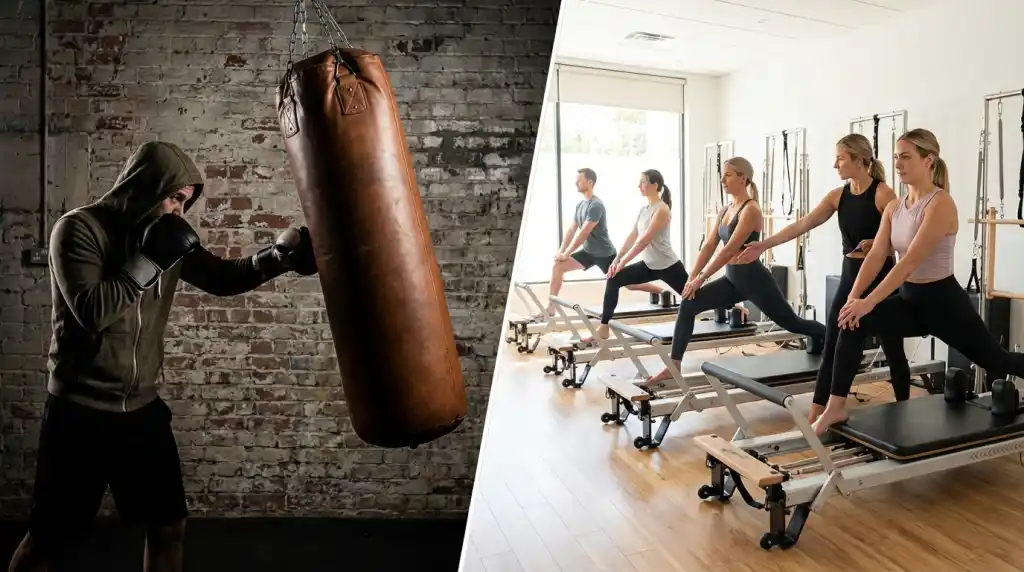
The Core Difference
Boxing
High-intensity, full-body workout that teaches a real combat skill. Builds explosive core strength through rotational power.
- • calorie burn varies by body size, intensity and session format
- • Rotational core power
- • Cardiovascular and muscular endurance
- • Self-defence skill
- • £5-£10 per session
Reformer Pilates
Low-intensity, controlled resistance work on a spring-loaded machine. Builds stabilising core strength through slow, precise movements.
- • 250-400 calories per hour
- • Stabilising core strength
- • Flexibility and posture
- • Injury rehabilitation
- • £25-£40 per class in London
Boxing builds the core that generates power. Reformer Pilates builds the core that maintains stability. Both are valuable. But if you had to choose one, it depends on what you need your body to do.
Calorie Burn: Not Even Close
According to BST Lagree's analysis of reformer calorie data, a 50-minute Reformer Pilates class burns approximately 250-400 calories depending on body weight and intensity. Boxing can be higher intensity, but the actual figure varies: calorie burn varies by body size, intensity and session format for the same person.
This is not a criticism of Pilates. It is a fundamentally different type of exercise. Reformer Pilates is controlled, deliberate, and low-impact. Boxing is explosive, intense, and high-output. If calorie burn is your primary goal, boxing wins decisively. If rehabilitation or flexibility is the priority, Reformer Pilates has the edge.
For the full calorie breakdown, see How Many Calories Does Boxing Burn?
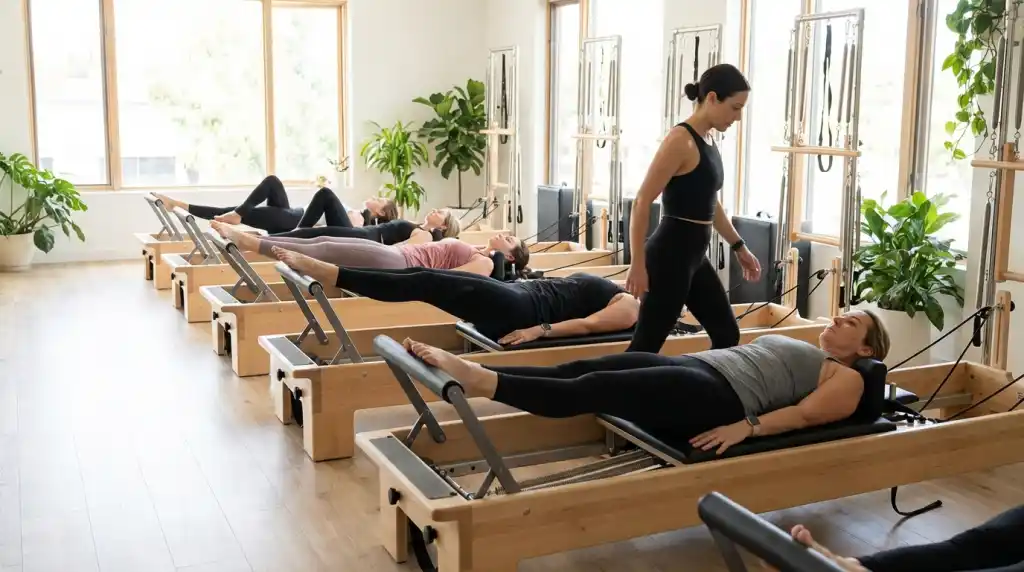
Core Strength: Two Types
Both boxing and Reformer Pilates are exceptional for core development, but they build different types of core strength. As our Boxing vs Pilates comparison details, boxing develops a strong, powerful core through explosive rotation, while Pilates builds a stable, controlled core through sustained engagement.
Reformer Pilates uses the spring-loaded carriage to create resistance through the full range of motion, particularly targeting the deep stabilising muscles (transverse abdominis, pelvic floor, multifidus). This is excellent for people recovering from injuries, addressing posture problems, or building foundational core stability.
Boxing core work is dynamic and powerful. Every punch involves hip rotation and core engagement. Over a 90-minute session, you perform thousands of rotational movements under explosive load. The result is a functional core that can generate and absorb force, not just hold a plank position.

Cost: The London Reality
Reformer Pilates at London prices three times a week would cost £3,900-£6,240 per year. Boxing at Honour and Glory at the same frequency costs approximately £1,440. That is a difference of £2,460-£4,800 annually. The Reformer machines require expensive studio space and equipment, which is why the classes cost what they do. Boxing needs a bag, some pads, and a coach.
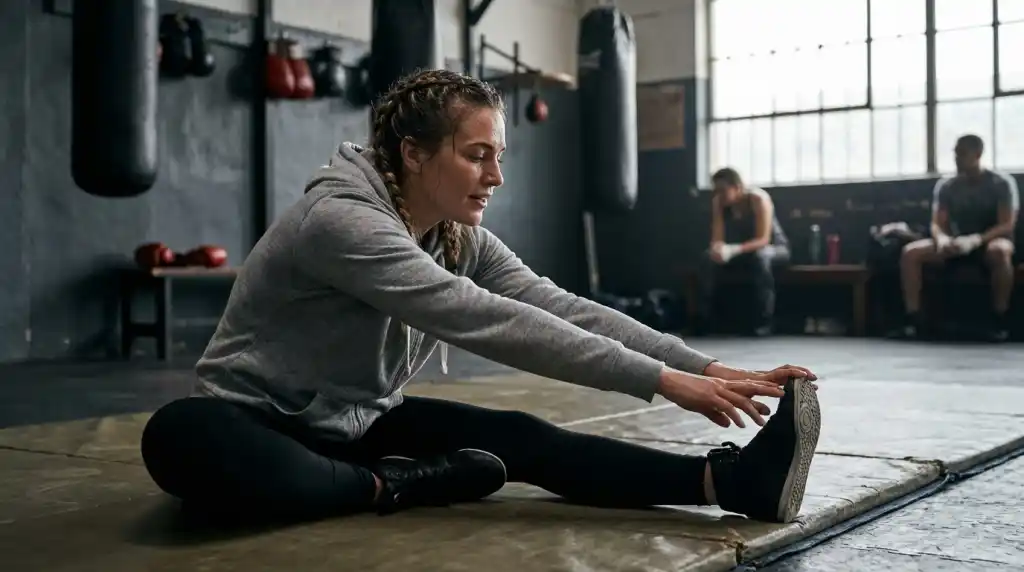
Injury Rehabilitation and Prevention
This is where Reformer Pilates genuinely excels. The spring-loaded carriage provides controlled, adjustable resistance through a full range of motion. Physiotherapists regularly prescribe Reformer Pilates for rehabilitation from back injuries, post-surgical recovery, and chronic pain conditions. If you are recovering from an injury, Reformer Pilates is likely the better starting point.
Boxing is not typically prescribed for rehabilitation, but it is excellent for injury prevention. The core strength, balance, and coordination developed through boxing training reduce the risk of falls and musculoskeletal injuries. The shoulder stability from maintaining a guard position and the ankle stability from footwork drills both build protective strength around vulnerable joints.
The practical advice: if you are recovering from an injury, start with Reformer Pilates to rebuild. Once your physiotherapist clears you for higher-intensity activity, add boxing for the cardiovascular, skill, and community benefits that Pilates alone cannot provide.
The Demographic Divide
There is a noticeable demographic split between these two activities, and it is worth being honest about it. Reformer Pilates in London tends to attract women aged 25-45 with above-average disposable income. The studios are typically in affluent areas, the classes are priced accordingly, and the marketing reflects this.
Boxing gyms, particularly community clubs like Honour and Glory, draw from a much wider demographic. Men and women, all ages, all backgrounds, all income levels. A session costs £5-£10, not £35. There are no Instagram-ready interiors, but there are real coaches, real training, and a genuine community that does not care what you earn or where you live.
Neither demographic pattern is inherently better. But if accessibility matters to you, if you want to train alongside a genuine cross-section of your community rather than a narrow slice of it, boxing is the more inclusive option by a significant margin.
Stress Relief and Mental Health
Reformer Pilates reduces stress through controlled breathing, mindful movement, and the calming effect of slow, deliberate exercise. It activates the parasympathetic nervous system and is genuinely effective for anxiety reduction and mental calm.
Boxing reduces stress through an entirely different mechanism: cathartic physical release. Hitting a heavy bag when frustrated is one of the most immediately effective stress management tools available. The forced focus of combination work prevents rumination. The high-intensity endorphin release produces a powerful mood shift. See our Best Workout for Stress Relief comparison for the full analysis.
The ideal scenario, if budget allows, is both: boxing for release and energy, Pilates for restoration and calm. They complement each other perfectly.
Was this page helpful?
It takes one tap, and it genuinely helps.
The Verdict
Choose boxing if:
- • Calorie burn and fat loss are priorities
- • You want to learn a genuine skill
- • You prefer high-intensity training
- • Budget matters (£5-£10 vs £25-£40)
- • You want stress relief through physical release
Choose Reformer Pilates if:
- • You are rehabilitating an injury
- • Flexibility is a primary goal
- • You prefer low-impact, controlled exercise
- • Deep stabilising core work is the priority
- • You enjoy the boutique studio experience
Our honest take: The ideal combination is both. Boxing for intensity, calorie burn, and skill. Reformer Pilates for flexibility, stability, and recovery. But if you can only afford one, boxing gives you more: a skill, a community, self-defence, and a complete workout, at a quarter of the price. Want to see for yourself? Book a free session and find out.
See also: Boxing vs Pilates | Boxing vs Yoga | How Many Calories Does Boxing Burn?
The best way to decide? Come and try it.
Your first session is free. No contract, no commitment.
Book Your Free Boxing Session
Your first session is free. No contract, no joining fee, no catches.
📍 122 Broad Walk, SE3 8ND · Pay as you go from £5