Boxing vs Fencing
Two Olympic combat sports built on footwork, timing, and reading your opponent. One uses fists, the other uses blades. Both reward discipline and quick thinking, but the training experience, cost, and accessibility could not be more different.

The Core Difference
Boxing
A striking art using hands only. Full-body conditioning with emphasis on power, speed, and defensive movement.
- • Four punches: jab, cross, hook, uppercut
- • Head movement and defensive slipping
- • Heavy bag, pad work, skipping
- • Optional sparring at all levels
- • Sessions £5-£10 at community clubs
Fencing
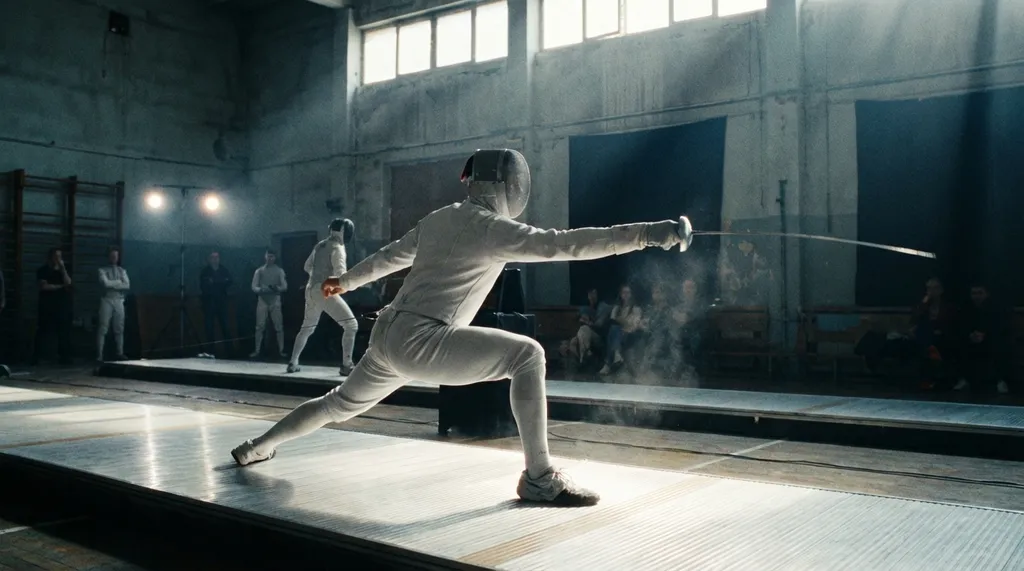
A weapon-based combat sport using foil, épée, or sabre. Precision and tactical thinking over raw power.
- • Three weapon disciplines with different rules
- • Linear footwork: advance, retreat, lunge
- • Right of way and priority scoring
- • Electronic scoring equipment
- • Sessions £10-£20 at London clubs
Boxing and fencing share more DNA than most people realise. Both are distance-management sports where footwork determines everything. Both require you to read an opponent, identify openings, and strike before they react. The difference is range: boxing operates at arm's length, fencing at blade's length.
Fencing tends to attract a more academic crowd and has strong university connections. Boxing draws from a broader demographic. As one r/Fencing user noted about costs: "It is not cheap once you get into it. A full set of personal kit can run £300-£500."
Fitness and Conditioning
Boxing is the superior conditioning workout by a significant margin. A typical boxing session lasts 60 to 90 minutes and maintains high intensity throughout: skipping, shadow boxing, bag rounds, pad work, and bodyweight circuits. Calorie burn sits between 500 and 800 per hour depending on intensity.
Fencing sessions involve more drill work and bouting (sparring). The cardiovascular demand comes in short, explosive bursts rather than sustained output. A fencing bout lasts three minutes at most, with rest between. The legs get a serious workout from constant lunging and retreating, but upper body development is limited compared to boxing.
Where fencing excels is reaction speed. Electronic scoring measures hits in fractions of a second, and the sport demands extraordinary hand-eye coordination. Boxing develops similar reflexes through defensive work and counter-punching, but fencing is arguably the sharper test of pure reaction time.

Footwork: The Common Thread
If there is one area where boxing and fencing genuinely overlap, it is footwork. Both sports treat the feet as the foundation of everything. In boxing, you learn to slide, pivot, and angle off. In fencing, you drill advances, retreats, and the explosive lunge until they become automatic.
The difference is dimensionality. Fencing footwork is almost entirely linear, forward and backward along a narrow piste. Boxing footwork is multi-directional: lateral movement, pivots, and angles are all critical. A boxer who can only move forward and backward will not last long.
Skills do transfer between the two. Former fencers who take up boxing often have excellent distance awareness and timing. They understand the concept of "making the opponent miss" instinctively. At Honour and Glory, we have had several members with fencing backgrounds who picked up boxing footwork unusually quickly.
Cost and Access in London
London prices as of 2026. Sources: London Fencing Club, community boxing club averages.
Fencing is significantly more expensive to get into. Clubs typically charge £10 to £20 per session and usually require you to purchase your own equipment once you progress past the beginner stage. A full set of personal fencing kit (mask, jacket, plastron, glove, weapon) costs £300 to £500 according to the London Fencing Club. Many clubs also charge annual membership fees on top of session costs.
Boxing requires wraps (£5) and gloves (£25-£50). That is it. Community clubs like Honour and Glory charge £5 to £10 per session with no contracts and no joining fees. The barrier to entry is about a tenth of what fencing demands.
London has fewer fencing clubs than boxing gyms. Most are concentrated in central and west London, while community boxing clubs exist in nearly every borough. If you live in southeast London, finding a fencing club within easy travel distance can be a challenge.
Who Each Sport Suits
Boxing suits you if: you want a complete fitness workout alongside a combat skill. If you prefer training that builds strength, endurance, and coordination simultaneously. If cost matters and you want something accessible without a large equipment investment. If you value a diverse, local community atmosphere.
Fencing suits you if: you are drawn to tactical, cerebral combat. If precision and strategy matter more to you than raw conditioning. If you have a competitive streak and enjoy tournament structures. If the history and tradition of European swordplay appeal to you and the higher cost is not a barrier.

Was this page helpful?
It takes one tap, and it genuinely helps.
The Verdict
Our honest take: Both are legitimate combat sports with Olympic heritage. Fencing is the more cerebral pursuit; boxing is the more physically demanding one. For pure fitness, stress relief, and self-defence value, boxing wins clearly. For tactical depth and precision, fencing has its own appeal.
The practical difference for most people comes down to access and cost. Boxing clubs are everywhere, sessions are cheap, and you need almost no equipment. Fencing is harder to find, more expensive, and requires specialist gear. If both interest you, try boxing first and see if the footwork and timing scratch that competitive itch. Want to see for yourself? Book a free session and find out.
See also: Boxing vs Karate | Boxing vs Martial Arts | Boxing vs Taekwondo | Boxing vs Aikido | Boxing vs Capoeira
The best way to decide? Come and try it.
Your first session is free. No contract, no commitment.
Book Your Free Boxing Session
Your first session is free. No contract, no joining fee, no catches.
📍 122 Broad Walk, SE3 8ND · Pay as you go from £5