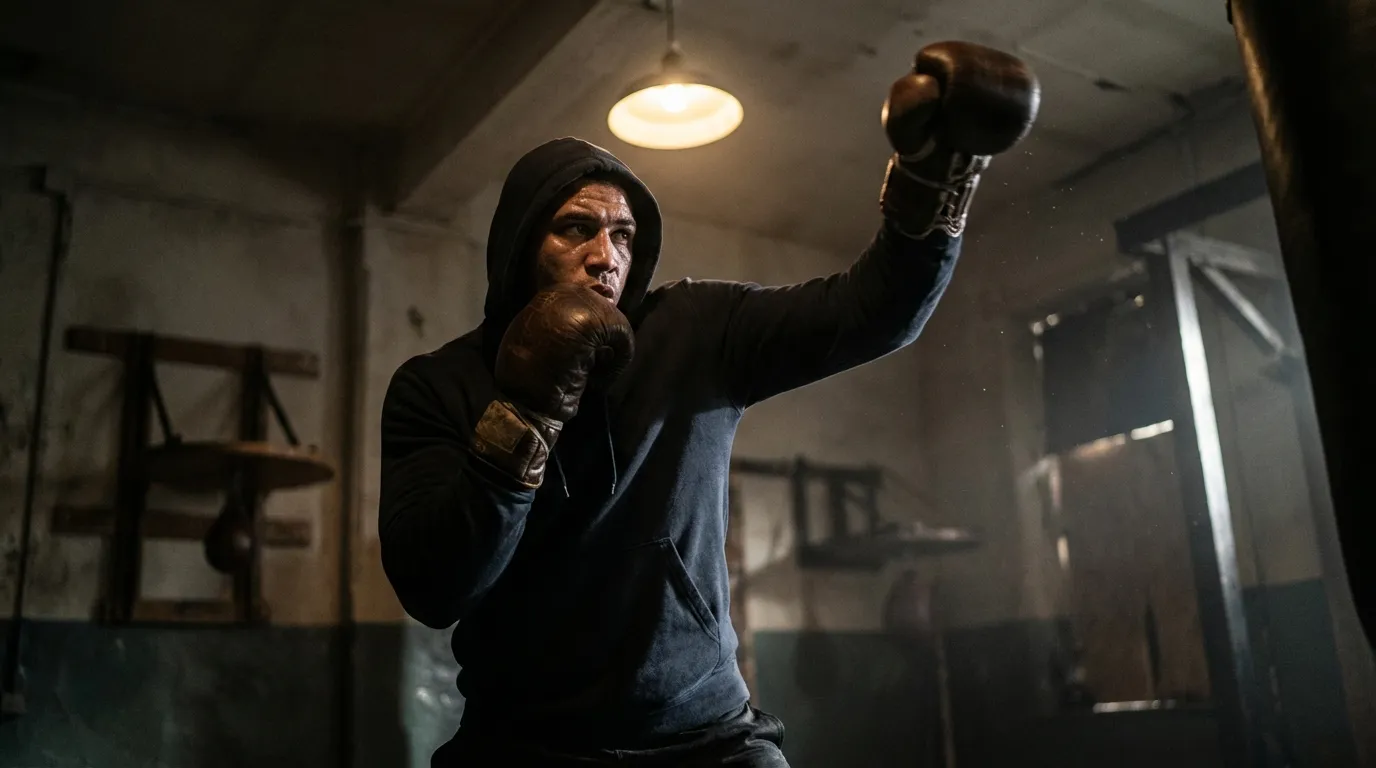
Most people who start boxing learn the jab first. Then the cross. Maybe a hook. The uppercut gets treated as some kind of advanced move you only need once you are already decent - something to worry about later.
That is backwards. The uppercut is one of the most natural punches in boxing once you understand how it works. Learning how to throw an uppercut early means you actually use it, rather than bolting it on awkwardly after a year of training. Here is how to do it properly.
What makes the uppercut different
The uppercut travels upward rather than straight out. You are not reaching across; you are driving up from below, targeting the chin. That upward angle is what makes it useful - it can slip under a high guard, catch someone leaning forward, or connect at close range when there is no room for a straight punch.
In the standard punch numbering system, the lead uppercut is 5, the rear uppercut is 6. Neither gets thrown on its own. They are connectors - punches that slot into combinations and create problems that are hard to defend.
That is the other thing worth understanding: the uppercut is a close-range punch. If you are trying to throw it at arm's length, you are doing it wrong. Get comfortable with inside range first, then the punch will start to make sense.
How to throw the lead uppercut (5)
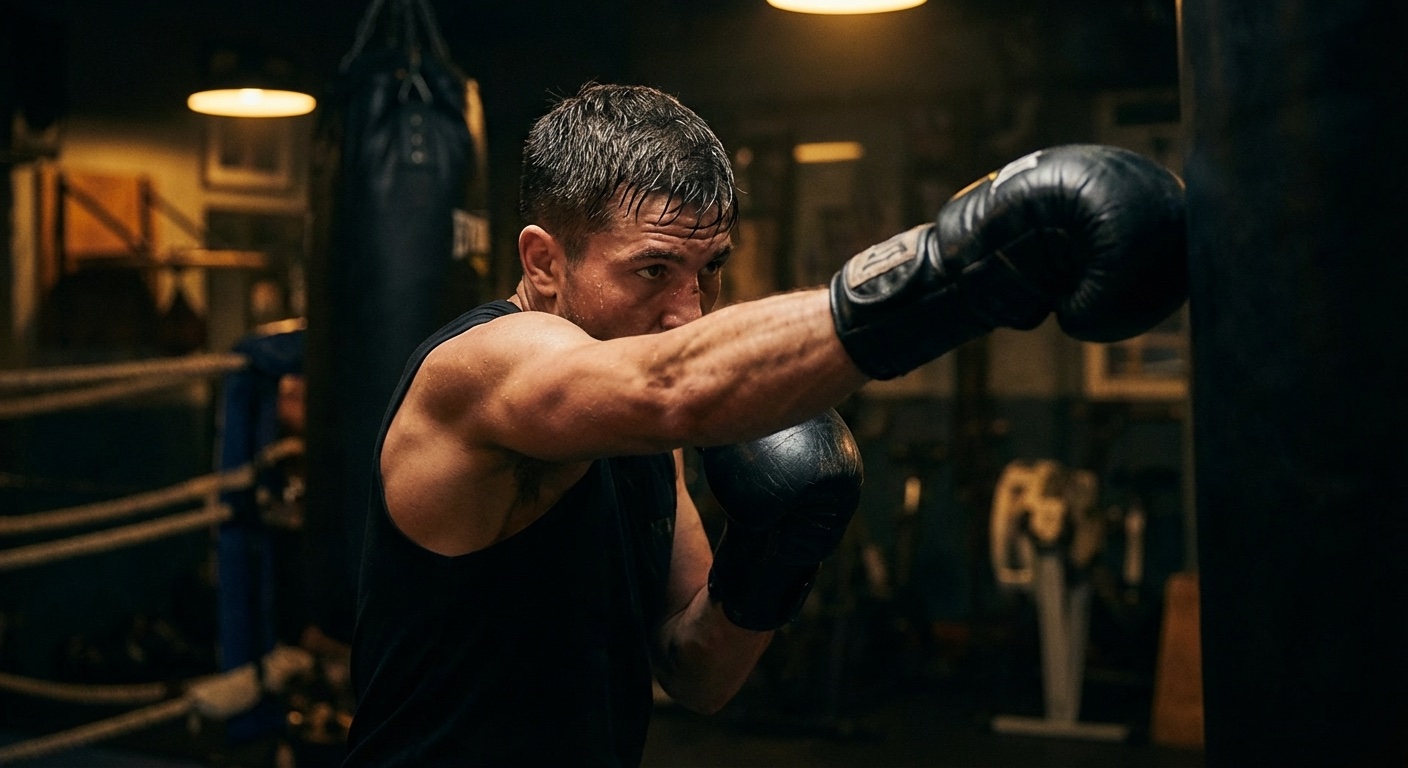
The lead uppercut comes from your front hand. It is the shorter, tighter of the two.
Start in your guard. Drop your lead shoulder slightly - not your whole hand dropping down to your waist, just a small rotation in your upper body. Your elbow stays close to your side. From there, drive your fist upward, rotating your hips as you go. Your palm faces you at the point of contact. Keep your other hand up throughout.
The most common error is dropping the hand too low to "load up." It feels like you are generating power. What you are actually doing is telegraphing the punch and leaving your face exposed. The real power in an uppercut comes from your legs and hips - not from how far you lower your arm before firing it. Research published in Frontiers in Sports and Active Living on the biomechanics of boxing punches confirmed that elite boxers use hip rotation significantly more than lower-level boxers when throwing hooks and uppercuts, with most power generated from the waist and legs rather than the arm itself.
If you are practising in front of a mirror, the motion should look compact and fast, not like a wind-up.
How to throw the rear uppercut (6)
The rear uppercut is your power hand, so it can carry more force than the lead version. The principles are the same; the mechanics are slightly different.
Push off your back foot. Drop your rear shoulder and rotate your hip forward and upward as the punch fires. Your elbow stays tucked in, and the fist comes up the centreline - not looping out to the side.
What trips most people up is the rotation. They fire the arm without the hip coming through, and the punch lands weak regardless of how much effort went into it. Your torso needs to turn into this shot, the same way it does on a cross. The difference is that the trajectory goes up rather than out.
Practice the motion slowly. Your shoulder, hip, and back foot should all be working in sequence, not just your arm.
Common mistakes
Dropping the hand too low. Already covered, but it is the main one. You see it at every pad session with newer boxers.
Looping the punch. If your elbow drifts outward as you throw, the uppercut turns into a wide swing. It telegraphs badly, hits less hard, and often misses even at close range.
Forgetting the guard hand. When you are concentrating on getting the uppercut right, the hand that is not punching tends to drop. Keep it up. You are already in close range when you throw this punch, which means you are close enough to get hit back.
Throwing it without a setup. An uppercut on a heavy bag, on its own, is fine for drilling the mechanics. In sparring, it needs to come from somewhere. A jab walks your opponent into position; a body shot brings their hands down; a hook creates the angle. The uppercut rarely lands as the first punch.
When to use it
Inside range. This is the obvious one. When you and your opponent are close and a straight punch does not have room to travel, the uppercut does.
Against a high guard. If someone is holding both gloves up tight in front of their face, a well-timed uppercut can drive up through the gap and catch the chin. It is harder to cover against than a straight shot.
When they are leaning forward. An opponent who is bowing their head or hunching over to cover up is giving you the angle. An uppercut from below is very difficult to defend from that position.
After a body shot. Classic combination: hook to the body (4), which pulls the elbows down, then a rear uppercut (6) up to the chin. We drill this regularly at H&G in Kidbrooke. It feels awkward the first few hundred times, then one session it just clicks.
Jab into a rear uppercut (1-6) is another combination worth learning. The jab occupies attention and creates a brief opening at the chin for the 6 to find.
Mike Tyson built much of his career on the uppercut - using head movement to close distance, then working inside with hooks and short uppercuts. George Foreman knocked Joe Frazier down six times in their 1973 fight, with uppercuts doing much of the damage. The PMC study on boxing biomechanics notes that elite boxers average approximately 21 punches per minute over three rounds, with hooks and uppercuts requiring distinct whole-body rotational mechanics that differentiate experienced from novice boxers. It is a punch that, at any level, creates serious problems when used well.
Building it into your training
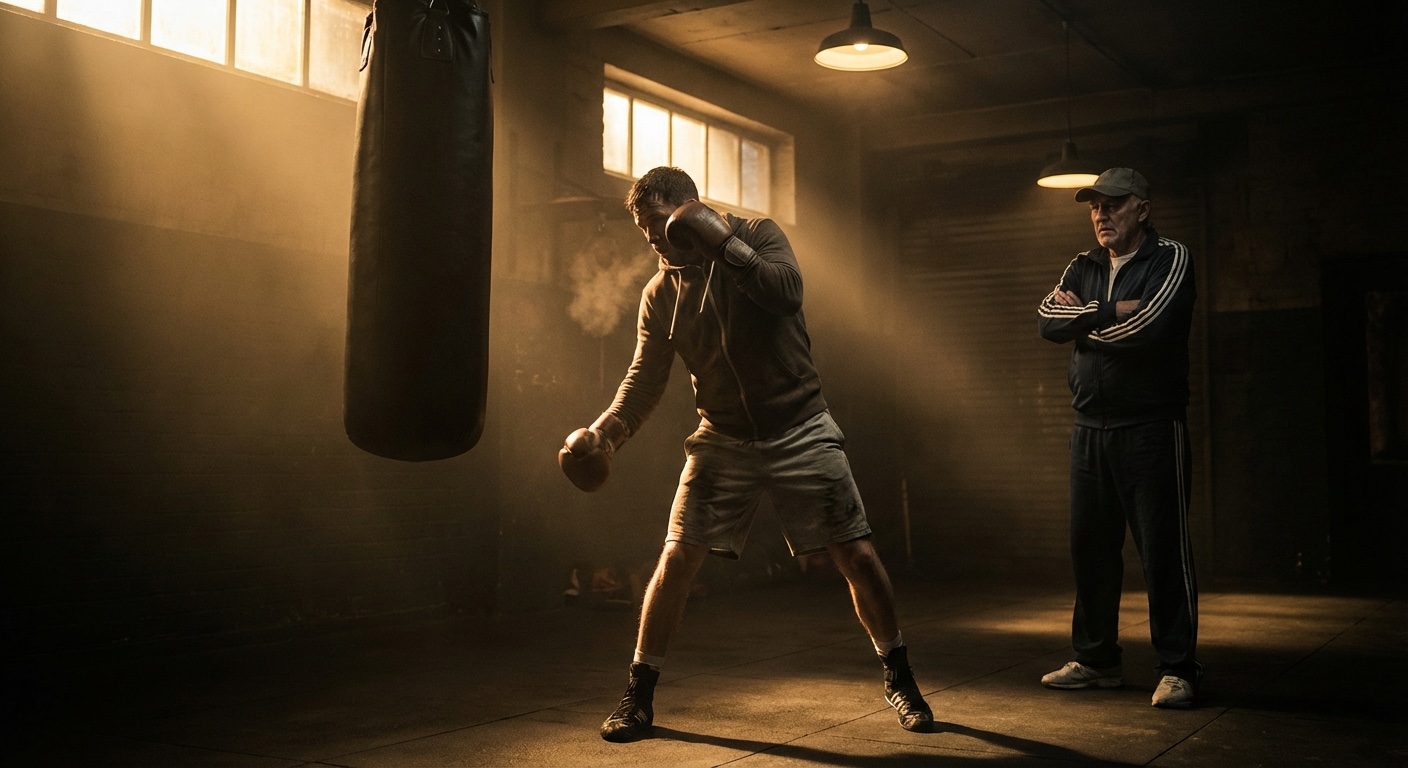
Start on the heavy bag at close range. Get into the habit of stepping inside to close distance before throwing - the uppercut needs that position. If you are standing at arm's length and trying to fire it, you are not in the right range.
Shadow box it slowly. Watch the guard hand. Watch the hip rotation. Build the mechanics at low speed before adding pace.
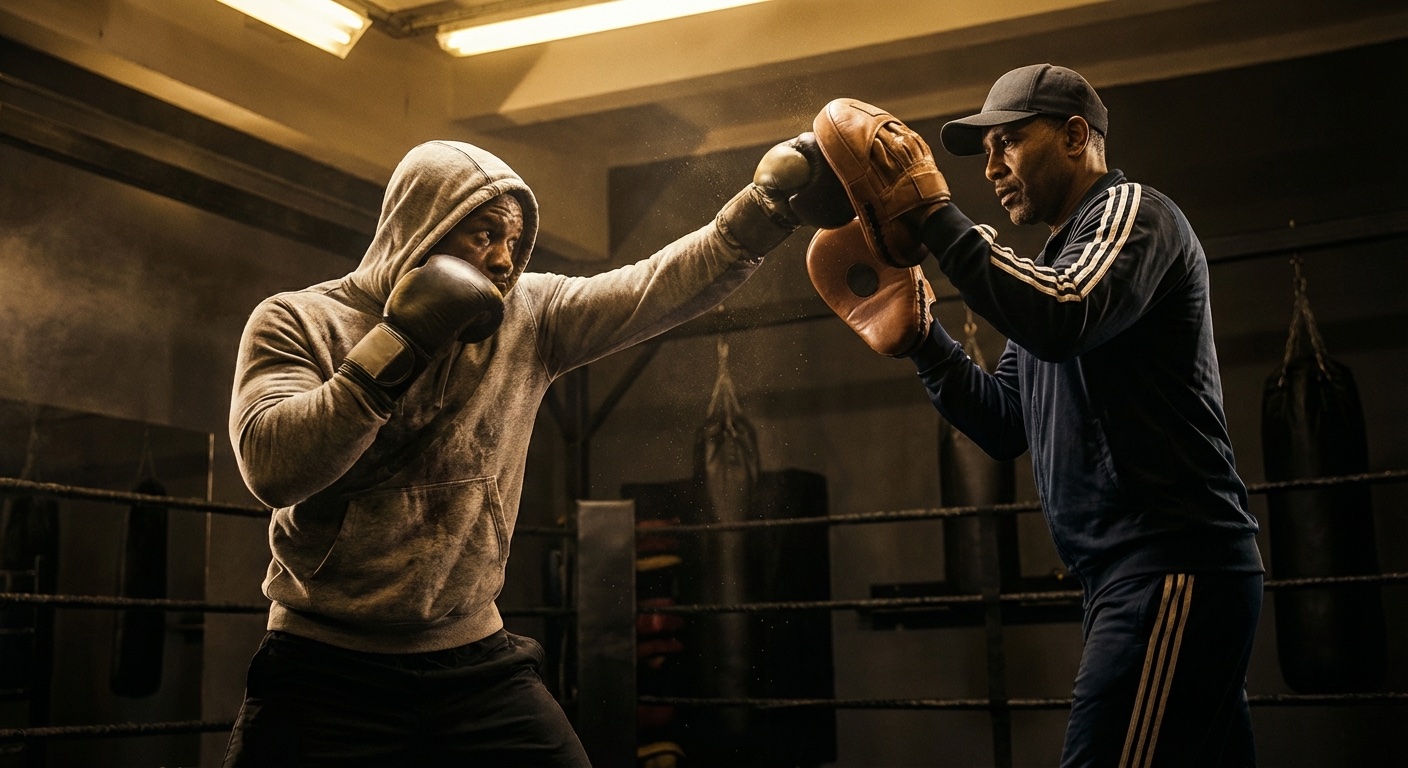
On the pads, ask your coach to set up the 1-6, 1-2-6, and the body-head combination (4-6). Good pad holders will give you the angle to drive up into, which helps you feel the difference between an uppercut that lands with weight behind it and one that just brushes past.
Be patient with it. The uppercut is one of those punches that feels unnatural for a while. The mechanics are different enough from a jab or cross that your brain takes time to internalise them. For most people it takes a few months of consistent work before it stops requiring conscious thought.
When to add it in your training journey
If you have been training a few months and have a working jab, cross and basic defence, the uppercut is the natural next step. We tend to introduce it at H&G once beginners are comfortable with straight punches and can hold a guard without thinking about it.
Once you have the 5 and 6 in your toolkit, the combinations open up considerably. You are no longer just throwing long shots - you can work inside, disrupt the guard, and throw from angles that straight punches cannot reach.
That range, and that variety, is what makes the uppercut worth spending time on.
H&G Team
Writer at Honour & Glory Boxing Club, a community boxing gym in Kidbrooke, South East London.
Was this page helpful?
It takes one tap, and it genuinely helps.
Choose your next step
Turn this article into the right action
Some readers are ready to book. Some need the class route first. Pick the route that matches what you actually want.