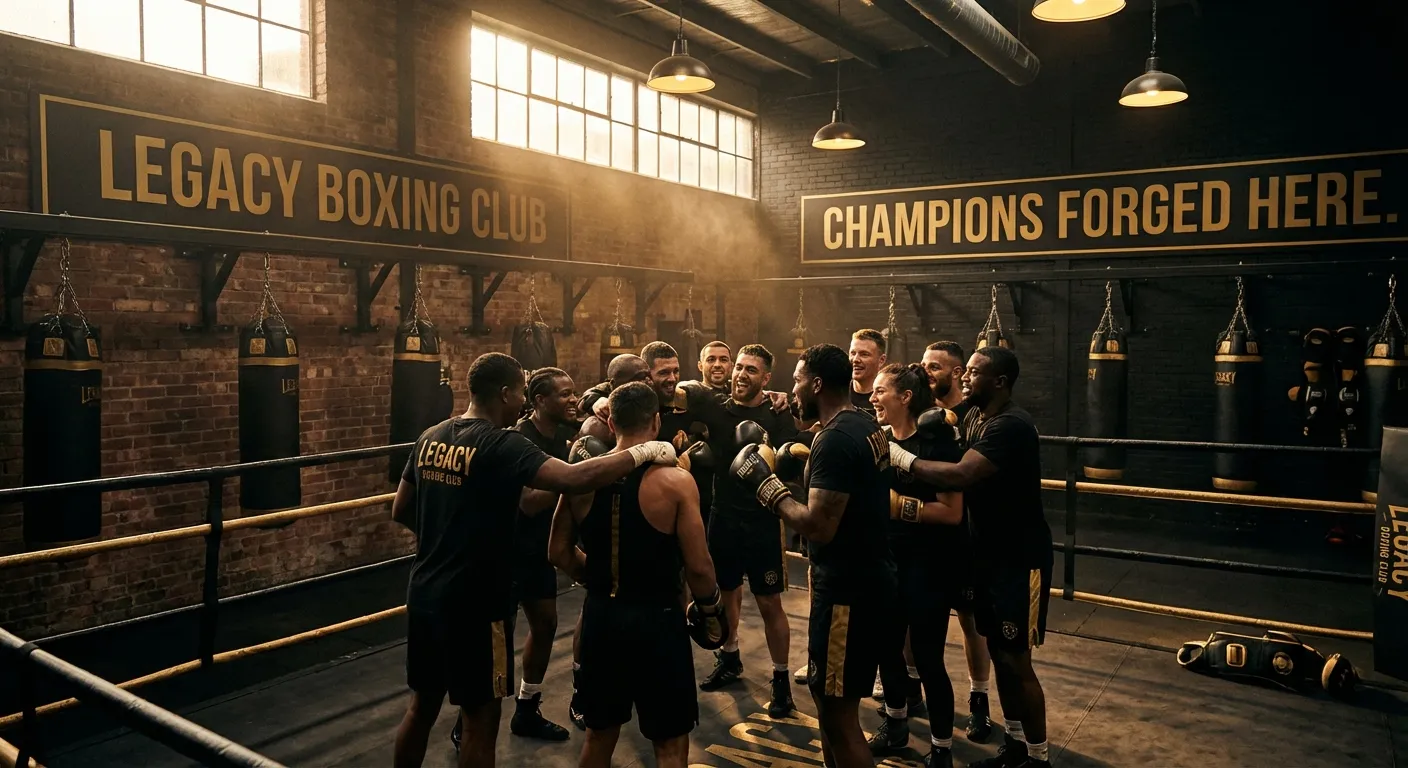
England Boxing documents the community infrastructure of 1,086+ affiliated clubs. Research on combat sports and social capital confirms boxing clubs generate stronger social bonds than most other sport environments.
People describe the community at boxing clubs with unusual consistency. Different clubs, different cities, different demographics, the same description: it is like a family, everybody looks out for each other, you cannot explain it until you are part of it.
This is not marketing language. It is a genuine characteristic of boxing clubs that has been noted by sociologists, journalists, and anyone who spends time at a working community gym.
Understanding what creates this community requires understanding what boxing training actually demands.
The Shared Experience of Physical Difficulty
Boxing training is really hard. Not performatively hard, not trendy-hard. Authentically demanding in a way that reveals character.
People who train together through difficulty form bonds that do not form through easier shared experiences. The first few weeks at a boxing gym are humbling for almost everyone. The technique does not come naturally. The fitness is tested. The expectations of the gym are clear and not softened.
People who come through that together recognise each other. The bond is specific to having been made vulnerable together and survived together.
The Equality of Effort
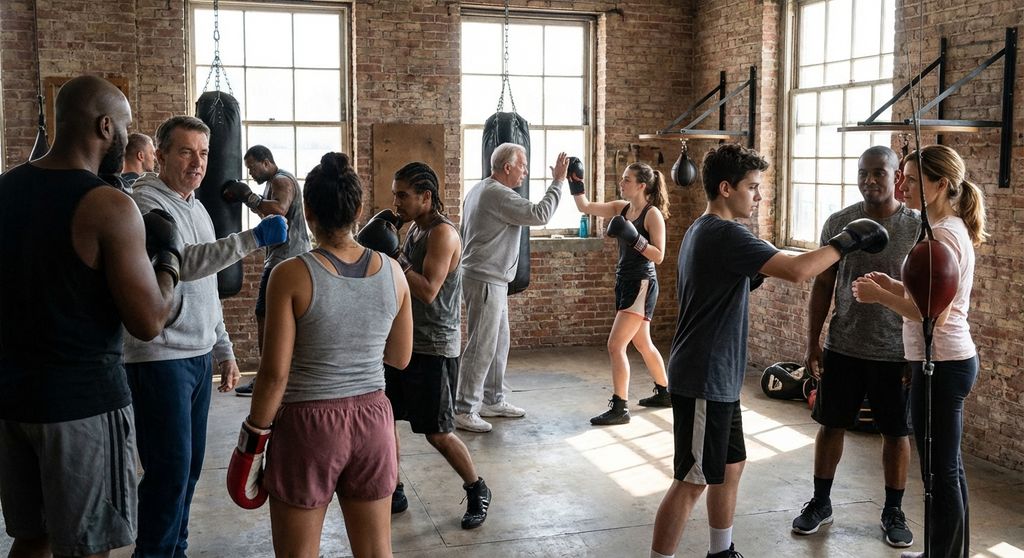
The boxing gym does not care about your job, your income, your social background, or your education. These things are really irrelevant inside the gym in a way that they are rarely irrelevant anywhere else.
What matters is whether you work hard and whether you treat other people with respect. These are the only currencies.
The result is a social environment where a city banker and a delivery driver train together and really see each other as equals - not as an exercise in social mixing but because the gym renders other status markers invisible.
The Non-Transactional Relationships
Gym relationships develop through parallel experience rather than through mutual obligation. You train together, you see each other regularly, you develop familiarity and then genuine regard. But nobody needs anything from you.
The friendships that form in boxing gyms are characterised by their lack of transactionality. The coach does not need you to succeed. The other members do not need you to perform. You are there for your own reasons and they are there for theirs.
This non-obligation social connection is rare. Most social contexts involve implicit or explicit reciprocal expectations. The boxing gym does not.
Why No Other Sport Replicates It
The specific combination - physical difficulty, equality of effort, non-hierarchical social structure, non-transactional relationships - is particular to boxing clubs among UK sports.
Gyms have the physical difficulty but lack the technique development that creates the learning bond. Team sports have the shared experience but introduce competitive hierarchies and exclusion dynamics. Yoga and similar practices have the non-competitive culture but lack the physical intensity that generates the neurochemical bonding.
Boxing gyms combine all of them.

At Honour and Glory, the community of the gym is something members consistently describe as the thing they least expected when they started and most value as they continue.
The Adult Recreational class is where most members begin.
H&G Team
Writer at Honour & Glory Boxing Club, a community boxing gym in Kidbrooke, South East London.
KEEP READING

Boxing and Belonging: Why the Gym Becomes Home for So Many
Why boxing gyms become a second home: shared hard training, an enforced culture of respect, and a sense of belonging few other places still offer.

How to Keep Your Boxing New Year Resolution Past February
Why boxing resolutions survive longer in a club than a gym: social training, shared effort and a community that notices when you stop turning up.
Social Prescribing and Boxing: What It Means
Social prescribing allows GPs to refer patients to non-clinical community activities. Boxing clubs are increasingly part of this network. Here is what it means and how to access it.
Was this page helpful?
It takes one tap, and it genuinely helps.
Choose your next step
Turn this article into the right action
Some readers are ready to book. Some need the class route first. Pick the route that matches what you actually want.