Boxing and Belonging: Why the Gym Becomes Home for So Many

Boxing and Belonging: Why the Gym Becomes Home for So Many People
The boxing gym occupies a specific place in the lives of the people who attend it. Not as a fitness facility, not as a hobby venue, but as something closer to a social institution that provides structure, identity, and belonging in a way that few other voluntary activities replicate.
Understanding why this happens requires looking at what boxing training actually demands and what that demand creates between the people who share it.
The Shared Experience of Difficulty
Boxing training is really hard. The cardiovascular demand, the technical complexity, the physical discomfort of learning to hit and be hit - these create a shared experience that bonds people in specific ways.
The research on social bonding through shared physical challenge is clear: people who undergo difficult experiences together develop stronger bonds than those who share easier experiences. The mechanism is vulnerability. Being tired, being technically inadequate, being pushed beyond comfort - these states reveal character in ways that comfortable social settings do not (source).
The person you have trained alongside through hundreds of difficult sessions knows you in a way that colleagues, casual friends, and even family members may not. They have seen you at the limits of your capacity and watched you continue.

The Culture of Respect
Every serious boxing gym operates on a foundation of mutual respect. This is not optional or aspirational - it is enforced. Disrespect in a boxing gym has immediate social consequences in a way that disrespect in most other settings does not.
This creates an environment where interactions are simple. People say what they mean, coaches give honest feedback, and the social performance that characterises many other environments is largely absent.
For many members, this directness is one of the most valued aspects of the gym. The clarity of expectations and the honesty of feedback create trust quickly.
Why It Matters
The belonging that a boxing club provides is not a luxury. For many young people, the routine and relationships of a boxing club can provide structure. For adults, training can offer focus, effort and connection.
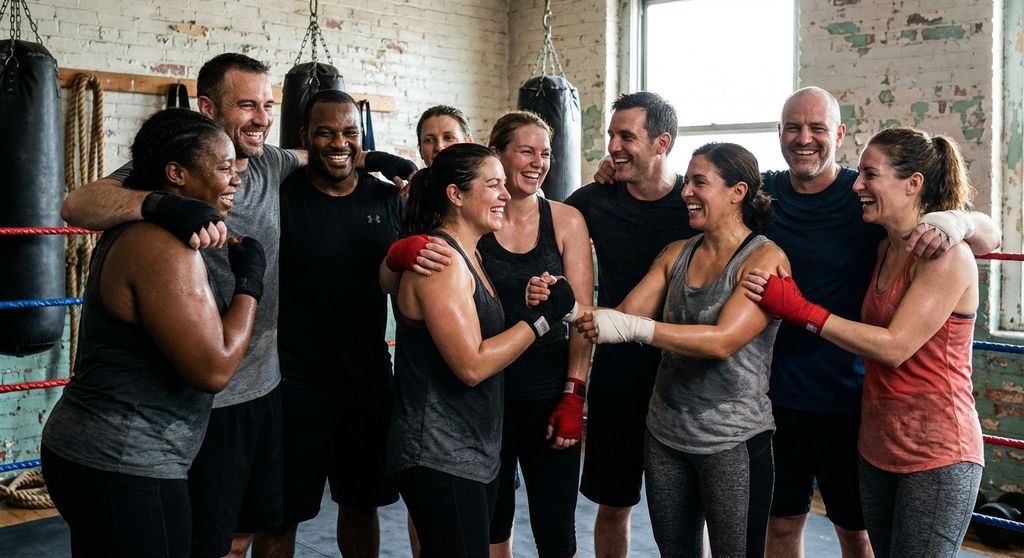
A good boxing gym can bring together people from different backgrounds through shared effort, routine and mutual respect.
At Honour and Glory Boxing Club, the community is present from the first session. The Adult Recreational class runs Monday, Wednesday and Friday evenings.
Research on combat sports and social capital found that boxing clubs create stronger community bonds than most other sports environments. Sport England's evidence on sport and social cohesion shows combat sports clubs scoring above average for member belonging and inclusion.
H&G Team
Writer at Honour & Glory Boxing Club, a community boxing gym in Kidbrooke, South East London.
KEEP READING
What a Boxing Club Community Actually Is
Why boxing clubs create a kind of trust, belonging and shared effort that is hard to replicate in ordinary sport environments.

Boxing and Friendship: Why Training Partners Become Friends
Why training partners become lifelong friends: shared hard rounds, honest feedback and mutual respect build bonds most social settings cannot.

How to Keep Your Boxing New Year Resolution Past February
Why boxing resolutions survive longer in a club than a gym: social training, shared effort and a community that notices when you stop turning up.
Was this page helpful?
It takes one tap, and it genuinely helps.
Choose your next step
Turn this article into the right action
Some readers are ready to book. Some need the class route first. Pick the route that matches what you actually want.