Most boxers think about weight in the wrong way. They think about it two weeks before a fight, when the number on the scale is too high and the options are all bad: skip meals, sweat it out in bin bags, restrict water. That is weight cutting. It is dangerous, it is counterproductive, and it is entirely avoidable if you track your body composition consistently over time.
A study published in the British Journal of Sports Medicine found that amateur boxers who lost just 3% of their bodyweight through rapid methods suffered a 12% reduction in voluntary force output and fatigued 16 seconds sooner than those who did not cut. That is a massive performance hit for a sport measured in three-minute rounds.
It gets worse. Research from St Mary's University in 2022 found that more than 60% of combat athletes who cut weight rapidly experienced worse concussion symptoms and increased injury susceptibility. The dehydration mimics concussion markers, meaning fighters who cut aggressively are harder to assess medically and more vulnerable in the ring.
The alternative is simple: weigh yourself regularly, track the trend, and manage your body composition gradually across months of training rather than days before a bout. A good smart scale makes this almost effortless. Step on it every morning, let it sync to your phone, and watch the data accumulate into something really useful.
Here are the five scales we recommend, from budget to premium, and the apps that bring the numbers together.
The 5 Best Smart Scales
1. Withings Body Smart - Best Overall (~£80-90)
This is our top recommendation for most boxers. The Body Smart tracks weight, BMI, body fat percentage, muscle mass, water percentage, heart rate, visceral fat, metabolic age, and basal metabolic rate. That is a lot of data from stepping on a bathroom scale.
What makes it particularly useful for boxing is the 0.1 lb precision. When you are monitoring gradual changes across a training camp, small increments matter. The scale syncs with over 100 apps including Apple Health, Google Fit, MacroFactor, and Fitbit, so your weigh-in data feeds straight into whatever tracking system you already use. It also has an athlete mode that adjusts its bioelectrical impedance calculations for people with higher-than-average muscle mass, which matters if you are training seriously.
At around £80-90, it sits in a sweet spot between the budget options and the premium tier. For the majority of boxers, recreational or competitive, this is the one to buy.
Withings Body Smart on Amazon UK

2. Withings Body Scan - Best Premium Pick (~£230)
If you want the most detailed body composition data available from a consumer scale, this is it. The Body Scan has a retractable handle that you hold during measurement, allowing it to perform segmental body composition analysis. That means it measures your arms, legs, and torso individually rather than giving you a single whole-body estimate.
It also includes a 6-lead ECG, vascular age assessment, and nerve health monitoring. PCMag's review noted that Withings claims correlation of r=0.99 compared to DEXA for total fat mass in their clinical study, though real-world accuracy does vary between users.
The Body Scan has the same athlete mode as the Body Smart. It is serious kit, and the price reflects that. This scale makes most sense for competitive boxers who need precise segmental data, or coaches tracking multiple athletes who want granular insight into where muscle is being gained or lost.
Withings Body Scan on Amazon UK
3. Eufy P3 - Best Budget Pick (~£35-45)
If you want a capable smart scale without spending much, the Eufy P3 is the one we recommend at the budget end. It tracks 16 body composition metrics, supports unlimited user profiles (handy if the whole household uses it), and syncs with Apple Health and Google Fit.
The app is beginner-friendly with a customisable display, so you can choose which metrics you actually want to see each morning rather than being overwhelmed by numbers. Setup is simple and the scale itself is well built for the price.
The limitations are real but minor. Auto user detection can be inconsistent if multiple people in the house weigh similarly. Third-party app support is more limited than Withings, so if you want to push data to MacroFactor or Fitbit, check compatibility first. For a first smart scale, especially if you are just starting to take training nutrition seriously, it is hard to beat at this price.
Eufy P3 on Amazon UK
4. Garmin Index S2 (~£130)
The Garmin Index S2 tracks 9 body composition metrics, syncs over wi-fi, and supports up to 16 user profiles. The colour display is a nice touch, showing weight trends over 30 days directly on the scale without needing your phone.
The real appeal here is ecosystem integration. If you already wear a Garmin watch and use Garmin Connect for your running, heart rate, and training load data, the Index S2 feeds weight and body composition directly into that same dashboard. Everything in one place. For boxers who also run (which should be most of you), having your roadwork data and body composition side by side is really useful.
If you are not already in the Garmin ecosystem, the Withings Body Smart offers more metrics for less money. But for Garmin users, this is the natural choice.
5. Renpho Smart Scale - Best Under £20 (~£15-20)
The Renpho is one of the most popular smart scales on Amazon for good reason. It tracks 13 body composition metrics, works with Apple Health, Google Fit, Samsung Health, Fitbit, and MyFitnessPal, and costs remarkably little. At the time of writing, prices on Amazon UK sit around £15-20, which makes it essentially an impulse purchase.
The app is solid, the Bluetooth sync is reliable, and the scale supports unlimited users. The platform is a decent size and the build quality is reasonable for the price. It will not match the Withings scales for accuracy or app polish, but as a first step into tracking your body composition, it does the job.
Renpho Smart Scale on Amazon UK
The Apps That Make It Work
A smart scale is only as useful as the app it feeds into. Here are the three worth knowing about.
MacroFactor
This is the best app for serious weight management, and it is what we recommend to members who want to get their nutrition dialled in. MacroFactor uses adaptive TDEE (total daily energy expenditure) calculation that adjusts weekly based on your actual food intake and weight trend. Unlike MyFitnessPal, which uses generic estimates and never updates them, MacroFactor learns your actual metabolism over time.
If you log what you eat and weigh yourself daily, MacroFactor will tell you with increasing accuracy how many calories you are actually burning and what adjustments to make. It costs around £10 per month or £70 per year, and it links with smart scales via Apple Health or Google Fit.
For anyone managing weight for competition or tracking a boxing diet plan, it is worth the subscription.
Apple Health and Google Fit
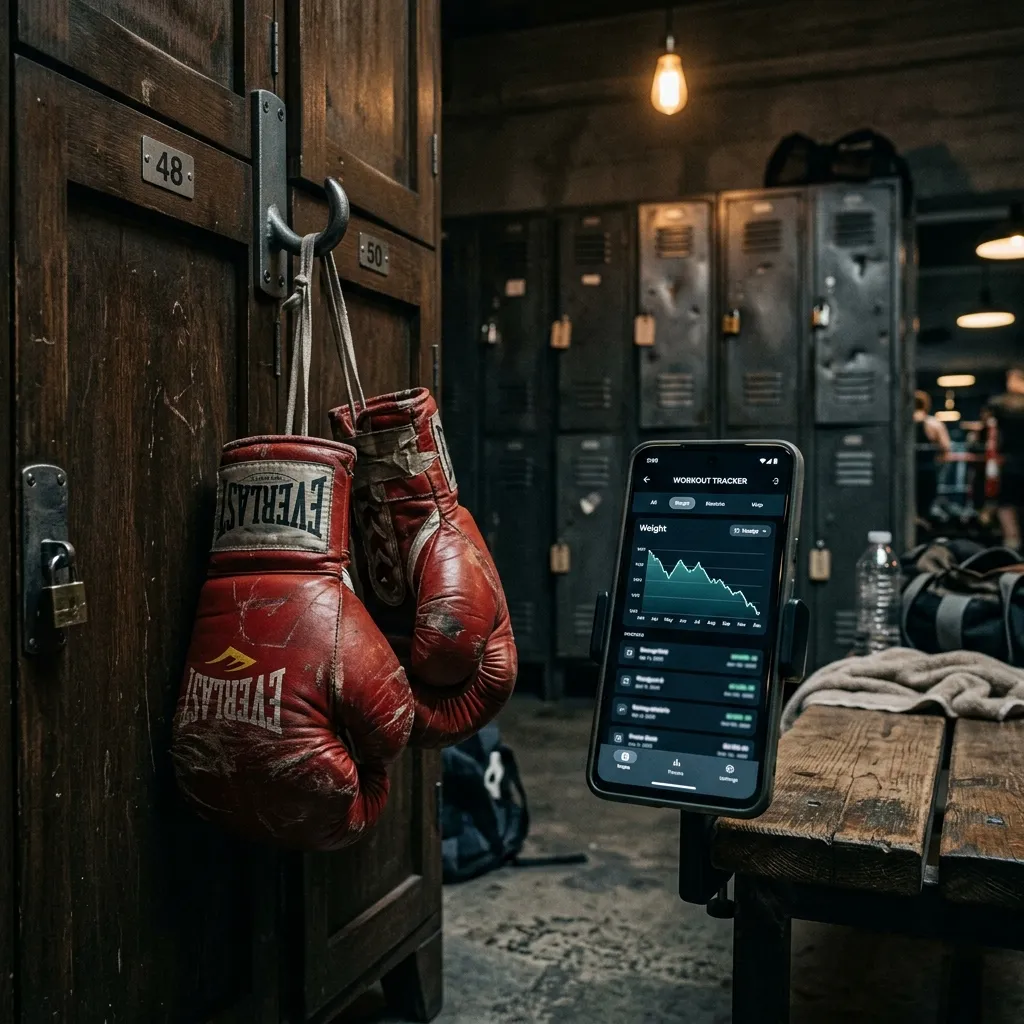
These are free, built into your phone, and pull data from any compatible smart scale automatically. If you do not want to pay for MacroFactor and just want a simple place to see your weight trend over time, these work perfectly well. The trend graphs show you the direction things are moving, which is honestly the most important thing. You can also share the data with a GP if needed.
Withings Health Mate
If you buy either of the Withings scales, this is the native app. The interface is clean, historical tracking is well presented, and it syncs bidirectionally with both Apple Health and Google Fit. You will not need a separate tracking app unless you want the nutrition-specific features of something like MacroFactor.
Why Daily Weigh-Ins Matter
Your morning weight can fluctuate by 1-2 kg from one day to the next based on hydration, salt intake, meal timing, and dozens of other variables. A single reading on any given morning tells you almost nothing useful.
The value is in the 7-day rolling average. Weigh yourself at the same time each morning (after the bathroom, before eating), and over a week the noise smooths out and the real trend becomes visible. Smart scales and apps like MacroFactor do this automatically. You step on, the number syncs, and the app shows you whether your weekly average is going up, down, or holding steady.
This is how you manage weight sensibly as a boxer. Not by panicking over a single high reading, not by starving yourself before weigh-in day, but by watching the trend line over weeks and months and making small adjustments to your training and nutrition when needed.

How We Use Scales at Honour and Glory
At H&G, we weigh members before and after every hard session to monitor acute fluid loss. If someone drops more than 2% of their bodyweight in a single session, that is a signal to focus on rehydration before anything else.
For our recreational adults members, the approach is different. We encourage tracking body composition over months rather than weeks. The changes that matter in boxing fitness - losing fat while maintaining or building muscle - happen gradually. Patience beats panic every time. A smart scale that syncs to your phone removes the friction from this process entirely. Step on, walk away, check the trend when you feel like it.
If you are thinking about starting boxing and want to see what a training session feels like, book a free trial at Honour and Glory. Bring your questions about weight management, nutrition, or anything else. That is what the coaches are there for.
H&G Team
Writer at Honour & Glory Boxing Club, a community boxing gym in Kidbrooke, South East London.
KEEP READING

Calorie Density: The Nutrition Concept Every Boxer Should Understand
One concept explains why some diets leave you constantly hungry and others do not. Here is what calorie density is and how it applies to boxing training.
If You Could Only Eat 5 Foods for Life
The five-food answer first, then the boxing nutrition stress test: what one, ten and twenty-five foods fix or still leave missing.
What to Eat Before Boxing Training
What you eat before boxing training directly affects your performance. Here is exactly what to eat and when for your best sessions.
Was this page helpful?
It takes one tap, and it genuinely helps.
Choose your next step
Turn this article into the right action
Some readers are ready to book. Some need the class route first. Pick the route that matches what you actually want.