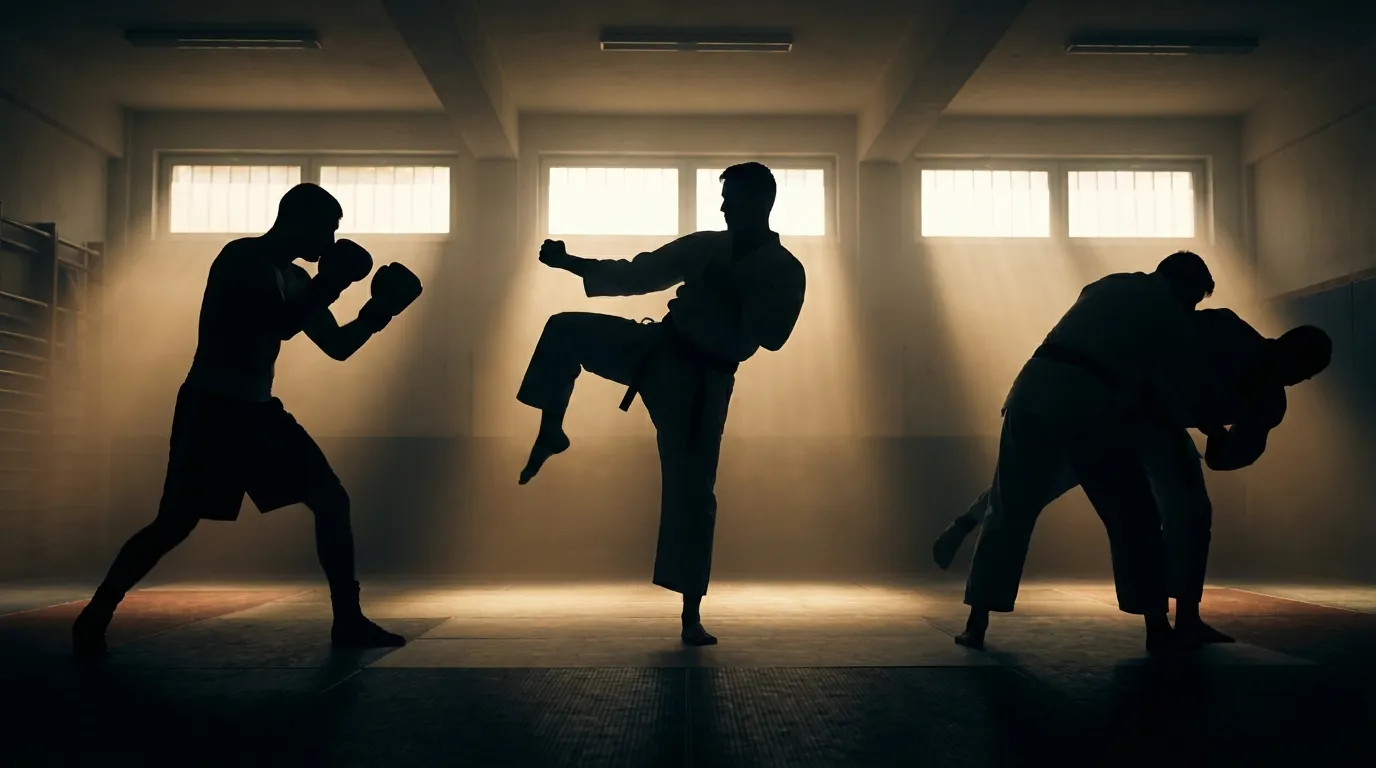
Walk into any martial arts forum and ask "what is the best martial art for self-defence?" You will get passionate arguments that never quite resolve. Everyone has their favourite, and most have reasonable points.
Here is our attempt at an honest comparison - acknowledging that we are a boxing gym, while trying to give other disciplines their due.
The Criteria That Actually Matter
Before comparing specific arts, let us establish what makes a martial art effective for self-defence:
Pressure Testing
Does training involve sparring against resisting opponents? Arts that only practice techniques cooperatively or against compliant partners may look impressive but fail under real pressure.
Realistic Scenarios
Does training prepare you for how actual violence occurs? Attacks often come suddenly, from close range, in confined spaces. Training for tournament point-scoring may not translate.
Time to Functional Competence
How long until you can actually use the skills? An art that takes ten years to become functional is less practical than one where you can handle yourself after one year.
Availability of Quality Instruction
Can you actually find good teachers? The best martial art in theory is useless if there is no qualified instructor within 50 miles (source).
Physical Demands
Can you realistically maintain training as you age or if you have physical limitations? An art that requires peak athleticism has a limited window of usefulness.
The Main Contenders
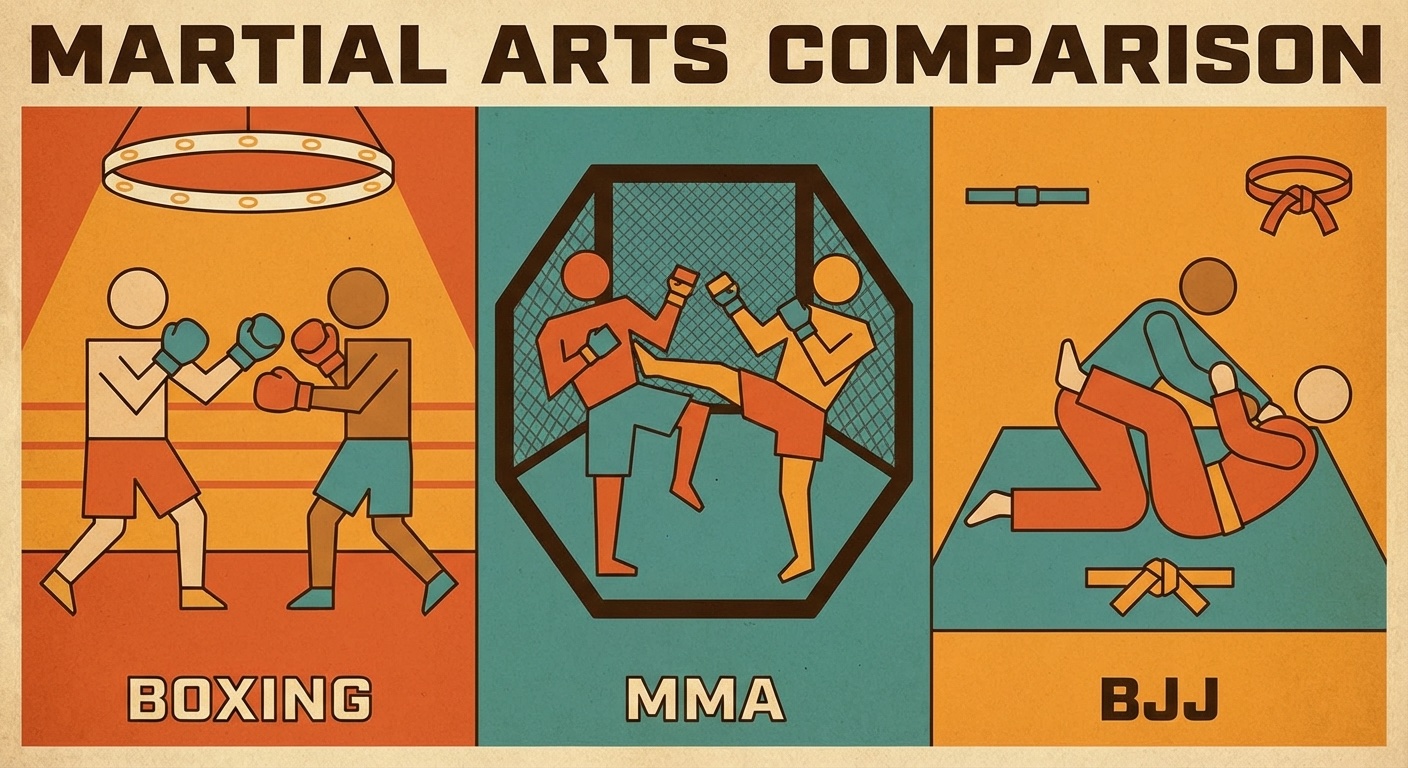
Boxing
- Excellent pressure testing through regular sparring
- Develops genuine punching ability most people lack
- Builds comfort with taking hits
- Fast path to functional competence
- Gyms everywhere with qualified coaches
- Outstanding conditioning
- Hands only - no kicks, elbows, knees
- No grappling or ground fighting
- Trains with gloves, requiring adaptation for bare knuckles
- Ring-based training does not cover all environments
- Time to competence. 6-12 months of consistent training produces someone who can handle themselves standing (source)
- Best for. People who want effective striking skills quickly, with plenty of sparring
Mixed Martial Arts (MMA)
- Most complete fighting system - striking and grappling
- Extensive pressure testing
- Closest to unrestricted fighting
- Adapts constantly as the sport evolves
- Handles multiple ranges and scenarios
- Broad curriculum means slower development in each area
- Very physically demanding training
- Fewer gyms than boxing (though growing rapidly)
- Still has rules that do not apply on the street (no groin shots, eye gouges, etc)
- Time to competence. 12-24 months minimum to be functional across all ranges
- Best for. Younger, athletic people willing to commit to intensive training
Muay Thai
- Full striking arsenal - punches, kicks, elbows, knees
- Devastating clinch game directly applicable to street fights
- Strong pressure testing tradition
- Leg kicks can end confrontations quickly
- Toughness built into training culture
- No ground fighting
- Can be hard on the body long-term
- Quality instruction less available than boxing in UK
- Time to competence. 8-14 months for solid fundamentals
- Best for. People wanting complete stand-up fighting with more weapons than boxing
Brazilian Jiu-Jitsu (BJJ)
- Dominates ground fighting
- Can control and submit larger opponents
- Lower injury risk in training (can tap out)
- Effective without strength advantage
- Excellent for close-range control
- Limited standing techniques
- Ground fighting is risky against multiple attackers
- Assumes you will get to the ground
- Hard surfaces punish takedowns and ground work
- Time to competence. 18-36 months (notoriously slow progression)
- Best for. People concerned about being taken down; those who want grappling expertise
Krav Maga
- Specifically designed for self-defence
- Addresses weapons, multiple attackers, surprise attacks
- Includes awareness and avoidance training
- No sporting rules to unlearn
- Teaches "dirty" techniques (groin, eyes, etc)
- Huge quality variation between schools
- Many schools lack proper sparring
- Can create false confidence without pressure testing
- Techniques often untested against resisting opponents
- Time to competence. Varies wildly by school quality
- Best for. People specifically focused on self-defence, if they find a quality school that spars
Wrestling
- Outstanding takedowns and takedown defence
- Elite-level conditioning
- Controls where the fight happens
- Pressure tested through competition
- Harder to defend against than most striking
- No striking
- Assumes athletic ability
- Limited submission knowledge
- Hard on the body with age
- Time to competence. 12-24 months for solid fundamentals
- Best for. Younger, athletic people; excellent complement to striking arts
Judo
- Powerful throws applicable to self-defence
- Works well in clinch situations
- Can be practiced into older age
- Good balance of competition and practicality
- Handles grabs and clothing-based control
- Rules have evolved away from some practical techniques
- No striking
- Some techniques risky on hard surfaces
- Gi (uniform) training does not always transfer to street clothes
- Time to competence. 12-18 months for useful throwing ability
- Best for. People interested in throws and standing grappling; good complement to striking
What The Evidence Suggests
Looking at what actually works in fights - from early UFC events to documented street confrontations - a few patterns emerge:
Wrestling and grappling consistently dominate when fights go to ground. Untrained people have almost no defence against competent grapplers.
Trained strikers crush untrained opponents standing. The gap between trained and untrained punching is enormous.
Multiple attackers change everything. Ground fighting becomes extremely dangerous. Mobile striking has advantages.
Most real threats are untrained. You probably will not face a trained opponent. Skills that work against the average person matter most.
The Honest Assessment
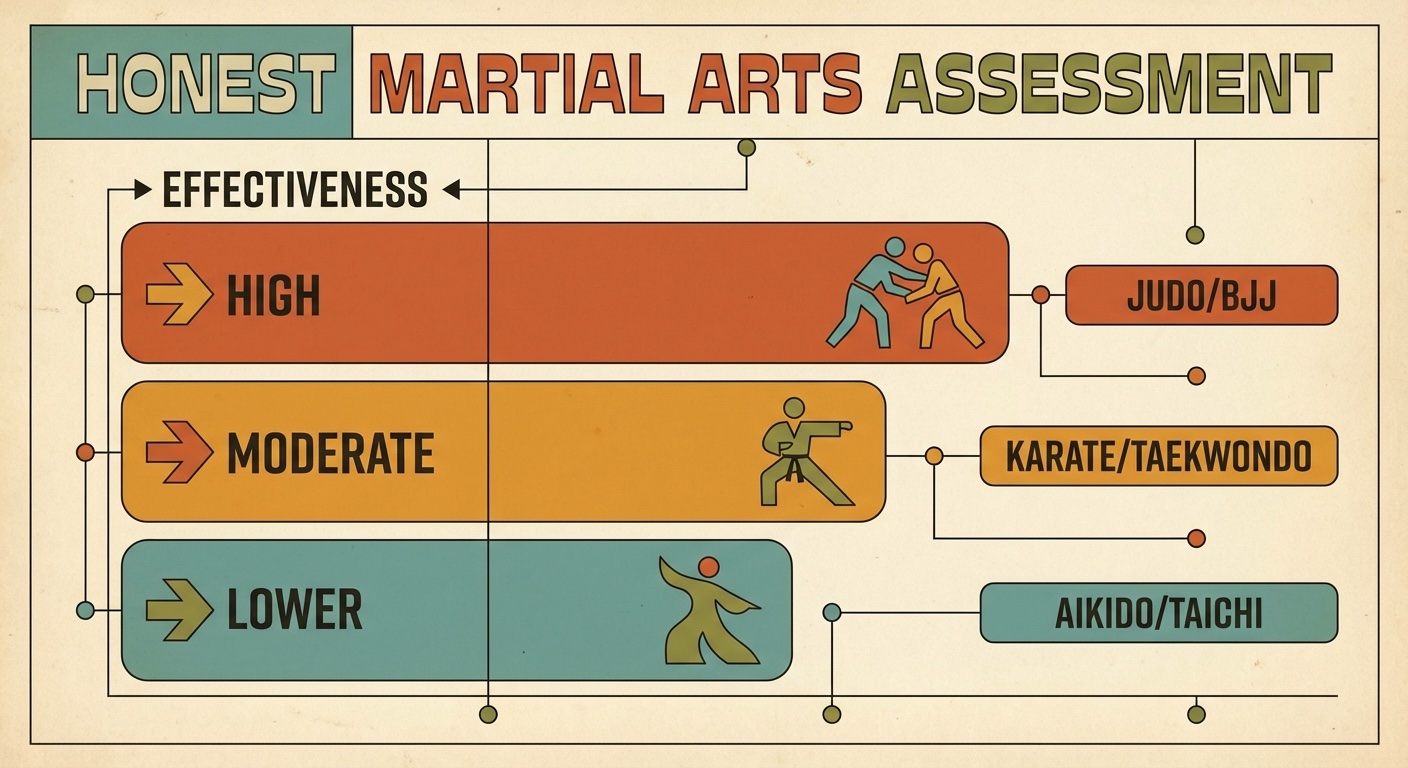
If forced to rank martial arts purely for self-defence:
- MMA - the most complete system, covering most scenarios
- Boxing + BJJ or Wrestling - combining stand-up and ground addresses major gaps
- Muay Thai - complete striking with practical clinch work
- Boxing - excellent striking foundation, some gaps
- BJJ/Wrestling alone - dominant in their range but vulnerable to strikes
- Krav Maga - potentially excellent but quality inconsistent
- Traditional arts - varies enormously; some effective, many not
However, these rankings assume equal training quality and commitment. A dedicated boxer beats a casual MMA practitioner. A serious judoka beats a weekend Krav Maga student.
Where Boxing Fits
Boxing ranks highly for self-defence because:
Accessibility: Boxing gyms are everywhere. You can find quality instruction in any UK city.
Pressure testing: Boxing culture includes sparring as standard. Your skills get tested regularly.
Fast development: The focused curriculum (hands only) means rapid skill development. Six months of boxing produces functional ability.
Applicable to likely threats: Against untrained attackers - which describes most real threats - boxing is highly effective.
Conditioning: Boxing training builds outstanding fitness, which matters in real confrontations.
The main limitation - no ground game - is addressable by adding some grappling training. Many boxers cross-train in wrestling or BJJ specifically to fill this gap.
Our Recommendation
If self-defence is your primary goal:
Start with boxing or Muay Thai to develop solid striking. Add wrestling or BJJ later to address ground scenarios. This combination covers most realistic threats.
If time and commitment are limited:
Focus on boxing alone. The striking skills you develop will serve you well against untrained opponents, and the conditioning benefits are substantial.
If you want the "complete" solution:
Train MMA from the start, accepting that you will develop more slowly in each component area.
Regardless of choice:
Find a school that spars. Techniques untested against resistance are unproven. Avoid any martial art that claims effectiveness without regular pressure testing.
Why We Teach Boxing
We chose boxing because we believe it offers exceptional value: practical skills, accessible training, genuine fitness benefits, and a clear path to competence.
Boxing is not the only effective martial art for self-defence. But it is among the best for people who want real skills without committing to full-time fighter training.
The conditioning, confidence, and composure you develop through boxing serve you in self-defence situations - and in the rest of life too.
---
H&G Team
Writer at Honour & Glory Boxing Club, a community boxing gym in Kidbrooke, South East London.
KEEP READING
Is Boxing Good for Self-Defence?
Can boxing skills actually protect you in a real confrontation? We examine boxing's genuine strengths and limitations for self-defence situations.
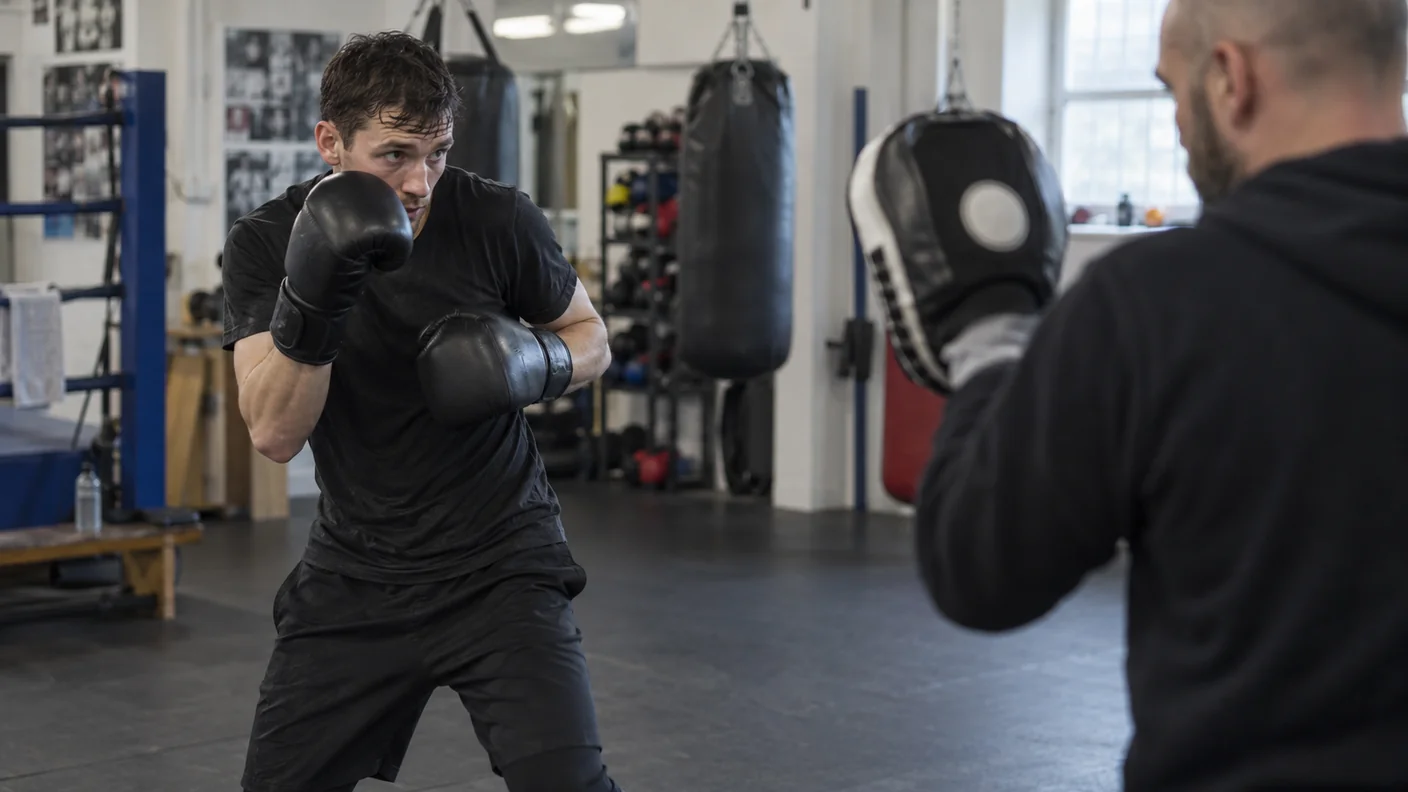
Step-Back Shield: Boxing Defence Without Running
Use a short step back with a compact lead-hand shield to create safer space against pressure without losing your stance.
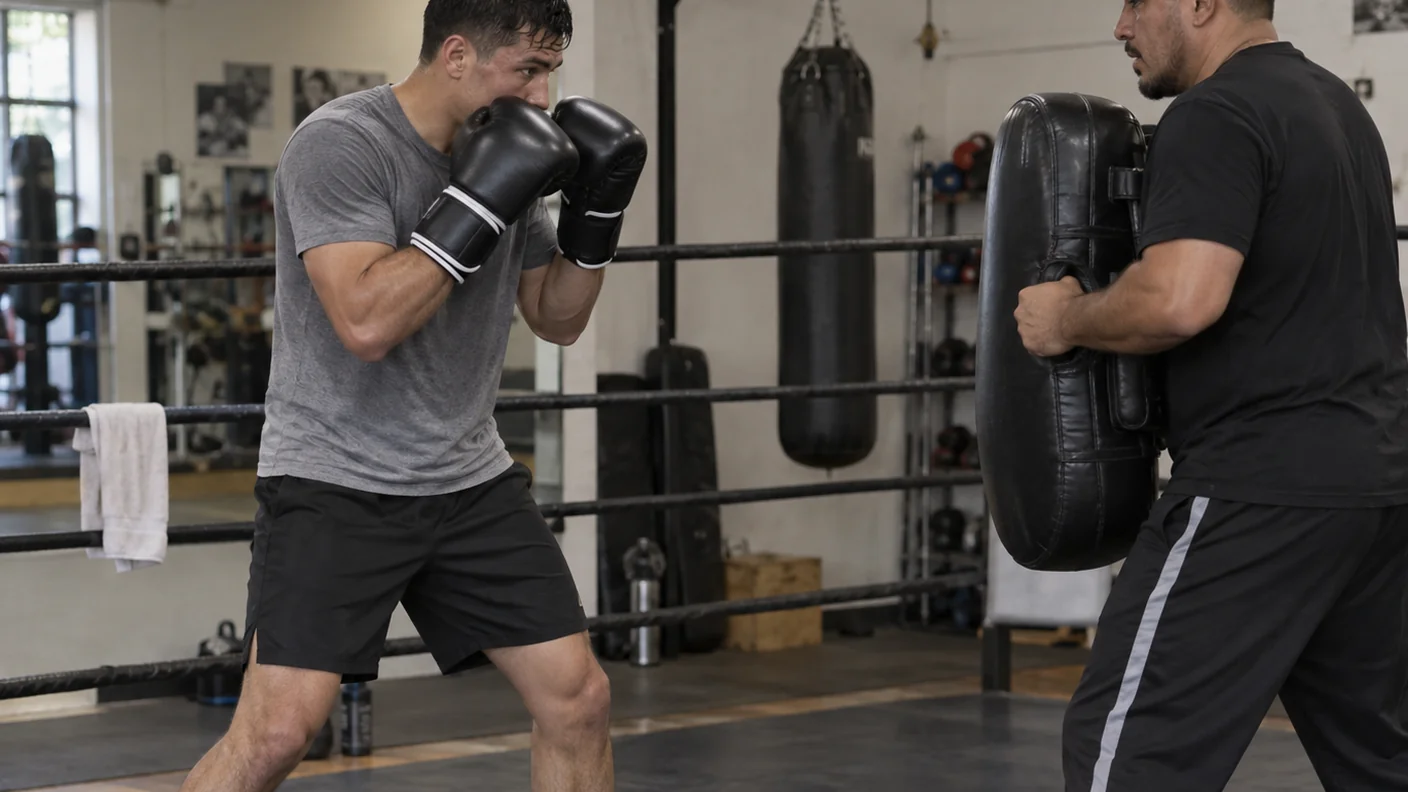
How to Defend a Body Jab in Boxing
Use a compact elbow line, steady eyes and a balanced reset to defend body jabs without dropping your hands or folding forward.
Was this page helpful?
It takes one tap, and it genuinely helps.
Choose your next step
Turn this article into the right action
Some readers are ready to book. Some need the class route first. Pick the route that matches what you actually want.