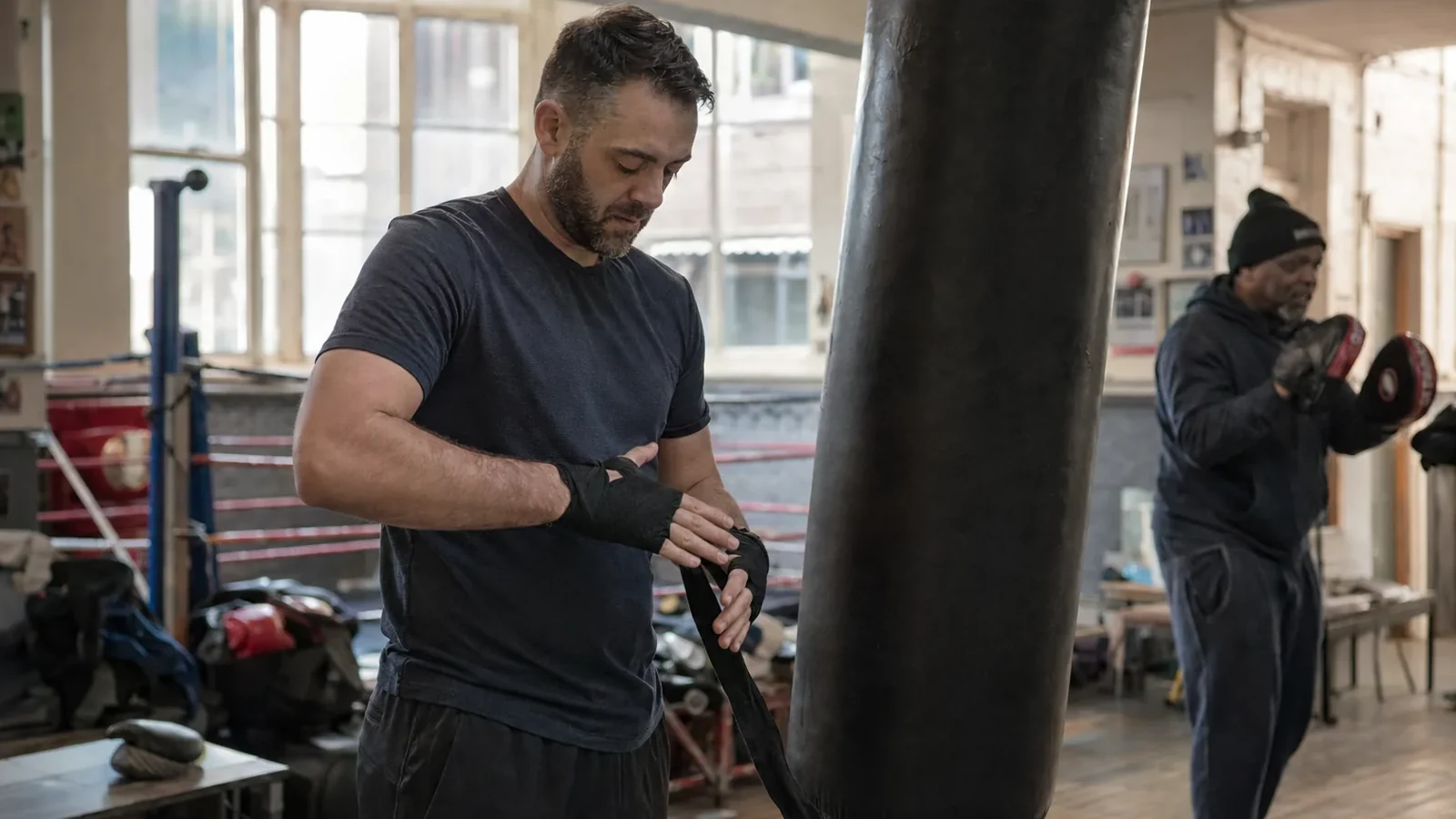
Best exercise for teachers? Boxing deserves to be high on the list.
Teaching looks active from the outside. You are on your feet, moving around, talking all day, constantly dealing with people. So a lot of teachers assume they do not need much beyond a walk and the occasional half-hearted gym plan.
That usually turns out to be wrong.
Teaching creates its own kind of wear and tear. A loud room. Constant vigilance. Repetitive stress. Bad posture while marking. Tight neck and shoulders. A brain that does not switch off when the bell goes. The best exercise for teachers needs to deal with all of that, not just burn a few calories.
That is why boxing fits so well.
Why teachers need a different kind of exercise
Teaching is not just tiring. It is accumulative.
You talk all day, often in poor positions. You lean over desks. You look down at books and screens. You carry the emotional temperature of a room even when you are meant to be calm. Then you go home and keep thinking about planning, behaviour issues, parents, observations and whatever else is waiting tomorrow.
The 2025 Teacher Wellbeing Index found that education staff wellbeing remains poor, with 76% reporting stress, 77% reporting work-related physical, psychological or behavioural symptoms, and 43.42 as the average wellbeing score, the lowest since the index began in 2019 (Teacher Wellbeing Index 2025). That lines up with what plenty of teachers already know without needing a report: the job can sit on your nervous system all day.
There is a physical layer too. A systematic review of musculoskeletal disorders among school teachers found self-reported prevalence rates ranging from 39% to 95%, with the back, neck and upper limbs appearing most affected (systematic review of MSD in teachers). Again, not surprising. Teaching involves far more awkward posture than people think.
So the best exercise for teachers needs to do more than raise heart rate. It needs to:
- get rid of tension in the neck, shoulders and back
- give the brain a proper reset after constant classroom attention
- feel motivating enough to survive term-time fatigue
- build resilience rather than just adding more tiredness
That is where boxing pulls ahead.
Why boxing works so well for teachers
Boxing gives teachers something most exercise fails to give them: total mental interruption.
Running still leaves room to think about tomorrow's lesson. Generic gym sessions often feel like one more task to manage. Boxing does not really let you do that. If you are working pads, moving your feet and trying to keep your hands in the right place, the day's school nonsense has to step aside for a bit.
That matters. Teachers spend all day directing attention outward. Boxing gives you an hour where attention comes back to something immediate and physical.
It also trains the right areas. Good boxing work develops shoulder endurance, trunk control, coordination, rhythm and conditioning. It gets the upper body working properly instead of just tightening under stress. It demands that you move with intent rather than slump through another hour of passive recovery.
And unlike a lot of wellness advice aimed at teachers, it does not feel patronising.
Nobody needs another leaflet about breathing, hydration and boundaries if the actual problem is that they are wound up and physically stale by 6pm. Boxing is useful because it gives a stronger intervention than that.
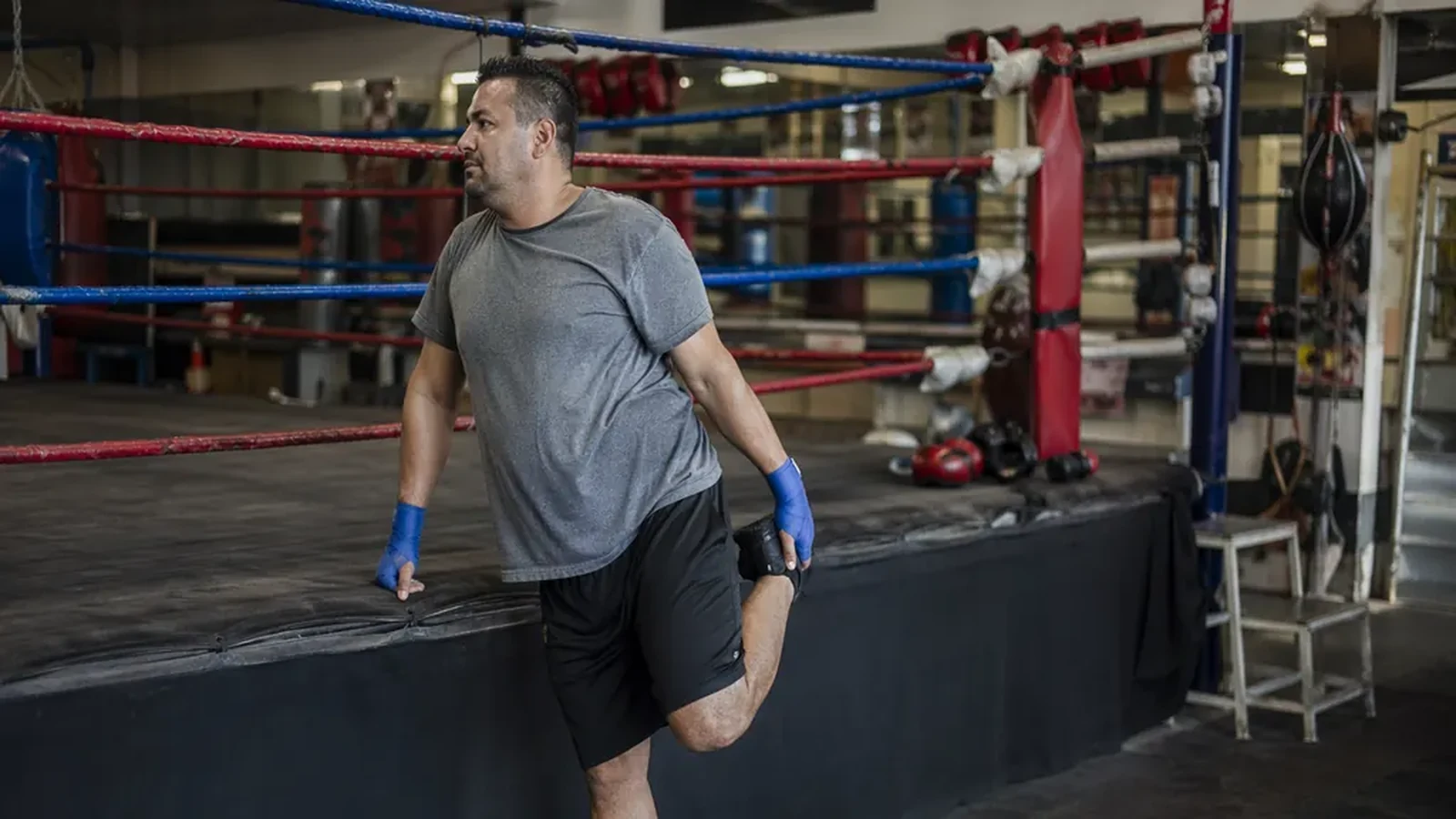
Boxing is better than "just do yoga" for many teachers
Yoga can be excellent. Pilates can be excellent. Walking is useful. None of this is an attack on lower-intensity exercise.
But plenty of teachers do not really need gentleness first. They need a clean break from being mentally switched on for everyone else.
That is where boxing is better.
It asks enough of you that the rest of the day stops running in the background. It gives you a technical problem to focus on. It makes you sweat properly. It leaves you physically worked in a way that can settle stress instead of just talking around it.
For teachers especially, that combination of skill and effort is valuable. The job is cognitively dense. A sport that rewards concentration without being academic often lands well.
If you want the broader mental side of this, read boxing for stress relief. The basic point is simple: some people need movement that feels like release, not just maintenance.
Teachers need exercise they will actually stick with in term time
This is the part people skip.
The best exercise in theory is irrelevant if you stop doing it by mid-November.
Teachers do not have neat energy. Some weeks are manageable. Some are absurd. Parents' evening, reports, safeguarding issues, mocks, timetables, cover. A training plan that only works when life is tidy is not built for teaching.
Boxing classes are good because they provide external structure when your internal motivation is low. You do not need to invent the session. You do not need to decide the reps, sets, intervals or route. You turn up, train, and leave feeling different.
That reduction in decision-making is a big part of why it works. After a day spent making hundreds of micro-decisions, many teachers do not want a sport that feels like project management.
The NHS adult activity guidelines recommend weekly aerobic activity plus strengthening work on two days, which is a useful anchor for teachers whose work is active in patches but not always physically balanced (NHS adult activity guidelines).
The posture and upper-body angle is a bigger deal than most people think
Teaching is full of low-level repetitive positions.
Looking down at books. Marking at a kitchen table. Standing twisted toward a whiteboard. Perching over a laptop. Holding tension through the jaw and shoulders while trying to control a room with your voice.
That is why the musculoskeletal data matters. The review on teachers found high prevalence of back, neck and upper-limb issues, with awkward posture consistently linked to higher rates of pain (teacher MSD review).
Boxing helps because it gives those areas something useful to do. You brace. You rotate. You keep the trunk organised. The shoulders work with purpose rather than sitting up by the ears all day. Even the warm-up can feel like the opposite of classroom posture.
It is not treatment, and it is not a replacement for sorting your desk setup. But if your body feels compressed and irritated by the end of term, boxing addresses that more honestly than another passive hour on a bike.
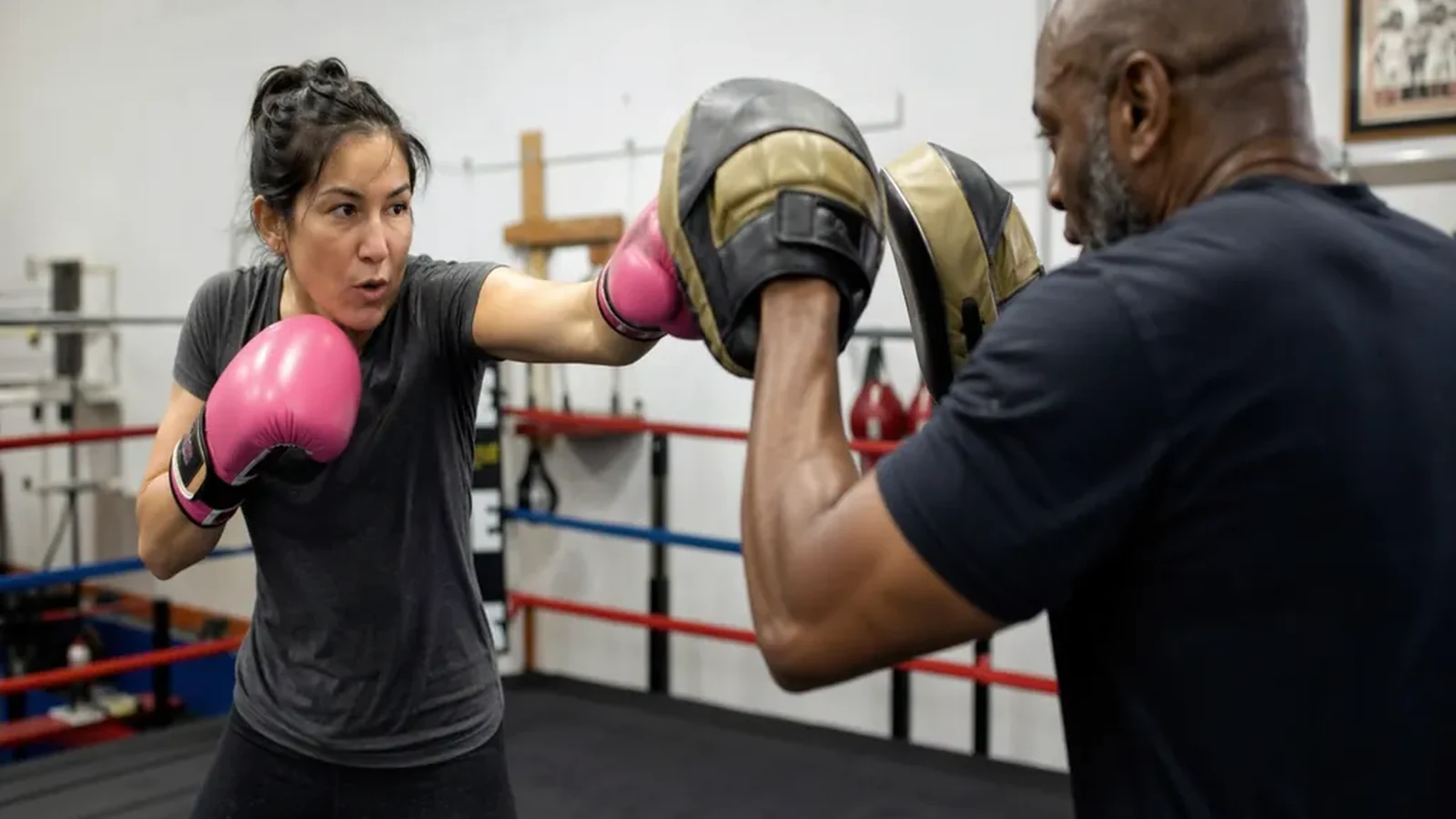
What kind of boxing works best for teachers?
For most teachers, the right answer is beginner-friendly recreational boxing two or three times a week.
You do not need hard sparring. You do not need a second career as an amateur. You need sessions that are coached properly, hard enough to matter, and realistic around term-time life.
That is why our Adult Recreational boxing classes are usually the best starting point. You get the mental reset, the physical work and the skill element without needing to become obsessed with the sport overnight.
If you are around Greenwich or Kidbrooke, it is also practical enough to fit after work, which is half the battle.
The honest caveat
Boxing is not going to solve the structural problems in education.
It will not reduce your marking load. It will not fix a chaotic SLT. It will not make Year 9 suddenly easy.
But if the question is narrower and more practical - what exercise actually helps teachers feel less tense, more switched off from work, and more physically alive again - boxing is one of the best answers available.
It gives you a real break from classroom attention. It strengthens the areas that teaching tends to aggravate. It is demanding enough to feel worthwhile and interesting enough to survive the school year.
That is not a bad combination.
For another angle on why immersive exercise can beat generic cardio, is boxing a good workout is the obvious companion piece.
How to start if you do this job
For most teachers, the best first step is a normal coached group class, not a complicated programme. Start with Adult Recreational boxing or the broader adult beginner boxing guide if you want to understand what happens first.
If your rota, clients or working hours make set classes hard, use boxing personal training or private boxing lessons as the paid route. The free trial is for scheduled group classes.
Book a free trial session at Honour and Glory Boxing Club.
More job-specific boxing guides
If this article fits your work pattern, the full boxing for workers guide links the rest of the job-specific series, including desk workers, shift workers, trades, carers, drivers, teachers and busy professionals.
H&G Team
Writer at Honour & Glory Boxing Club, a community boxing gym in Kidbrooke, South East London.
KEEP READING
Boxing Fitness for Programmers: When It Fits
Boxing can be a useful training option for programmers when you want coached movement, conditioning and a clear break from work. It is not the only answer, but it can fit well.
Boxing Fitness for Accountants: When It Fits
Boxing can be a useful training option for accountants when you want coached movement, conditioning and a clear break from work. It is not the only answer, but it can fit well.

Boxing for Office Workers: What Training Does to Desk Posture
Desk workers develop specific postural problems that boxing training directly addresses. Here is the mechanism and what to expect over three to six months of consistent training.
Was this page helpful?
It takes one tap, and it genuinely helps.
Choose your next step
Turn this article into the right action
Some readers are ready to book. Some need the class route first. Pick the route that matches what you actually want.