Boxing Fitness for Project Managers: When It Fits

Best exercise for project managers and programme managers? Boxing is a strong answer because the job creates a very specific kind of pressure.
Project management is not just planning. It is deadlines, blockers, status calls, awkward conversations, risk logs, shifting scope, stakeholder pressure, budget questions and the quiet stress of being accountable for work you often do not fully control.
The body sits through most of it. The head does not.
Boxing works because it gives project managers a direct physical reset: movement, structure, pressure, feedback and a way to switch out of meeting mode.
Project management is not physically dramatic, but it is not light work
Project managers can spend whole days in chairs, calls and documents.
That can make the job look physically easy. It is not. Long sitting, laptop posture, travel, screen-heavy work and meeting blocks can load the same areas again and again: neck, shoulders, upper back, lower back, hips and wrists.
Office-worker research has looked at exercise for neck pain among office workers and back-pain prevention among office workers. That matters for project managers because the workday often rewards staying still. One more call. One more update. One more deck.
Boxing breaks that pattern. You stand, move your feet, rotate, brace, punch, breathe and recover. The body gets a broader job than holding a laptop posture until the next meeting starts.
That is the first benefit. You stop feeling like the workday has folded you into one position.
Boxing gives deadline pressure somewhere clean to go
Project managers absorb other people's urgency.
A supplier slips. A team member is blocked. A client wants an answer. A sponsor wants confidence. A delivery date looks optimistic. Everyone has a reason. Somehow, you are still expected to turn the mess into a plan.
That kind of pressure can sit in the body. Tight jaw. Raised shoulders. Shallow breathing. The brain still running after the laptop closes.
Project-management stress is a recognised problem. Research on project managers has examined workload, role pressure and coping, while the Project Management Institute has written about how deadlines, scope changes and client pressure can make projects stressful (PMI on project pressure).
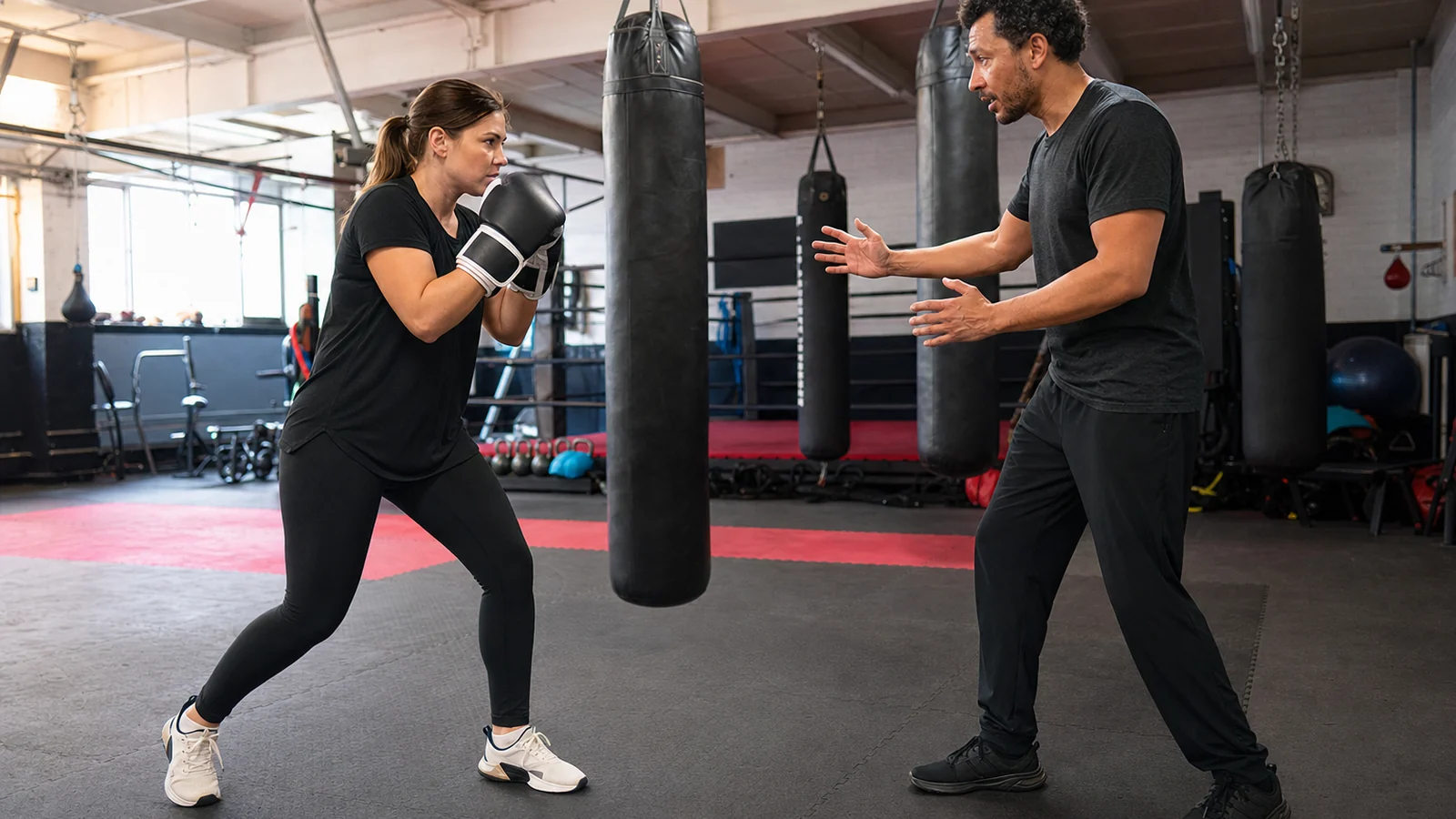
Boxing helps because it gives that pressure a clear outlet. You hit pads, move, listen, breathe and reset. You cannot spend a round half-thinking about a red RAG status. The session pulls you back into the room.
If stress relief is the main reason you are looking, boxing for stress relief is the obvious next read.
It trains calm when things are moving quickly
Good project managers are not just organised. They are calm under friction.
That does not mean pretending everything is fine. It means staying clear enough to make the next useful decision when the plan has changed again.
Boxing trains a physical version of that. If you panic, you waste energy. If you tense up, you get slower. If you stop listening, the coach has to bring you back. A round gives immediate feedback.
That lesson is useful. You learn to stay present while tired. You learn to recover between bursts. You learn that rushing usually makes things messier.
Good boxing should not make people aggressive. It should make them steadier. For project and programme managers, that steadiness is worth having.
The NHS says being active can help people switch off from worries and support mental wellbeing (NHS mental wellbeing and activity advice). Boxing adds skill, structure and pressure to that basic benefit.
It is better than another self-managed plan
Project managers are used to turning life into plans.
That can be useful at work. It can ruin training. The gym becomes another self-managed task: build the programme, track the sessions, review the data, feel guilty when the week slips.
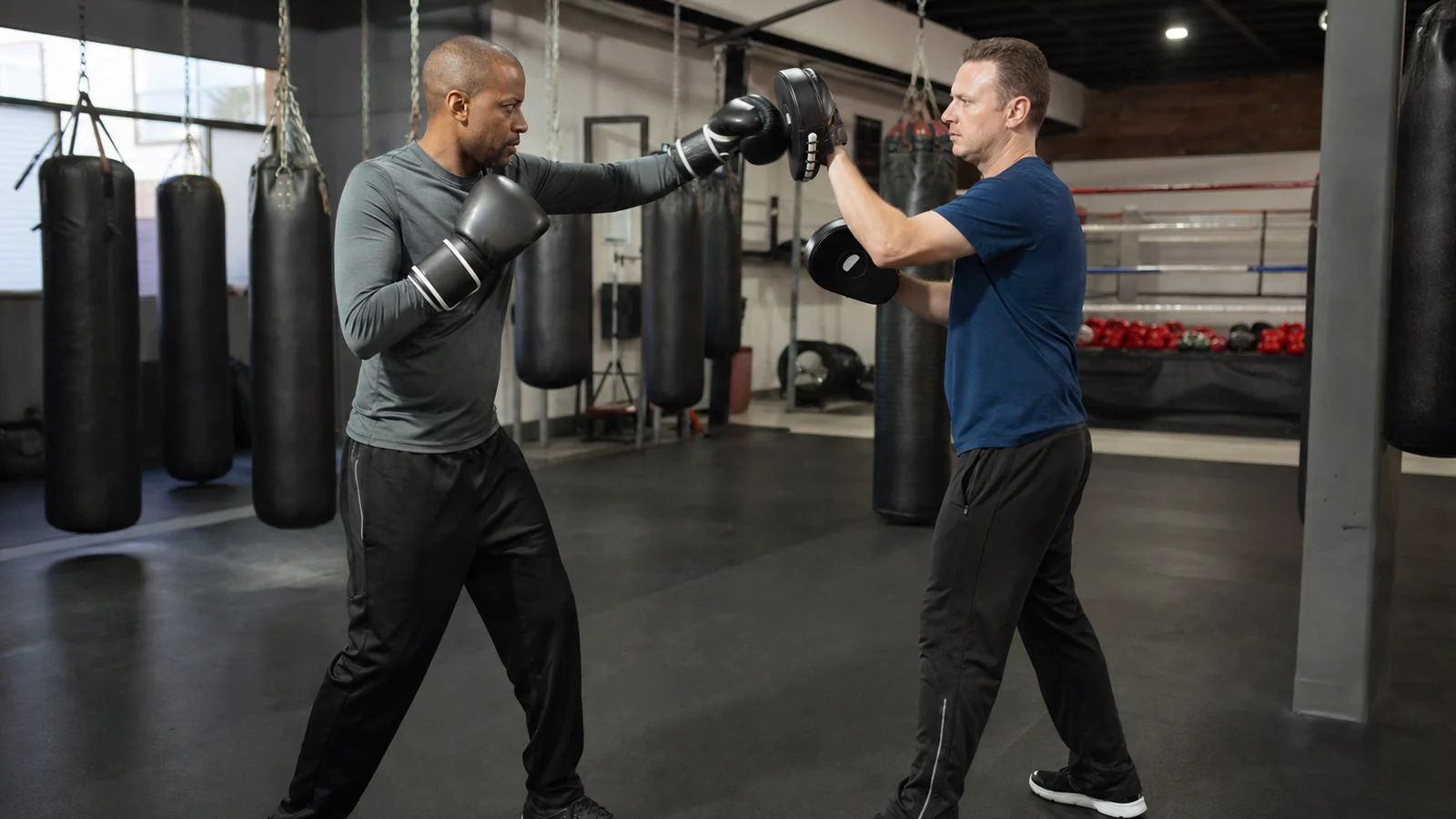
Boxing cuts through that. You turn up. The coach runs the session. You work. You learn. You leave.
There is structure, but you are not carrying it all yourself. That matters when your day already contains enough planning, chasing and coordination.
It also gives fast feedback. Did the jab land clean? Did your feet cross? Did you hold your breath? Did your shoulders tighten? The answer is obvious straight away.
That is satisfying for people who spend their week trying to make vague problems concrete.
Boxing fixes the wrong kind of tired
Project managers often finish the day tired in a way that normal rest does not quite solve.
The eyes are tired. The brain is tired. The shoulders are tight. The body has barely moved, but the idea of exercising can feel unreasonable.
That is why the exercise needs to feel different from work.
Boxing is physical, direct and skill-based. It uses the legs, hips, trunk, shoulders, hands, eyes and lungs. It gives you a reason to breathe hard without turning the session into punishment.
The NHS advises adults to aim for at least 150 minutes of moderate activity each week or 75 minutes of vigorous activity, plus strengthening work on two days (NHS adult activity guidelines). Boxing can help cover both because it mixes conditioning, coordination and strength under fatigue.
If you are comparing it with a normal gym membership, boxing vs gym: why people switch explains why coached sessions keep many adults more consistent.
Programme managers need a hard boundary after work
Programme management can make the end of the day blurry.
There is always another dependency. Another steering update. Another risk to reword. Another message that could wait until tomorrow but probably will not.
A boxing session gives the day a boundary. You cannot box properly while half-answering messages. You cannot check a dashboard during padwork. The gym becomes a clean stop.
That matters because recovery is not only sleep. It is also getting out of the mental loop. Boxing gives the brain a job it can understand: move, listen, breathe, try again.
For people who spend the day carrying other people's uncertainty, that simplicity is useful.
What kind of boxing should project managers start with?
Start with coached recreational boxing.
You do not need sparring on day one. You do not need to be fit first. You do not need expensive kit or a fighting mindset. You need a class where adults can learn stance, footwork, punching mechanics, bag work, pad work and conditioning at a sensible pace.
Our Adult Recreational boxing classes are built for adults who want proper boxing training without needing previous experience.
If you work or live around Greenwich, Kidbrooke, Blackheath, Woolwich or nearby parts of south east London, the club is practical for after-work training, remote-work days or evenings when the last meeting finally ends.
Bring normal gym kit, water and patience. If your neck, back, wrist or shoulder is already painful, get that checked properly. Boxing should build you up, not become another deliverable.
The honest answer
Boxing will not fix unrealistic deadlines, weak sponsorship, unclear ownership, poor resourcing or a team that treats every message as urgent.
It will not replace sleep, sensible workload, proper ergonomics or time away from screens.
But as exercise, it fits project and programme managers well. It gives the body the movement the job does not. It gives deadline pressure somewhere clean to go. It builds calm under effort and gives the working day a hard stop.
For project managers, that is not vanity. It is maintenance.

How to start if you do this job
For most project managers, the best first step is a normal coached group class, not a complicated programme. Start with Adult Recreational boxing or the broader adult beginner boxing guide if you want to understand what happens first.
If your rota, clients or working hours make set classes hard, use boxing personal training or private boxing lessons as the paid route. The free trial is for scheduled group classes.
Book a free trial session at Honour and Glory Boxing Club.
More job-specific boxing guides
If this article fits your work pattern, the full boxing for workers guide links the rest of the job-specific series, including desk workers, shift workers, trades, carers, drivers, teachers and busy professionals.
H&G Team
Writer at Honour & Glory Boxing Club, a community boxing gym in Kidbrooke, South East London.
KEEP READING

Boxing Fitness for Product Managers: When It Fits
Boxing can be a useful training option for product managers when you want coached movement, conditioning and a clear break from work. It is not the only answer, but it can fit well.

Boxing Fitness for Office Administrators: When It Fits
Boxing can be a useful training option for office administrators when you want coached movement, conditioning and a clear break from work. It is not the only answer, but it can fit well.

Gym or Boxing: Which Is Better for Fitness?
A practical answer to whether a gym or boxing is better for fitness, weight loss, confidence and long-term consistency.
Was this page helpful?
It takes one tap, and it genuinely helps.
Choose your next step
Turn this article into the right action
Some readers are ready to book. Some need the class route first. Pick the route that matches what you actually want.