The Boxing Maize Bag: What It Is and How to Train With It
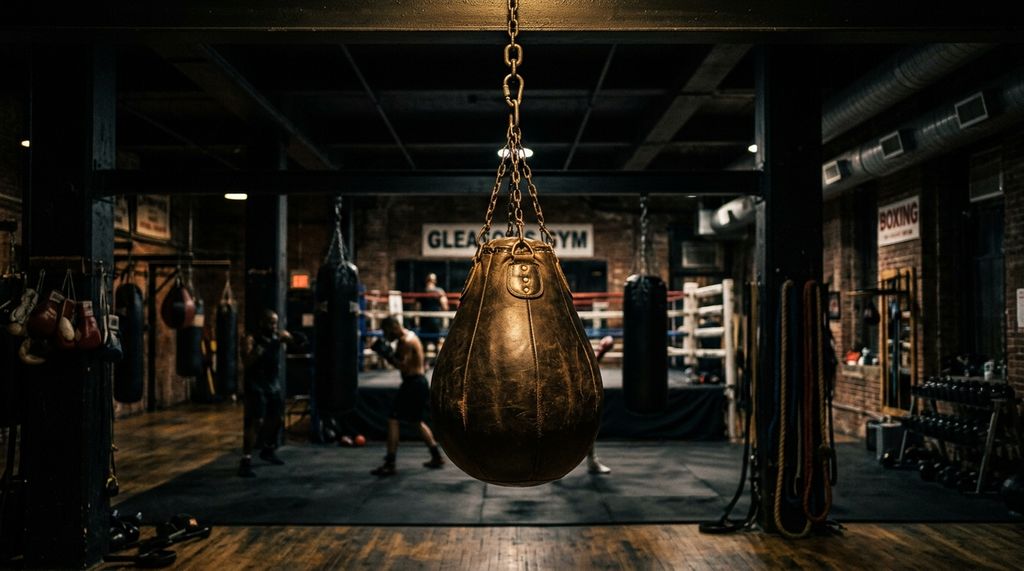
There is a bag in most serious boxing gyms that beginners walk straight past. Not the heavy bag - that one is hard to miss. Not the speed bag either - someone is usually making noise on it. The boxing maize bag just hangs there, pear-shaped and a bit unassuming, often in a corner, and most people have no idea what it is for.
It is, in short, the best piece of equipment in the gym for learning how not to get hit.
This guide explains what the maize bag does, who it is for, and how to get started with it - whether you are training at H&G in Kidbrooke or anywhere else.
What is a boxing maize bag?
The maize bag - also called a slip bag or teardrop bag - is a small, teardrop-shaped bag suspended from a chain or hook at roughly head height. Traditional versions were filled with dried corn (maize), which gave the bag a dense but slightly yielding quality. Modern versions are filled with sand, granulated rubber, or synthetic materials, but the name has stuck.
Unlike the heavy bag, which is designed to absorb power, or the speed bag, which is designed to be hit in a rhythm, the maize bag is primarily a tool for defensive training. You do not stand in front of it and punch combinations. You move around it, slip it as it swings, let it graze past you, and learn to make yourself a smaller target.
That is a fundamentally different kind of training, and one that most beginners skip for too long.
Why defensive training gets neglected
When you start boxing, the natural instinct is to focus on hitting things. That is understandable. Learning to punch is satisfying and measurable - you can feel whether a combination landed clean. Learning to avoid being hit is harder to observe and easier to put off.
The problem shows up in sparring. Beginners who have spent months hitting the heavy bag but little time on defensive work tend to stand in front of their partners and take clean shots. Their punches are improving but they are not moving their heads, not slipping, not getting off the centre line. The heavy bag never punched back, so why would it?
The boxing maize bag starts to fix that. Because it swings and returns, it gives you something to react to. Push it, let it come back, move your head. Over time, the movement becomes automatic rather than calculated. That is what you are looking for.
What the maize bag actually trains
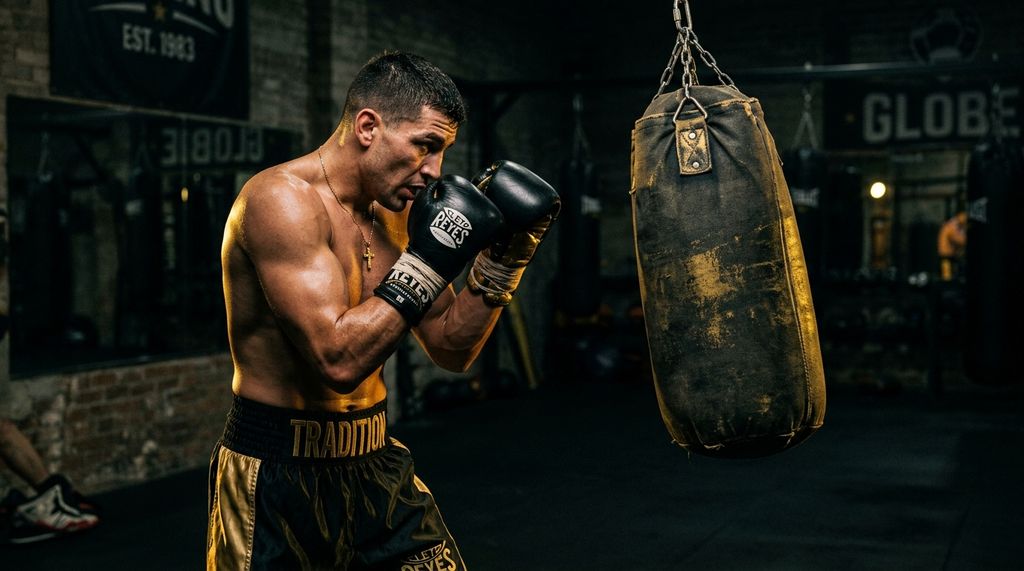
The specific benefits depend on how you use it, but the core ones are:
Head movement and slipping. This is the main one. As the bag swings towards you, you practise moving your head just far enough off the line to let it pass. Not a big dramatic dodge - a small, controlled movement from the hips and knees. Over many repetitions, that movement becomes instinct rather than decision.
Timing. The bag moves at a consistent speed and rhythm. You learn to anticipate its return, which trains the same timing you need to read an opponent's punches and react at the right moment rather than too early or too late.
Close-range punching. The maize bag is particularly good for hooks and uppercuts - the compact power shots you throw when you are in close. Because the bag hangs at head height and moves, it forces you to stay tight with your punches rather than swinging wide.
Footwork and angles. Good defensive boxing is not just about moving your head - it is about stepping to angles where you are less exposed. The maize bag rewards you for moving to a better position. Stay flat-footed and the bag just keeps coming back at the same line. Circle off it and you create space.
England Boxing's coaching handbook specifically references the maize bag as effective for developing hooks, uppercuts, timing, and distance judgement - the defensive and close-range skills that are hardest to train on static equipment.
How to set it up
Height matters more than most people realise. The bottom of the bag should sit at roughly chin level when it is hanging still. You want it at the height of an opponent's head, because that is what you are practising avoiding.
If the bag is too low, you are practising ducking under shots that would hit your chest. Too high, and you will end up reaching for it rather than moving naturally into position.
In a gym like H&G, your coach will show you where to set the height for your build. If you are using one independently, adjust it and do a few test swings before you start. Five minutes spent on setup is worth it.
The chain or cord length also affects how the bag behaves. A short attachment means the bag returns quickly and stays close. More length gives it a wider, slower swing. For beginners, a shorter attachment is easier - the bag is more predictable. Extend it as your movement improves.
Starting out: the first three drills
The instinct on the maize bag is often to start punching it. Resist that for the first couple of sessions. The bag is a defensive tool first.
Push and slip drill. Stand in your stance with the bag at chin height. Give it a gentle push forward and step back slightly. As it swings back towards you, slip your head to the outside - move your chin past the line of the bag so it passes your cheek rather than hitting your nose. Reset. Do it again to the other side. This is the whole movement. You are not hitting anything. You are moving your head to avoid something. Spend ten minutes just doing this and you will understand what the bag is actually for.
Slip and counter drill. Once the slip feels natural, add a punch immediately after. Slip to the outside of the bag's swing, and as your second foot lands, throw a hook or uppercut to where a real opponent's head would be. Slip - land - punch. The movement and the shot have to be one continuous action, not two separate things. This is the real pattern in boxing: avoid, then attack.
Bob and weave drill. Push the bag sideways so it swings left and right rather than straight at you. As it comes across your face level, duck under it in a U-shaped movement - down as it comes, up as it passes. This is the weave. Getting this right requires bending at the knees rather than just bending the back. Coaches notice the difference immediately and it matters for your lower back over the long run.
Common mistakes
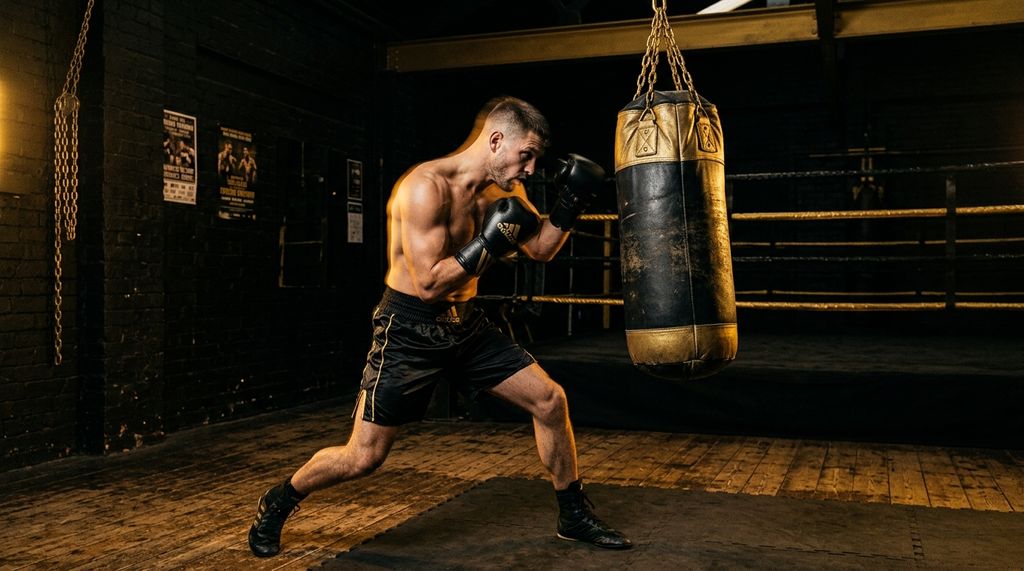
Going too hard. The maize bag is not a power tool. Hit it hard and it swings erratically, ruins the rhythm, and teaches you nothing. Light contact, controlled movement. The purpose is the head work, not the punch.
Moving your head too much. A common beginner error is to dodge the bag by a foot. That looks dramatic but it is not useful training. In a real fight, moving your head far off line takes you out of position to counter. Train the small, tight slip - just enough to miss, not a foot past it.
Ignoring your feet. It is easy to get absorbed in the head movement and forget that your feet should be moving too. After every slip or weave, take a small step to change your angle. Do not root yourself to one spot.
Getting frustrated and leaving. The maize bag is one of those things that takes a few sessions to click. If it feels chaotic and uncontrollable in the first session, that is normal. Most people who persist past three sessions find the timing suddenly makes sense. The ones who walk away after ten minutes never find out.
Who should be using the maize bag
Any boxer past the very early beginner stage should be spending time on this bag. Specifically:
People a few months into their training who have the basic punches down but have not done much defensive work. The maize bag is the obvious next step.
Anyone who finds themselves getting hit in sparring by punches they saw coming. The issue is usually not reflexes - it is that the movement to avoid those punches is not automatic yet. The bag builds that automaticity.
People training for fitness who want to develop genuine boxing skills rather than just a workout. There is something satisfying about doing a proper slip-and-counter sequence cleanly. It feels like boxing, because it is.
Competitive boxers who want to work on defence between pad sessions. The bag is available independently and you can get meaningful work done in one or two rounds.
It is worth saying: two or three rounds on the maize bag is usually enough in a single session. It is not the kind of equipment you spend an hour on. Use it as part of a broader session, not as the whole thing.
How it fits with the rest of your training
The maize bag sits alongside pad work, not as a substitute for it. Pads with a coach is where you learn and refine technique with corrections in real time. The maize bag is where you reinforce what you have already learned - specifically the defensive side of it.
Think of it this way: if pad work teaches you the skill, the maize bag builds the habit. Doing a hundred slips on a bag means the movement is in your body rather than just your head. When someone throws a punch at you in sparring, you want the response to be physical memory, not a thought process.
Our double end bag guide covers another reactive bag that complements the maize bag well - where the maize bag focuses on defensive movement, the double end bag adds timing and counter-punching accuracy. The two work together.
The speed bag rounds out the set if you want to cover shoulder endurance and rhythm separately.
Getting started at H&G
At Honour and Glory in Kidbrooke, Greenwich, we have maize bags as part of the gym setup. If you have not used one before, ask one of the coaches to walk you through the setup and the basic slip drill before you start independently. Five minutes of guidance saves a lot of time working out bad habits.
The bag is available to all members during open sessions - you do not need to be a competitive boxer to use it. If you are doing recreational training or boxing for fitness, the defensive skills it builds are just as relevant. Getting hit less is good regardless of why you train.
If you want to see how the gym works and what a proper session looks like, book a free trial.
---
Honour and Glory Boxing Club trains beginners through to competitive amateurs in Kidbrooke, Greenwich. For more on what the different bags in the gym do, see our guide to the double end bag and our speed bag guide.
H&G Team
Writer at Honour & Glory Boxing Club, a community boxing gym in Kidbrooke, South East London.
KEEP READING
How to Improve Your Head Movement: Drills That Help
Head movement is the most difficult defensive skill in boxing. Here are the drills that actually develop it, why most people practise it wrong, and what coaches look for.
How Hard Should You Hit a Heavy Bag?
Most bag rounds do not need maximum force. Learn when to hit hard, when to stay light and how to keep boxing technique intact.
Heavy Bag Work That Transfers to Sparring
The heavy bag builds power, but only if you add defence, feints, distance and clean technique instead of treating it like furniture.
Was this page helpful?
It takes one tap, and it genuinely helps.
Choose your next step
Turn this article into the right action
Some readers are ready to book. Some need the class route first. Pick the route that matches what you actually want.