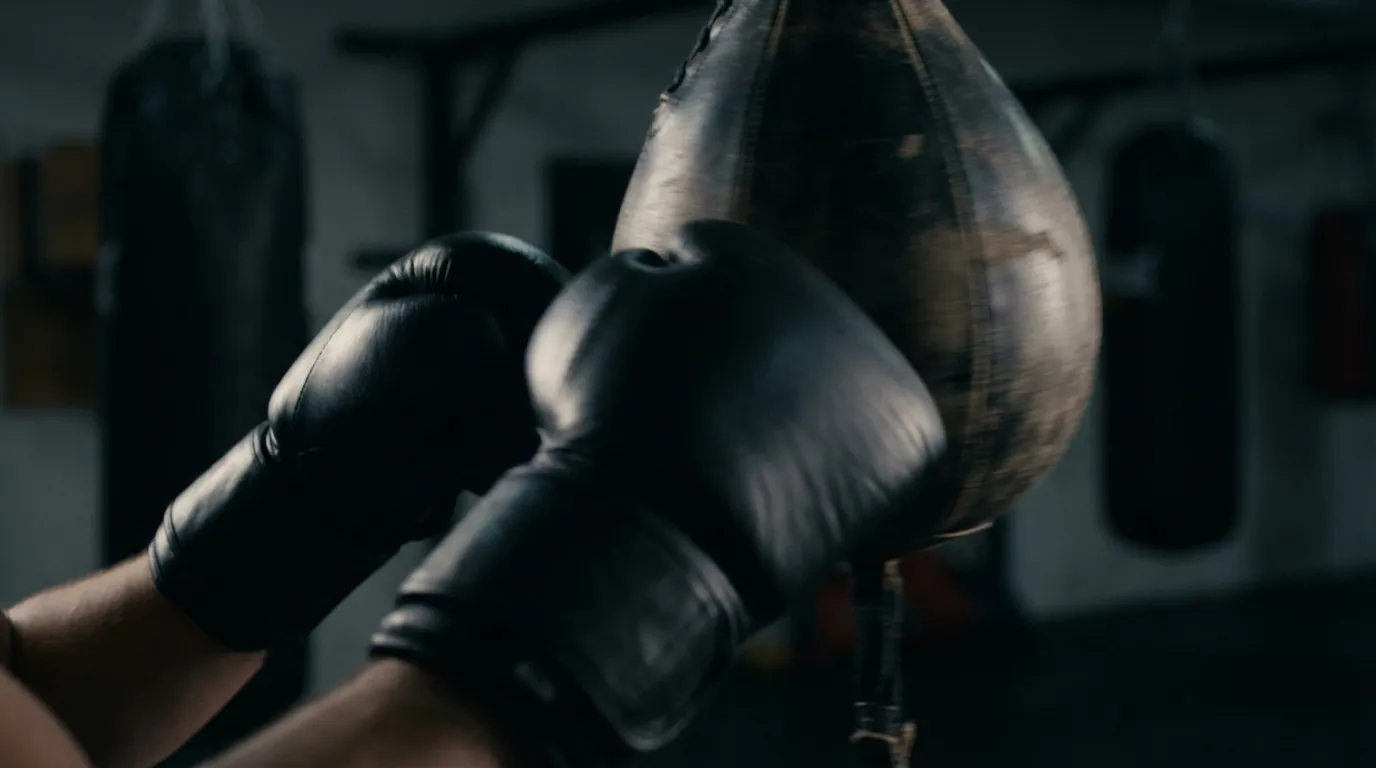
Walk into any proper boxing gym and there is a moment most beginners have - someone glances over at the speed bag, watches it blur into a near-invisible whir, and quietly decides to leave that one alone. For now. Maybe forever.
That decision is understandable. Speed bag boxing looks like a skill that requires some innate gift - natural rhythm, freakish coordination, years of repetition. The reality is more mundane, and actually more encouraging. The speed bag is one of the most learnable pieces of equipment in the gym. It just has a steeper first ten minutes than almost anything else.
This guide is about those first ten minutes, and what comes after.
What the speed bag is actually for
The speed bag does not build power. That is the heavy bag's job. What the speed bag does is train a cluster of things that are genuinely hard to develop through other means - rhythm, shoulder endurance, hand-eye coordination, and the ability to keep your hands up without thinking about it.
That last one matters more than people realise. One of the most common problems in beginners is dropping the hands after punching. It happens because raising your arms is tiring, and fatigue finds the path of least resistance. The speed bag forces you to keep your hands at face level for entire rounds. Your deltoids and upper arms will complain about this the first few sessions. Then they will not. Wicked Boxing's guide to speed bag training notes that consistent speed bag work develops hand-eye coordination, timing, and reflexes by requiring constant visual tracking of a moving target at pace.
The other key benefit is timing. Unlike the heavy bag, which you hit and largely controls nothing, the speed bag bounces back on a precise rhythm. It punishes you for being off-beat. Over time, your body internalises that rhythm and starts to apply it more generally - to combinations, to footwork, to reading an opponent's patterns.
The three-bounce rule
Here is the thing nobody tells you clearly enough at the start. Every time you hit a speed bag, it bounces forward, back, and forward again before it reaches you. Three bounces. Hit - one, two, three - hit. That is the whole mechanism.
If you are rushing it, you are fighting the bag rather than working with it. If you are too slow, you lose the rhythm and the bag ends up swinging sideways. Three bounces. Commit to that number before you touch the bag.
The height matters too. The bag should be level with your mouth or nose when it hangs still. Most gym bags are adjustable - worth taking a moment to set it before you start, rather than hunching or reaching overhead.
Starting from scratch
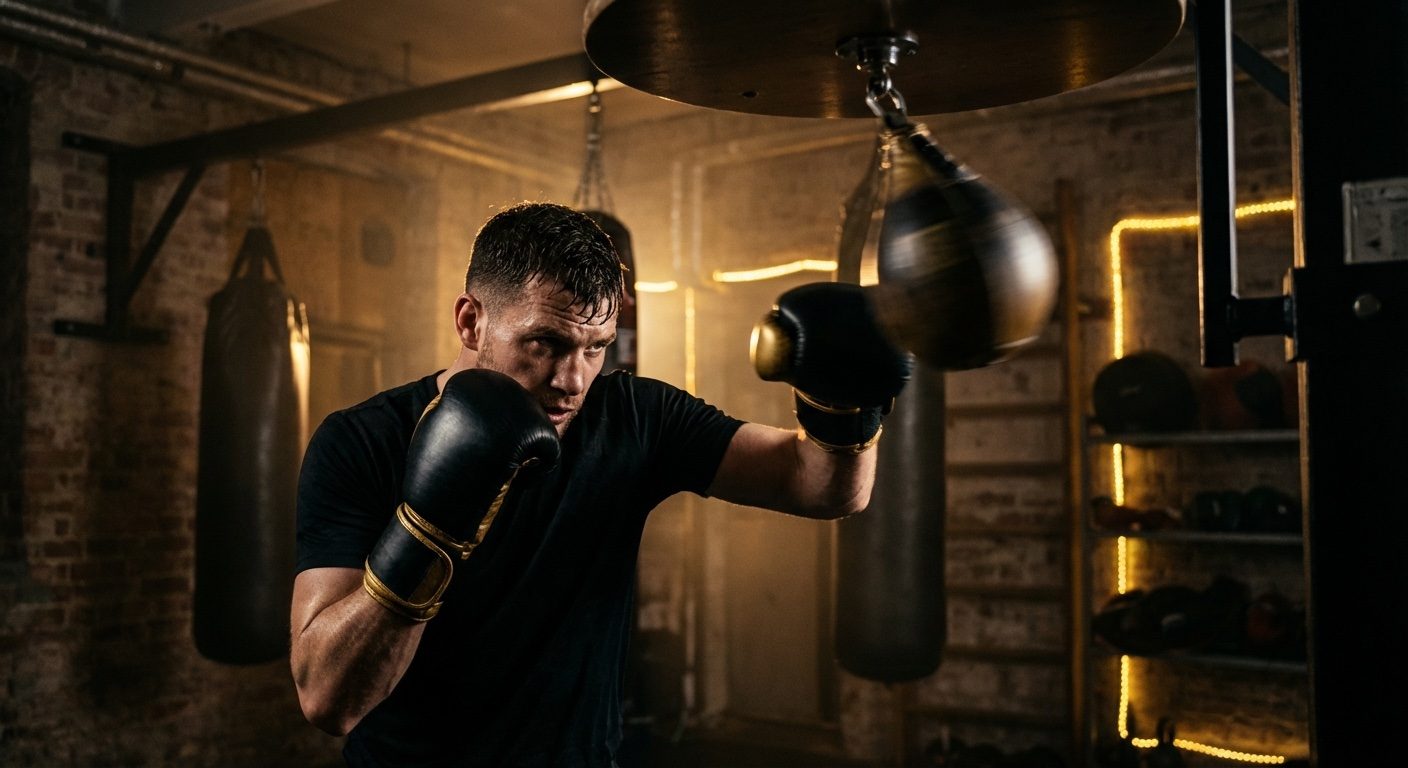
The single best tip for beginners is: open your hands.
Do not punch the speed bag. Not yet. Instead, keep your hands slightly open and strike it with the heel of your palm or your fingers. This does two things. It slows you down, which helps you find the rhythm. And it removes the variable of where your fist lands, which is one thing too many to manage when you are first getting started.
Stand directly in front of the bag with your hands at eye level. Hit with your right hand, wait three bounces, hit with your right hand again. Just that. Same hand, both hits using the three-bounce gap. When that feels like second nature - and it will, sooner than you think - switch to right-right-left-left. Both hands now, each side hitting twice before you swap. This is the most natural beginner rhythm for alternating hands.
Keep your elbows up. The arms should move in small circles, not big windmill swings. Your hands stay close to the bag at all times - when one hand hits, the other should be sitting just below the bag waiting. The less distance you travel, the more control you have.
Common mistakes (and why you are making them)
Hitting too hard. This is the most common one. The speed bag does not require force - it requires precision. Hitting it harder does not make it faster to control, it makes it more erratic. Start embarrassingly light. You can add pace later.
Reaching forward. Most beginners step back from the bag to get a clear view of it. Then they have to reach to hit it, which throws off the timing. Stand closer than feels natural.
Trying to watch your hands. Your eyes should be on the bag, not your fists. Where your hands are is secondary - where the bag is going is the information you need.
Giving up after thirty seconds. The speed bag has a way of making people feel worse at something the moment before they get better at it. There is a specific frustrating stage where you can do five or six clean hits and then completely lose it. That stage means you are close. Do not walk away from it.
Building your endurance
Once the rhythm is there, the work shifts to conditioning. A speed bag round is typically two or three minutes. In the first few weeks, your shoulders will fail before your technique does. That is normal and actually useful - it tells you exactly where the weakness is.
Work in full rounds rather than doing thirty seconds and stopping. The reason the bag builds shoulder endurance is the sustained effort, not short bursts. If you need to slow down mid-round, slow down - but keep going. Stopping and restarting resets the benefit.
After a few weeks of basic alternating rhythm, you can start experimenting. A common next step is the double-tap - hitting the bag twice with the same hand before switching. You can also try timing combinations: jab-jab-cross tempo, or a hook rhythm that uses the side of your fist in a looping arc. None of this matters until the base rhythm is solid.
How much time should you spend on it
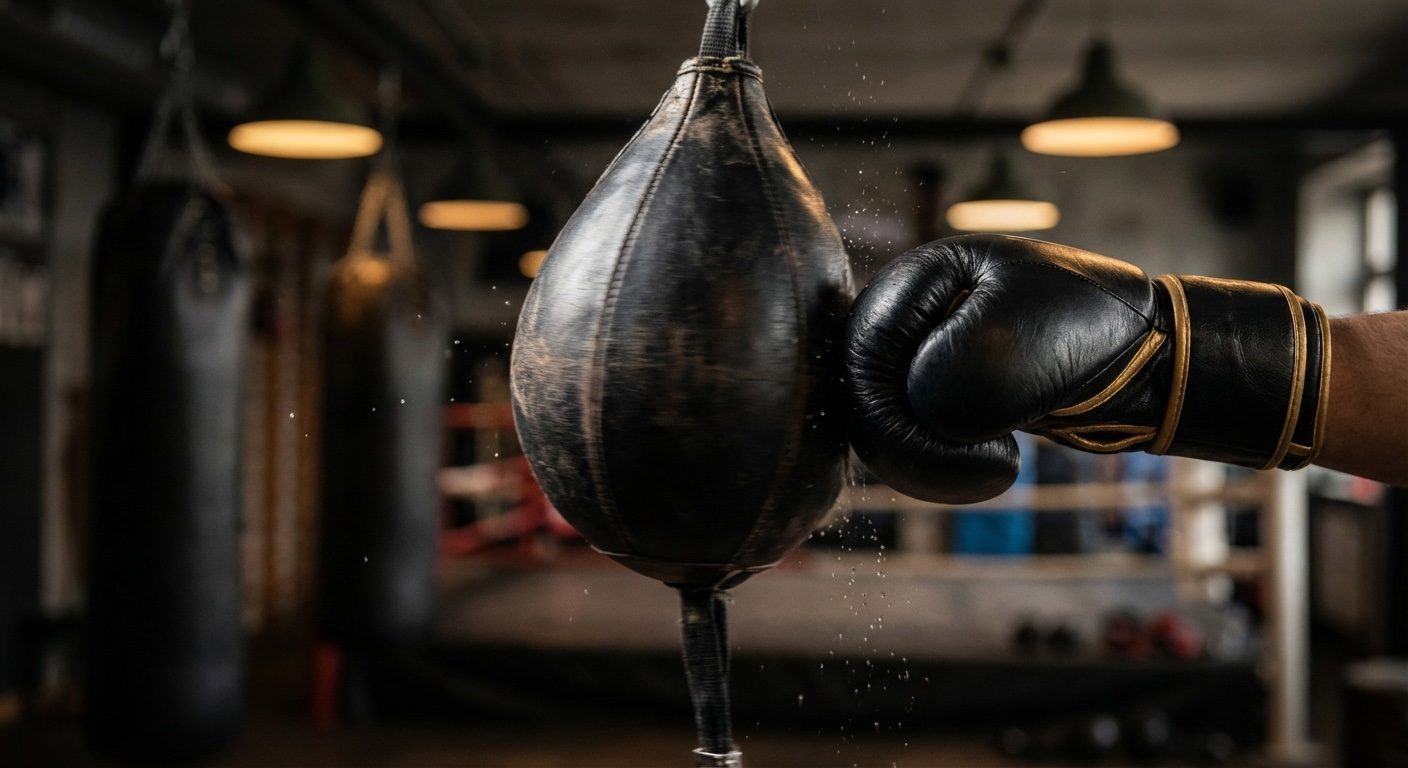
The speed bag is a supplement, not a session in itself. Most boxers at H&G will spend five to ten minutes on it as part of a broader session - a round or two after skipping or before the heavy bag, or worked into a circuit. It does not need to be its own slot in the timetable.
For beginners who are specifically working on their coordination, a focused ten-minute practice a few times a week will produce noticeable improvement within a month. Sting Sports recommends 3-4 focused sessions per week of 15-20 minutes emphasising rhythm over power to develop consistent timing improvements - the same principle applies to the speed bag, where rhythm is everything. The rhythm tends to click in a session you do not expect it to - you will come in, warm up, and suddenly realise it feels different. That is the payoff.
It is not about looking impressive
There is something in boxing gym culture where the speed bag carries a certain mystique. Watching someone fluid on it does look good - the blur, the rhythm, the apparent ease. That impression is the end product, not the process.
The process is ten embarrassing minutes with an open palm, learning to count to three. Every competent speed bag boxer started there.
At H&G, we have the bags, the coaching, and frankly the patience for the awkward stage every beginner goes through. Kidbrooke's not glamorous, and neither is most of boxing training when you are getting started. But the improvement is steady, and the speed bag is one place where that improvement is genuinely measurable - week by week, you can feel the difference.
Come in, pick a bag, start slow, and count your bounces.
Claim a free trial at Honour and Glory and try the speed bag for yourself.
H&G Team
Writer at Honour & Glory Boxing Club, a community boxing gym in Kidbrooke, South East London.
Was this page helpful?
It takes one tap, and it genuinely helps.
Choose your next step
Turn this article into the right action
Some readers are ready to book. Some need the class route first. Pick the route that matches what you actually want.