
There is a particular kind of tired that belongs to dads. It is not just bad sleep. It is work, nursery runs, school forms, bills, messages you forgot to answer, and the small guilt of knowing you should probably do something for your own health as well.
Boxing fits that life better than most fitness plans because it is honest. You do not need to pretend that you can train like a professional. You need one or two hard, coached sessions a week that clear your head, rebuild your fitness, and give you a skill that still feels interesting after the novelty has gone.
At Honour and Glory, we see plenty of men who come back to training after children, long work hours, or years of doing nothing more than the occasional jog. The good ones do not wait for a perfect routine. They build a realistic one.
Why boxing works well for dads
Boxing gives you a lot back for the time you put in. A proper session uses your legs, shoulders, trunk, lungs and brain at once. You are not just counting reps while staring at a wall.
That matters when time is tight. The UK Chief Medical Officers' physical activity guidelines recommend regular aerobic activity plus strength work for adults. The NHS gives the same broad advice: adults should aim for weekly activity that raises the heart rate, with muscle-strengthening work on at least two days (source). Boxing ticks both boxes when it is coached properly.
It also solves the boredom problem. Most dads do not fail at fitness because they have never heard of exercise. They fail because the plan is dull, lonely, or too easy to skip. Boxing gives you a coach, a room, a timer, a partner, and a reason to improve that is not just weight loss.
If you already lift, run, or play five-a-side, boxing can sit beside it. If you do nothing at all, it can be the first thing that gets you moving again.
The real problem is not motivation
Motivation is overrated. The real problem is friction.
A dad with two children, a full-time job and a partner who also needs a break cannot build training around fantasy. He needs a session time he can actually make, kit that stays packed, and an agreement at home that this hour matters.
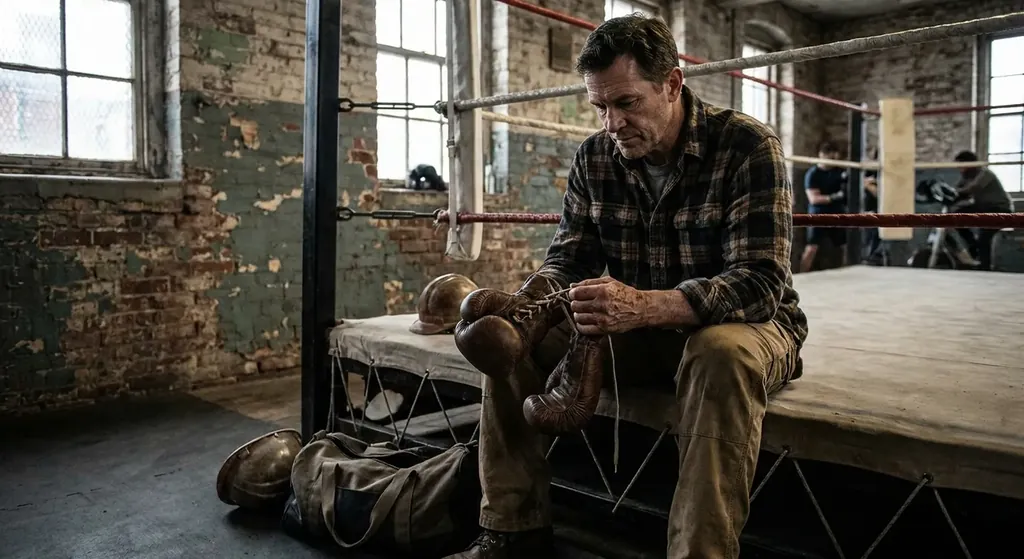
That sounds less exciting than a twelve-week transformation plan, but it works. Put gloves, wraps, water and a T-shirt in one bag. Keep it by the door or in the car. Pick the same training night most weeks. Tell your family the plan before the day arrives, not ten minutes before you leave.
The target at first is not perfection. It is attendance. Once you are in the gym, the coach can deal with fitness, stance, footwork and conditioning. Nobody can coach you from the sofa.
Start with one or two sessions, not five
The biggest mistake is trying to overcorrect. A man who has not trained properly for years suddenly decides he will box four times a week, run twice, cut bread, quit sugar, and become a different person by Friday.
That plan usually lasts about ten days.
Start with one session a week if life is genuinely full. Two is better if you can hold it without causing trouble at home. Three can work later, once your body and routine have adjusted. Our guide to how often you should train boxing explains the difference between maintenance, progress and fight-style training.
For most dads, two good sessions beat five imaginary sessions. You will get fitter because you are actually there. You will learn because the coach sees you regularly enough to correct you. You will recover because you are not trying to live like a twenty-year-old with no dependants.
What a dad-friendly boxing session should include
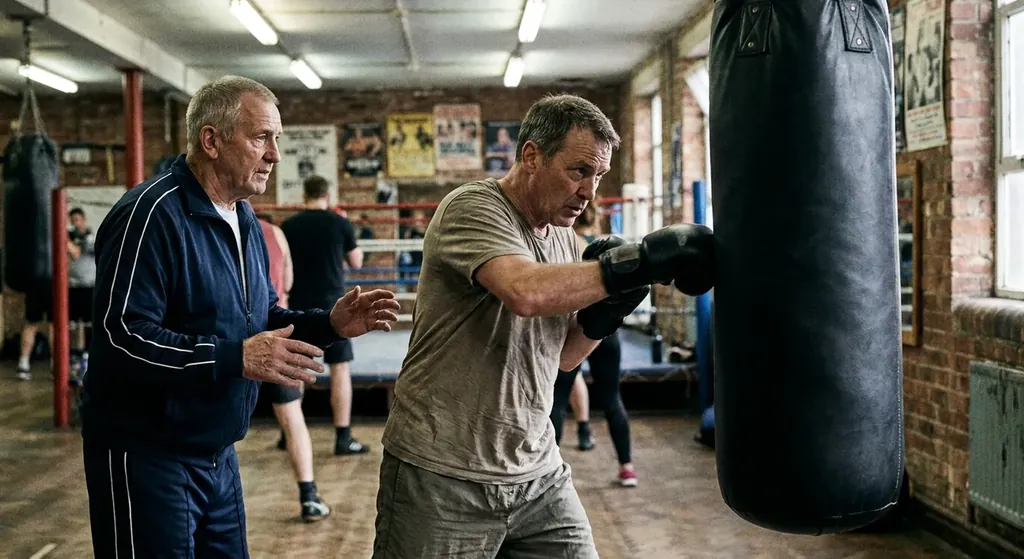
A good adult beginner session should not throw you straight into hard sparring. It should teach you how to stand, move, punch, defend yourself, breathe, and work under pressure without turning the room into a survival test.
Look for these pieces:
- A warm-up that raises the heart rate without breaking beginners in the first ten minutes
- Footwork and stance work, because balance comes before power
- Pad work or bag work with technical correction
- Partner drills where control matters more than ego
- Conditioning that is hard but not reckless
- A coach who can tell the difference between effort and panic
That last point matters. Dads often arrive with one of two problems: they either hold back because they feel rusty, or they go too hard because they feel they have something to prove. Both are coachable. Neither needs a lecture.
Our Recreational Adults boxing classes are built for that middle ground: proper boxing, proper coaching, no need to pretend you are trying to turn professional.
Boxing helps with stress because it gives it somewhere to go
Stress relief is not magic. Boxing helps because it gives your nervous system a clean job: move, listen, breathe, hit the target, reset.
A large overview of systematic reviews published in the British Journal of Sports Medicine found that physical activity can reduce symptoms of depression, anxiety and psychological distress (source). That does not mean boxing replaces medical care. It means regular movement is one of the better tools most adults keep ignoring.
For dads, the psychological part is often as important as the fitness. You spend a lot of family life being needed. In a boxing session, the job is simpler. Keep your hands up. Move your feet. Listen to the coach. Finish the round.
That simplicity is powerful. You leave tired, but it is a cleaner tired than the one you brought in.
You do not need to be fit before you start
This is the line that keeps people out of gyms for years: "I will start once I am fitter."
No. You get fitter by starting.
A decent boxing coach can scale the work. You can slow the pace, reduce the round length, take a breather, or focus on technique while your engine catches up. What you cannot do is wait until parenting, work and sleep all line up perfectly. That week may not arrive.
If you are carrying extra weight, coming back after a long gap, or worried about looking bad, start in a recreational class. You will not be the only beginner in the room. You will probably not even be the least fit person who has ever walked through the door that month.
We wrote more on this for men returning later in life in Boxing for Men Over 40. The same principle applies to dads in their twenties and thirties as well: train the body you have today, not the one you remember from before children.
Make the family calendar part of the plan
The family calendar beats the training plan every time. So put boxing on the family calendar.
If you treat training as a vague hope, it will lose to homework, traffic, late meetings, washing, and the moment a child remembers a school project at 8.30pm. If you treat it as a fixed appointment, it has a chance.
Some dads train straight after work before going home. Some come out after bedtime. Some use Saturday sessions because weekday evenings are chaos. There is no moral prize for the hardest route. The best route is the one you can repeat.
If you are near Greenwich, Kidbrooke, Blackheath or Eltham, the practical travel question matters. A brilliant gym that takes ninety minutes to reach will become a theory. A solid local boxing club you can reach and repeat will change more.
What about sparring?
Sparring is not the entry ticket. Beginners do not need to spar to get fitter, learn boxing, or feel the stress-relief benefit.
There is a proper pathway into contact work: stance, defence, control, partner drills, coach approval, and the right partner. Some adults eventually want that. Some never do. Both are fine.
For dads, especially those with work and family responsibilities, the point is to build a sustainable training habit first. If competitive or contact boxing becomes a serious goal later, talk to the coach. Do not rush it because your pride got loud after three decent sessions.
A simple weekly plan for busy dads
Here is a realistic starting point:
- One coached boxing class each week as the non-negotiable anchor
- One short walk, run, bike ride or home strength session when time allows
- Five minutes of shadow boxing or mobility on one other day
- Sleep whenever the household gives you the chance
That is not glamorous, but it is enough to restart momentum. After four to six weeks, you can decide whether to add a second class.
The key is not to make boxing another pressure in a life already full of pressure. Make it the hour that makes the rest of the week easier to handle.
The standard is not perfection, it is showing up
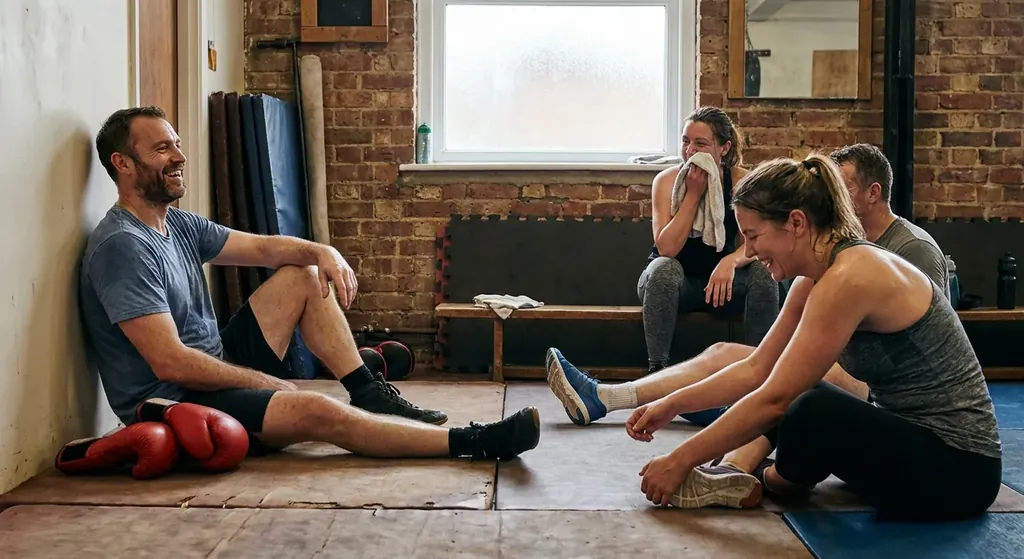
Dads are very good at putting themselves last and then wondering why they feel flat. Boxing will not fix every part of that. It will give you a regular place to work hard, learn something, and leave with your head clearer than when you arrived.
Start small. Keep the bag packed. Pick the session you can actually attend. Let the coach handle the boxing.
If you want adult training that respects real life but still teaches proper boxing, come and try a session with us.
H&G Team
Writer at Honour & Glory Boxing Club, a community boxing gym in Kidbrooke, South East London.
Was this page helpful?
Your feedback helps us improve this page
Got questions about what you just read?
ASK OUR AI ASSISTANT ✨MORE LIKE THIS


WANT TO JOIN US?
Book a free trial session and see what we're all about.
Claim a Free Trial