← Back to Articles Training Tips

Boxing and Back: Lats, Traps and the Pulling Muscles

By H&G Team 5 min read
Boxing and Back: Lats, Traps and the Pulling Muscles

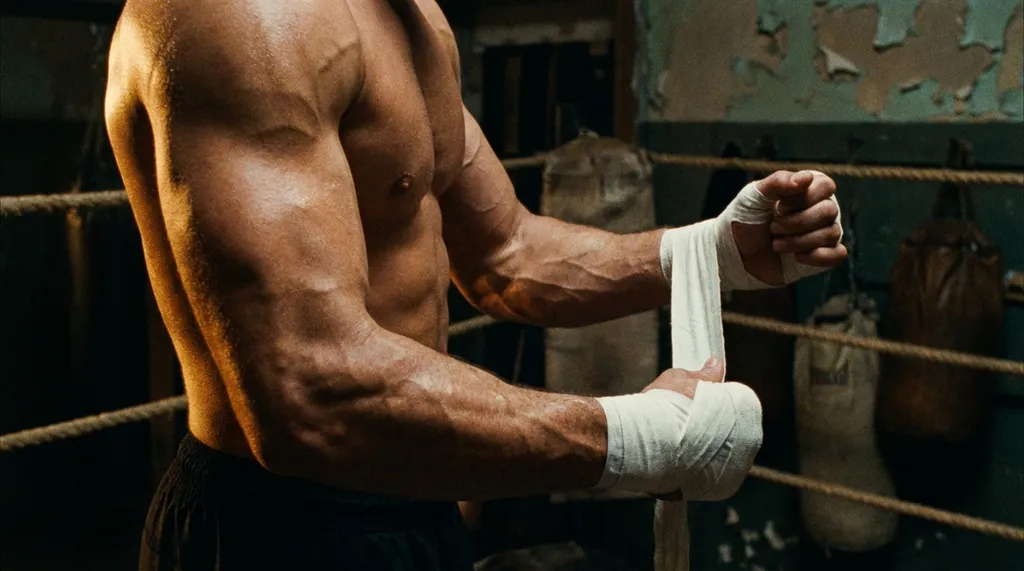
Ask most people which muscles boxing works and they will say arms, shoulders, and core. Almost nobody mentions the back. This is a mistake, because your back muscles do half the work in every punch you throw.

The back is responsible for punch retraction, defensive movement, posture under fatigue, and the elastic snap that makes combinations fast rather than laboured. Ignore it and your boxing suffers. Train it through boxing and you develop one of the most visibly athletic back profiles available from any sport.

The lats: snap and retraction

The latissimus dorsi is the largest muscle in your back. It runs from under your armpit down to your lower spine and it does something in boxing that most people never think about: it pulls your arm back.

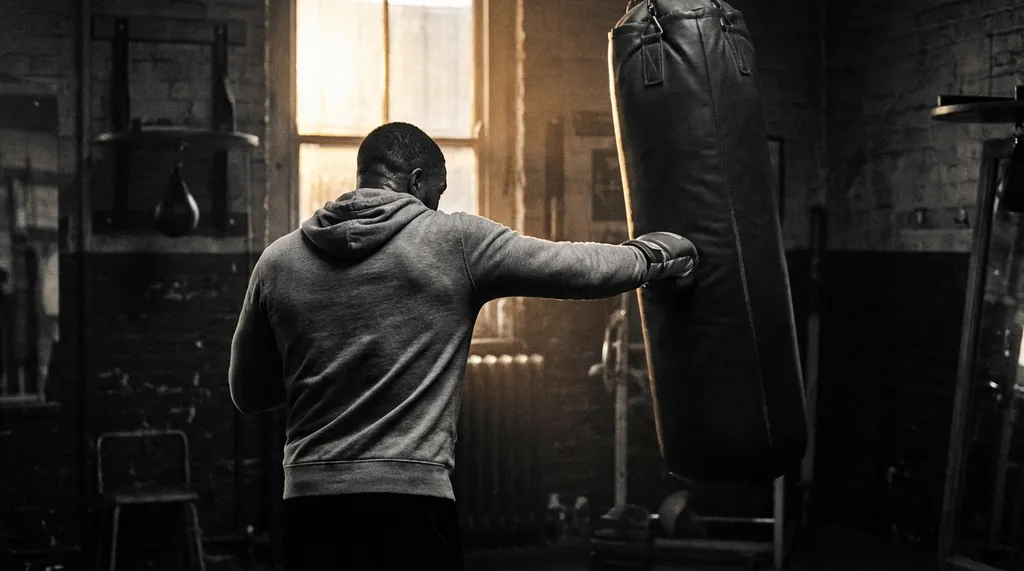
When you throw a jab, your arm extends. But the speed of your combination depends on how quickly that arm returns to guard position. The faster the retraction, the faster the next punch arrives. That retraction is powered by the lats.

A study in the Journal of Sports Sciences found that elite boxers generated significantly higher lat activation during punch retraction than novices. The difference was not in how hard they punched. It was in how fast they pulled their hand back. The lat is the muscle that separates fast combinations from slow ones.

Over hundreds of punches per session, the lats contract forcefully on every retraction. This builds the dense, wide lat development that gives boxers the characteristic V-taper, the wide upper back narrowing to a tight waist, without ever touching a lat pulldown machine.

The traps: posture and protection

The trapezius runs from the base of your skull down to the middle of your back and out to your shoulders. In boxing, it does three things.

First, it elevates your shoulders to protect your chin. When a coach says "keep your shoulders up," they are asking your upper traps to contract isometrically and hold that position for the duration of the round. Three minutes of sustained trap engagement is a serious training stimulus.

Second, the mid traps retract the shoulder blades. After you throw a punch and your shoulder blade protracts (moves forward), the mid traps pull it back into position. This happens on every single punch and creates the postural control that experienced boxers display.

Third, the lower traps stabilise the shoulder blade during overhead movements and defensive actions. Slipping, rolling, and ducking all require rapid scapular movement that the lower traps control.

Boxer slipping a punch showing lat engagement

A systematic review in the Journal of Shoulder and Elbow Surgery documented that athletes in overhead and rotational sports develop significantly greater trap activation patterns than sedentary controls. Boxing is both overhead (guard position) and rotational (every punch), making it one of the most effective trap developers available.

Rear deltoids: the forgotten shoulder

The posterior deltoid sits at the back of your shoulder and it is the most under-trained muscle in most gym programmes. In boxing, it works constantly.

Every time you retract a punch, the rear delt decelerates the arm and pulls the shoulder back. It also stabilises the shoulder joint during the rapid changes of direction that boxing demands. Without strong rear delts, the shoulder is vulnerable to injury from the repeated high-speed extensions of punching.

Boxers develop prominent rear delts naturally because the training volume is enormous. Two hundred punches means two hundred rear delt contractions. No amount of reverse flyes in a gym matches that volume.

The erector spinae: the posture chain

The muscles that run along either side of your spine, the erector spinae group, maintain your upright posture throughout a boxing session. When you are fatigued and everything in your body wants to collapse forward, the erectors keep you upright.

They also transfer force from the lower body to the upper body. The rotation that powers a hook or cross passes through the erector spinae. Weak spinal erectors mean force leaks out before it reaches your arms.

Boxers who train consistently develop a lower back that is thick and resilient. This is not the same as the massive lower back of a deadlifter. It is a functional, endurance-oriented development that protects the spine under fatigue and maintains posture when everything else is tired.

Boxer retracting their arm after a punch

Why boxing back is different from gym back

A gym back routine typically focuses on pulling movements: rows, pull-ups, lat pulldowns. These are concentric exercises where you contract the muscle against resistance.

Boxing back development comes primarily from eccentric and isometric contractions. The lats work eccentrically during punch retraction. The traps work isometrically holding the guard position. The rear delts work eccentrically decelerating the arm.

Eccentric training produces different muscle qualities than concentric training. It builds more durable tendons, creates longer muscle fibres, and develops the elastic quality that makes explosive movements possible. This is why boxing backs look different from gym backs: they are leaner, more defined, and more functionally resilient.

What you will notice

If you train boxing three times per week:

  • Week 2-3: Your upper back aches between the shoulder blades. This is the traps and rhomboids adapting to sustained guard position.
  • Week 4-6: Your posture visibly improves. The traps and erectors are stronger, pulling your shoulders back and your chest forward without conscious effort.
  • Week 8-12: The V-taper becomes apparent. Your lats widen, your waist stays tight (from the core work), and the overall silhouette changes.

Building the complete picture

This is the fourth article in our muscle series. Boxing builds the entire body, not in isolation like a gym programme, but as an integrated system where every muscle works with every other muscle.

  • Abs and core: the force transmitter
  • Arms: the delivery system
  • Legs: the power source
  • Back: the retraction and posture engine

Together, these produce the boxer physique: lean, defined, proportional, and genuinely functional. No single muscle group is neglected because the sport demands all of them in every session.

If you want to see what full-body athletic development feels like, book a free trial at Honour and Glory. First session free, all levels welcome. Your back will thank you. Eventually.

H

H&G Team

Writer at Honour & Glory Boxing Club, a community boxing gym in Kidbrooke, South East London.

Got questions about what you just read?

ASK OUR AI ASSISTANT ✨
#back #lats #traps #rear delts #muscle building #boxing fitness #body transformation
WEB DESIGN BY JF
Call Us Claim a Free Trial