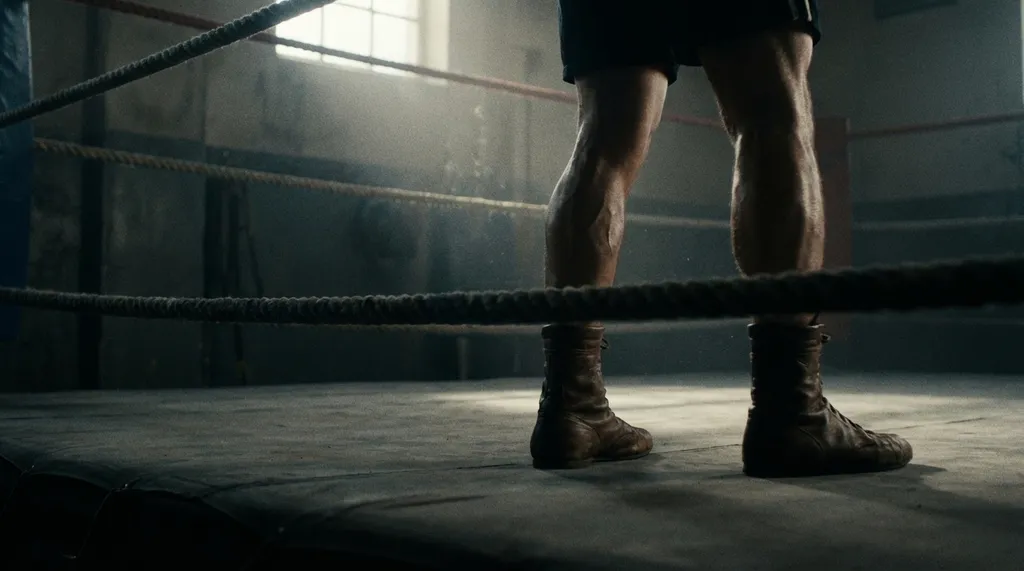
People who have never boxed assume it is an upper body sport. They see the arms moving and the fists landing and they think that is where the work happens. Then they attend their first session and discover that their legs are the first thing to give out.
Boxing is a leg sport. The power for every punch starts in the legs. The ability to move, cut angles, and control distance comes from the legs. The endurance to last three minutes on your feet, throwing and defending, depends on leg conditioning more than anything else.
Here is what happens to each muscle group when you box regularly.
Calves: the engine you did not know you had
The calf muscles (gastrocnemius and soleus) are the most consistently worked leg muscles in boxing. They are active every second you are in stance.
Boxing stance is a ball-of-foot position. Your heels are slightly raised, your weight is on the balls of your feet, and your calves are under constant tension maintaining that position. This is isometric calf work that lasts the entire session. Over 90 minutes, that is a volume of calf work that no gym programme replicates.
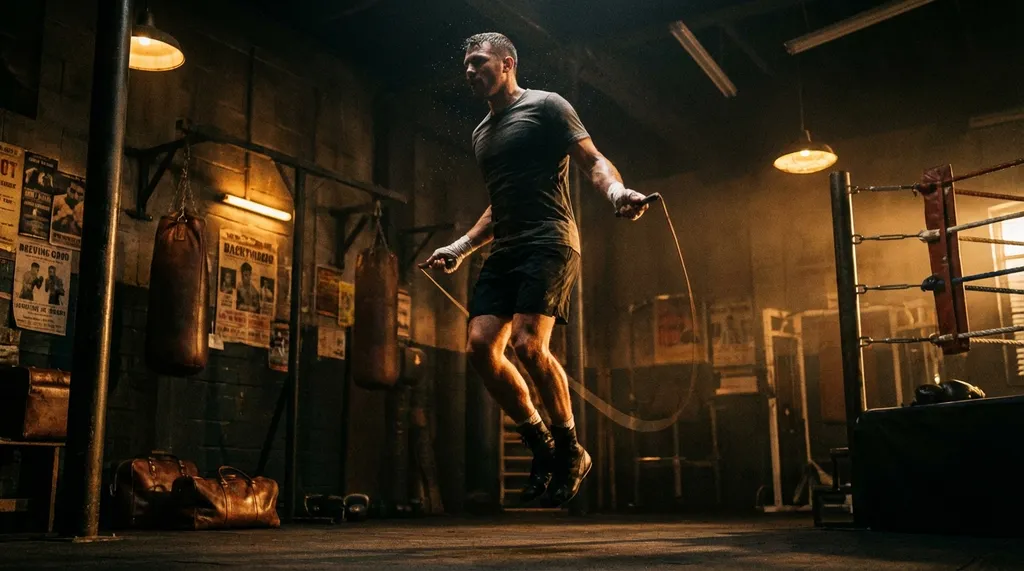
Then there is skipping. A standard boxing warm-up involves 10-15 minutes of rope work. Skipping is essentially repeated calf raises at high speed. A study in the Journal of Sports Sciences found that skipping develops calf power and elastic recoil properties comparable to plyometric training programmes.
The result: boxers develop calves that are dense, hard, and defined. Not inflated like a bodybuilder's, but visibly athletic with clear separation between the gastrocnemius heads.
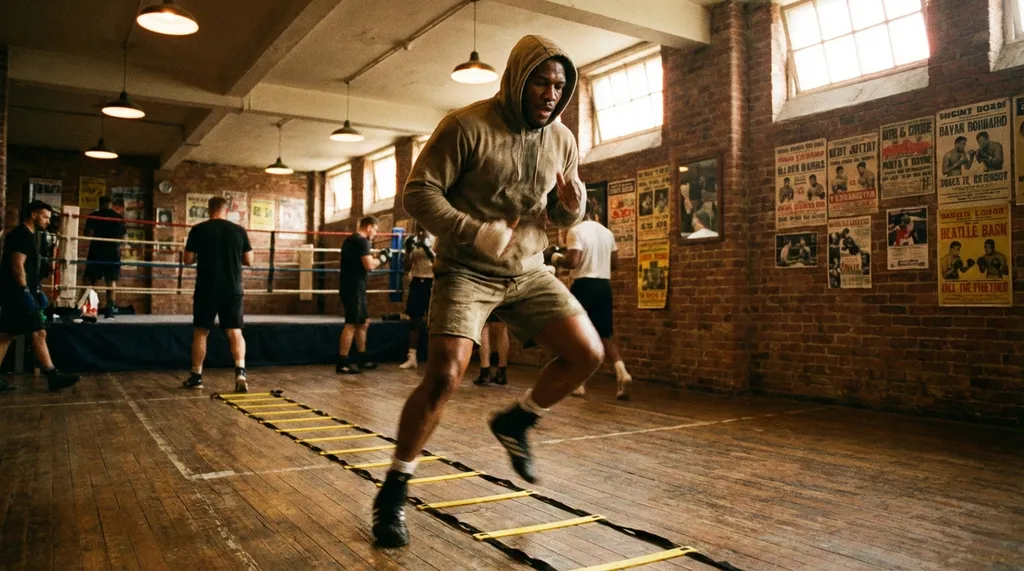
Quads: the stance muscle
Your quadriceps maintain your boxing stance. The slight knee bend that keeps you balanced and mobile is a sustained partial squat. Hold a quarter squat for three minutes and you will feel exactly what a boxing round does to your quads.
The quads also drive forward movement. When you step in to throw a combination, the front leg extends and the back leg pushes off. This is a split-stance pushing movement that loads the quads unevenly, which develops the kind of functional leg strength that transfers to real-world athleticism.
Lateral movement is where the quads really earn their keep. Cutting angles in boxing requires rapid lateral steps, each of which demands explosive quad contraction on the leading leg. A fighter who cannot drive sideways off the lead leg cannot create angles, and creating angles is what separates competent boxers from people who just stand in front of each other.
Research from the British Journal of Sports Medicine has documented that combat sport athletes develop significantly higher isometric leg strength than recreational exercisers, primarily because of the sustained partial-squat demands of stance-based training.
Glutes: the power source
Every boxing coach says "power comes from the hips." What they mean is: power comes from the glutes.
The gluteus maximus is the largest muscle in the body and it drives hip extension and rotation. When you throw a rear cross, the power sequence is: back foot drives into the floor, glutes fire to rotate the hips, core transmits the force, arm delivers the punch. If the glutes are weak, the chain breaks at the most critical link.
The gluteus medius, on the outside of the hip, is equally important. It stabilises the pelvis during single-leg stance phases. Every time you shift weight from foot to foot, pivot, or change direction, the glute medius fires to keep you balanced. Weak glute medius equals poor balance, and poor balance in boxing means getting knocked off your feet.
Boxers rarely need dedicated glute exercises because the training itself provides the stimulus. Hundreds of rotational movements per session, constant weight shifting, and the sustained partial squat of boxing stance all load the glutes in ways that are directly functional.
Hamstrings: the brakes
The hamstrings decelerate forward movement and stabilise the knee. In boxing, they fire every time you pull back from a punch, retreat from pressure, or absorb the force of a weight shift.
They also play a protective role. Boxers who lack hamstring strength relative to their quad strength are at higher risk of knee injuries during lateral movement. The balance between quad and hamstring development is one of the reasons boxing produces fewer knee injuries than sports like football or rugby, where the quad-to-hamstring ratio is often badly skewed.
What boxing legs look like
Boxing legs are distinctive. They are lean, defined, and proportional. The calves are hard and prominent. The quads have visible separation without being bulky. The glutes are developed but not exaggerated.
This is the natural outcome of a sport that demands endurance, power, and agility from the lower body simultaneously. No single gym exercise produces this combination because no single gym exercise asks the legs to do what boxing asks them to do: sustain a partial squat for minutes at a time, explode laterally, rotate at the hips, and absorb impact, all while maintaining balance.
The soreness reality
If you attend your first boxing session, your legs will be sore the next day. Not your arms. Your legs. Specifically:
- Calves: from skipping and stance
- Quads: from maintaining the partial squat
- Glutes: from the rotation in every punch
This catches almost everyone off guard. It also tells you something important about where the real work is happening.
Getting started
Honour and Glory Boxing Club runs sessions for all levels from complete beginner upward. Sessions cost from £5 with no contracts or joining fees. Your first session is free.
If you want legs that are athletic, defined, and really functional, boxing builds them from session one. No leg press required.
For the upper body side, see our articles on how boxing builds abs and what boxing does to your arms. And for fuelling all of this properly, our nutrition programme covers everything.
H&G Team
Writer at Honour & Glory Boxing Club, a community boxing gym in Kidbrooke, South East London.
KEEP READING
Why Your Legs Feel Heavy in Boxing
Heavy legs in boxing usually come from stance, pacing, conditioning, or recovery. Here is what causes it and what to fix first.
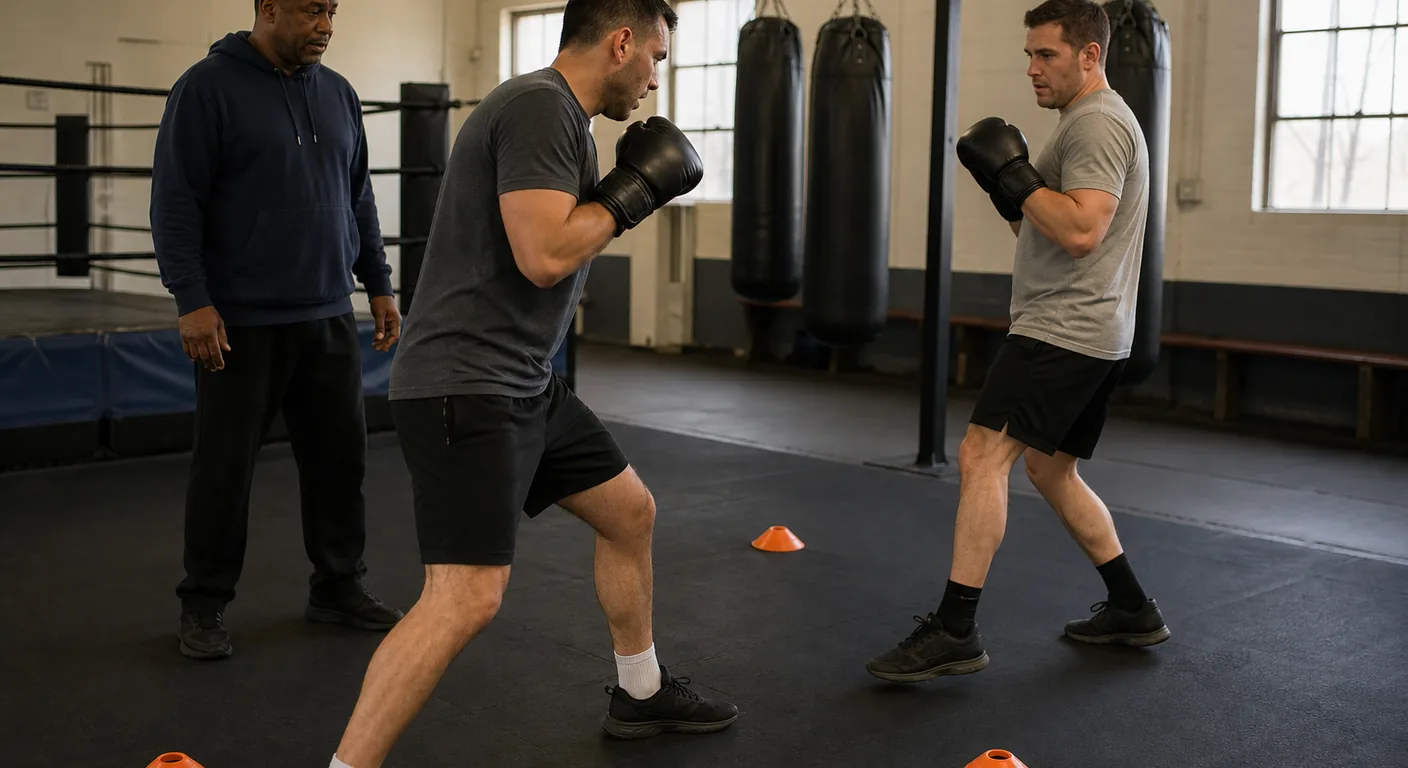
How to Close Distance in Boxing
Learn how to close distance in boxing without rushing, reaching or walking onto counters. A practical footwork guide for beginners.
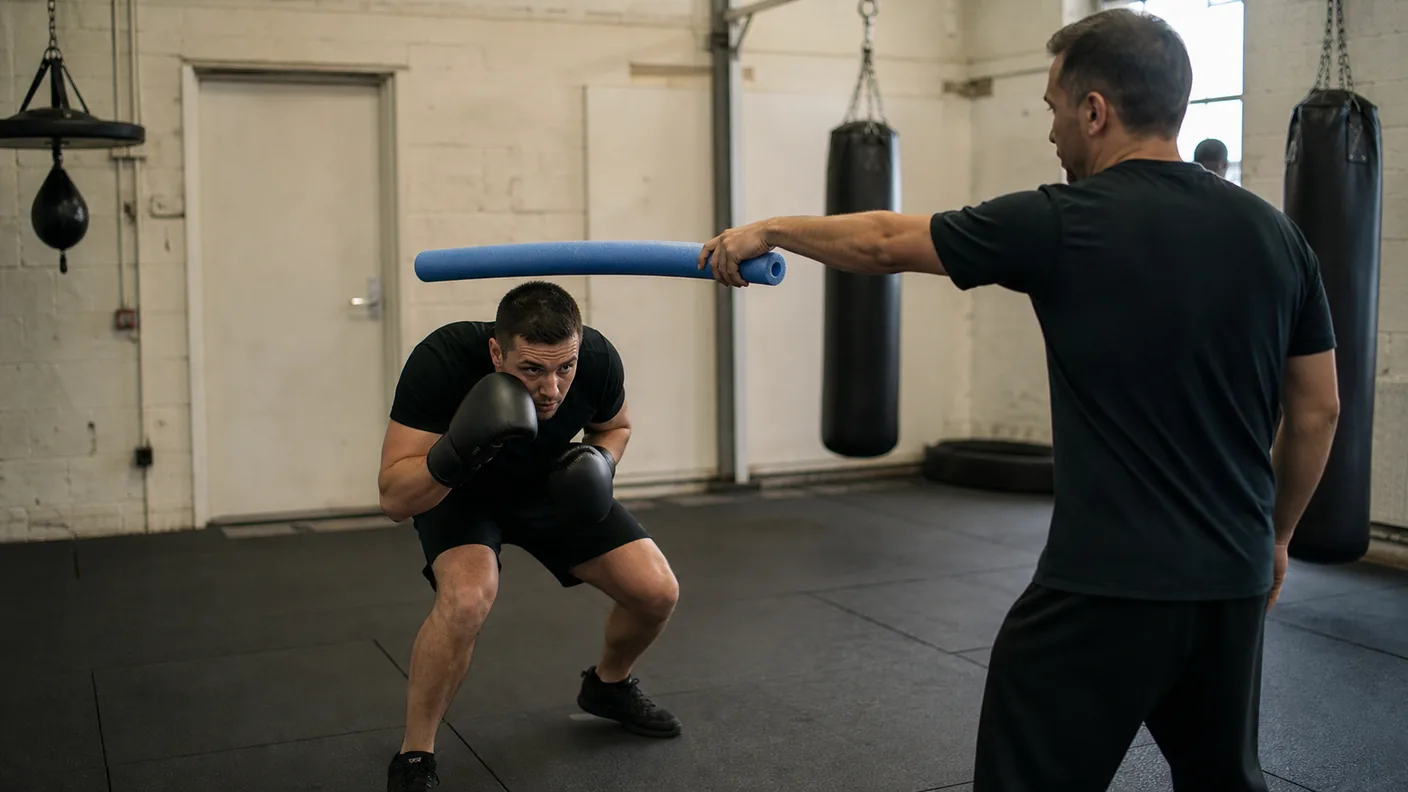
Roll Under Punches in Boxing Without Folding
Learn a compact boxing roll that uses the legs, keeps your eyes up and leaves you ready to hook, defend or move away.
Was this page helpful?
It takes one tap, and it genuinely helps.
Choose your next step
Turn this article into the right action
Some readers are ready to book. Some need the class route first. Pick the route that matches what you actually want.