Boxing and Menopause: Why High-Intensity Training Helps
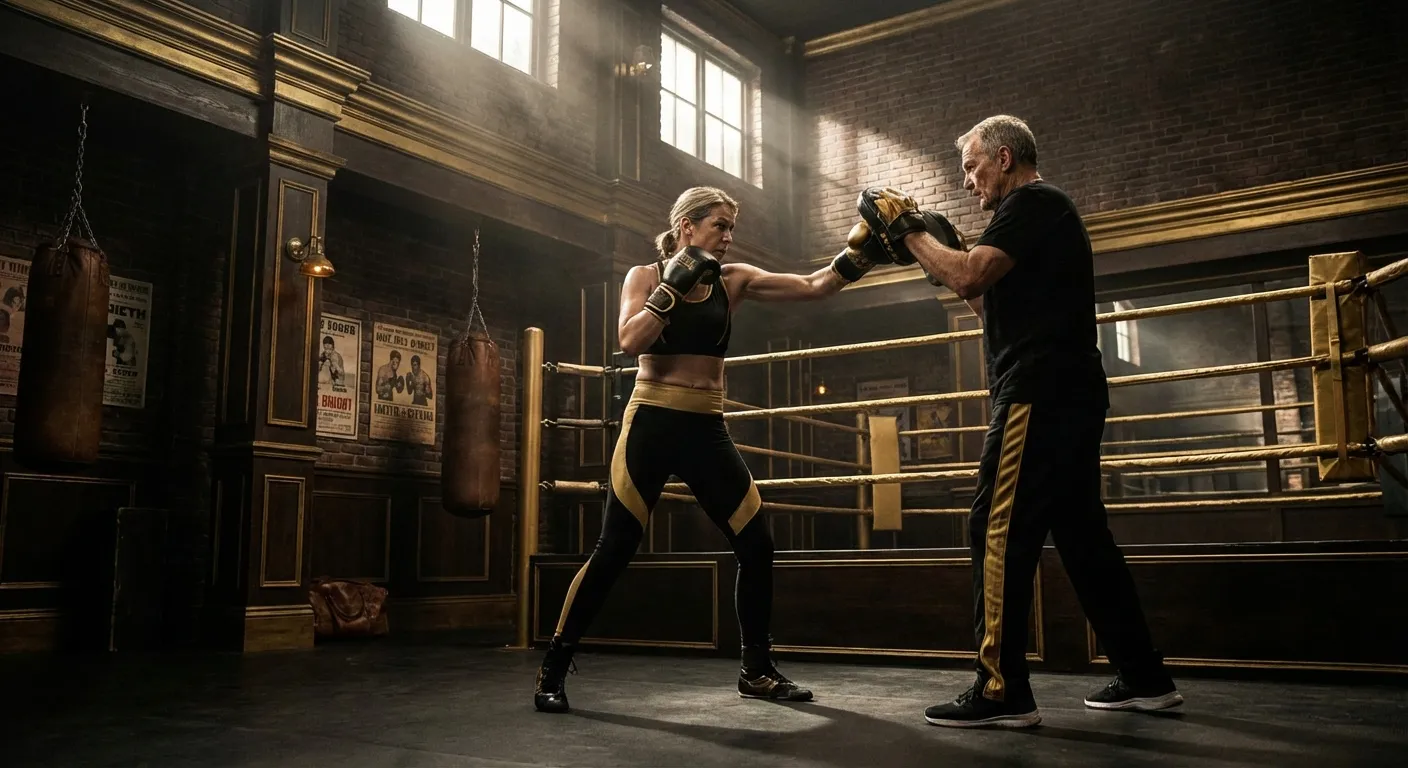
The standard advice for menopausal women and exercise has historically been conservative: light activity, gentle yoga, walking. The evidence now suggests this is insufficient - and that the women who benefit most from menopause management are those who train at higher intensities.
Boxing sits at exactly the intensity that the research increasingly identifies as most beneficial.
What Menopause Does That Exercise Can Address
The menopause transition involves declining oestrogen that produces a range of effects with varying evidence for exercise as a management tool.
Hot flushes and vasomotor symptoms. The evidence on exercise and hot flushes is mixed. Some studies show reduction, some show no effect. What is clearer is that exercise does not worsen vasomotor symptoms and improves the quality of life that hot flushes affect (source).
Mood changes and depression. The evidence for exercise as an antidepressant is strong across multiple conditions. For menopause-related mood changes, high-intensity exercise shows larger effects than moderate-intensity activity in multiple studies.
Sleep disruption. Regular vigorous exercise consistently improves sleep quality in peri and postmenopausal women. The physical exhaustion of genuine training overrides much of the sleep disruption associated with hormonal change.
Muscle and bone loss. Oestrogen is muscle and bone protective. Its decline accelerates both. High-intensity, impact-including exercise is the most effective non-pharmacological intervention for both.
Cognitive changes. Some menopausal women report brain fog and memory changes. Exercise is neuroprotective - it promotes neuroplasticity and blood flow to the brain. High-intensity exercise produces larger effects.
Weight gain and metabolic change. The metabolic slowdown of menopause is addressed more effectively by high-intensity training than by low-intensity activity.
Why High Intensity Works Better
The dose-response relationship between exercise intensity and the hormonal response to exercise is clear.
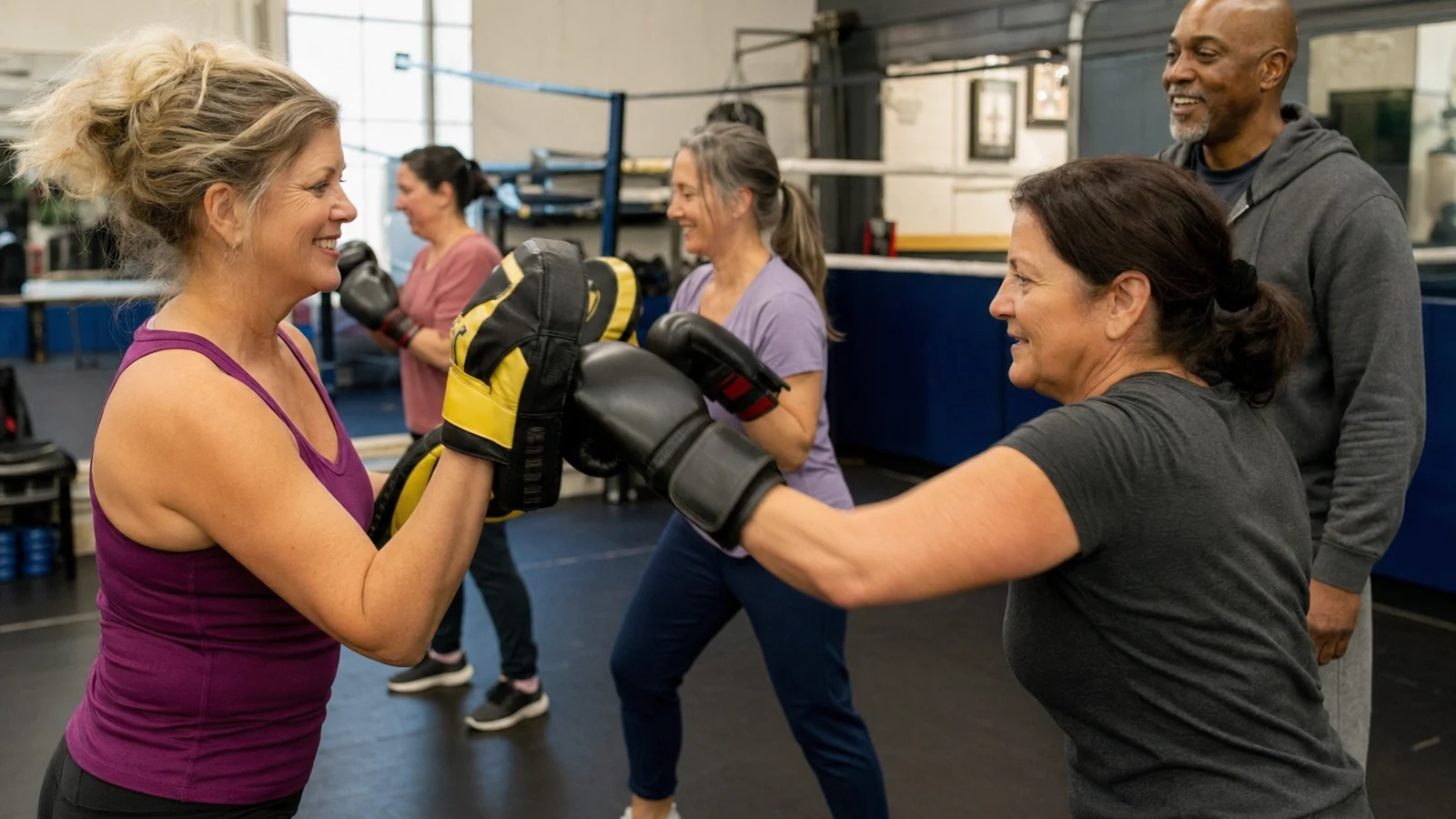
High-intensity exercise produces significantly larger releases of growth hormone, endorphins, dopamine, and BDNF (brain-derived neurotrophic factor) than low-intensity activity (source).
During menopause, oestrogen's protective role in neurotransmitter regulation is reduced. Exercise at high intensity compensates for some of this by driving the other neurochemical systems that regulate mood, cognition, and energy.
Low-intensity exercise produces smaller neurochemical responses. For some women, light activity is sufficient. For women experiencing significant mood, cognitive, or sleep challenges during menopause, the evidence increasingly suggests they need to exercise harder, not gentler.
Boxing as a Menopausal Exercise
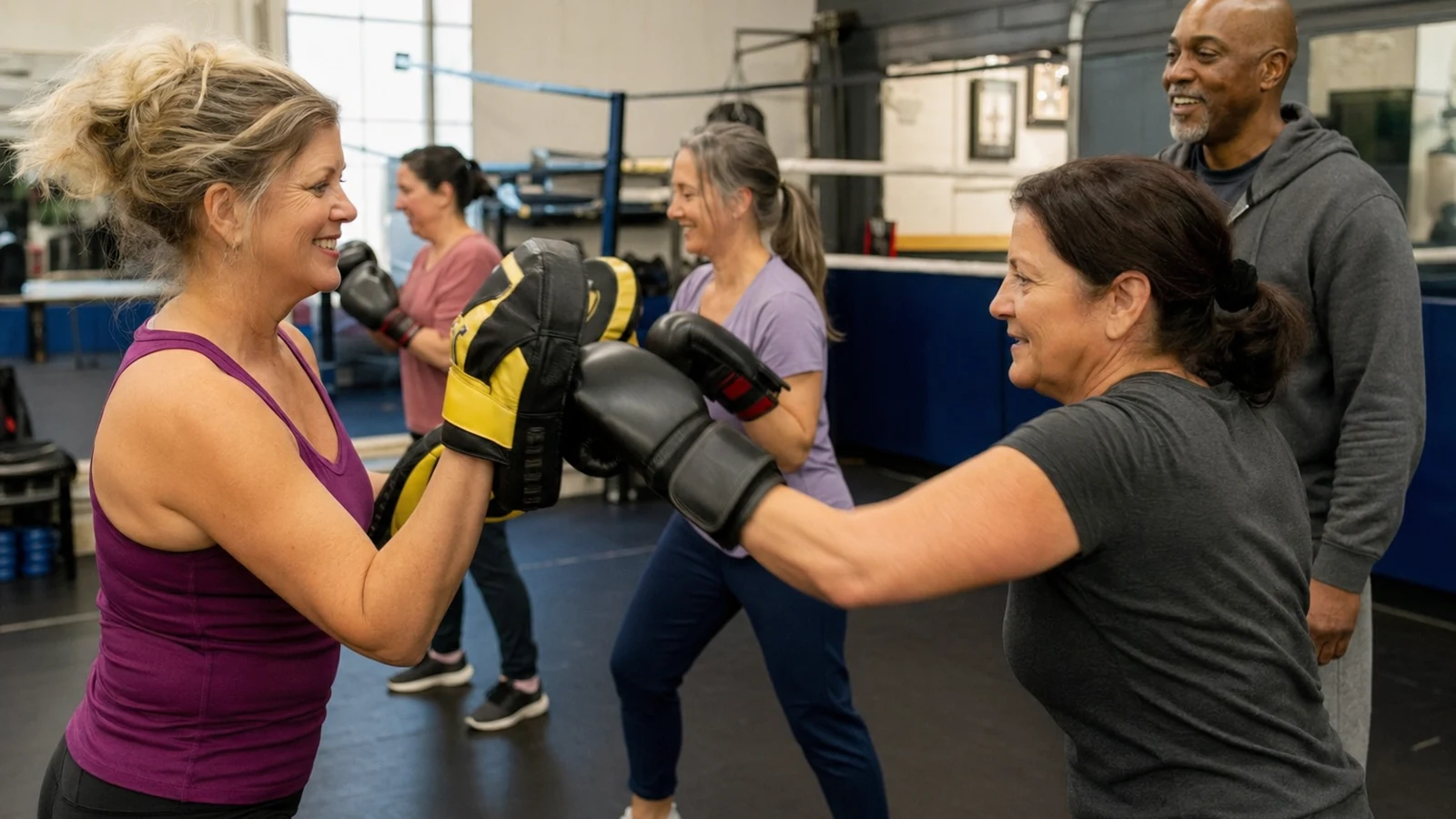
Boxing hits the required intensity. A hard boxing session will take your heart rate to 85-95% of maximum for sustained periods. This is exactly the intensity that produces the neurochemical responses most beneficial for menopausal symptoms (source).
The social context of boxing training also matters. Social isolation and loneliness are risk factors for worsening menopause symptoms and poststroke depression. A boxing gym community provides connection and belonging in a way that solo exercise cannot.
The skill development element adds something too. Learning new physical skills in mid-life and beyond is cognitively engaging in a way that walking is not. The cognitive demands of boxing - memorising combinations, developing tactical awareness, improving body awareness - provide exactly the kind of complex cognitive stimulation that is neuroprotective.
The Practical Considerations
For women in perimenopause or menopause starting boxing, a few practical notes:
Hot flushes during training are normal and manageable. Dress in layers you can remove. Have water. The gym temperature is relevant - ask about the ventilation situation.
Recovery may take longer. This is not a reason to reduce intensity. It is a reason to prioritise sleep and nutrition around training.
The hormonal effects on joint laxity continue during perimenopause. Warm up thoroughly.
At Honour and Glory, the Saturday Women's Boxing class has members across all menopausal stages. The coaches are aware of these considerations. If you want private coaching around confidence, pacing, strength, or weight management, women's boxing PT is the more tailored option.
H&G Team
Writer at Honour & Glory Boxing Club, a community boxing gym in Kidbrooke, South East London.
Was this page helpful?
Your feedback helps us improve this page
Got questions about what you just read?
ASK OUR AI ASSISTANT ✨MORE LIKE THIS
WANT TO JOIN US?
Book a free trial session and see what we're all about.
Claim a Free Trial