
Research on exercise adherence beyond 4 weeks found that skill-based sports have significantly higher 12-month retention than fitness-only activities. England Boxing's member retention data shows club boxers averaging much longer participation spans than commercial gym members.
The data on exercise adherence is discouraging. Approximately 50% of people who begin a new exercise programme have stopped within six months. For boxing specifically, the drop-out rate in the first month is high (source).
The people who stop in the first month consistently miss what is on the other side of it. People who reach month two consistently say that something changed, that the training became something they want rather than something they are making themselves do.
Here is what actually gets you there.
Understanding the First Month Correctly
The first month of boxing is not representative of the experience. It is the prerequisite.
Your technique is wrong. Your fitness is below the demands. The environment is unfamiliar. The exercises are movements you have never done before. Every single session involves doing things you cannot do well.
This is the experience of learning, not the experience of boxing. The drop-outs mistake the learning phase for the thing itself. They try boxing and think "this is not for me" when actually they have not yet experienced what boxing is like when you have some competence.
The inflection point happens between session six and session twelve for most people. Something clicks. A combination flows. The footwork becomes partly automatic. You feel what you are supposed to feel. And the experience changes from "I am getting through this" to "I want to do this."
People who leave before session six miss this moment.
The Attendance Strategies That Work
Schedule boxing like a commitment, not an option. Two specific days per week are boxing days. Not "when I can" or "if I feel like it" - specific days, committed in advance. Treat non-attendance as a change to the schedule requiring justification, not as the default when motivation is low.
Front-load the session. The transition from wherever you are before training to the gym floor is the hardest part. Once you are changed and warming up, the motivation problem is largely solved. The barrier is getting there.
Find a training partner. Someone at the gym who is at a similar stage, who you have an implicit expectation of seeing. This social accountability works even without explicit conversation about it.
Commit to eight weeks. Not indefinitely - eight weeks. Tell yourself you are trying boxing for eight weeks and then you will decide. This removes the open-ended commitment that can feel overwhelming and replaces it with a finite trial.
What Month Two Looks Like
By month two, you know the coaches by name and they know you. You have favourite drills and exercises you find harder than others. You have a sense of your own technical strengths and weaknesses.
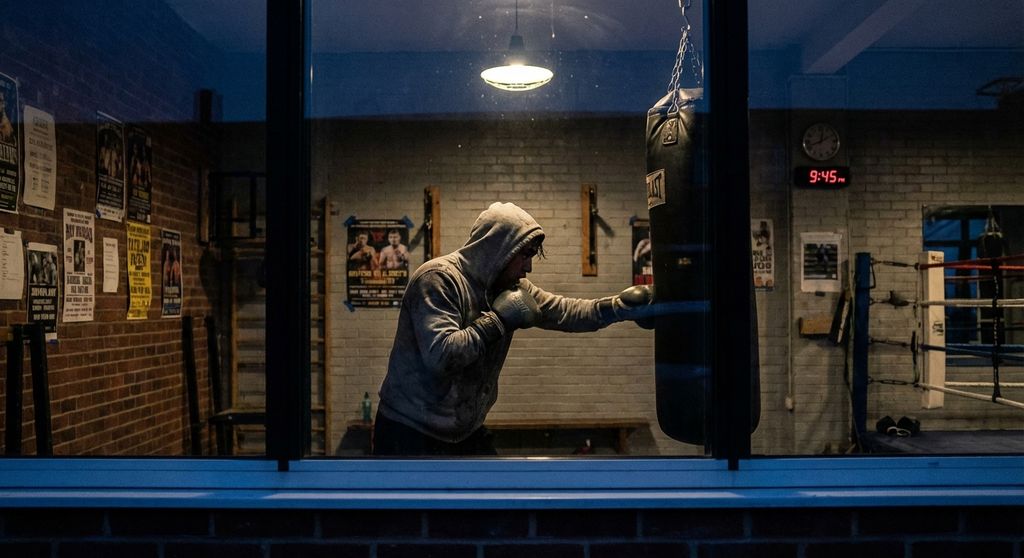
The gym is familiar. The warm-up is not a shock anymore. You can get through a full session at your own pace.
This is when boxing becomes the thing the advocates describe. Not because anything dramatic has changed, but because the learning curve has reached the point where you can feel actual progress session to session.
At Honour and Glory, the free trial starts the clock. Eight weeks from session one is the real test.

H&G Team
Writer at Honour & Glory Boxing Club, a community boxing gym in Kidbrooke, South East London.
Was this page helpful?
Your feedback helps us improve this page
Got questions about what you just read?
ASK OUR AI ASSISTANT ✨MORE LIKE THIS
WANT TO JOIN US?
Book a free trial session and see what we're all about.
Claim a Free Trial