Doctor Mike's Boxing Record and What Doctors Say About Boxing
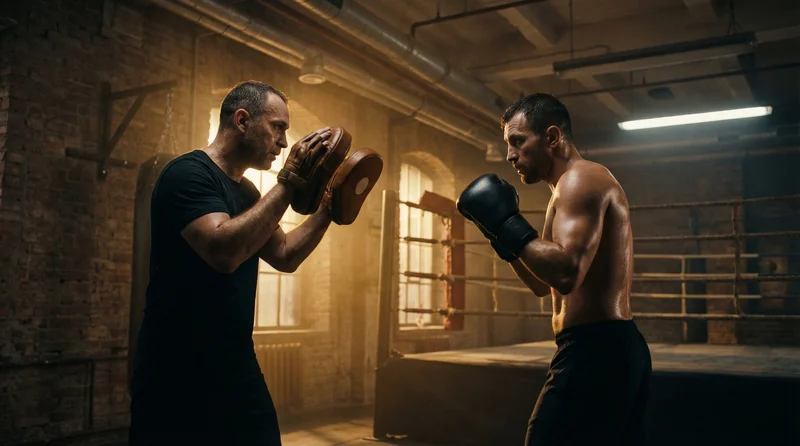
Doctor Mike is not a traditional boxing name. He is better known as Mikhail Varshavski: a family medicine doctor, YouTuber, medical educator and internet personality. He also happens to be a 6'3" doctor who stepped into a boxing ring in front of a huge online audience.
That is why people search for his boxing record. Part curiosity, part celebrity, part "could someone like that actually box?"
The short answer: yes, he could box. But his record needs explaining properly. The more useful answer is about what his journey says to adults who are interested in boxing but still slightly nervous about walking into a gym.
Doctor Mike's boxing record
According to Tapology's fighter profile, Doctor Mike's professional boxing record is 0-1. That only counts his licensed professional bout against Chris Avila in October 2022.
Before that, he beat iDubbbz by unanimous decision in the main event of Creator Clash 1, which was an exhibition crossover boxing match.
So the clean version is:
- Exhibition boxing: Doctor Mike beat iDubbbz by unanimous decision
- Professional boxing: Doctor Mike lost to Chris Avila by unanimous decision
- Overall public boxing journey: one win, one loss, two high-profile nights
That is the record. The interesting part is why it landed with so many people.
Why Doctor Mike's boxing caught attention
Doctor Mike already had a mainstream audience before boxing. He was known online for medical videos, health myth-busting and a polished public image. He was not obviously from the fight world.
That combination matters.
A lot of people who would never search for amateur boxing results will search for Doctor Mike. They are not necessarily boxing fans. They might follow medical content, fitness content, YouTube personalities, or just the general internet drama around Creator Clash.
And for busy adults who have not boxed before, his appeal is simple: he made boxing look accessible without making it look silly.
He was not a teenage prospect. He was not raised in a boxing gym. He was an adult with a real career, a public reputation, and plenty to lose by looking bad in the ring. He still trained, turned up and fought.
That is the bit worth paying attention to.
What doctors and medical sources say about boxing
A doctor boxing in public is a neat hook, but the medical angle is broader than Doctor Mike himself.
The sensible version is this: medical sources are generally positive about fitness boxing and non-contact boxing training as exercise. They are much more cautious about competitive boxing where repeated head impacts are part of the sport.
That distinction matters.
Most beginners do not need sparring. They need pad work, bag work, footwork, conditioning, coordination and coaching. That is where boxing becomes a useful fitness tool rather than a fight.
Harvard Health describes fitness boxing as a way to get many of the benefits of a traditional boxing workout "without the risks of taking punches or suffering head trauma." It points to strength, endurance, balance, posture, coordination, mood and alertness as possible benefits.
The NHS guidance is not boxing-specific, but it helps explain why boxing works so well as training. The NHS physical activity guidelines for adults recommend a mix of aerobic activity and strengthening work. Boxing naturally combines both. You raise your heart rate, work in rounds, use your legs and trunk, and repeat upper-body movements under control.
The NHS also notes that regular activity can improve mood, self-esteem, sleep quality and energy, and reduce stress. That is often what new boxers notice before they notice weight loss or visible muscle changes.
There is also specific research on non-contact boxing and mental health. A 2023 scoping review in the American Journal of Lifestyle Medicine found preliminary but promising evidence that non-contact boxing interventions may help with anxiety, depression, PTSD symptoms, stress, mood, self-esteem, confidence and concentration. The authors were careful: the evidence base is still limited and needs better trials. But the direction is interesting.
That is the honest medical position. Boxing training can be excellent exercise. Non-contact boxing appears particularly promising for fitness, coordination, confidence and stress. Competitive boxing carries different risks, especially around head contact, and should not be confused with a beginner class or PT session.
Is boxing safe for beginners?
For recreational boxing, beginner classes and fitness boxing, the key point is simple: you do not need competitive sparring to train properly.
You can learn on pads, bags, footwork, defence drills, conditioning and controlled partner work without taking blows to the head. For most adults starting for fitness, confidence or stress relief, that is the sensible lane.
If you are talking about amateur competition, the risk is different because boxing is a contact sport. Head shots exist. Concussion can happen. Anyone pretending otherwise is selling you something.
The research is mixed rather than simple. A BMJ systematic review on amateur boxing and chronic traumatic brain injury concluded that there was "no strong evidence" linking amateur boxing with chronic traumatic brain injury, but it also said the overall quality of evidence was generally poor. That means the result is reassuring, not a blank cheque.
More recent reviews are more cautious about boxing overall. A 2023 systematic review and meta-analysis on head trauma in boxing described boxing as hazardous and highlighted concussion and longer-term neurological concerns. That paper looks across boxing evidence more broadly, including professional and amateur contexts, so it should not be read as saying a beginner fitness class carries the same risk as a fight.
England Boxing makes the practical distinction clearly in its beginner's guide: clubs can teach the basics in a safe, controlled environment, whether someone wants non-contact fitness or wants to work towards the ring.
That is exactly the distinction we use at Honour and Glory. Recreational boxing is not competitive sparring. Beginners learn how to move, punch safely, defend, listen, breathe and build fitness. If someone later wants to spar or compete, that is a separate pathway with coaching, suitability checks, gradual progression and proper control.
Why this matters if you are boxing-curious
A lot of adults do not start boxing because the image in their head is wrong.
They imagine a harsh gym, aggressive men, shouting, people already knowing what they are doing. They worry they will look stupid. They worry they are not fit enough. They worry they are too old to start, too uncoordinated, too busy, too far removed from the version of themselves who used to try new things.
That is especially true for women who are interested in boxing but do not want to walk into a macho environment.
Doctor Mike's story cuts through some of that. Not because he is the perfect model for everyone, but because he came from outside the sport. He had a professional life. He was visibly new to parts of it. He still learned enough to compete.
That is closer to the reality of most beginners than the highlight reels are.
At Honour and Glory, many women start boxing for similar reasons:
- they want fitness that does not feel like another gym treadmill
- they want confidence without being patronised
- they want a skill, not just a calorie burn
- they want something that fits around work, children and real life
- they want to feel sharp again
That last one matters. Boxing wakes people up. You have to listen. You have to move. You have to think with your body. For busy parents and professionals who spend most of the week organising everyone else, that hour can feel very different.
The iDubbbz fight
Doctor Mike's first public boxing appearance came at Creator Clash on 14 May 2022 in Tampa, Florida. He fought Ian Jomha, better known as iDubbbz, in the main event.
The bout was scheduled for five two-minute rounds. Doctor Mike won by unanimous decision after going the distance.
It was not elite boxing. It was not pretending to be. But compared with a lot of early influencer boxing, the event had more structure and more seriousness. Creator Clash raised money for charity and tried to make the fighters prepare properly rather than just turn up for chaos.
Doctor Mike looked like someone who had taken the training seriously. He used his reach, stayed composed enough over five rounds, and did not let the occasion swallow him.
That matters for beginners watching at home. The lesson is not "you can become a fighter in a few months." The lesson is that basic boxing training changes how you carry yourself quickly. Stance, guard, breathing, balance, distance. Those things are learnable.
You do not need to be naturally aggressive. You do need to be coachable.
The Chris Avila fight
Doctor Mike's professional debut came on 29 October 2022 on the Jake Paul vs Anderson Silva card in Glendale, Arizona. His opponent was Chris Avila, a combat sports athlete from the Diaz team.
This was a different level of problem.
Avila beat Doctor Mike by unanimous decision over four rounds. Reports from the night described it as a clear Avila win, and Tapology lists Doctor Mike's professional record as 0-1 after that fight.
That result should not be dressed up. Avila was the more experienced fighter. He understood pressure, range, toughness and the uncomfortable parts of boxing better than Doctor Mike did.
But losing a professional boxing match does not erase the achievement of taking one. Most people never find out what they do under that kind of pressure. Doctor Mike did.
There is something honest about that. He won at creator level, stepped up, found the ceiling, and took the loss.
What his journey teaches beginners
Doctor Mike's boxing story is useful because it sits in the space most normal adults understand.
He was not trying to become a world champion. He was learning a hard skill in public.
For beginners, that gives a few practical lessons.
Fitness helps, but boxing is still different. You can be strong, lean and generally fit, then gas out quickly when boxing starts. Boxing uses rhythm, breathing and relaxation under pressure. Most beginners are too tense at first.
Reach and size help, but they do not replace experience. Doctor Mike had height and reach advantages in some contexts. Against a more seasoned fighter, those physical advantages were not enough.
Composure is trained. The first time someone hits back, even lightly, most people forget the plan. Calmness in boxing is not personality. It is repetition.
You can start as an adult. This is the biggest one. You do not need to have boxed as a child to enjoy boxing, get fit from it, or become technically competent.
Should you start with classes or PT?
If Doctor Mike's journey made boxing look interesting, your route depends on your temperament.
If you like learning around other people, start with a beginner-friendly class. The women's boxing class is a good route if you want a women-only environment. The adult recreational class is the normal mixed beginner route.
If you feel self-conscious, want faster correction, or prefer to learn quietly before joining a group, personal training is the cleaner starting point. One-to-one coaching lets you learn stance, guard, footwork and basic punches without feeling watched.
Neither route is more legitimate. They just suit different personalities.
The real lesson from Doctor Mike's boxing record
Doctor Mike's record is not the point by itself.
On paper, his pro boxing record is 0-1. In crossover boxing, he also has a unanimous decision win over iDubbbz. That is the factual answer.
The useful answer is this: boxing is one of the few fitness activities where adults can feel themselves changing quickly. Not just physically. Mentally.
You stand differently. You breathe differently. You stop panicking when something feels awkward. You learn that being a beginner is not embarrassing. It is just the first round.
If that is what caught your attention watching Doctor Mike, follow the instinct.
Start simple. Learn properly. Do not rush sparring. Give yourself a few sessions to be bad at it.
That is how everyone starts.
Try a women's boxing class at Honour and Glory. If you would rather learn privately first, compare personal training options here.
H&G Team
Writer at Honour & Glory Boxing Club, a community boxing gym in Kidbrooke, South East London.
Rate this article
Your feedback helps us write better content
Got questions about what you just read?
ASK OUR AI ASSISTANT ✨MORE LIKE THIS

WANT TO JOIN US?
Book a free trial session and see what we're all about.
Claim a Free Trial