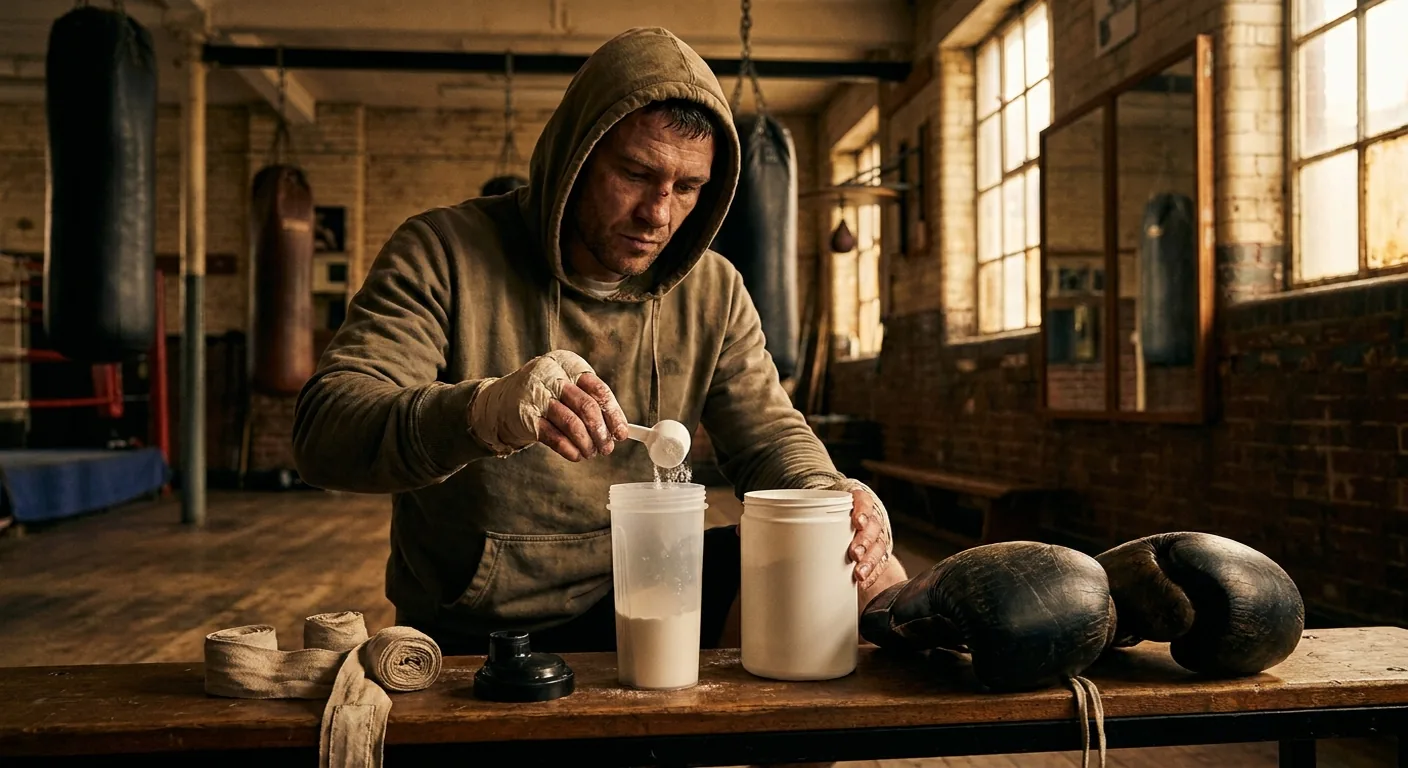
Creatine is one of the few supplements in sport that deserves to be taken seriously. Most powders promise far more than they deliver. Creatine is different.
That does not mean every boxer should rush out and buy a tub this afternoon. It means the conversation should be more honest than the usual two extremes: either "everyone needs it" or "all supplements are nonsense". Neither view is useful.
If you box recreationally, train hard two or three times a week, and eat decently, creatine can help a bit. If you are trying to make weight for competition, if your nutrition is chaotic, or if you still skip sessions and sleep five hours a night, it is probably not the place to start.
Creatine does fit the demands of boxing
Yes, creatine makes sense for boxing because boxing is built on repeated hard efforts, not one long steady effort.
A round is a series of short bursts. You punch in combinations, reset, move, defend, punch again, then do it all over. Even a fitness session on pads or the heavy bag has that same stop-start rhythm. That is exactly the kind of work creatine supports.
The International Society of Sports Nutrition position stand on creatine calls creatine monohydrate the most effective ergogenic supplement available for increasing high-intensity exercise capacity. That matters in boxing more than it does in sports where the effort is smoother and more predictable.
In practical terms, the benefit usually shows up like this: the third hard effort looks a bit more like the first one. Your snap fades later. You recover a little better between explosive rounds. You hold pace better in conditioning work. Nobody turns into a different athlete overnight, but small gains are real gains when a sport is decided by who can still work cleanly while tired.
If you have read our piece on why beginners gas out in boxing, you already know fitness in boxing is not only about lungs. Tension, pacing, footwork, and breathing matter too. Creatine does not fix those things. It simply helps with the energy demand once your training is organised properly.
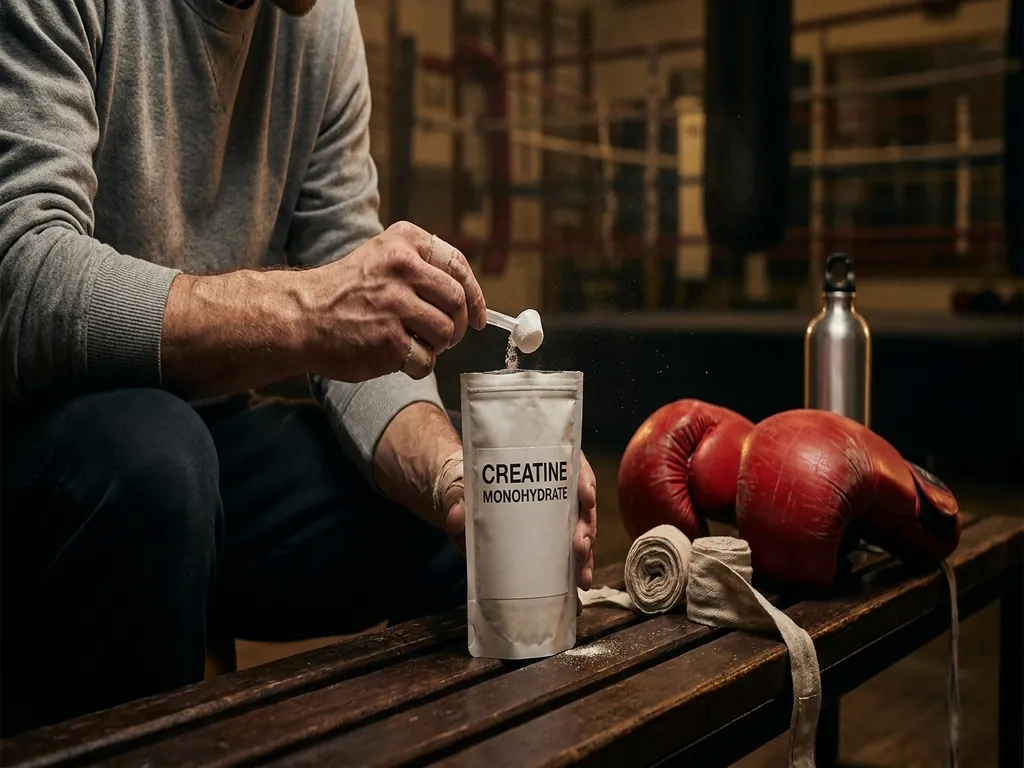
The people who benefit most are not always the people buying it
The boxers most likely to benefit are usually the ones already doing the boring stuff well.
If you are training consistently, lifting sensibly, eating enough protein, and getting through demanding pad and bag rounds every week, creatine is a sensible add-on. It sits well alongside a proper programme. The same is true if you are combining boxing with strength training for boxers. Explosive work in the gym and explosive work in the ring draw from the same system often enough for creatine to be relevant.
The people least likely to get much from it are beginners who are still missing the basics. If you have not got your stance sorted, if your shoulders fill with tension after a minute, or if you train once one week and not again for ten days, creatine is not the bottleneck. Coaching and consistency are.
That is why I do not like the way supplements are sold in boxing. New members are often sold the finishing touches before they have built the floorboards. You do not need a supplement stack to survive your first few months. You need regular sessions, decent meals, enough water, and a coach correcting what you are doing.
The big drawback is bodyweight
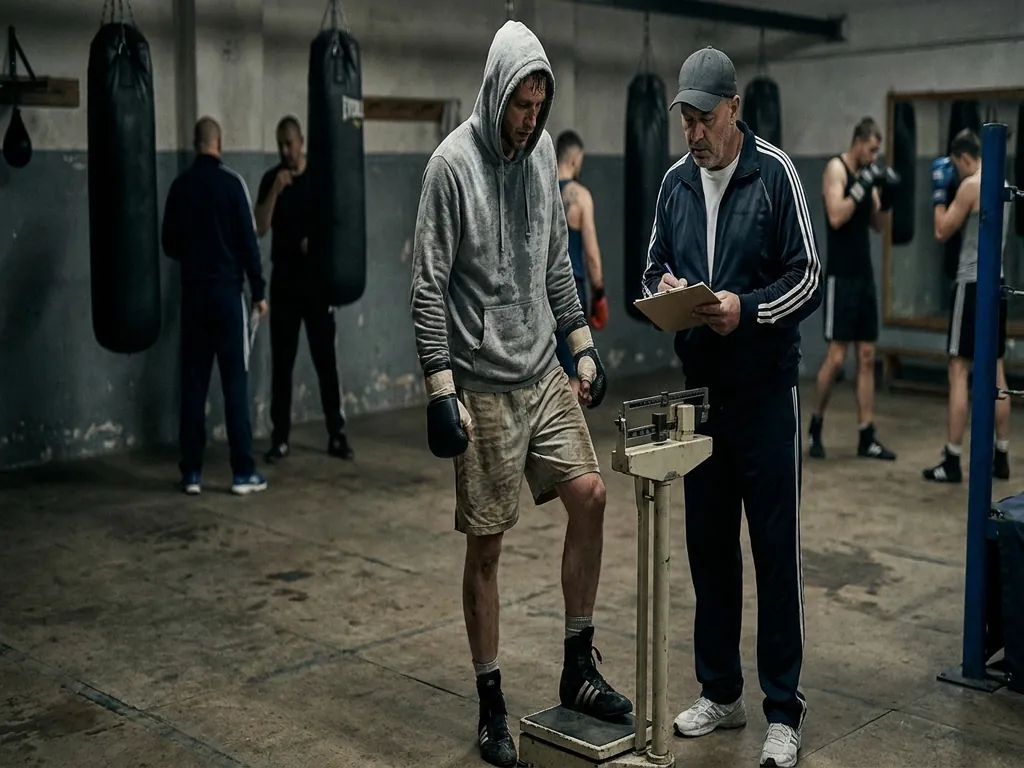
The main downside for boxing is simple: creatine often increases bodyweight, and boxing is a weight-class sport.
That weight gain is usually not fat. It is largely water held in muscle tissue. A Journal of Athletic Training study on creatine and total body water found increased body mass and total body water after supplementation, without the harmful fluid shift that older gym myths used to blame for cramps and heat issues.
For a recreational boxer, that is rarely a problem. Half a kilo to a kilo of extra scale weight is not worth worrying about if you are training for fitness, confidence, or general sharpness.
For a competing boxer, it is a different calculation. If you walk around comfortably under your limit, no issue. If you are forever scraping into a class, a supplement that nudges bodyweight upward needs more thought. It might still be worth it in some parts of camp and a bad idea close to weigh-in. Context matters.
This is the bit that gets flattened online. People talk about creatine as if every athlete has the same problem. They do not. A heavyweight, a white-collar boxer, and an amateur trying to hit a tight number on the scales are making three different decisions.
Safety is usually not the real issue
For healthy adults, creatine monohydrate itself has a strong safety record. The same ISSN position stand says there is no compelling evidence that short or long-term use harms otherwise healthy people when used appropriately.
The more realistic concern in boxing is not that creatine itself is secretly dangerous. The concern is supplement quality.
UK Anti-Doping's guidance on supplement risk is blunt for good reason: there are no guarantees that any supplement product is free from banned substances, contamination happens, and strict liability still applies if you test positive. For competitors, that matters far more than internet arguments about whether creatine is "natural" enough.
So if you compete, the sensible rule is this: if you choose to use creatine, use creatine monohydrate from a batch-tested product and keep the tub, receipt, and batch details. Do not buy mystery blends with aggressive labels and twenty ingredients you do not need. Boxing has enough ways to make life difficult already.
If you have kidney disease, are under medical supervision for another condition, or take medication that affects kidney testing, speak to a clinician before taking it. That is not fearmongering. That is normal adult behaviour.
How to use it without being silly
The best way for most adult boxers to use creatine is boringly simple: 3 to 5 grams of creatine monohydrate a day, every day.
You do not need a flashy pre-workout. You do not need a proprietary blend. You do not need to time it to the minute. Taking it consistently matters more than taking it at the perfect moment.
Some people do a loading phase. That fills stores faster, but it can also bring stomach discomfort and a quicker jump on the scales. For most recreational boxers, there is no urgency. Daily steady use is good enough.
Take it with water or with a meal. If it upsets your stomach, split the dose. If you keep forgetting, put it next to something you already use every day. The limiting factor is usually routine, not biochemistry.
And do not confuse creatine with recovery itself. It does not replace sleep. It does not replace food. It does not replace the basics in our guide to post-workout nutrition for boxing. If your recovery is poor, fix the large leaks before worrying about the small gains.
So, should you take it?
For many adult boxers, yes, it is a reasonable supplement. For many others, it is a lower priority than they think.
If you train regularly, are not battling a tight weigh-in, and want a supplement with actual evidence behind it, creatine is probably the best place to look. If your boxing is still irregular, your sleep is poor, or your diet is an afterthought, spend your effort there first.
That is the honest answer. Creatine is useful, not magical. It can help the work you are already doing. It cannot do the work for you.
At Adult Recreational boxing at Honour and Glory, most people will improve more from three consistent months of proper training than from any supplement they can buy. But if you already train properly and want one simple extra edge, creatine is not a bad bet.
H&G Team
Writer at Honour & Glory Boxing Club, a community boxing gym in Kidbrooke, South East London.
Rate this article
Your feedback helps us write better content
Got questions about what you just read?
ASK OUR AI ASSISTANT ✨MORE LIKE THIS


WANT TO JOIN US?
Book a free trial session and see what we're all about.
Claim a Free Trial