Training Through Ramadan at a Higher Level: What Changes

Training through Ramadan at recreational level - maintaining fitness while fasting - is one challenge. Training at a higher level with competitive goals is a different problem with different solutions.
The Physiological Challenge at Higher Intensity
During Ramadan, the fasting window typically runs from pre-dawn until sunset - roughly 12 to 17 hours depending on the time of year. For UK Muslims in spring or summer, the fast can extend past 18 hours (source).
At recreational training intensity, the body adapts reasonably well to glycogen depletion. At competitive training intensity - multiple sessions per week, high volume, sparring - the depletion is more significant and the consequences for training quality are more pronounced.
Strength and power output decrease measurably during the fast. Reaction time slows. Cognitive function, which matters enormously in sparring, is affected.
These changes are real and should be planned for rather than ignored.
Session Timing
The most important decision for higher-intensity Ramadan training is when to train.
Training immediately after Iftar (the meal breaking the fast) is not optimal - digestion redirects blood flow and the energy is not yet bioavailable. Training 60 to 90 minutes after Iftar, when the first meal has partially processed, tends to produce better session quality (source).
Some competitive boxers train in the hour before Suhoor (the pre-dawn meal), using the sleep window to maximise fasting hours while training on a relatively full stomach.
The right timing is individual and takes experimentation to establish. What is consistent across the research is that training during the middle of the fast - afternoon, when depletion and dehydration are at their peak - produces the worst training quality and the highest injury risk.
Volume and Intensity Management
This is not the month for personal bests. The goal is maintaining conditioning and technique, not building new peaks.
Reduce training volume by approximately 25 to 30 percent compared to normal. Maintain intensity on key sessions - pad work, technical work - and reduce bag work volume and conditioning circuits.
Sparring during Ramadan requires specific consideration. Dehydration increases impact injury risk. If you spar during Ramadan, reduce duration and intensity, and ensure adequate hydration at Iftar before any sparring session.
Nutrition at Suhoor and Iftar
Complex carbohydrates at Suhoor - oats, whole grain bread, brown rice - release energy more slowly and sustain glycogen stores longer into the fast. Protein at Suhoor - eggs, yoghurt, lean meat - supports muscle protein balance during the fasting hours.
At Iftar, rehydrate first. Then a moderate first meal before the main eating window. Avoid the tendency to eat very large volumes immediately at Iftar - the digestive system responds poorly and energy availability the following day is affected.
Protein intake across the eating window should remain at training levels - roughly 1.6 to 2 grams per kilogram of bodyweight.
Mental Approach
Some boxers find Ramadan training, done correctly, produces unusual mental clarity during sessions. The discipline of training through the fast, combined with the month's spiritual focus, creates a quality of concentration that is specific to the period.
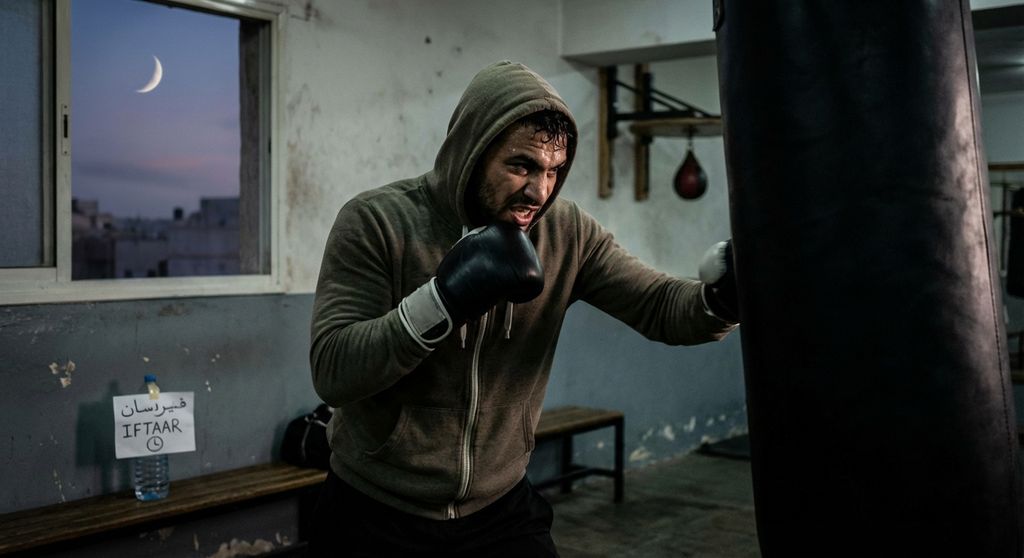

This is not a universal experience but it is common enough to be worth expecting rather than dismissing.
At Honour and Glory, several members train through Ramadan each year. The Adult Recreational class accommodates different training approaches.
H&G Team
Writer at Honour & Glory Boxing Club, a community boxing gym in Kidbrooke, South East London.
Was this page helpful?
Your feedback helps us improve this page
Got questions about what you just read?
ASK OUR AI ASSISTANT ✨MORE LIKE THIS



WANT TO JOIN US?
Book a free trial session and see what we're all about.
Claim a Free Trial