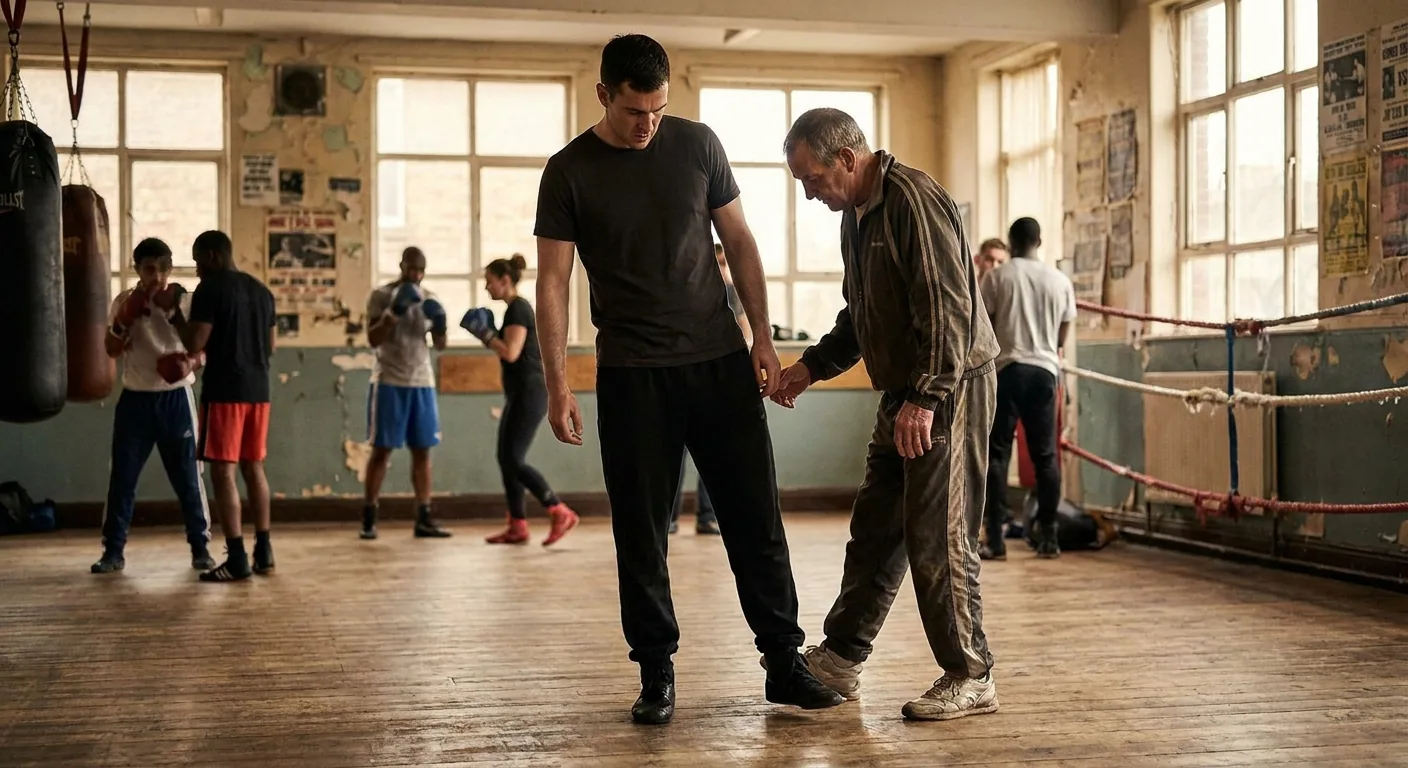
If you feel clumsy, boxing can help because it teaches body control in small, repeatable pieces. You do not need natural rhythm, fast hands or perfect balance to start. You need a coach who slows the work down, corrects the obvious leaks and gives you enough repetition for the movement to stop feeling foreign.
That matters because a lot of adults quietly avoid sport for years after deciding they are not coordinated. They remember being picked last at school, tripping over their own feet in a fitness class or feeling lost when someone says "just move naturally". Boxing is better than that. Good boxing coaching is not vague movement. It is stance, guard, step, jab, reset.
The trick is that boxing looks chaotic from the outside but feels orderly when it is taught properly. At Honour and Glory in Greenwich, we see plenty of adults arrive convinced they have two left feet. Most are not hopeless. They have just never been shown how to organise their feet, hands, eyes and breathing at the same time.
Why boxing suits clumsy beginners
Boxing suits clumsy beginners because the basic skills are clear and coachable. A jab has a start position, a path, a finish and a recovery. A step has a direction and a reason. A guard has a job. That gives your brain something better to work with than random exercise noise.
A lot of group fitness hides poor movement under speed. The music is loud, the instructor is miles away and everyone is copying a routine they learned three weeks ago. If you are already self-conscious, that is miserable. You miss a beat, then you miss the next one because you are thinking about the first one.
Boxing should not start like that. A sensible beginner session gives you a stance first. Then you learn how to move without crossing your feet. Then you add a jab. Then you add a right hand, a catch, a slip or a pad call when you are ready.
That is why our Recreational Adults boxing classes are built around coaching rather than showing off. Nobody cares whether your first jab looks sharp. We care whether you are standing safely, listening, trying and improving.
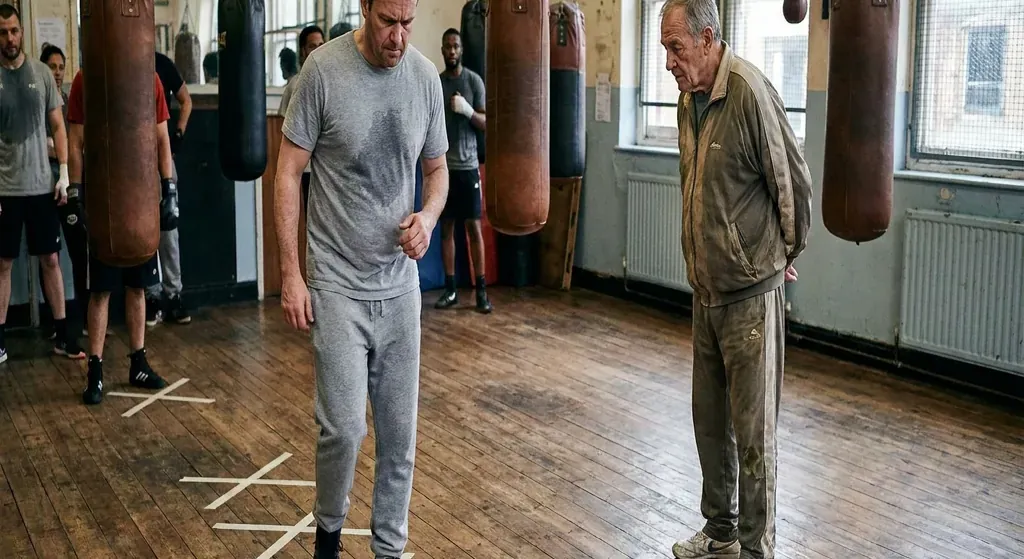
Clumsy usually means untrained, not broken
Most clumsy adults are not broken. They are under-practised. They have spent years sitting, driving, typing, rushing and avoiding the exact movements that would make them feel more confident in their body.
The NHS recommends adults do strengthening activities at least two days a week as well as 150 minutes of moderate activity or 75 minutes of vigorous activity (NHS adult activity guidance). Boxing can fit that neatly because it mixes footwork, trunk control, shoulder stamina, leg drive and short bursts of harder effort in one session.
That does not mean one boxing class magically fixes years of awkward movement. It means you get a practical training environment where coordination is part of the work, not an embarrassing side issue.
Harvard Health describes boxing workouts as training balance, posture, upper-body and core strength, while also challenging attention and reaction (Harvard Health boxing workout overview). That is the real appeal for clumsy beginners. You are not just burning calories. You are learning a skill that asks your body to talk to itself properly. For the more technical version, see our guide to how boxing improves coordination.
What improves first
The first thing that improves is usually awareness. You start noticing where your feet are, when your chin is up, when your rear hand drops and when you hold your breath. That sounds basic, but basic is where confidence comes from.
Early progress often looks small. You stop stepping too narrow. You remember to bring the jab back. You stop leaning over the front knee. You breathe before the pad call instead of after it. None of that makes a film montage, but it changes how you feel in the room.
Then rhythm starts to appear. Not nightclub rhythm. Boxing rhythm. Step, punch, reset. Jab, right hand, guard. Move after punching. Breathe on effort. Listen to the coach, then go again.
If you have read our piece on why beginners gas out in boxing, this connects directly. Many beginners gas out because their movement is inefficient. They tense everything, rush the hands and use twice the effort needed. Better coordination saves energy.
Why pads help awkward movers
Pads help awkward movers because they give instant feedback. If your feet are wrong, the punch feels weak. If your distance is wrong, you reach. If your guard is late, the coach can stop the drill before bad habits settle in.
Good pad work is not a circus trick. It is a conversation. The coach calls a simple shot, you answer, then you reset. Over time, the answer gets cleaner and faster because the pattern becomes familiar.
This is where clumsy beginners often surprise themselves. They may not feel athletic during a warm-up, but give them a repeated jab-cross on pads with good coaching and the penny drops. The sound changes. The balance changes. The shoulders stop doing all the work.
Pad work also removes some of the panic. You are not trying to win a spar. You are not being judged against a boxer with ten years behind them. You are learning how to put your hands and feet in the right place under mild pressure.
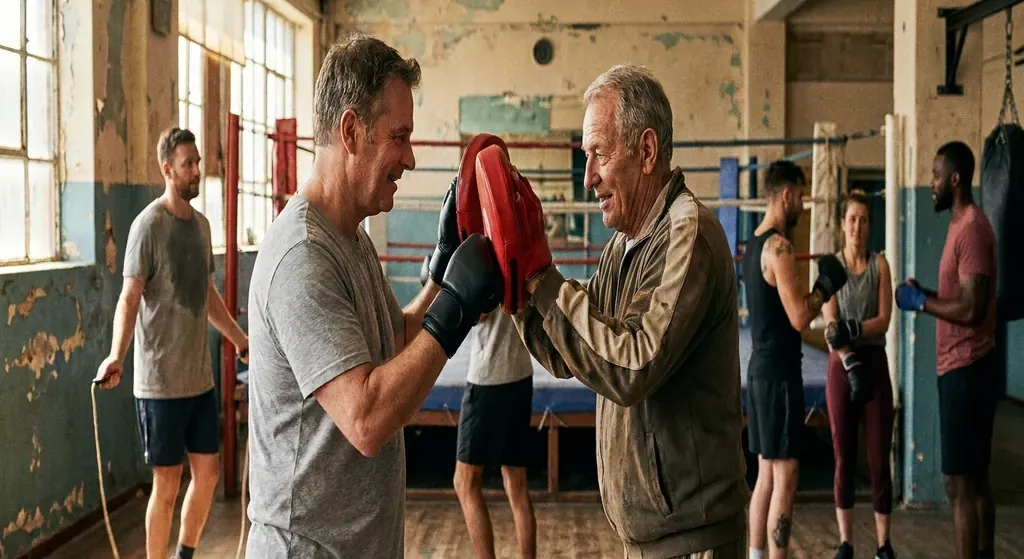
You do not need sparring to get the benefit
You do not need sparring to improve coordination through boxing. Recreational boxing can include stance, footwork, bag work, pads, partner drills, defence practice and conditioning without competitive contact.
That distinction matters. Some people hear "boxing" and imagine being thrown into a ring. That is not how a proper beginner pathway works. Sparring is a separate step, and for many recreational adults it is not the goal at all.
If your aim is to feel less awkward, fitter and more capable, non-contact or controlled technical work is enough to make a real difference. You can learn how to punch, move, defend and think under instruction without taking unnecessary risks.
That is also why we tell beginners not to buy the hardest-looking kit on day one. Bring yourself, comfortable training clothes and a willingness to be coached. If your wrists have been sore after training, read why your wrists hurt after boxing before blaming your coordination.
The confidence change is the point
The best change is not that you suddenly look slick. It is that you stop treating your body like an unreliable machine. You learn that awkwardness can be trained. You learn that repetition works. You learn that a room full of boxers is often less judgemental than a normal gym floor.
That confidence carries. People stand differently after a few months of training. They walk into the gym with less apology in their shoulders. They ask better questions. They stop hiding at the back.
There is also a social part. Boxing classes create shared effort without the forced cheeriness of some fitness spaces. Everyone is sweating. Everyone forgets a drill sometimes. Everyone has had a day where their feet ignore instructions.
If you live near Blackheath, Kidbrooke or Greenwich, the journey to H&G is short enough to make training a habit. Consistency beats motivation here. One class tells you what boxing feels like. Ten classes start to change how you move.
How to start if you feel embarrassed
Start by telling the coach you are new and feel awkward. That is not a confession. It is useful information. A good coach can scale the drill, slow the tempo and give you one correction at a time.
Do not hide at the back and copy the fastest person in the room. Watch the coach, ask where your feet should be and keep the first session simple. Your job is not to impress anybody. Your job is to learn the shape of the session.
Wear normal gym clothes, bring water and arrive a few minutes early. If you have not trained for a while, pace yourself. Clumsy movement gets worse when you panic or chase intensity too early.
You should expect to feel confused at points. That is not failure. That is learning. The first time your hands, feet, eyes and breathing all get instructions at once, your brain will complain. Let it complain. Then repeat the drill.
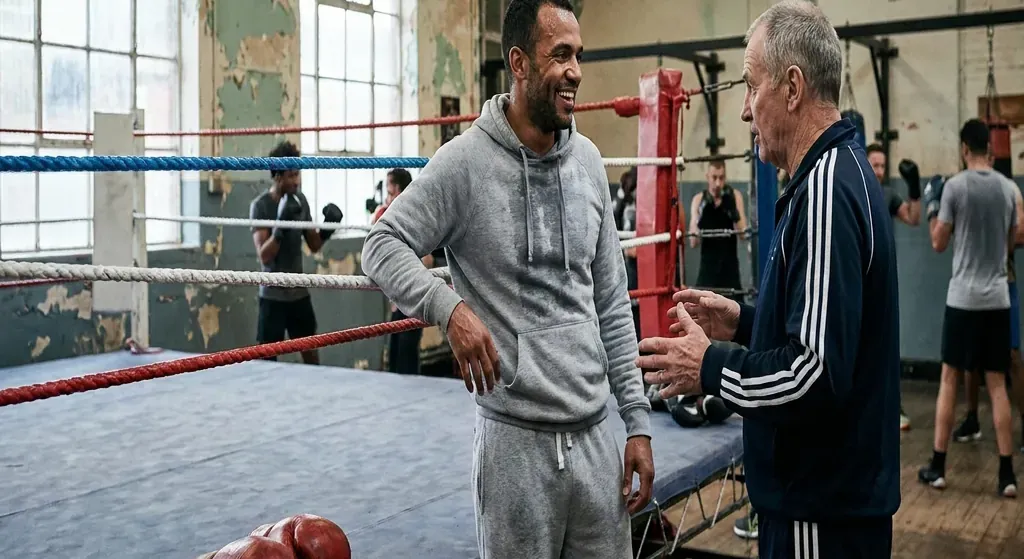
Who this is not for
If you want a class where nobody corrects you, boxing will annoy you. Correction is the product. The coach sees the dropped hand, the crossed feet, the flinch and the rushed breathing. Then they help you fix it.
If you want instant mastery, boxing will also humble you. Everyone looks rough at the start. The difference between the people who improve and the people who quit is not natural talent. It is whether they can tolerate being a beginner for long enough to get better.
That is the honest promise. Boxing will not make every awkward adult graceful overnight. It will give you a straight, practical way to train balance, timing, attention and confidence without pretending you already have them.
The bottom line
If you feel clumsy, boxing is one of the better sports to try because it breaks movement down into coachable parts. You learn stance before speed, rhythm before power and control before intensity.
The first session may feel messy. That is fine. Messy is where the work starts. Give yourself a few weeks of consistent coaching and you may find the thing you called clumsiness was mostly lack of practice.
H&G Team
Writer at Honour & Glory Boxing Club, a community boxing gym in Kidbrooke, South East London.
Was this page helpful?
Your feedback helps us improve this page
Got questions about what you just read?
ASK OUR AI ASSISTANT ✨MORE LIKE THIS


WANT TO JOIN US?
Book a free trial session and see what we're all about.
Claim a Free Trial