Boxing During A-levels: How to Train Without Burning Out
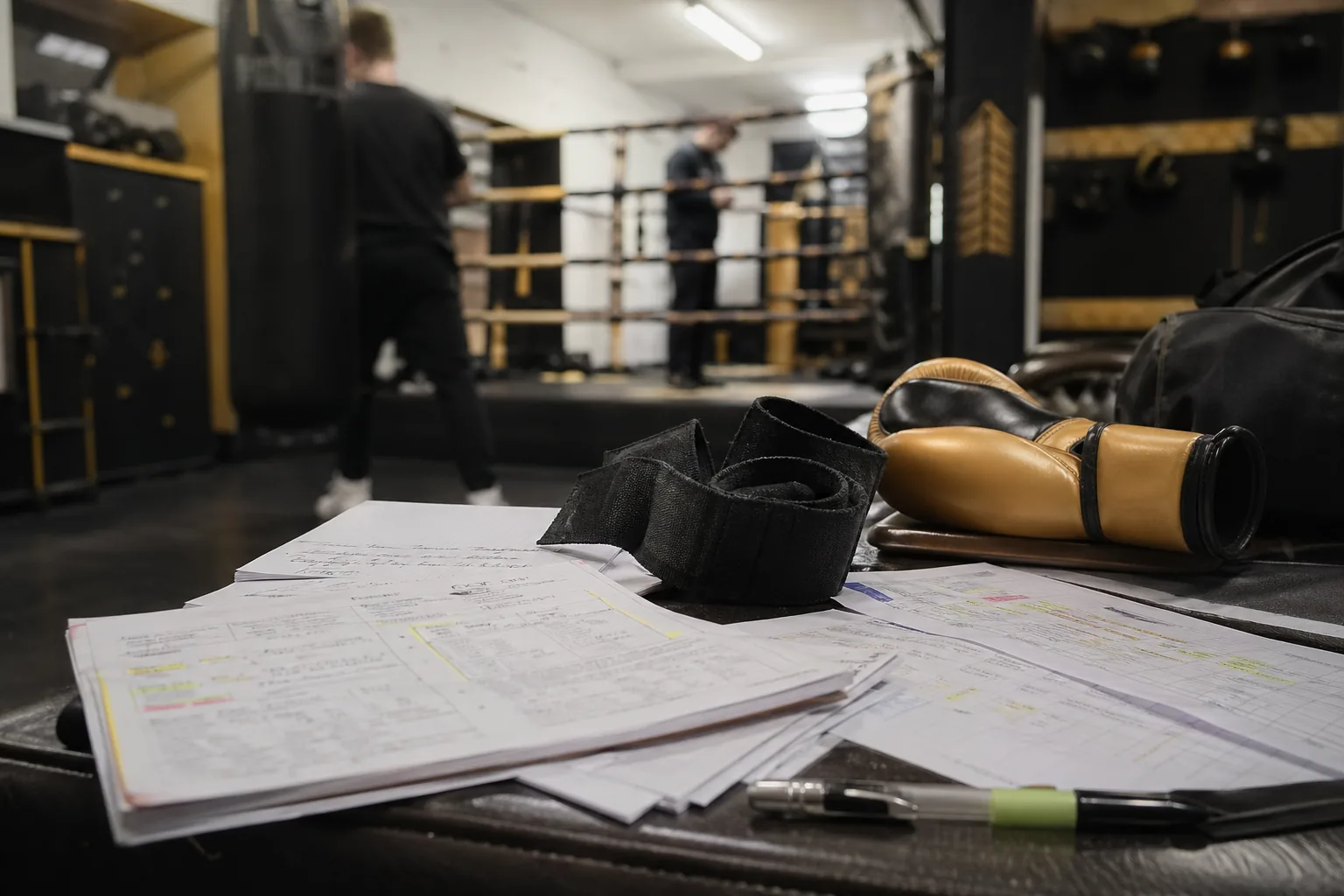
A-levels are a strange age for fitness.
You are old enough to train seriously, but your week can still be controlled by school, college, commuting, part-time work, family expectations and exams that feel like they decide everything. Some students stop training completely. Others go too hard because the gym becomes their escape.
Boxing sits in the middle if it is coached properly. It gives structure, challenge and confidence, but it does not need to take over your life.
During A-levels, the best training plan is the one you can keep without burning out.
Why A-level students lose fitness routines
Most A-level students do not quit exercise because they suddenly stop caring.
They quit because their timetable becomes unstable. One week is quiet. The next has mocks, coursework, open days, interviews, personal statements, shifts and late revision. Normal gym routines are easy to lose when nobody is expecting you to turn up.
A boxing class fixes part of that problem because the session is already built. You do not need to design a workout. You do not need to wander around equipment. You walk into a room where the coach gives the structure.
That is useful when the rest of the week is already full of decisions.
Two sessions a week is enough for most students
A-level year is not the time to copy a professional fighter's schedule.
For most students, two coached boxing sessions a week is enough to improve fitness, build skill and keep stress under control. One session is still useful during heavy revision. Three can work if sleep, food and study are still stable.
A realistic week might look like this:
- Monday or Tuesday: boxing class.
- Wednesday or Thursday: light movement, walk, mobility or short home session.
- Weekend: boxing class or rest, depending on workload.
The aim is consistency, not heroics.
Boxing is better than vague gym sessions for many students
The gym can be useful, but it asks a lot from a tired student.
You need a plan. You need confidence around equipment. You need motivation when nobody notices whether you train or not. You need to avoid turning every session into random arms, abs and scrolling.
Boxing gives you a clearer job. Learn the stance. Move your feet. Throw clean punches. Breathe. Reset. Listen. Improve.
That technical focus is one reason students often stick with boxing better than normal gym training. It gives your brain something to do as well as your body.
If you want the broader comparison, read boxing vs gym: why people switch.
Training can help your head, but it is not therapy
A hard boxing session can clear your head. It can make you feel more capable. It can break the screen-revision-scroll loop. It can help you sleep if you do not train too late and you recover properly.
But it is not a substitute for support if you are struggling badly. If exam stress is affecting sleep, appetite, panic, mood or day-to-day functioning, speak to a parent, tutor, GP or appropriate support service.
Boxing is a strong layer. It is not the whole safety net.
Should A-level students spar?
Not automatically.
Some students are already on a competitive pathway and spar as part of proper coaching. Others are complete beginners and should not be rushed anywhere near hard sparring.
If you are training mainly for stress, confidence and fitness, you do not need sparring to get value from boxing. Bag work, pad work, footwork, conditioning and technical drills are enough to build serious fitness.
If you do want to compete, that should be a coach-led decision made when your basics, attitude and consistency are ready.
How to avoid burnout
Burnout usually comes from stacking stress without recovery.
A-level students should watch for these warning signs:
- Training late, then sleeping badly.
- Using hard sessions to punish yourself for not revising enough.
- Skipping food because you want faster body changes.
- Doing extra conditioning when you are already exhausted.
- Feeling guilty whenever you rest.
None of that is discipline. It is poor load management.
A good coach would rather see a student train consistently for months than smash two weeks and disappear.
For college and sixth-form students near Greenwich
If you study, live or work around Greenwich, Kidbrooke, Blackheath, Eltham, Lee or nearby parts of south east London, Honour and Glory can be a practical training base.
Our Adult Recreational boxing classes suit students aged 17 and above who want coached training without having to already be fit. If you are younger, start with the junior and youth boxing pathway.
If your schedule is too irregular for group classes, private boxing lessons can work, but they are a paid route. The free trial is for scheduled group sessions.
The simple rule
During A-levels, boxing should make the week more stable, not more chaotic.
Train once or twice a week. Protect sleep. Eat properly. Do not chase extreme body changes. Do not make sparring the goal unless you are actually on that pathway.
If boxing gives you a place to move, reset and feel capable again, it is doing its job.
Next read: best exercise for students, boxing in your 20s, and can boxing give you abs?.
H&G Team
Writer at Honour & Glory Boxing Club, a community boxing gym in Kidbrooke, South East London.
Rate this article
Your feedback helps us write better content
Got questions about what you just read?
ASK OUR AI ASSISTANT ✨MORE LIKE THIS


WANT TO JOIN US?
Book a free trial session and see what we're all about.
Claim a Free Trial