Sleep and Boxing Recovery: The Protocol That Actually Makes
Every boxing coach will tell you to sleep more. Most cannot explain in detail why sleep is so specifically important for boxing development, or what to do about the sleep quality problems that most working adults experience.
Here is the physiology and the practical application.
What Happens During Sleep
During deep sleep stages (stages three and four, slow-wave sleep), growth hormone release peaks. This is not incidental - it is the primary physiological window during which muscle tissue repair and adaptation occur. The micro-damage to muscle fibres from training is addressed during these sleep stages. Skip them and the adaptation does not happen at the same rate.
During REM sleep, motor patterns are consolidated. Neurological learning - including the motor programmes that make a jab automatic rather than deliberate - is encoded during REM. Boxers who sleep poorly after training sessions where new technique was introduced retain less of what they learned than those who sleep well. This is demonstrated in research on motor skill consolidation.
Cortisol, the stress hormone that is elevated during training and remains elevated in people under chronic life stress, is metabolised during sleep. Poor sleep keeps cortisol elevated. Elevated cortisol suppresses testosterone and growth hormone. The result is worse recovery and slower adaptation (source).
How Much Sleep Do You Need
The research consistently shows that adults who engage in regular high-intensity physical training need between eight and nine hours of sleep for optimal recovery. Most people sleep six to seven hours. There is a meaningful gap (source).
The performance consequences of six hours versus eight hours of sleep are quantifiable. Reaction time - central to boxing - degrades measurably on six hours. Emotional regulation - important for decision-making in training and competition - worsens with sleep restriction. Perceived effort increases, meaning you feel like you are working harder than you are for the same output.
Sleep Quality vs Sleep Duration
Duration matters but quality matters equally. Eight hours of fragmented, light sleep is not equivalent to eight hours of consolidated deep sleep. Quality improvements come from addressing what fragments sleep.
Common causes of poor sleep quality in adults: alcohol within three hours of sleep (suppresses REM and fragments sleep architecture), blue light from screens within ninety minutes of sleep (delays melatonin onset), irregular sleep schedule (undermines circadian rhythm), room temperature too high (core body temperature needs to fall to initiate deep sleep - a cool room facilitates this), caffeine after 2pm (caffeine's half-life is five to six hours; afternoon caffeine delays sleep onset and reduces deep sleep duration).
Addressing even two or three of these typically produces a noticeable improvement in sleep quality within a week.
The Nap Question
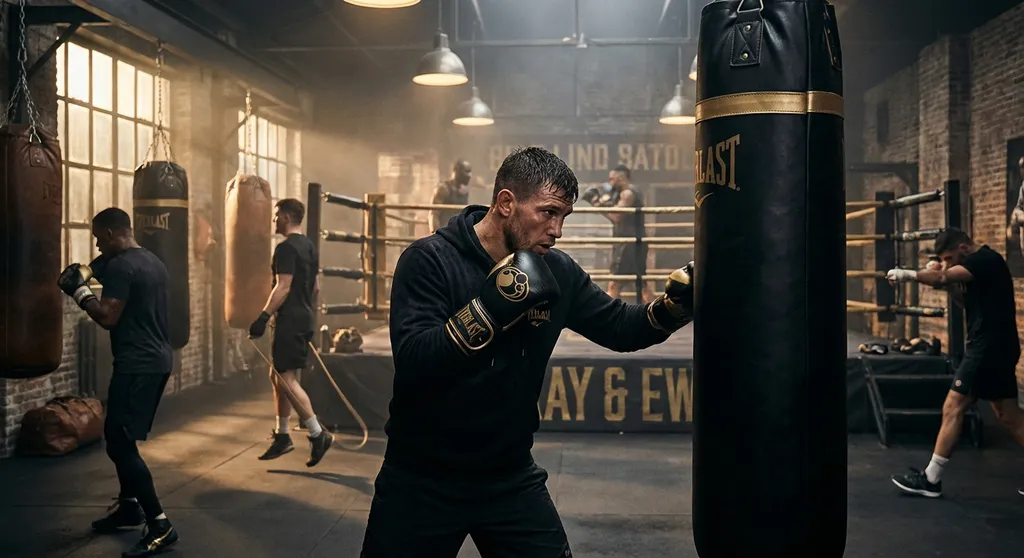
Short naps (fifteen to twenty minutes) improve cognitive performance and reaction time when taken in early afternoon and do not significantly disrupt night-time sleep for most people. Longer naps (sixty to ninety minutes) that include deep sleep stages can interfere with night sleep timing.
For boxers with evening training sessions, a short afternoon nap before training can be beneficial. The key is keeping it short enough not to enter deep sleep.
Post-Training Recovery Window
The two-hour window after training is when nutrition input has the most impact on recovery. Protein for muscle repair (20-40g), carbohydrate to replenish glycogen, and hydration to replace fluid lost during training.
The pre-sleep meal or snack is worth attention. Casein protein (found in milk and cottage cheese) digests slowly and provides a sustained amino acid supply during the overnight fast. Consuming it before sleep is associated with slightly better overnight muscle protein synthesis.
Recovery as Training
The most effective way to think about sleep and recovery is as a component of training rather than a pause in it. You adapt during recovery, not during training. Training is the stimulus; sleep is where the adaptation is encoded. Supplements can support recovery in narrow situations, but they do not outrank sleep. For the sensible hierarchy, see legal recovery supplements for boxing.
Boxers who train intelligently at Honour and Glory Boxing Club and manage their recovery as seriously as their training improve faster than those who train hard and recover poorly. The coaches at the club can discuss training load management alongside your technical development.
Claim a free trial session to start building a training practice that treats recovery as part of the programme.
H&G Team
Writer at Honour & Glory Boxing Club, a community boxing gym in Kidbrooke, South East London.
Was this page helpful?
Your feedback helps us improve this page
Got questions about what you just read?
ASK OUR AI ASSISTANT ✨MORE LIKE THIS
WANT TO JOIN US?
Book a free trial session and see what we're all about.
Claim a Free Trial