Body Conditioning in Boxing: What It Is and Why It Matters
Boxing Science's conditioning methodology for amateur boxers covers the specific fitness qualities boxing demands. Research on sport-specific conditioning in boxing from Frontiers in Physiology identifies the key physical attributes that separate competitive from recreational level performance.
Body conditioning in boxing means something specific: the physical preparation that allows you to take the physical demands of boxing - impact to the body, the clinch, the accumulated punishment of a training session or bout - without being limited by them.
It is different from fitness. You can be cardiovascularly fit and still be vulnerable to a body shot. It is different from strength. You can be strong and still have the wind knocked out of you by a left hook to the liver.
What Body Conditioning Covers
Core strength and stability. The core - abdominals, obliques, transverse abdominis, lower back - is the foundation of every punch and the primary structure protecting internal organs from body shots. A weak core means body shots land more effectively on your opponent's vital organs.
Body toughening. This is the progressive adaptation of the muscles and connective tissue of the trunk to absorb impact. Properly conditioned body muscles take body shots and contract to protect the organs beneath. This is not the same as having tight abs. It is specifically the ability to contract on impact.
General physical robustness. Neck strength for head shots, wrist and hand conditioning for punching, leg strength for the continuous movement of boxing - all of these fall under body conditioning broadly defined.
Core Work Specific to Boxing
Standard crunches have limited transfer to boxing. The boxing-specific core demands are rotational - the obliques are the primary movers in hooking punches - and isometric - maintaining a tight guard requires sustained tension throughout the core.
Rotational medicine ball throws develop the obliques through the full range of punching movement. Wood chops, whether with cables or bands, train the same pattern.
Planks and their variations train the isometric component - maintaining abdominal tension while in the boxing stance for a full round.
Anti-rotation exercises - Pallof press variations - train the core to resist rotational force, which is exactly what happens when an opponent lands a hook.
Body Toughening
This is the part that makes people uncomfortable because the method is what it sounds like: taking controlled impact to condition the tissue.
Pad work and bag work provide this passively - the impact of punching transmits force through the gloves and back into the body. But direct body conditioning work accelerates the process.
Medicine ball drops to the abdomen from low height, performed with proper muscle contraction, are the standard method. The progression is gradual: low height, contracted abdominals, increasing resistance as the tissue adapts.
This is done with a coach, not alone. The risk of doing this incorrectly - without proper contraction or at too high an intensity - is real.
Practical Schedule
Body conditioning work should supplement boxing training rather than replace it. Two to three targeted sessions per week of 15 to 20 minutes is more effective than occasional long sessions.
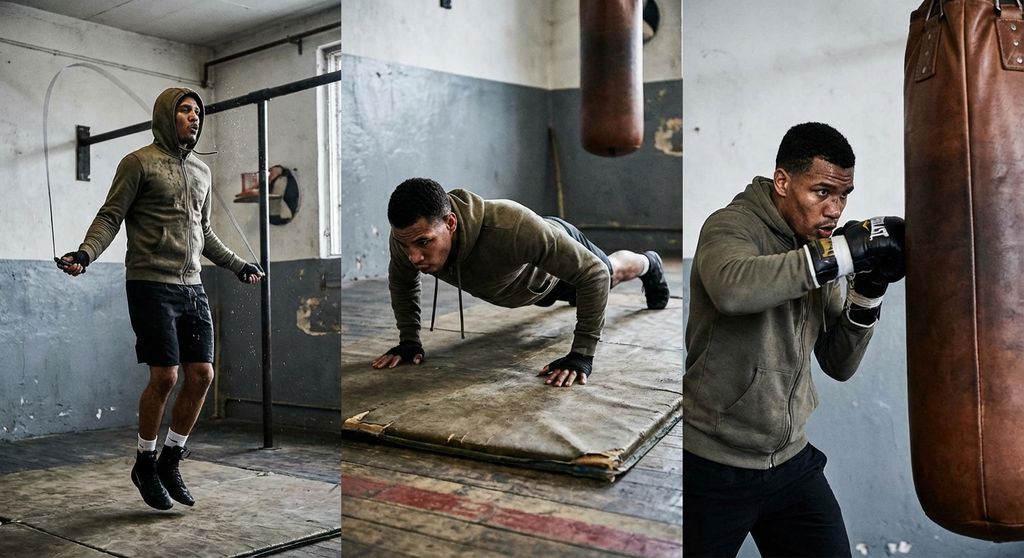
Rotational core work can be done any time. Body toughening work is best done after training sessions when the body is already warm rather than as a standalone cold session.
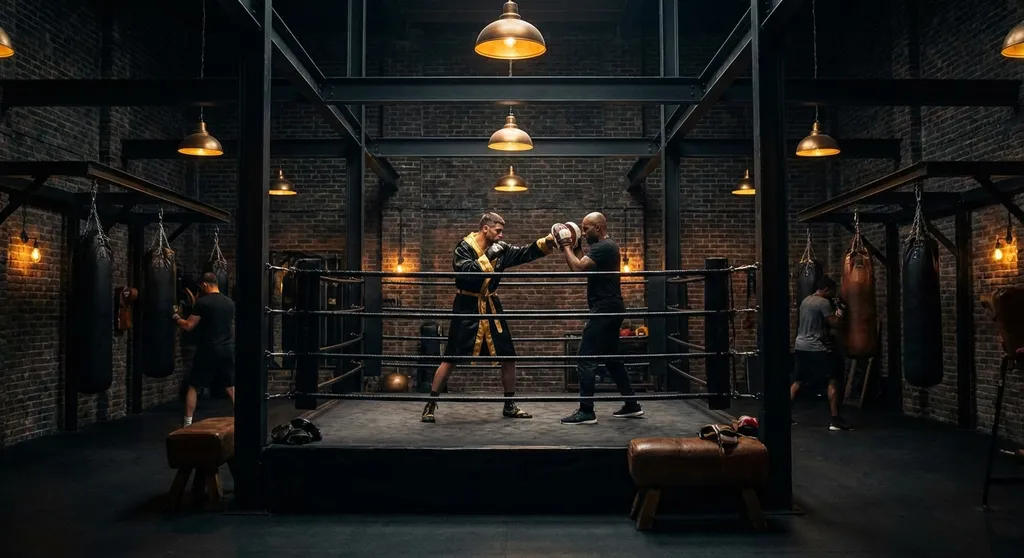
At Honour and Glory, the Adult Competitive class includes conditioning work as a component of training preparation.
H&G Team
Writer at Honour & Glory Boxing Club, a community boxing gym in Kidbrooke, South East London.
Was this page helpful?
Your feedback helps us improve this page
Got questions about what you just read?
ASK OUR AI ASSISTANT ✨MORE LIKE THIS
WANT TO JOIN US?
Book a free trial session and see what we're all about.
Claim a Free Trial