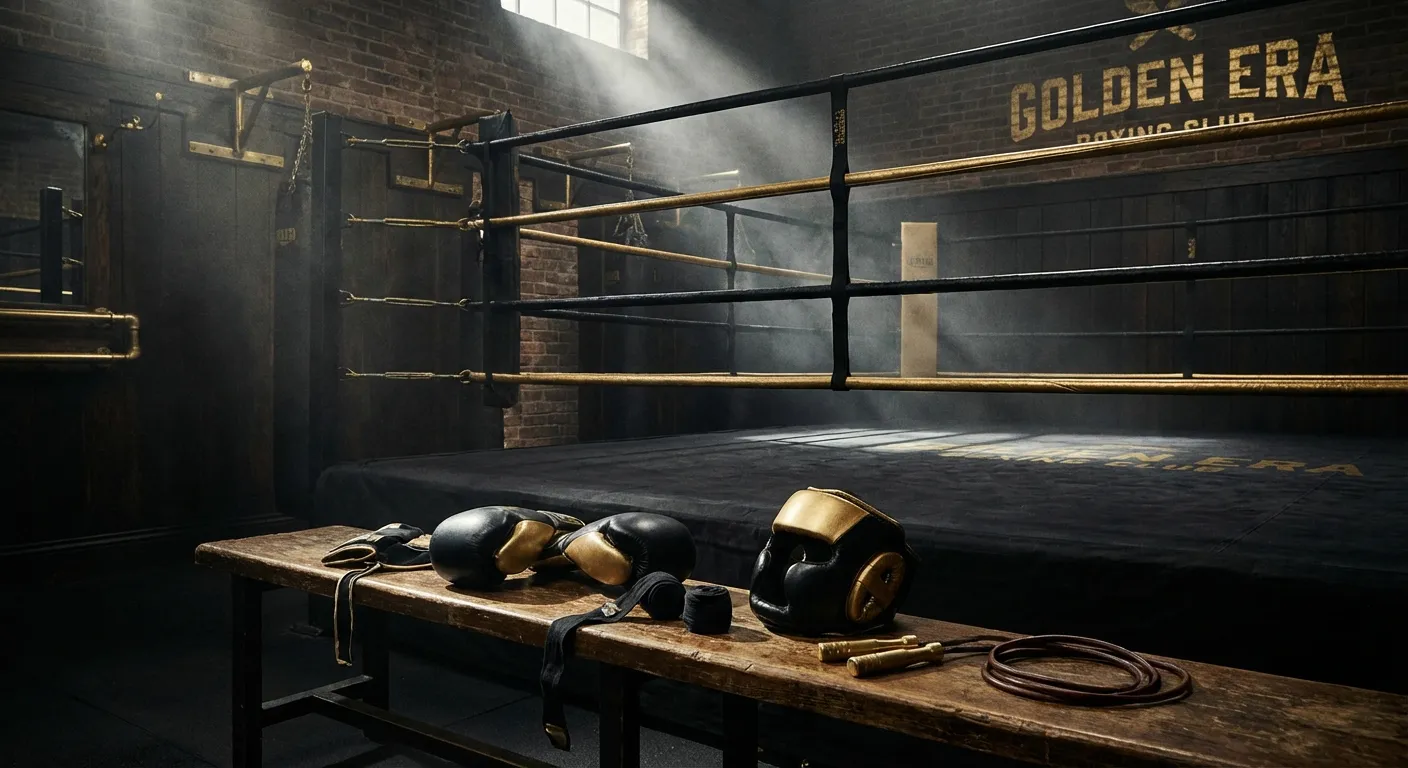
What Home Training Can and Cannot Do
Home training without equipment develops three things effectively: movement patterns, cardiovascular conditioning, and technical awareness. It does not develop punch power (which requires hitting something), timing against an opponent, or defensive reflexes (which require someone throwing at you).
Understanding this distinction prevents the frustration of spending weeks shadow boxing at home and then feeling like nothing improved when you return to the gym. The improvement is there. It is in the parts of boxing that home training addresses: cleaner movement, better stamina, more automatic technique.
Shadow Boxing: The Foundation of Home Training
Shadow boxing is the single most effective home drill for boxing. It requires no equipment, no space beyond roughly three metres square, and develops technique, movement, and cardiovascular fitness simultaneously.
The mistake most people make with shadow boxing is treating it as going through the motions. Effective shadow boxing requires visualisation: you are boxing an imaginary opponent. They throw, you defend. You create angles, you attack openings. The quality of your shadow boxing is determined by the quality of your imagination.
A basic structure for a home shadow boxing session:
Round 1 (3 minutes). Jab and footwork only. Step forward with the jab, step back, step laterally. Focus exclusively on the jab being technically correct: straight extension, rotation, immediate return.
Round 2 (3 minutes). Jab-cross combinations. Add the rear hand. Focus on hip rotation driving the cross, not the arm pushing forward.
Round 3 (3 minutes). Add hooks and uppercuts. Throw three and four-punch combinations. Move between punches. Do not stand still and throw.
Round 4 (3 minutes). Defence-focused. Spend half the round imagining attacks and performing the defensive response: slip left, slip right, roll, step back. Follow defensive movements with counters.
One-minute rest between rounds. If you can do six rounds of this at genuine intensity, you are in reasonable boxing-specific cardiovascular shape.
A mirror is the most useful piece of equipment for shadow boxing. It shows you immediately whether your guard drops when you punch, whether your chin rises, whether your footwork is balanced.
Footwork Drills
Boxing footwork is what separates someone who can punch from someone who can box. Home footwork drills build the habits that make gym footwork automatic.
The box step. Mark a square on the floor approximately shoulder-width. Step to each corner in sequence: forward-left, forward-right, back-right, back-left. Maintain boxing stance throughout. The feet never cross. This builds the basic movement pattern of boxing.
The pendulum. Step forward with the lead foot, let the rear foot follow. Step back with the rear foot, lead foot follows. This in-and-out movement controls distance. Do it continuously for three minutes. When it feels natural, add a jab on the forward step.
Lateral shuffle. Move sideways in boxing stance, leading with the foot in the direction you are moving. Left foot leads going left, right foot leads going right. Maintain stance width throughout. Three minutes each direction.
Pivot drill. Plant the lead foot and swing the rear foot 90 degrees, pivoting on the lead foot. This changes your angle completely in one movement. Practice pivoting to both sides until the movement is smooth and your balance is maintained throughout.
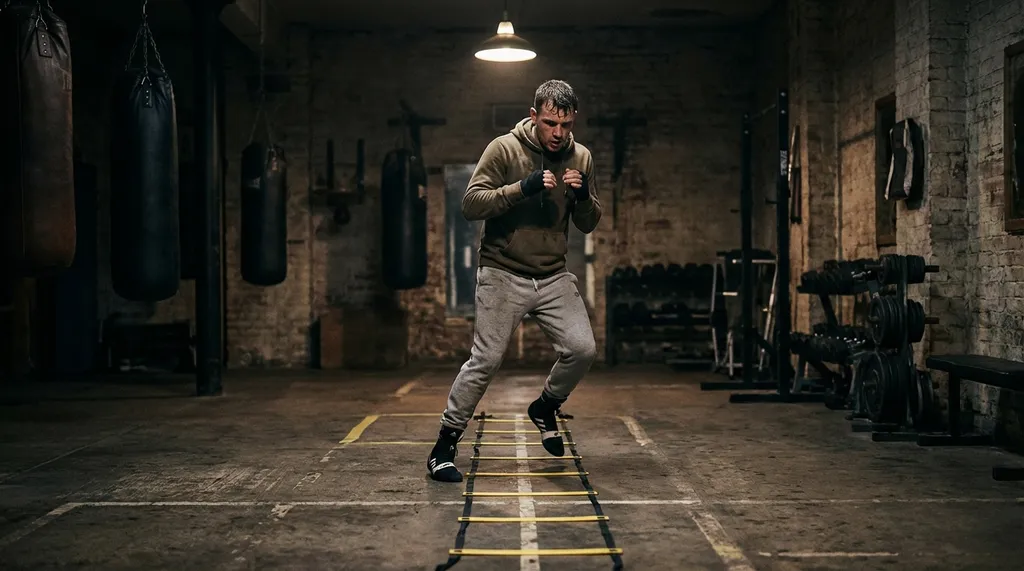
Conditioning Without Equipment
Boxing conditioning at home does not require a gym. These circuits develop the specific energy systems boxing uses:
Burpee-punch combinations. Perform a burpee, stand up into boxing stance, throw a six-punch combination. Repeat for 3 minutes. This develops the recovery capacity that boxing demands: high-intensity effort followed by continued activity.
Mountain climbers in boxing stance. From a push-up position with hands roughly in guard-width position, alternate driving knees to chest. 30 seconds work, 15 seconds rest, 10 rounds. This builds the core endurance that maintains your guard through three rounds.
Squat-to-jab. Full squat, explode up, throw a double jab at the top. The leg drive connects to the punching power chain in a way that makes this more boxing-specific than standard squats.
Skipping without a rope. If you do not have a skip rope, performing the skipping motion without one still develops the footwork rhythm and calf endurance. It looks slightly ridiculous. It works.
The Slip Rope at Home
A slip rope is one of the cheapest and most effective home training tools. Tie a rope at head height across a room (between two door handles works). Move along it, slipping beneath the rope alternately to each side. The movement comes from the waist, not the neck. Hands stay up throughout.
Three minutes on the slip rope develops head movement automaticity. When someone throws a punch in sparring and you slip it without thinking, the slip rope is where that reflex was built.
What to Avoid
Hitting the air at full power. Throwing full-power punches at nothing hyperextends the elbow and strains the shoulder. Shadow boxing should be at 60-70% power. Save the power for the bag.
Trying to replicate sparring alone. Some YouTube tutorials suggest complex reaction drills that simulate sparring. Most of these are too complex to execute properly without a partner and develop performance anxiety rather than skill.
Neglecting the basics. The temptation at home is to practice the flashy combinations rather than drilling the jab for five minutes straight. The jab is more important than any combination. Drill it until it is automatic.
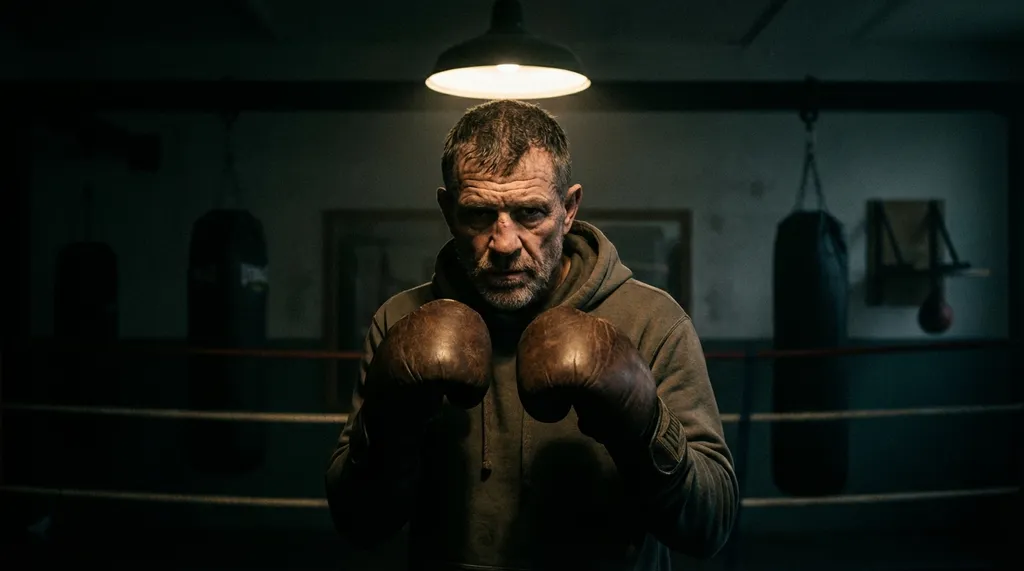
How Home Training Connects to Gym Training
Home training is preparation, not replacement. The drills above prepare your body and your movement patterns for what happens in the gym. The gym provides what home cannot: impact training, partner work, and coaching.
At Honour and Glory, the Adult Recreational class builds on the foundations that home training develops. Members who supplement their gym sessions with home shadow boxing and footwork drills progress noticeably faster than those who train only at the club.
H&G Team
Writer at Honour & Glory Boxing Club, a community boxing gym in Kidbrooke, South East London.
Was this page helpful?
Your feedback helps us improve this page
Got questions about what you just read?
ASK OUR AI ASSISTANT ✨MORE LIKE THIS
WANT TO JOIN US?
Book a free trial session and see what we're all about.
Claim a Free Trial