
The Part Nobody Prepares You For
Your first competition day is not about boxing. The boxing is three rounds. Competition day is six to eight hours of waiting, logistics, and nerves, with three rounds of boxing somewhere in the middle.
Every boxer who has competed will tell you the same thing: the hardest part is not the opponent. It is the wait. Understanding the structure of the day reduces the uncertainty, which reduces the stress, which means you arrive at the ring in better condition to perform.
This is what actually happens.
Before Competition Day
Your club enters you into a competition through the England Boxing registration system. Your coach submits your details: weight, age category, experience level, and your ABA licence number. The matchmaker uses this information to find an appropriate opponent.
You will know your weight category and the approximate time your bout is scheduled in advance. Arrive at the venue before the programme starts, not just before your bout. If you arrive late and miss your weigh-in window, you do not box.
Your BCR1 (Boxer's Competition Record) must be up to date and physically present. This is the document that records your medical history, previous bouts, and medical suspensions. Without it, you will not be cleared to compete. The England Boxing Rule Book is explicit on this.
The Weigh-In
Weigh-ins typically happen in the morning for evening competitions, or two hours before the programme starts. According to England Boxing rules, boxers weigh in dressed in underwear only. You are permitted to check your weight as many times as you wish during the two-hour weigh-in window.
If you are over your weight category limit, you will not be allowed to compete. This is not negotiable and there is no grace period. This is why weight management in the weeks before competition matters far more than what you do on the day. Dehydrating aggressively on the morning of the fight to make weight impairs performance and is dangerous.
The weight categories for senior men under the 2025 England Boxing rules run from Minimumweight (46-48kg) through to Super Heavyweight (92kg+), with categories spanning 2-5kg each.
The Medical
After weighing in, you see the tournament doctor. This is a mandatory pre-bout medical check: blood pressure, pupil response, a brief neurological assessment, and a check of your BCR1 for any outstanding medical suspensions.
The doctor clears you to box or does not. This check exists to protect you. If you have an existing injury, have had a recent head injury, or your blood pressure is abnormally elevated (which stress and aggressive weight cutting both cause), you may be stood down.
The Wait
This is the part that surprises people. After the medical, you may have hours before your bout. The waiting is genuinely the hardest part of competition day.
Find your dressing room. Your corner team - your coach and at least one second - will be with you. Get changed into your vest and shorts, wrap your hands (your wraps will be checked by officials), and stay warm.
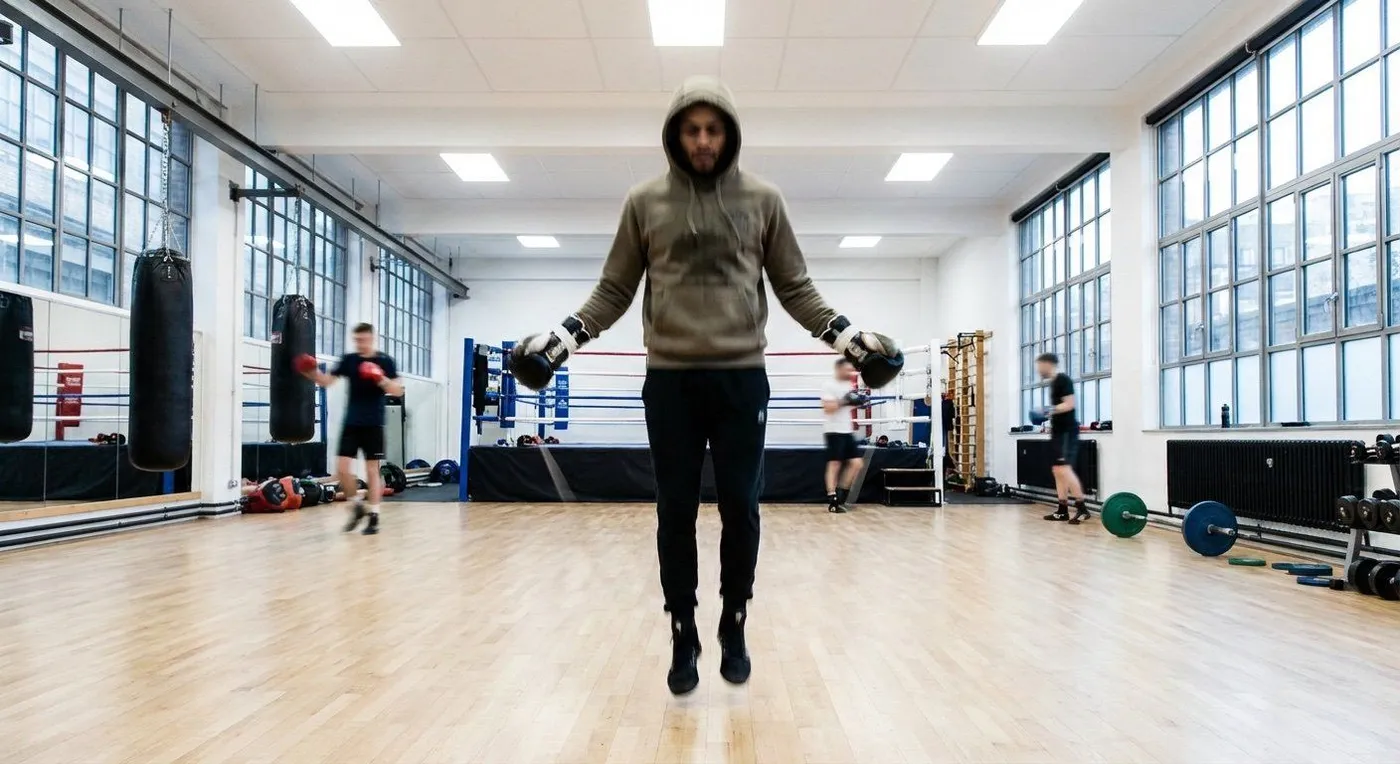
Some boxers warm up continuously: shadow boxing, light pad work with their coach, skipping. Others prefer to stay still and focused. Some listen to music. Some talk. There is no correct approach, but you should have tried your pre-fight routine in training before competition day.
The dressing room is a specific environment. Other boxers from other clubs, their coaches, nervous energy. Some rooms are loud, some are tense, some are surprisingly relaxed. The culture varies by event.
Eat lightly if your bout is more than two hours after weigh-in. A banana, some rice cakes, an energy drink. Nothing heavy. Stay hydrated but do not drink excessively - you do not want to feel bloated when the bell rings.
Ring Entrance
When your bout is called, you walk out with your corner team. You have a corner assigned - red or blue. Your opponent enters from the opposite corner.
The referee calls both boxers to the centre of the ring, gives the rules briefing - protect yourself at all times, obey my commands, break when I say break, no hitting on the break - and sends you back to your corners.
Your coach gives you final instructions. The mouthguard goes in. The bell rings.
During the Bout
Senior amateur bouts are three rounds of three minutes. Junior bouts are shorter depending on age category. Skills bouts (for inexperienced boxers) may be shorter still.
Amateur boxing now uses the 10-point-must scoring system, the same as professional boxing. Five judges score each round independently. The winner of each round receives 10 points, the loser 9 (or 8 for a dominant round, 7 for a knockdown round). At the end of the bout, judges' scores are totalled.
Effective punches are defined as blows with the knuckle part of the closed glove landing on the front or sides of the head above the belt line, or the front of the body above the belt line, delivered with force and intent. Blocked, deflected, or glancing punches do not score.
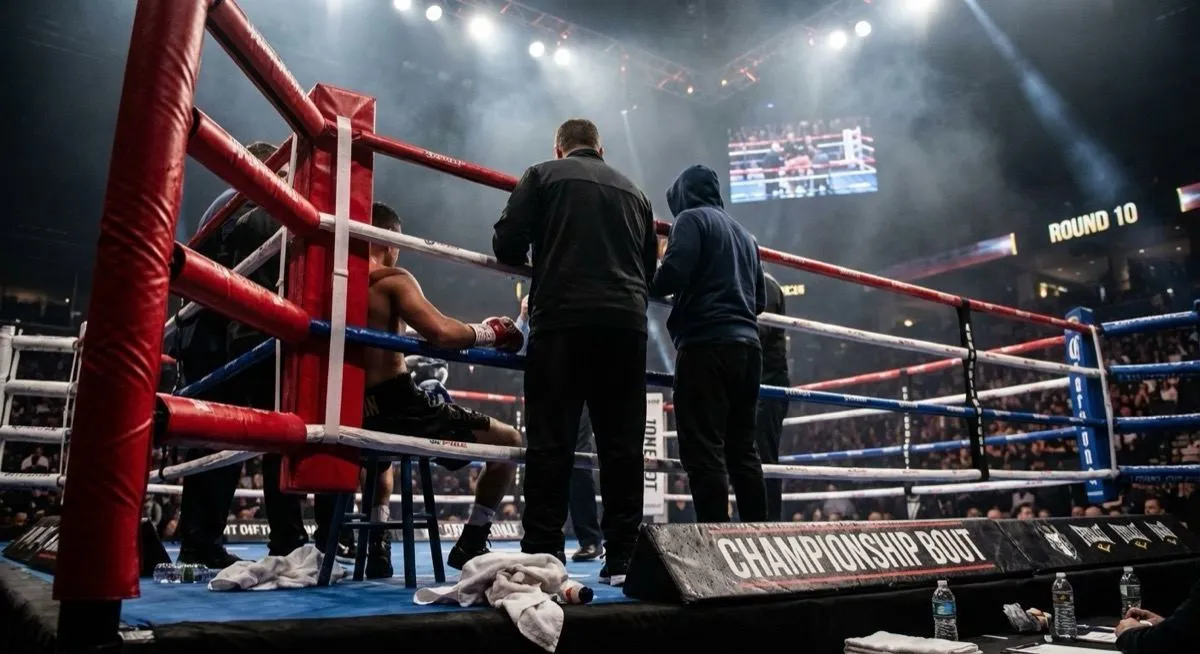
At the end of each round, return to your corner. Your coach has 60 seconds. Water, specific tactical advice, the cut kit if needed. Listen to instructions. The coach can see things you cannot see while you are in there.
The Decision
At the end of the final round, both boxers stand at the centre. The referee takes each boxer by the wrist and raises the winner's hand.
A unanimous decision means all five judges scored for the same boxer. A split decision means the majority scored for one boxer but some scored for the other.
Other outcomes: Technical Knockout (TKO) - the referee stops the bout because one boxer cannot continue or defend themselves. Knockout (KO) - rare in amateur boxing with headguard requirements and proactive referee intervention. Disqualification - for serious or repeated fouls after warnings.
Win or lose, shake hands with your opponent and their corner. Thank the referee. Boxing has formal protocols around respect and sportsmanship and they are not optional.
After the Bout
The medical officer clears you after the bout. If you took significant head shots, you will receive a medical suspension - a mandatory period during which you cannot box again until medically cleared. For a loss by KO or RSC (Referee Stopped Contest) involving head blows, the standard suspension under England Boxing rules is 28 days with a mandatory medical before return.
This is not punishment. It is protection. Head injury accumulates and the medical suspension exists to prevent damage that would not be visible for years.
What Your First Bout Teaches You
Every boxer who has competed says the same thing: the first bout taught them something that training never could. The gap between hitting pads in the gym and boxing an opponent who is trying to hit you back is specific and cannot be simulated.
The adrenaline dump, the tunnel vision in the first 30 seconds, the moment where training takes over and conscious thought stops - these are experiences that define the difference between someone who trains boxing and someone who boxes.
Most boxers describe their first bout as the moment they understood what all the training was for.
Getting Ready at Honour and Glory
At Honour and Glory, the Adult Competitive class trains specifically for the competitive pathway. The coaches prepare members for competition from both technical and psychological perspectives - including structured sparring, competition-format training rounds, and pre-bout preparation.
Competition is not for everyone and it is never required. But for those who want it, the pathway is supported from first bout through to national level.
H&G Team
Writer at Honour & Glory Boxing Club, a community boxing gym in Kidbrooke, South East London.
Was this page helpful?
Your feedback helps us improve this page
Got questions about what you just read?
ASK OUR AI ASSISTANT ✨MORE LIKE THIS
WANT TO JOIN US?
Book a free trial session and see what we're all about.
Claim a Free Trial