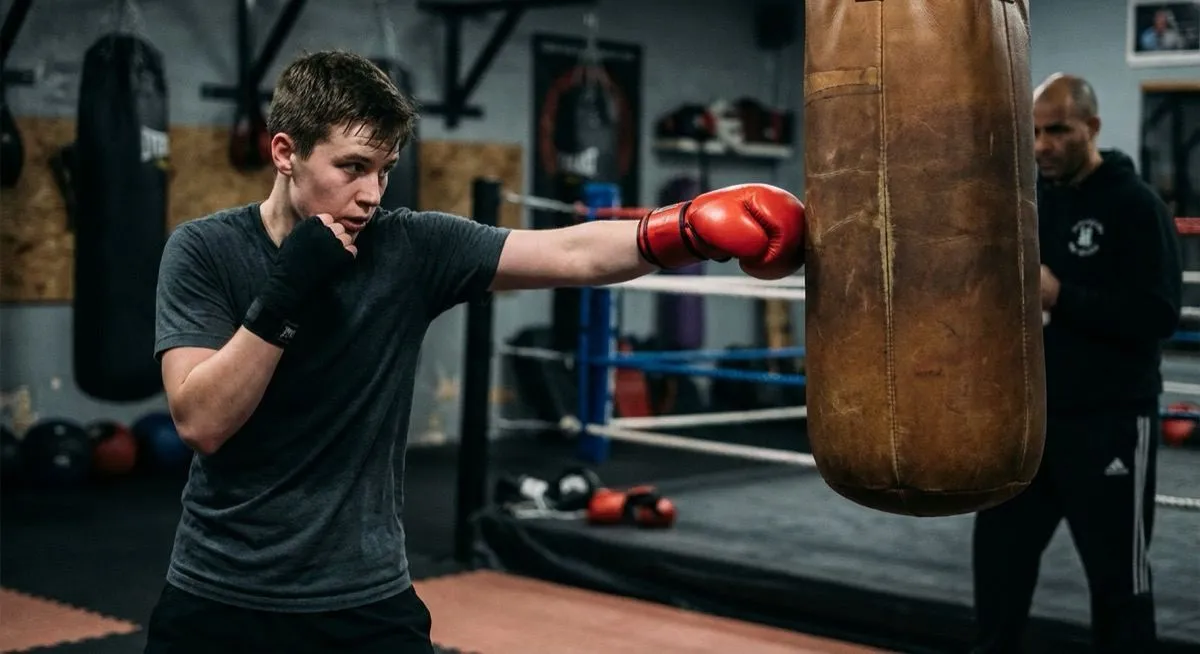
A lot of beginners have the same thought.
Why pay for classes when you could just buy a bag, hang it in the garage, and get going at home?
On paper it sounds sensible. One purchase, unlimited sessions, no commute, no timetable. If you are disciplined, maybe you even imagine it saving money.
In reality, most beginners who buy a bag first end up with one of three outcomes. They stop using it. They use it badly. Or they use it badly for just long enough to hard-wire habits that a coach then has to spend months undoing.
That does not mean a home bag is always a bad idea. It means it is usually a bad first idea.
If you are around Kidbrooke and deciding whether to spend your first boxing money on equipment or classes, here is the honest answer.
Why the home bag idea is so appealing
Because it promises progress without friction.
You do not have to walk into a gym. You do not have to feel new. You do not have to ask questions. You just hit something and tell yourself that counts as boxing.
And yes, heavy bags are useful. Decathlon's own guide to punching bags presents them as a solid tool for technique, stamina, and power work, with a common rule of thumb that an adult bag should weigh around half the user's body weight (source). That is reasonable advice as far as bag choice goes.
But bag choice is not the main issue.
The main issue is that beginners usually do not need more access to punching. They need more feedback.
The biggest problem: the bag does not correct you
A coach tells you when your chin is too high.
A coach tells you when your rear hand is dropping.
A coach tells you when you are arm-punching, overreaching, standing too square, breathing badly, or throwing every shot with your feet nailed to the floor.
A heavy bag tells you none of that.
It just sits there and gets hit.
That is why beginners often feel productive on a bag while actually getting worse. You can spend twenty minutes throwing busy-looking punches and reinforce every bad thing you are doing.
The bag rewards volume. Boxing rewards quality.
Bag work teaches the wrong lessons if you start too early
This is where beginners get caught.
They think the bag is teaching them power. Often it is teaching them to push punches.
They think it is teaching them combinations. Often it is teaching them to stand in front of a stationary object and throw memorised sequences with no regard for timing or defence.
They think it is building confidence. Sometimes it is building false confidence, which is worse.
Even Geezers' guide to glove types makes the point that heavy bag work creates serious repeated impact and is one of the most common sources of wrist trouble when the wrong gloves or poor setup are involved (source). If decent boxers can pick up hand and wrist problems from bag work, beginners with weak mechanics can definitely do it.
The hidden costs nobody mentions
The bag itself is only the start.
Decathlon's category page makes this obvious if you actually look at the listings. A basic 14kg bag can be around £50, but more realistic adult hanging bags are listed much higher, with 20kg, 32kg, and 50kg options running from roughly £90 to £130, and that is before you get into stands, hooks, straps, or free-standing alternatives (source).
Then there is the rest:
- bracket or ceiling hook
- chains or straps
- space to hang it properly
- gloves
- wraps
- maybe floor protection
- maybe a free-standing base if you cannot mount it
So the "cheap home setup" often turns into a few hundred pounds very quickly.
That is before you have learned a proper jab.
Space is a bigger issue than most people realise
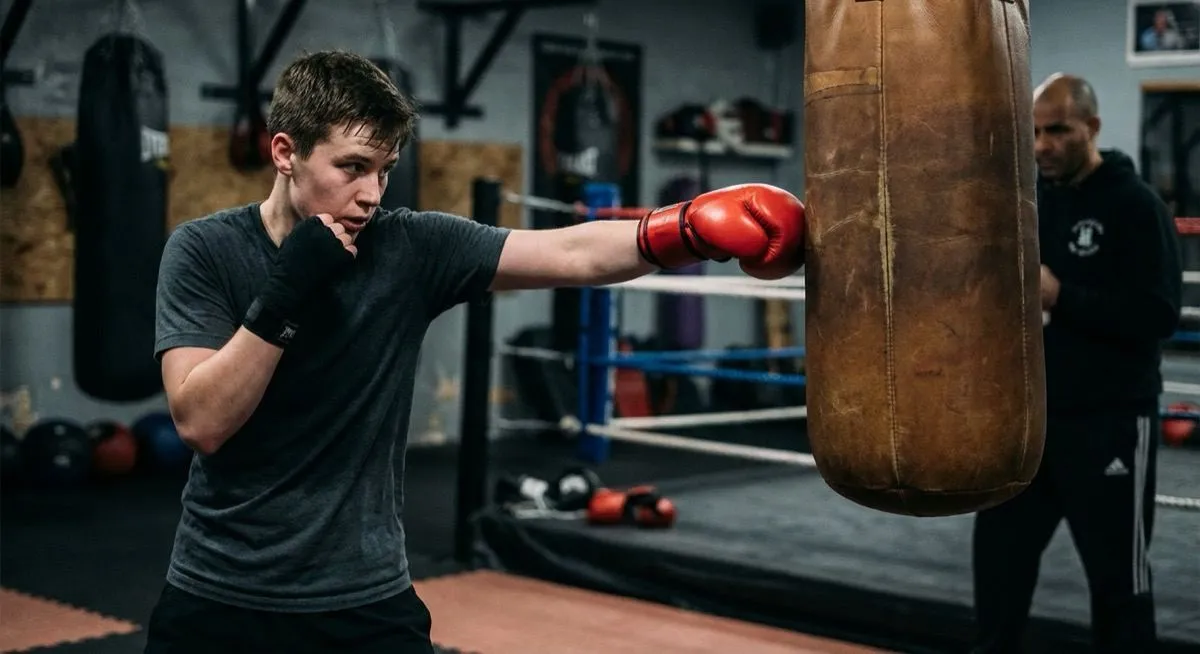
A bag is not just something you own. It is something you have to live with.
You need enough room to move around it. Enough clearance to punch properly. Enough confidence that the fixings will hold. Enough tolerance from everyone else in the building when the thing starts thudding through the wall.
A garage works better than a box room. A proper outbuilding works better than a flat. A heavy hanging bag in a rented upstairs London property is often a deeply optimistic plan.
And if you go free-standing instead, you solve one problem but create another. They take floor space, they can shift around, and many of them still do not feel as good as a well-hung bag.
The noise problem is real
This is the part people ignore because it is boring.
Bags are noisy.
Not just the punches. The chain, the bracket, the swing, the vibration through the mount, the floor impact if it is free-standing, the constant thud-thud-thud that is tolerable for five minutes and maddening after twenty.
In a proper gym, nobody cares. That is what the space is for.
At home, it can become the reason the bag slowly stops getting used.
What beginners actually need instead of a bag
Most beginners need three things before they need a home heavy bag.
1. Basic technique
You need someone to show you how to stand, move, and punch without hurting yourself.
2. Hand protection and sensible kit
England Boxing's safety guidance is clear that proper protective hand bandages are part of boxing safety kit (source). That matters because beginners often spend hundreds on a bag and then buy terrible gloves and ignore wraps.
A decent pair of wraps and appropriate training gloves matter sooner than a bag does. If you already know most of your training will be heavy bag work, compare the best boxing gloves for bag work UK before buying a cheap pair with poor wrist support.
3. Structured rounds
Most people training alone do not work in a useful structure. They hit until tired, then stop. Classes give you rounds, pace, coaching, and people around you who are all doing the same thing properly.
That is a far better use of your first month than punching a bag alone in bad posture.
When a home bag does make sense
There is a point where buying a bag becomes smart.
Usually that point comes after you have already done enough classes to know what you are doing.
- you already train in a gym and want extra rounds between sessions
- you have enough space and a realistic mounting solution
- you know how to wrap your hands and choose gloves properly
- you can actually self-correct basic technique
- you see it as supplementary work, not your whole boxing education
That is the key distinction.
Supplement, not substitute.
If you already understand the basics, a home bag can be brilliant. If you do not, it often becomes expensive furniture with a hero complex.
What to spend your money on first
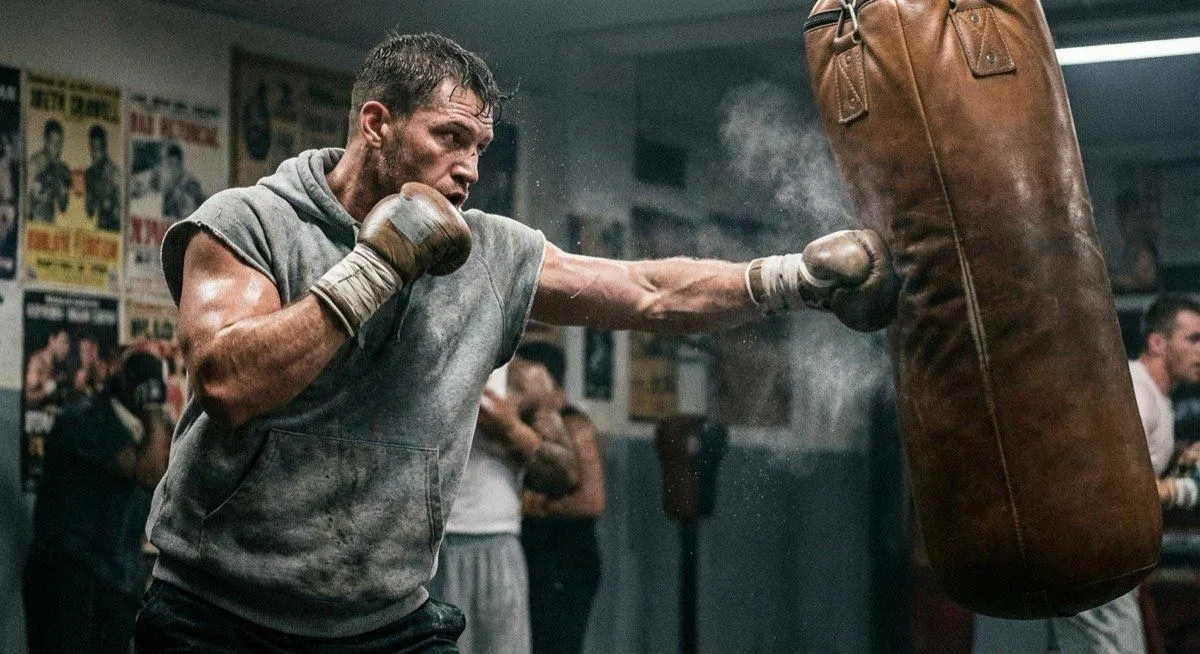
If your budget is limited, spend in this order.
- classes
- hand wraps
- gloves
- maybe a skipping rope
- only then start thinking about a bag
That order offends gear people, but it is still right.
One month in a good gym teaches more than a month of random bag work at home. You learn whether you even like boxing. You learn what sort of gloves suit you. You learn whether you want fitness boxing, technical boxing, or something more serious.
Only then can you buy a bag intelligently.
The question most beginners should ask instead
Not "should I buy a bag?"
The better question is, "what gets me better fastest for the next eight weeks?"
For almost everyone starting from zero, the answer is not a bag.
It is coached sessions.
That is especially true if your real concern is cost. Spending a few hundred pounds on a mediocre home setup and building bad habits is not saving money. It is just paying upfront for correction later.
The honest verdict
Should beginners buy a boxing bag for home?
Usually, no.
Not because bags are bad. Bags are great. But for most complete beginners they are bought too early, used badly, and treated as a replacement for learning.
Start with classes. Learn how to stand. Learn how to punch. Learn what proper rounds feel like. Then, if you catch the bug and want extra work at home, buy a bag with a clear purpose. A few weeks in our Adult Recreational class will usually tell you more than any equipment review ever will.
That is the cheaper route in the long run, and definitely the better one.
Book a free trial session at Honour and Glory Boxing Club.
If you still want to build a home setup later, read our Boxing Starter Kit guide and Heavy Bag Workout for Beginners after you have got some real coaching under your belt.
H&G Team
Writer at Honour & Glory Boxing Club, a community boxing gym in Kidbrooke, South East London.
KEEP READING
Heavy Bag Workout for Beginners
A complete heavy bag workout designed for beginners. This 20-minute routine builds technique, cardio, and power without requiring years of experience.
Do Beginners Need Boxing Boots?
A practical guide to when beginner boxers should buy boots, what normal trainers get wrong, and what to choose first.
Boxing Lessons Beginners Learn the Hard Way
Most beginners chase power, big combinations and toughness. Better boxing usually comes from calmer breathing, cleaner feet, a sharper jab and fewer thoughts at once.
Was this page helpful?
It takes one tap, and it genuinely helps.
Choose your next step
Turn this article into the right action
Some readers are ready to book. Some need the class route first. Pick the route that matches what you actually want.