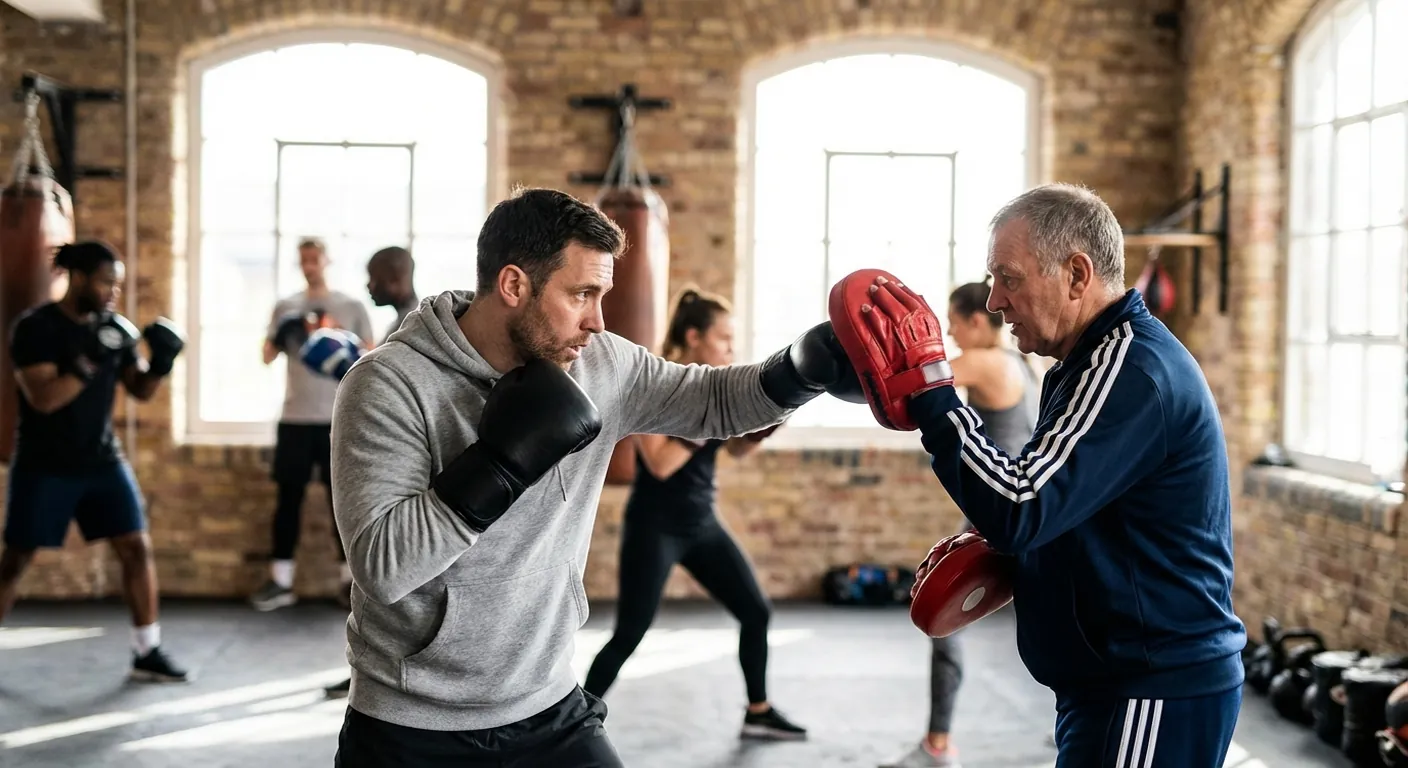
Yes, boxing improves coordination.
It does it quickly because boxing punishes sloppy timing straight away. If your feet arrive late, your punch lands weak. If your eyes switch off, you miss the target. If your hands move before your balance is set, everything feels rushed and ugly.
That is why beginners often walk out of their first few sessions saying the same thing: they expected to get tired, but they did not expect their brain to feel so busy.
There is good reason for that. A 2024 study in Frontiers in Physiology found that reaction time, eye-hand coordination and depth perception were major predictors of punch performance in amateur boxers. A 2025 boxing study in the Journal of Physical Education also reported that targeted training reduced reaction time and increased punch frequency in elite boxers.
That does not mean you need to be coordinated before you start. It means boxing is one of the better ways to build it.
What kind of coordination does boxing improve?
Boxing improves whole-body coordination, not just hand speed.
People hear “coordination” and think hand-eye coordination only. That is part of it, but boxing asks for more than that. You are tracking distance, reading movement, adjusting your stance, turning your hips, keeping your guard in place and landing on balance. Several things need to happen in sequence, and they need to happen fast.
The first gain most beginners notice is cleaner timing between feet and hands. A jab stops feeling like a random arm movement and starts feeling like one connected action from the floor up. After that, the second gain is rhythm. You stop freezing between movements and start flowing from one action to the next.
That matters outside the ring too. Better coordination usually means better body awareness, fewer clumsy steps when tired, and a stronger sense of where your weight is sitting when you move.
Why boxing improves coordination faster than many gym workouts
Boxing improves coordination fast because the feedback is instant.
On a machine in a standard gym, you can move badly for months and still complete the rep. Boxing does not let you hide in the same way. Miss the pads and you know. Lean too far over your front foot and you know. Drop your back hand while throwing a jab and a coach will correct it inside ten seconds.
That constant correction matters. Motor learning improves when the body gets a clear signal about what worked and what did not. A systematic review in the European Review of Aging and Physical Activity found that physically active people, especially those doing more motor-coordinative training, tended to show better upper-extremity motor performance and stronger early-phase motor learning.
Boxing gives you that kind of training in a very direct form. You are not just “working out”. You are solving movement problems over and over again.
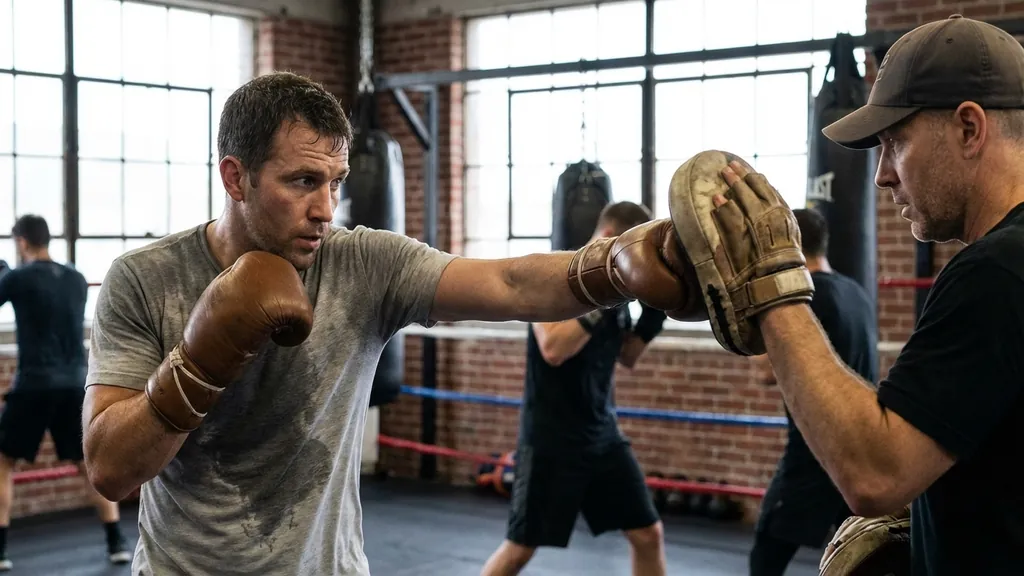
Does boxing improve hand-eye coordination?
Yes. Hand-eye coordination is one of the clearest things boxing improves.
Pads, bag work and partner drills all ask you to see a target, judge the distance and send the punch to the right place without overreaching. That sounds simple until you try it at speed.
The Frontiers in Physiology boxing paper found eye-hand coordination to be one of the strongest visual factors linked to punch accuracy. That fits what coaches already know from practice. People who train regularly stop swiping and start placing punches.
This is also why tools such as the double end bag are so useful. The target moves, the timing changes, and your eyes have to stay engaged instead of drifting. It is very hard to build that on a treadmill.
Does boxing improve balance and footwork as well?
Yes. Good boxing makes balance better because almost every mistake starts with poor weight distribution.
A lot of beginners think footwork is something separate from punching. It is not. The feet decide whether the punch has a base under it, whether you can defend after throwing, and whether you can change angle without stumbling into range.
That is why coaches keep banging on about stance. It can sound pedantic at first. Chin down. Knees soft. Rear heel light. Do not cross your feet. Do not square up after every combination. But those details are exactly how coordination gets built.
Once stance improves, the rest usually improves with it. Combinations feel smoother. Defensive movement stops looking panicked. Even skipping becomes easier because the body starts learning rhythm instead of fighting it.
If you are based near Kidbrooke, this is one reason beginners often settle into regular classes faster than they expected. They come in feeling awkward and leave after a few weeks moving with far less wasted effort.

How long does it take to notice a difference?
Most people notice some improvement within a few sessions.
The change is not dramatic on day one. You are unlikely to turn into a slick mover in two classes. What usually happens is smaller and more useful. You stop crossing your feet as often. You hit the pads more cleanly. You recover your stance faster after punching. You do not need to look down at your own feet as much.
Within a month of consistent training, many beginners look calmer. They still make mistakes, but the movements are less scrambled. That is a real gain. Calm movement is coordinated movement.
If you want that process to move quicker, add short bits of mental rehearsal between sessions. Our guide to boxing visualisation techniques for beginners explains how rehearsing the movement pattern can make the next session feel less messy.
What part of a boxing session helps coordination most?
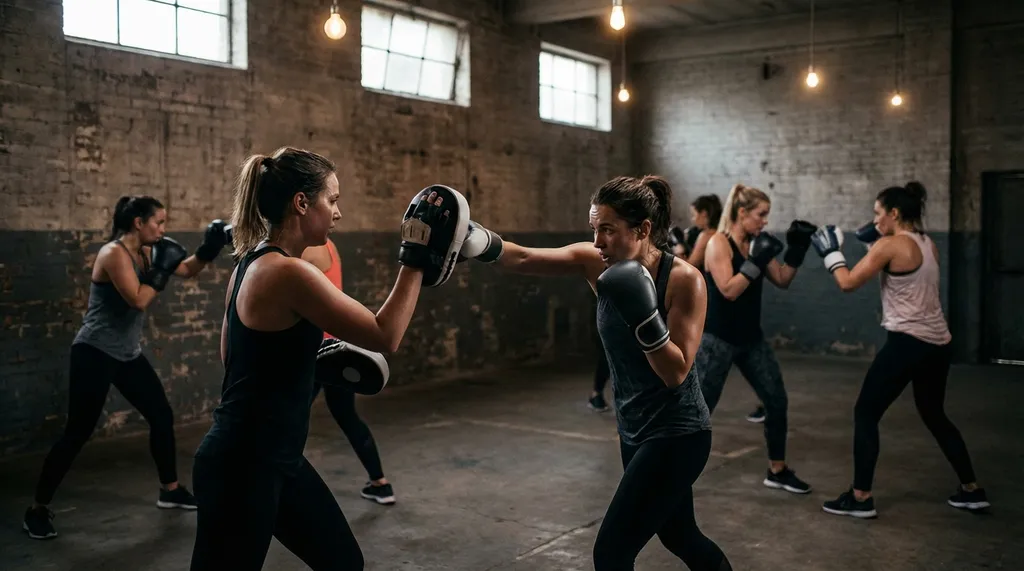
Pad work and controlled partner drills usually help coordination most at the start.
Heavy bag rounds are useful, but beginners often turn them into a cardio bash if nobody is guiding them. Pads are better for learning because they force timing, target selection and rhythm. You have to respond to what is in front of you rather than emptying a clip at a bag.
Shadow boxing matters too, provided you do it properly. Slow, precise shadow boxing teaches you to organise your body without the panic of impact. Then bag work and pads test whether you can keep that shape once speed and fatigue arrive.
Skipping is another underrated piece. It looks basic, but it teaches rhythm, timing and lower-leg coordination. There is a reason boxing gyms still use it.
Is boxing still worth it if you feel uncoordinated now?
Yes. Feeling uncoordinated is a reason to start, not a reason to avoid it.
Good beginner boxing classes are built around correction. Nobody walks in moving well straight away. The people who improve fastest are usually not the naturally flashy ones. They are the ones who listen, slow down and repeat the basics until the pattern sticks.
That is also why boxing works well for adults who got bored with standard gym routines. There is a skill to chase. You are not just trying to survive another set. You are trying to move better than you did last week.
At Honour and Glory Adult Recreational, that is a big part of the appeal. People come for fitness, but many stay because they enjoy the process of getting sharper.
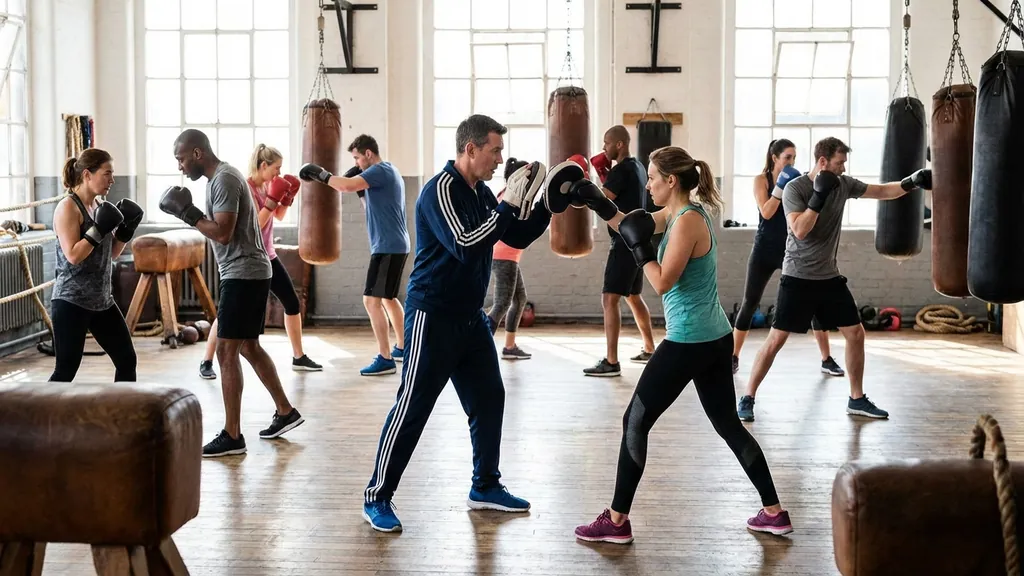
The honest answer
Boxing improves coordination because it forces timing, balance, focus and movement sequencing at the same time.
That is the real answer. It is not magic. It is repeated practice with clear feedback. Done consistently, it changes how you move.
If you want a training style that feels more engaging than generic gym work and teaches your body to move with more control, boxing is one of the best options available.
H&G Team
Writer at Honour & Glory Boxing Club, a community boxing gym in Kidbrooke, South East London.
Rate this article
Your feedback helps us write better content
Got questions about what you just read?
ASK OUR AI ASSISTANT ✨MORE LIKE THIS
WANT TO JOIN US?
Book a free trial session and see what we're all about.
Claim a Free Trial