Boxing Visualisation Techniques: The Mental Training Beginners Ignore

Most people who start boxing spend all their time thinking about what happens in the gym - the drills, the bag work, the fitness. That's fair enough. But there's a whole layer of training that happens nowhere near a heavy bag, costs nothing, and can genuinely improve how you move.
Boxing visualisation techniques - sometimes called mental rehearsal - involve running through movements, scenarios and fights entirely in your head. No gloves, no bag, no sweat. Just your brain doing some work between sessions.
Muhammad Ali called it "future history". He would mentally rehearse entire fights before they happened - picturing himself winning, feeling the emotions, hearing the crowd. He wasn't being eccentric. He was training.
What the science actually says about boxing visualisation techniques
Visualisation works because the brain doesn't distinguish very clearly between a real action and a vividly imagined one. When you visualise throwing a jab, your motor cortex - the part of the brain that controls movement - activates. You're reinforcing the same neural pathways you'd use if you were actually punching.
Research published in Frontiers in Psychology and related motor imagery studies consistently show that mental rehearsal alongside physical training produces better results than physical training alone. The brain records these imagined actions as a kind of blueprint - one the body draws on when it's time to execute for real.
What this means for a boxing beginner: those hours between sessions, sitting on the bus or lying in bed, can actually contribute to your training if you use them properly.
---
Skill-based versus scenario-based
There are two main types, and both are useful.
Skill-based visualisation is about specific techniques. You pick one thing - say, a jab-straight combination - and run through it carefully in your head. You picture your stance, your guard, the extension of your arm, your shoulder rolling forward, your hip rotating on the right hand. You slow it down, then bring it up to speed.
This is particularly useful for beginners because you're trying to build good habits. Every time you mentally rehearse a correct movement, you're adding to the pattern before you've touched a bag.
Scenario-based visualisation is about situations. You picture yourself sparring. Someone throws a jab at you - what do you do? You see yourself slipping it, countering, moving your feet. You imagine getting tired in round three and having to grind through it. You imagine your guard dropping and picture yourself resetting it.
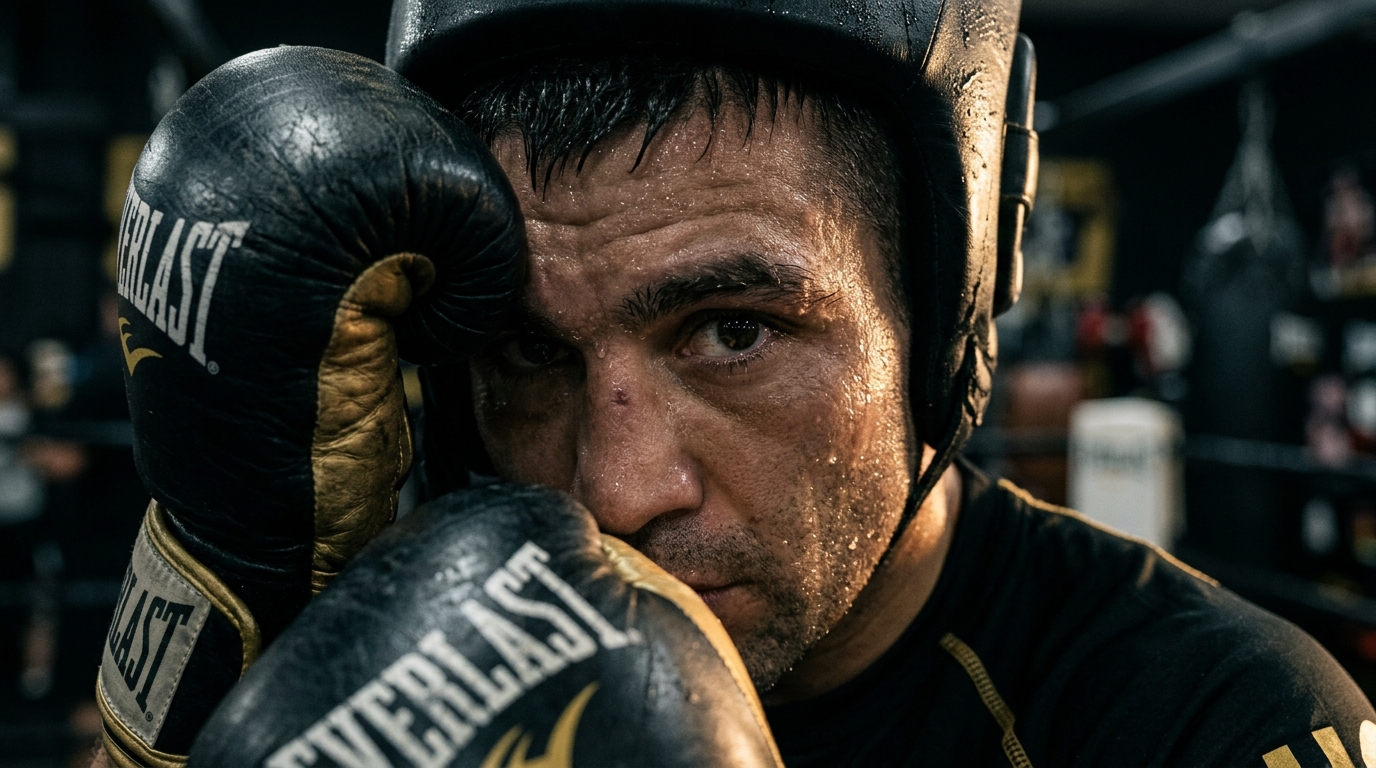
Most coaches will say boxing is mostly mental. That's slightly overstated, but there's something real in it. The boxers who panic under pressure are usually the ones who've never mentally rehearsed what being under pressure actually feels like.
---
How to actually do it
This doesn't need to be complicated. Five minutes a day will make a difference.
Find somewhere quiet - before bed, first thing in the morning, or during a lunch break. Close your eyes, take a few slow breaths, and let your body settle.
Then build the scene. Don't just see it - try to feel it. What does the gym smell like? What do your gloves feel like on your hands? What does your footwork sound like on the floor? The more senses you bring in, the more effective it becomes.
Start slowly. Picture a single technique from the starting position all the way through to recovery. Get the details right. Then gradually bring it up to pace.
If you're preparing for your first sparring session, run through it beforehand. Imagine the round starting. Imagine moving well, breathing properly, keeping your guard up. Imagine making a mistake, and picture yourself correcting it calmly - don't just visualise the ideal run where nothing goes wrong.
At H&G in Kidbrooke, coaches will often tell members to think of the drive home as part of training - review what worked, what didn't, and run through the corrections in your head before the next session.
---
A few things that trip people up
Some people try visualisation once, decide it isn't working, and leave it alone. It's a skill like any other. Your first session will probably feel unfocused and a bit strange. That's normal. It gets easier.
Others visualise only perfect scenarios where they never make mistakes. That's less useful. Visualise yourself making a mistake and recovering from it. You're training the response, not just the ideal.
And don't make it too long. Ten minutes of genuine focused mental rehearsal beats thirty minutes of half-attention drifting.
---
When to fit it in
Before training: Run through what you want to work on. If you're drilling your jab that session, visualise it first. You'll often find your first few reps are sharper.
After training: Think back over the session. Pick one thing that didn't feel right and visualise doing it correctly. You're effectively correcting the session before the memory settles.
Between sessions: The gap between Tuesday and Thursday is where most forgetting happens. A few minutes of mental practice on Wednesday helps bridge it.
Before sleep: The brain consolidates memory during sleep. Reviewing a technique just before bed isn't a bad idea.

---
Why it suits boxing in particular
Visualisation applies to any skill-based activity - golf, music, surgery. But boxing lends itself to it well because so much of the sport is reactive and split-second. You can't think through a counter-punch in real time. Your responses need to be automatic before you ever need them.
Visualisation accelerates that process. It helps you have a practised response before you've been in the situation physically. The first time you slip a jab in sparring shouldn't be the first time your brain has tried it.
Sugar Ray Leonard was known to mentally run through every scenario before fights. Not because he lacked confidence, but because preparation like that meant nothing in the ring felt completely new.
---
Putting it together
If you're training in south-east London - whether at H&G in Kidbrooke, or anywhere else in Greenwich - this is one of the simpler edges you can find. No equipment, no extra time in the gym, no cost. Just your brain and a few minutes of quiet.
The physical work in the gym is the foundation. Boxing visualisation techniques are what you build on top of it between sessions.
Try it tonight, before you fall asleep. Pick one combination you drilled this week and run through it. Slowly at first, then at speed. You'll be surprised what carries into your next session.

Start training at Honour and Glory - claim your free trial session.
H&G Team
Writer at Honour & Glory Boxing Club, a community boxing gym in Kidbrooke, South East London.
KEEP READING
How to Start Amateur Boxing in Bexley
Are you based in Bexley and looking to take boxing seriously? Find out exactly how to transition from fitness boxing to competing as a registered amateur.
Beginners Boxing in Eltham
Starting boxing as a complete beginner in Eltham? A direct guide to what the first weeks look like and how to find coaching that actually works.
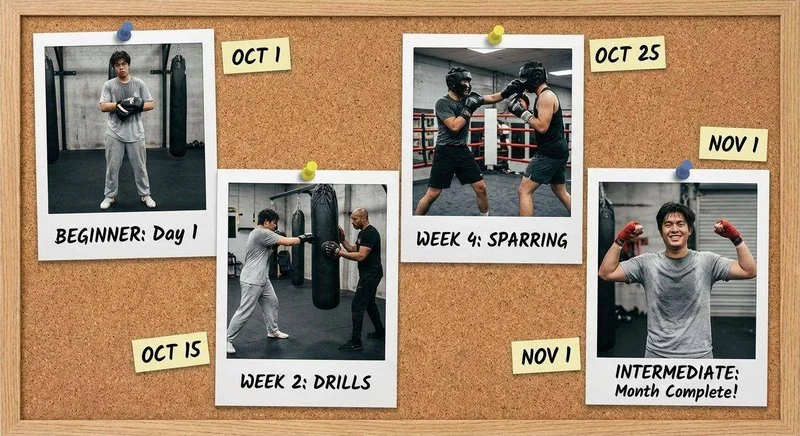
Your First Month of Boxing Personal Training
What actually changes in 30 days of boxing personal training. Physical changes, technical milestones, and what month two looks like if you stick with it.
Was this page helpful?
It takes one tap, and it genuinely helps.
Choose your next step
Turn this article into the right action
Some readers are ready to book. Some need the class route first. Pick the route that matches what you actually want.