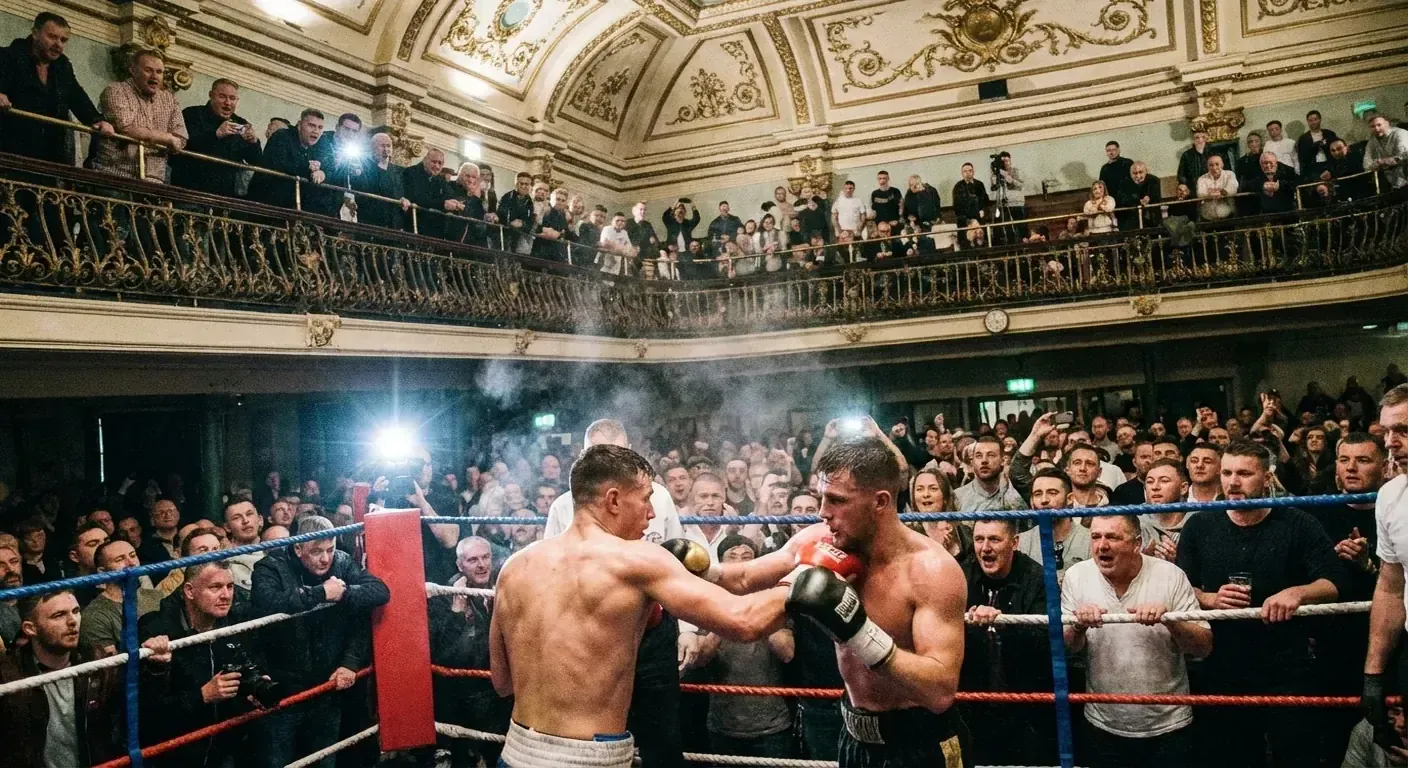
York Hall is the boxing room every British fight fan should visit at least once. Not because it is comfortable, glossy, or built for selfies. It matters because it strips the sport back to the thing television often hides: two fighters, two corners, a crowd close enough to feel the tempo change, and nowhere for a prospect to fake it.
The official York Hall page describes the Bethnal Green venue as a historic 1920s hall and an event space with capacity for about 1,200 people for boxing and other events (Be Well Tower Hamlets). BBC Sport called it a piece of living boxing history in its Small Hall Spotlight feature (BBC Sport). That is the correct framing. York Hall is not just a place where boxing happens. It is a place where boxing still feels like boxing.
If you train at Honour and Glory in Greenwich, a York Hall night is worth the trip. You see distance, nerves, corner work, recovery, ring judgement, and pressure in a way that a big arena rarely gives you. Then you come back to the gym and realise why coaches keep talking about feet, balance, breathing, and not admiring your own work.
What York Hall boxing is actually like
York Hall boxing is close, loud, and brutally honest. The ring does not feel like a stage miles away. It feels like the room is wrapped around it.
That changes how you watch. You hear the slap of a jab on the guard. You hear the corner telling a fighter to stop backing up. You notice when a prospect looks calm on the walk-in but starts breathing through the mouth after two hard rounds. You can see which shots land clean and which ones only impressed the back row.
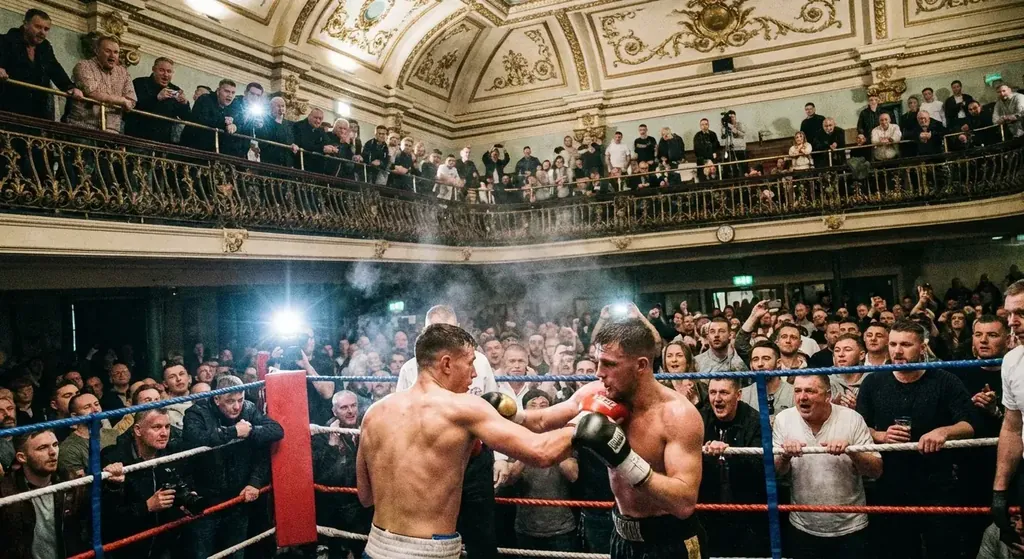
The venue opened in 1929, and local history coverage records its public-baths origin and 1,200-capacity hall before the boxing reputation became the story most people know (Tower Hamlets Slice). Small-hall boxing does not forgive poor matchmaking, weak fundamentals, or a fighter who can only perform when everything is comfortable.
That is why good coaches like these nights. You can learn a lot without pretending you are a pundit. Watch who wins the first minute of each round. Watch who controls centre ring. Watch who panics when the other fighter steps off line. Those small details matter more than the entrance music.
Why York Hall still matters in British boxing
York Hall matters because it sits between the amateur gym and the television arena. It is where fighters move from potential to proof.
A prospect can look wonderful in clips. York Hall asks harder questions. Can they stay relaxed when the crowd is on top of them? Can they adapt when the opponent is awkward rather than cooperative? Can they win a round with simple boxing when the knockout does not come?
That middle layer is important for British boxing. The sport needs stadium nights, world title fights, and the big lights at The O2. But it also needs rooms where fighters build the habits that survive pressure. York Hall is one of those rooms.
The venue is also useful for beginners because it makes boxing feel less abstract. At home, a new boxer might think footwork is boring and combinations are the fun bit. In person, you see the truth quickly. The fighter with better feet usually has more choices. The fighter with poor balance wastes energy, misses counters, and falls into clinches they did not want.
What to watch if you are new to boxing
Do not try to watch everything. Pick one or two things per fight and stick with them.
Start with the feet. A beginner should watch how often the winning fighter exits after punching. Good boxers do not throw and pose. They punch, recover position, and make the opponent reset. That is why our Recreational Adults boxing classes spend so much time on stance, balance, and simple movement before loading people with long combinations.
Next, watch the jab. A jab is not just a scoring punch. It measures distance, interrupts rhythm, hides the right hand, and tells you whether a fighter is comfortable. If one boxer can touch the other with the jab whenever they choose, the fight usually starts bending their way.
Then watch the corner between rounds. This is where small-hall boxing is brilliant. You can often see whether a corner gives calm, useful instructions or panics with the fighter. Good coaching is not noise. It is one or two clear corrections the fighter can actually use.
What first-time visitors should know
York Hall is not a giant arena experience. That is the point.
Arrive with enough time to find your seat, get a feel for the room, and watch the early undercard. The early fights often tell you more about the sport than the main event. You see nerves. You see young fighters learning. You see how different the sport looks when the crowd is still filling in and nobody can hide behind theatre.
Expect the room to feel busy on a proper fight night. Expect queues. Expect a mix of families, boxing people, gym friends, fighters from other clubs, and people who have followed the sport for decades. It is a boxing crowd, not a corporate hospitality crowd.
If you are going with children or first-time fans, explain the rhythm before you go. Some fights are quick and explosive. Others are technical, messy, or cautious. That does not mean nothing is happening. It usually means both fighters are solving problems under pressure.
Why beginners should watch live boxing
Watching live boxing makes training make more sense. It gives context to the boring-looking things that coaches repeat every week.
After a York Hall night, shadow boxing looks different. You understand why the rear foot must turn. You understand why your guard has to come back after the hook. You understand why a tired fighter who can still breathe calmly has a serious advantage.
This does not mean beginners should rush towards sparring or competition. A good beginner pathway separates learning the sport from being thrown into danger. If you are new, your job is to build control first: stance, jab, defence, pad work, bag work, conditioning, and enough composure to listen while tired.
That is also why watching professionals can be both inspiring and misleading. Copy the discipline, not the showmanship. Copy the way good fighters reset after an exchange. Do not copy the low hands, crowd gestures, or risky exits unless you understand what is behind them.
York Hall versus the big arena night
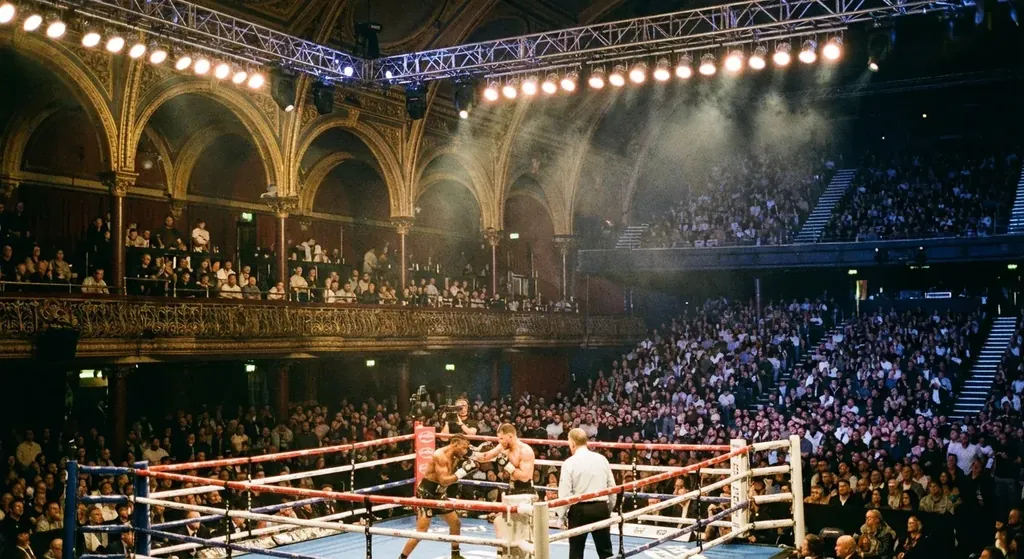
The O2 gives you scale. York Hall gives you information.
At a big arena you get the spectacle: the screens, the lights, the walkouts, the national anthem, the sense that the whole event has been built around one result. That can be brilliant. Big fight nights make boxing feel huge.
York Hall gives you the mechanics. You are close enough to see what a round costs. You notice the difference between a clean punch and a crowd reaction. You see how much of boxing is not violence but control: where to stand, when to breathe, when to break rhythm, when to take a half-step back instead of trading.
For a larger East End room with more production around the ring, read our Troxy boxing first-time fan guide. Troxy is more theatrical; York Hall remains the more compressed small-hall education.
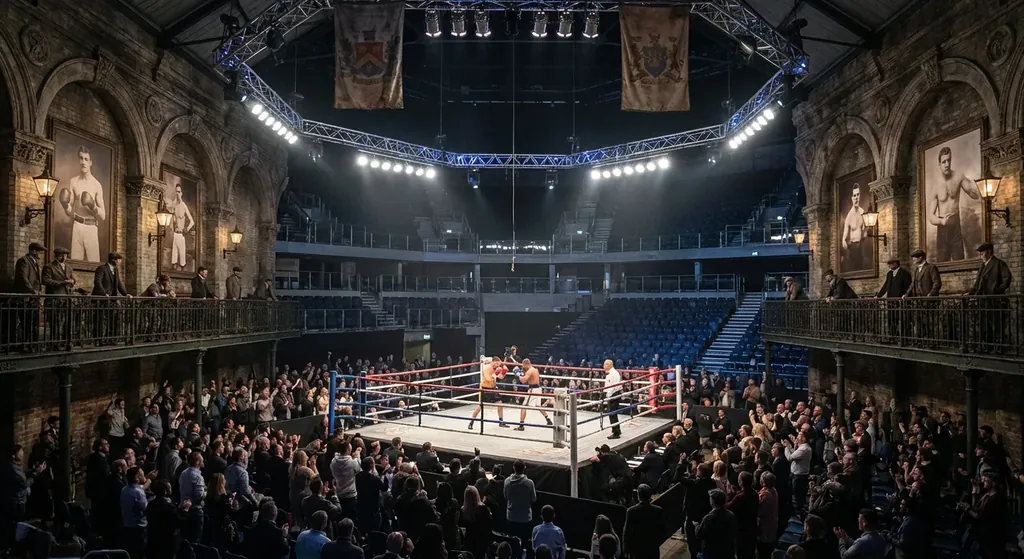
For someone who trains, that is gold. A small-hall night can make the next evening class better because it gives the drills a reason. The ladder, the jab round, the defensive step, the bag round where your shoulders are burning - all of it connects back to what you saw.
How York Hall connects to training at H&G
Honour and Glory is not in Bethnal Green, but the lesson travels well. Good boxing is built in small rooms before it is tested in bright ones.
Our gym is in South East London, and plenty of members follow live boxing around the city. Some go for the atmosphere. Some go because they want to understand the sport better. Some go because seeing a fighter stay disciplined under pressure gives them a kick to train properly the next week.
If York Hall gets you interested, do the sensible thing. Do not buy every bit of kit, invent a boxing identity, or declare that you want to fight before you can jab. Start with coaching. Learn the basics. Build your feet. Get fit enough to enjoy the work.
If you want more London boxing context, read our guide to Repton Boxing Club and East London boxing history or our practical guide to white collar boxing training. If you want to watch rather than train, keep an eye on our professional boxing events in London page.
The coach answer
Go to York Hall if you get the chance. Do not overthink it. Watch the feet, listen to the corners, and pay attention to how quickly a fight changes when one boxer loses position.
Then bring that lesson back to training. Boxing is not made of highlights. It is made of habits under pressure.
If you are local to Greenwich, Blackheath, Kidbrooke, Woolwich or nearby South East London, come and learn the sport properly before trying to imitate what you watched from the balcony.
H&G Team
Writer at Honour & Glory Boxing Club, a community boxing gym in Kidbrooke, South East London.
KEEP READING
The Most Iconic Boxing Venues in the UK
The venue shapes the fight. Some of the most memorable nights in British boxing happened in specific places for specific reasons. Here are the venues that matter.
How to Build an Amateur Boxing Training Schedule Around a Full-Time Job
Amateur boxers with full-time jobs face real constraints. Here is a realistic training schedule that produces competitive development without requiring professional athlete availability.

Is Boxing a Good Workout?
Wondering if boxing is worth your time? Here is an honest breakdown of how boxing stacks up as a workout - what it is great for, what it is not, and who benefits most.
Was this page helpful?
It takes one tap, and it genuinely helps.
Choose your next step
Turn this article into the right action
Some readers are ready to book. Some need the class route first. Pick the route that matches what you actually want.