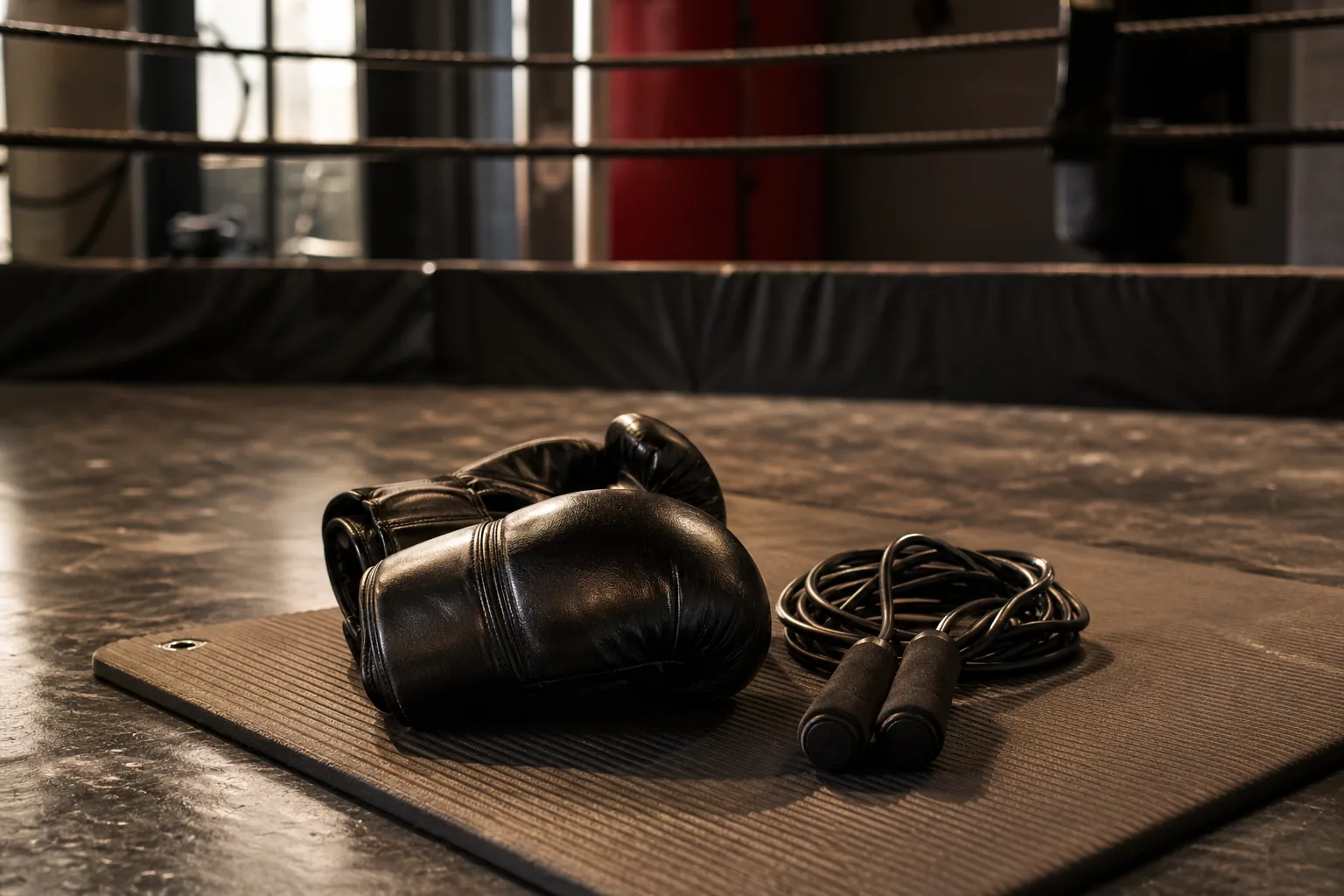
Yes, boxing can help you build abs.
No, boxing does not magically reveal a six pack if the rest of your life works against it.
That is the honest answer. Boxing trains the core properly because punching, slipping, rolling, bracing and footwork all rely on the trunk. But visible abs are not just a training question. They are a body-fat, nutrition, sleep, genetics and consistency question too.
If you want the simple version: boxing builds the engine, but body composition decides how much you can see.
Boxing trains the core on almost every movement
A punch does not start in the fist. It starts from the floor, moves through the legs and hips, rotates through the trunk and finishes through the shoulder and arm.
That means your core is working every time you throw properly. The abs are not just bending your spine like a crunch. They are transferring force, controlling rotation and stopping your body from falling out of position.
The main muscles involved are:
- Rectus abdominis: the visible six-pack muscle.
- Obliques: the side muscles used heavily in hooks, slips and rotation.
- Transverse abdominis: the deeper bracing muscle around the waist.
- Lower back and hip muscles: the support system that keeps the trunk stable.
That is why boxing can build a stronger midsection than a random floor-ab routine.
Why boxing beats endless crunches
Crunches train one small movement. Boxing trains the core while you are standing, breathing, rotating, moving and reacting.
That is closer to how the body actually works.
In a normal boxing class, your core is involved during:
- Shadow boxing.
- Bag work.
- Pad work.
- Defensive movement.
- Skipping.
- Press-ups, planks and conditioning.
- Holding your guard when tired.
You may not feel a neat burn like you do during sit-ups, but the total work across a full session is much bigger.
Our longer guide to boxing and abs explains the muscle side in more detail.
The part people do not want to hear
Visible abs are mostly about body fat.
You can have strong abs and still not see them clearly. That does not mean the training is failing. It means the muscle is covered. For most people, the route to visible abs is a combination of:
- Regular training.
- Enough daily movement.
- Sensible food choices.
- Enough protein.
- Sleep.
- Time.
- Not drinking or snacking away the calorie deficit every weekend.
Boxing helps because it burns energy and builds fitness at the same time. But if training makes you eat far more than usual, or you are sleeping badly, results slow down.
Be careful with "abs fast" promises
Search engines are full of fast six-pack advice because people want a shortcut.
Most of it is poor advice. Teenagers and young adults especially should be careful with extreme dieting, dehydration tricks, endless ab circuits and social-media body comparison. A six pack is not worth damaging your relationship with food or training.
The better goal is this: build a body that can work.
If visible abs come with that, fine. If your waist gets stronger, your posture improves, your fitness climbs and you feel better in yourself, that is already a serious result.
How often should you box for abs?
For beginners, two or three sessions a week is a strong start.
You do not need to train every day. In fact, most beginners who try to train too often end up sore, tired and inconsistent. Better to do two good sessions a week for six months than five chaotic sessions for two weeks.
A realistic beginner plan:
- Two coached boxing sessions a week.
- One simple strength or bodyweight session.
- Walking on non-training days.
- Normal meals with enough protein.
- Sleep kept as a priority.
That will do more for most people than another 10-minute abs challenge.
What about students?
Boxing works well for students because the session is structured. You do not need to invent a gym plan around lectures, revision, work shifts and social life.
If you are in GCSEs, A-levels, college or university, be especially careful with aggressive dieting. Your body and brain need fuel. The aim should be better fitness and consistency first.
Read boxing during A-levels or best exercise for students if you are trying to fit training around study.
The honest answer
Boxing can absolutely help you build abs.
It trains the core through rotation, bracing, movement and fatigue. It burns calories. It builds discipline because the training is skill-based rather than just cosmetic.
But if the question is whether boxing alone guarantees a visible six pack, the answer is no. You still need consistency, sensible food, sleep and enough time for body fat to change.
Start with boxing because it makes the process worth sticking with. The mirror can catch up later.
H&G Team
Writer at Honour & Glory Boxing Club, a community boxing gym in Kidbrooke, South East London.
Rate this article
Your feedback helps us write better content
Got questions about what you just read?
ASK OUR AI ASSISTANT ✨MORE LIKE THIS

WANT TO JOIN US?
Book a free trial session and see what we're all about.
Claim a Free Trial