Boxing vs Krav Maga
Krav Maga markets itself as the ultimate street self-defence system. Boxing is a sport with centuries of competitive pressure testing. Which one actually prepares you better for a real confrontation, gets you fitter, and costs less in London? The answer might surprise Krav Maga enthusiasts.
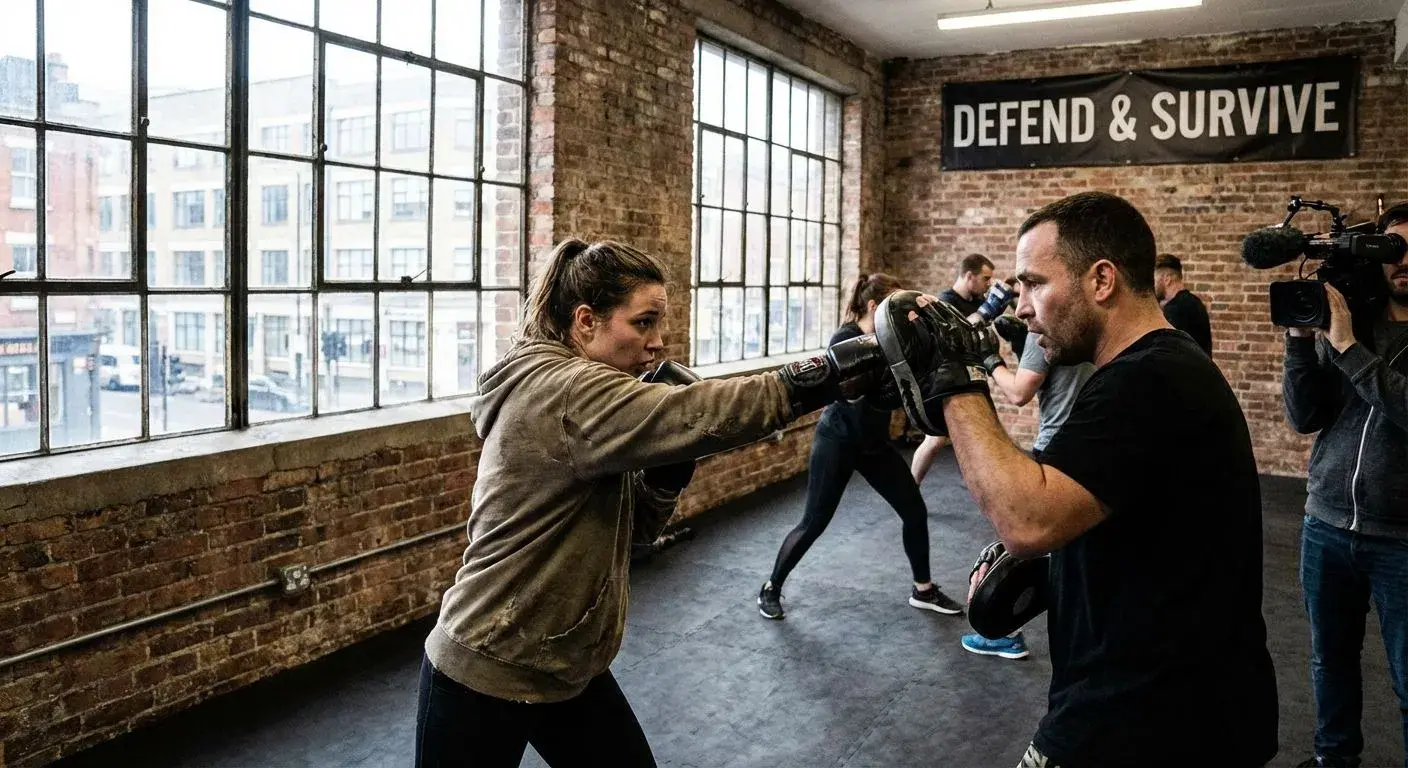
The Core Difference
Boxing
A striking discipline refined over centuries of competitive testing. You learn to hit, move, and defend against a resisting opponent.
- • Four punches: jab, cross, hook, uppercut
- • Footwork, angles, distance management
- • Head movement, slipping, rolling
- • Pressure-tested through sparring
- • Governed by England Boxing (ABA) standards
Krav Maga
A military self-defence system developed for the Israeli Defence Forces, adapted for civilian use since the 1990s.
- • Strikes: punches, elbows, knees, kicks
- • Defences against weapons and chokes
- • Multiple attacker scenarios
- • Situational awareness training
- • No unified global governing body
Boxing is a specialist discipline. You learn four punches and spend years perfecting them, along with the footwork, timing, and defensive skills that make them effective under pressure. Krav Maga is a generalist system. It covers a broader range of scenarios (weapon threats, ground defence, multiple attackers) but drills each one far less intensively.
The trade-off is depth for breadth. A boxer who has trained for six months knows their jab inside out. A Krav Maga student who has trained for six months has been exposed to dozens of techniques but mastered none of them.
Self-Defence: The Critical Difference
Krav Maga teaches a wide range of self-defence scenarios: defending against knife attacks, gun threats, multiple attackers, chokes, and grabs. On paper, this looks more practical than boxing. In reality, there is a serious gap.
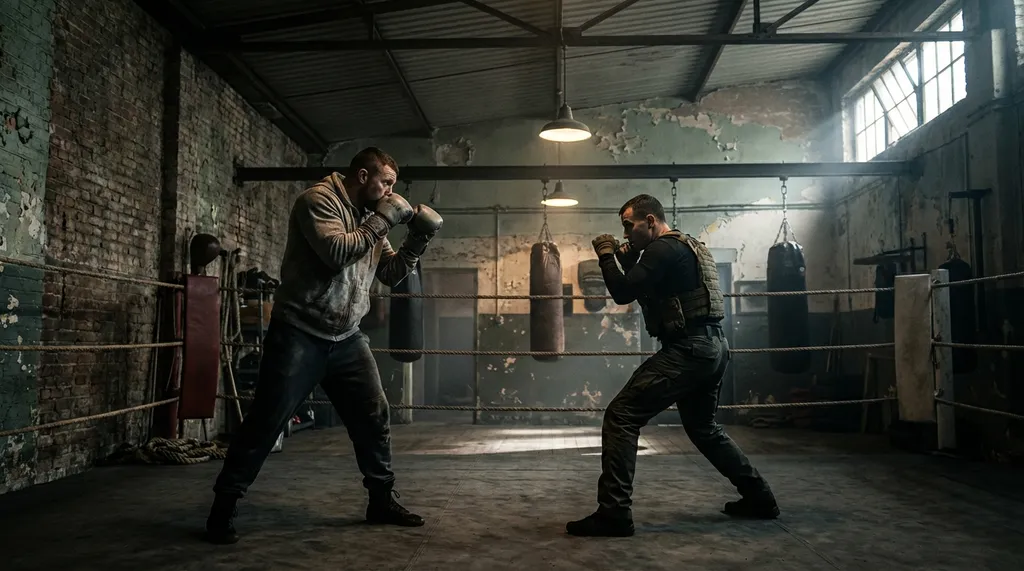
The pressure-testing gap. Boxing is pressure-tested constantly. Every sparring session puts you against a resisting opponent who is genuinely trying to hit you. Boxers develop the ability to perform under stress, to absorb a shot and keep fighting, to make decisions when frightened. This is trained through hundreds of rounds, not discussed in theory.
Most Krav Maga schools drill techniques against compliant training partners. The knife defence, the gun disarm, the choke escape: they are practised against someone who cooperates. In a real attack, nobody cooperates. A 2024 cross-sectional study in BMC Sports Science examining Krav Maga injuries found that 38.5% of injuries were to the lower limbs and 17.4% to the torso, suggesting the training itself can be physically demanding, yet the study did not assess whether technique effectiveness transferred to real-world scenarios.
The composure factor. A trained boxer who has sparred regularly has been punched in the face hundreds of times. They know what it feels like. They do not freeze. They do not panic. They respond. Most Krav Maga practitioners have never been hit with genuine force. When it happens for real, the shock can be paralysing, regardless of how many techniques they have memorised.
As one r/martialarts commenter put it bluntly: boxing teaches "muscle memory" through constant live drilling, while Krav Maga risks teaching techniques that fall apart under genuine adrenaline.
Calorie Burn and Fitness
Calories per hour (70 kg / 11 stone person)
Sources: Coach Magazine (Forza study)
Boxing training sessions maintain consistently high cardiovascular intensity throughout. The round structure (2-3 minutes on, 30-60 seconds rest) mirrors high-intensity interval training. Krav Maga classes typically include significant time on technique demonstration and partner drilling at moderate intensity, with shorter bursts of high-intensity work.
Boxing is a significantly better workout. The cardiovascular demands, the explosive power development, the full-body conditioning: boxing produces fitter athletes than Krav Maga, consistently. Krav Maga is a self-defence system that includes fitness as a side effect. Boxing is a sport where elite fitness is a prerequisite. That distinction matters if fitness is one of your goals.
Quality Control and Coaching Standards
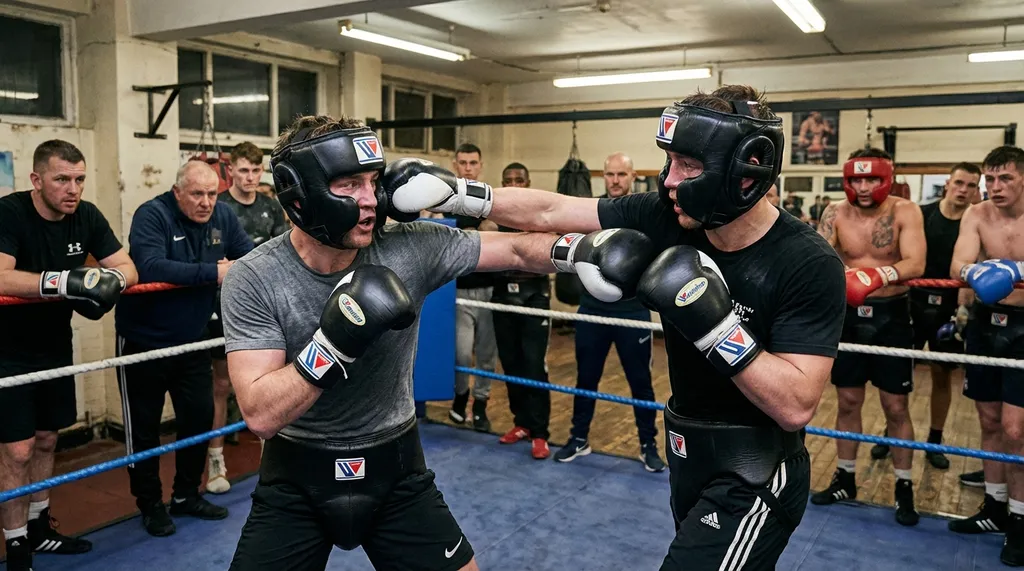
Boxing has a well-established, globally consistent coaching structure. In England, coaches are certified through England Boxing (the ABA), and clubs are affiliated and inspected. The sport's competitive nature means poor coaching is quickly exposed. You can walk into almost any affiliated boxing club and receive competent, standardised instruction.
Krav Maga has a quality control problem. There are at least six competing international organisations (IKMF, KMG, Krav Maga Global, FEKM, and others), each with their own certification process. Some Krav Maga instructors are excellent former military practitioners with decades of experience. Others completed a weekend certification course. The consumer has no reliable way to distinguish between them without doing extensive research.
At Honour and Glory, all coaches hold England Boxing qualifications and several are licensed by the British Boxing Board of Control. The standard is externally verified, not self-declared.
Injury Risk
A study in the Journal of Sports Science and Medicine examining martial arts injuries found that injury prevalence varies significantly by style. Krav Maga's inclusion of knee strikes, ground work, and weapon defence introduces injury mechanisms that pure boxing does not have.
Recreational boxing (non-sparring) has a low injury profile. The most common issues are minor wrist and hand strains, largely preventable with proper wrapping technique and coaching. There is no heavy external load, no ground work, and the risk of serious joint injury is minimal. Most people who train boxing for fitness never spar, which removes the primary injury vector entirely.
Krav Maga training involves throws, joint locks, ground defence, and weapon disarm drills. The 2024 BMC study found that 109 of 382 surveyed Krav Maga practitioners (28.5%) reported injuries during training. Lower limb injuries were most common, followed by torso injuries. These are injury mechanisms that simply do not exist in boxing training.
Cost in London
London prices as of 2026. Krav Maga prices from Krav Maga London, Urban Krav Maga, and IKMF-affiliated schools.
Krav Maga is expensive. Monthly memberships at London schools typically run £80-£150, with drop-in classes at £15-£25 each. Many also require purchasing branded uniforms and equipment. Some schools charge for grading examinations on top of regular fees.
Community boxing clubs are significantly cheaper. At Honour and Glory in Kidbrooke, sessions cost £5-£10. No contracts, no joining fee, no mandatory uniform purchases. Equipment costs are minimal: hand wraps (£5) and gloves (£25-£50) are all you need. Over a year of training three times per week, boxing saves you roughly £2,000-£4,000 compared to Krav Maga.
Community and Long-Term Value
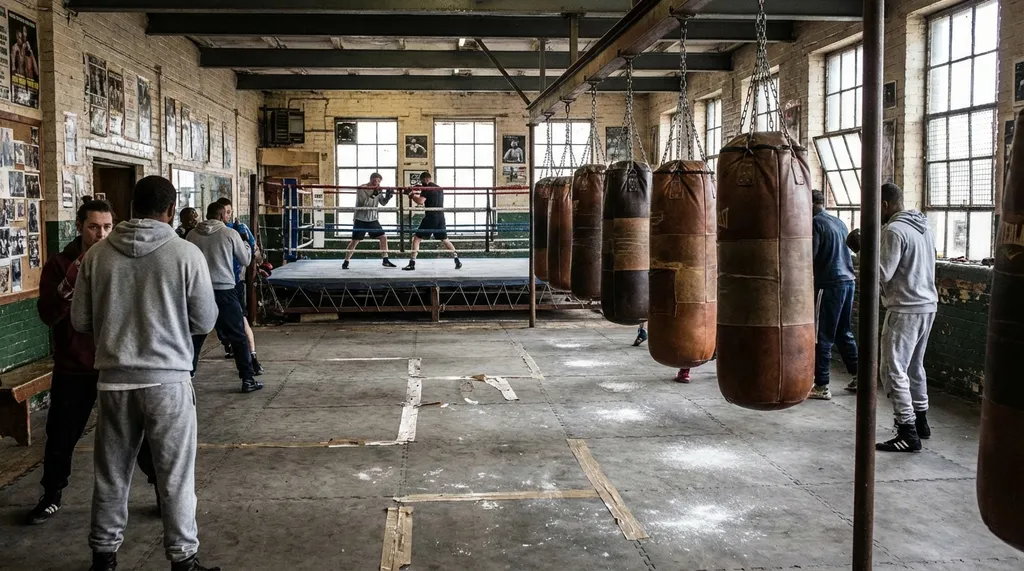
Boxing clubs build communities rooted in mutual respect and shared effort. The training is intergenerational: at Honour and Glory, you will find 5-year-olds, teenagers, office workers, tradespeople, and retirees training alongside each other. The bonds formed through hard physical work together are genuine, not manufactured.
Krav Maga schools tend to attract a narrower demographic (primarily adults aged 25-45) and the commercial franchise model means the community often feels more like a fitness studio than a club. There are exceptions, but the average Krav Maga school does not have the deep, neighbourhood-rooted community that a boxing club develops over decades.
Boxing also ages better. The techniques become more refined and efficient as you develop. Many people train boxing well into their sixties and seventies. Krav Maga's physical demands (throws, ground work, explosive defensive movements) become harder to sustain as you age, and the system does not scale down as gracefully.
Rate this article
Your feedback helps us write better content
Which Should You Choose?
Choose boxing if:
- • You want genuine, pressure-tested fighting ability
- • You want superior fitness and calorie burn
- • You want the most affordable option (£5-£10/session)
- • You want training sustainable into your fifties and beyond
- • You value a deep, intergenerational community
- • You want externally verified coaching standards
Choose Krav Maga if:
- • You specifically want weapon defence training
- • Multiple attacker scenarios are a priority
- • You can find a school with regular, hard sparring
- • Budget is not a major concern
- • You want broader scenario coverage over striking depth
- • You have verified the instructor credentials thoroughly
Our honest take: A boxer with six months of sparring experience is better prepared for a real confrontation than most Krav Maga practitioners with years of compliant drilling. The difference is pressure testing. Boxing does it every session. Most Krav Maga does not.
We are a boxing gym, so factor that in. But we have seen former Krav Maga students arrive at Honour and Glory and stay because the training is harder, the skills are more deeply ingrained, and the cost is a fraction of what they were paying. Want to see for yourself? Book a free session and find out.
See also: Boxing vs MMA | Boxing vs Kickboxing | Boxing vs Karate | How Many Calories Does Boxing Burn?
The best way to decide? Come and try it.
Your first session is free. No contract, no commitment.
Book Your Free Boxing Session
Your first session is free. No contract, no joining fee, no catches.
📍 122 Broad Walk, SE3 8ND · Pay as you go from £5