Boxing vs BJJ
Two combat arts that could not be more different. Boxing is about staying on your feet and using your hands. BJJ is about taking the fight to the ground and using leverage. Both are brilliant, both have passionate communities, and neither is wasted time.
Calorie Burn
Calories per hour (70 kg / 11 stone person)
Sources: OSF Healthcare, ACE Fitness
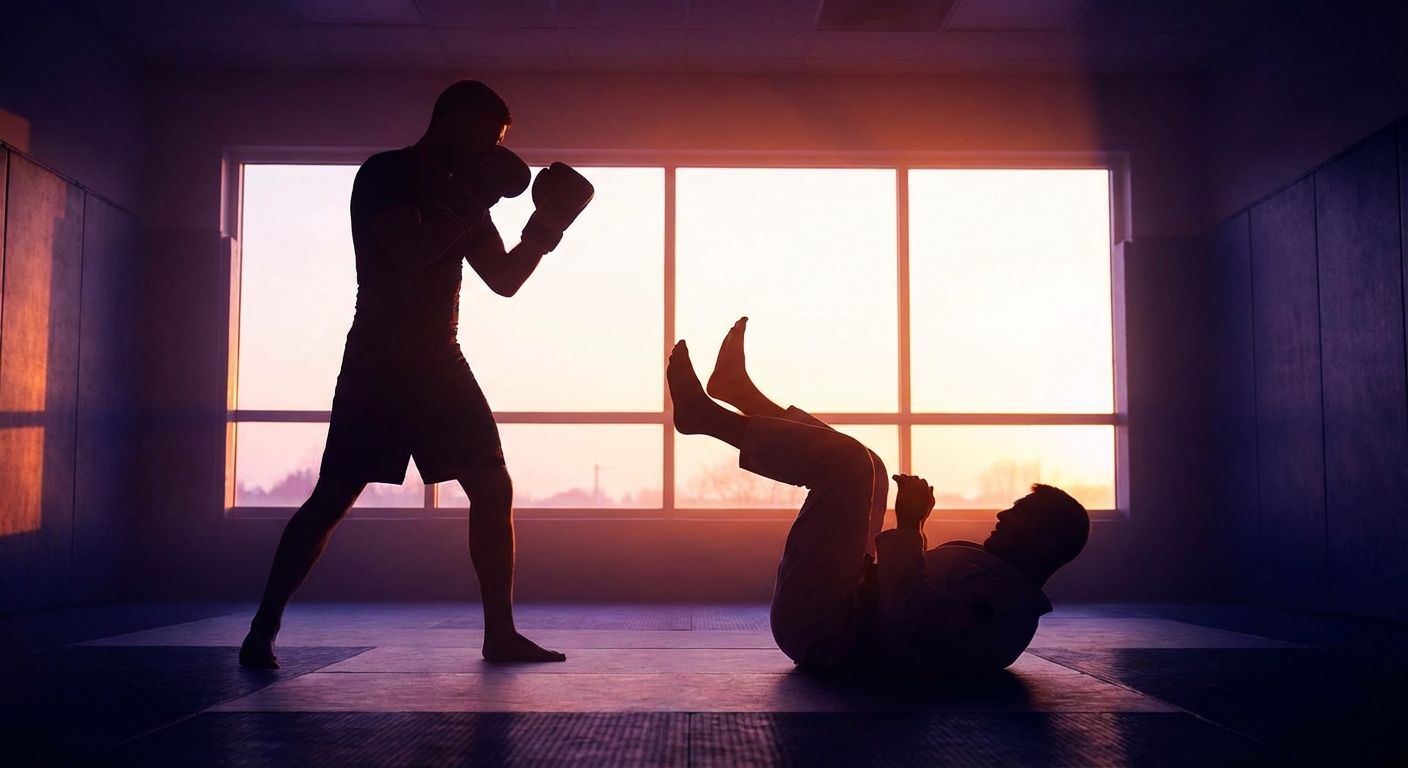
Boxing has a clear edge on calorie burn, particularly during non-sparring sessions. A boxing training session maintains high intensity throughout: skipping, bag work, pad work, and conditioning circuits keep your heart rate elevated continuously.
BJJ training typically splits between technique drilling (moderate intensity) and rolling (very high intensity). The calorie burn during live rolling is comparable to boxing sparring, but a full BJJ class with warm-up, drilling, and rolling averages lower than a full boxing session. For the full numbers, see How Many Calories Does Boxing Burn?
What Each One Actually Teaches You
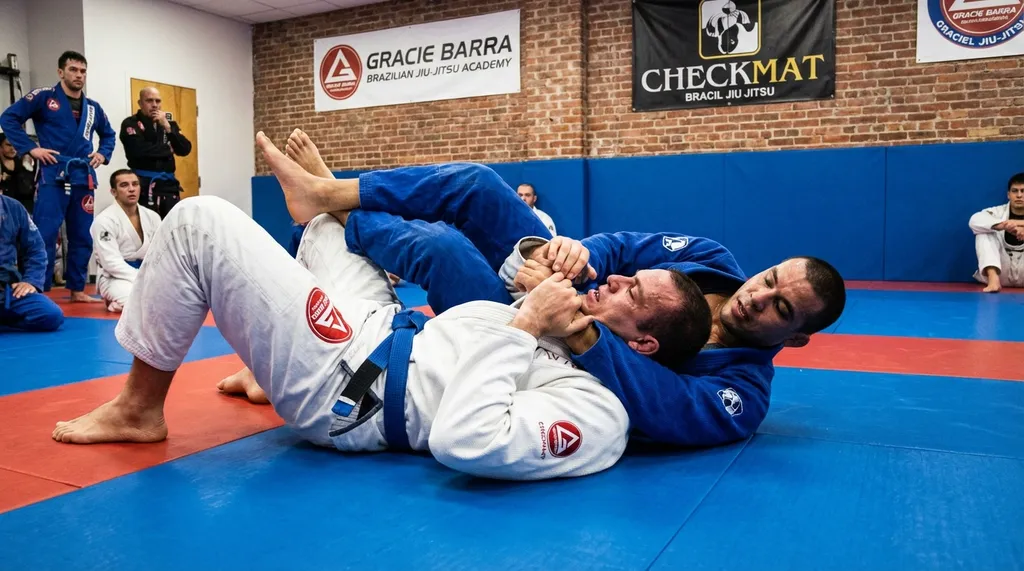
Boxing teaches you to fight standing up. Distance management, timing, angles of attack, defensive head movement, and the ability to generate devastating power with your hands. Boxing is direct: you learn to hit without being hit. The skill transfers to any standing confrontation and builds confidence in a very practical way.
BJJ teaches you to control an opponent on the ground using leverage, positioning, and submissions (joint locks and chokes). BJJ is often called "human chess" because of its intellectual depth. It teaches smaller people to control larger opponents through technique rather than strength, which is a powerful and unique proposition.
One r/martialarts user framed it well: "Boxing is better since you can defend yourself from strikes, manage distance, and most fights start standing up." Another countered: "Six months of BJJ and two weeks of boxing are going to serve you better for self defence." The truth is somewhere in between, and depends entirely on what kind of confrontation you are preparing for.
Injury Risk: What the Studies Show
BJJ has a higher injury rate than recreational boxing. A study in Physical Therapy in Sport found that 59.2% of BJJ practitioners reported at least one injury over a six-month period. The knee was the most commonly injured area, followed by the shoulder and elbow.
A larger survey study found a three-year injury incidence rate of 68.8% among BJJ practitioners. Common injuries include finger and toe injuries (from gi gripping), knee injuries (from guard work and sweeps), shoulder injuries, and neck strain. Cauliflower ear is also common among regular grapplers.
Recreational boxing (non-sparring) has a very low injury profile. Minor hand and wrist strains are the main concern, and proper wrapping prevents most of those. The risk increases with sparring, but sparring is optional and gradual at most clubs, including Honour and Glory.

Fitness Development
Boxing develops cardiovascular endurance, explosive power, shoulder and core strength, hand-eye coordination, and fast-twitch muscle fibres. It builds a lean, athletic physique and excellent cardio fitness. You will feel the difference within weeks.
BJJ develops grip strength (to an extraordinary degree), core stability, hip mobility, isometric strength, and full-body muscular endurance. BJJ builds a different kind of fitness: the ability to exert constant force against resistance for extended periods. It is one of the best activities for developing functional grip and core strength.
The fitness profiles are genuinely different and genuinely complementary. Boxing makes you fast and gives you gas. BJJ makes you strong in unconventional ways.
The Beginner Experience
Boxing is easier to start. You can throw a basic jab on day one, hit a heavy bag, and feel like you achieved something. The fundamentals are intuitive even if mastering them takes years. Most people enjoy their first boxing session. At Honour and Glory, your first session is free and requires zero experience.
BJJ has a steeper initial learning curve. Your first rolling session will almost certainly involve being controlled by someone half your size, which is both humbling and confusing. The positions, grips, and transitions take weeks to even begin understanding. Many beginners find the first month of BJJ frustrating before it clicks.
As one r/martialarts contributor noted: "Boxing is probably easier as a skinny guy. BJJ is more fun just because boxing at the intensity necessary to get good is brutal."
Cost in London
Boxing is significantly cheaper to start and maintain. Community boxing clubs charge £5-£10 per session with no contracts. BJJ academies typically charge £80-£150 per month. You also need a gi (£50-£120) or no-gi gear (rash guard and shorts, £40-£80). Over a year, the cost difference is hundreds of pounds.
If you are in Lee, Kidbrooke, or south-east London, Honour and Glory charges £5-£10 per session. No joining fees, no contracts, no monthly commitments.
The Crossover: What Transfers
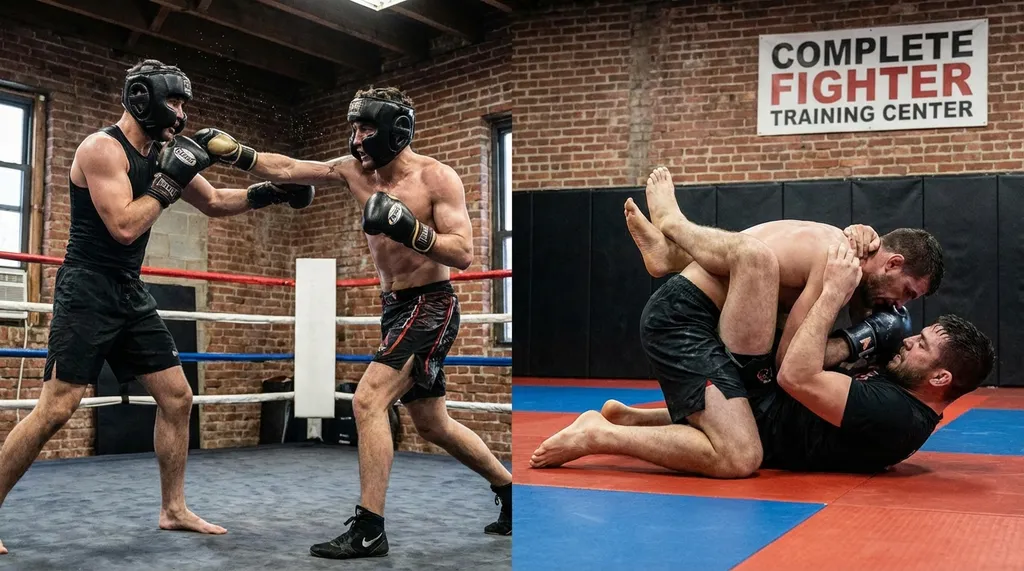
These are genuinely complementary martial arts. Boxing handles the stand-up range. BJJ handles the ground. Together, they cover most self-defence scenarios and form the core of any MMA skill set.
Boxing fitness (particularly cardiovascular endurance) transfers directly to BJJ. Rolling is exhausting, and the cardio base boxing builds means you will gas out less quickly. Boxing also develops the composure to stay calm under physical pressure, which is critical when someone is trying to choke you.
BJJ grip strength and body control transfer back to boxing in subtle ways. Core stability helps with punch power. The awareness of body position (spatial intelligence) makes you harder to take down or unbalance.
The Honour and Glory Perspective
Several of our members cross-train in BJJ. We think that is great. The two arts complement each other perfectly, and the BJJ community in London is strong and welcoming.
Our advice is to start with boxing. Not because BJJ is inferior, but because boxing is easier to begin, cheaper to maintain, and builds a fitness base that makes BJJ easier when you add it. Most people who start with BJJ wish they had better cardio. Boxing solves that problem before it starts.
The Verdict
Choose boxing if: You want a more accessible starting point, higher calorie burn per session, lower injury risk, a more affordable option, and a skill that builds confidence quickly. Boxing is the better first martial art for most people.
Choose BJJ if: You are drawn to the intellectual challenge, want ground fighting skills, enjoy the idea of controlling larger opponents through technique, or are specifically interested in grappling and submission work.
The best answer: Learn both. Start with boxing (it is easier, cheaper, and more immediately rewarding), and add BJJ once you have a solid fitness base. The combination covers every range of combat and builds the most well-rounded self-defence ability possible. Want to see for yourself? Book a free session and find out.
See also: Boxing vs MMA | Boxing vs Judo | How Many Calories Does Boxing Burn? | Boxing vs Rugby Training
Rate this article
Your feedback helps us write better content
The best way to decide? Come and try it.
Your first session is free. No contract, no commitment.
Book Your Free Boxing Session
Your first session is free. No contract, no joining fee, no catches.
📍 122 Broad Walk, SE3 8ND · Pay as you go from £5