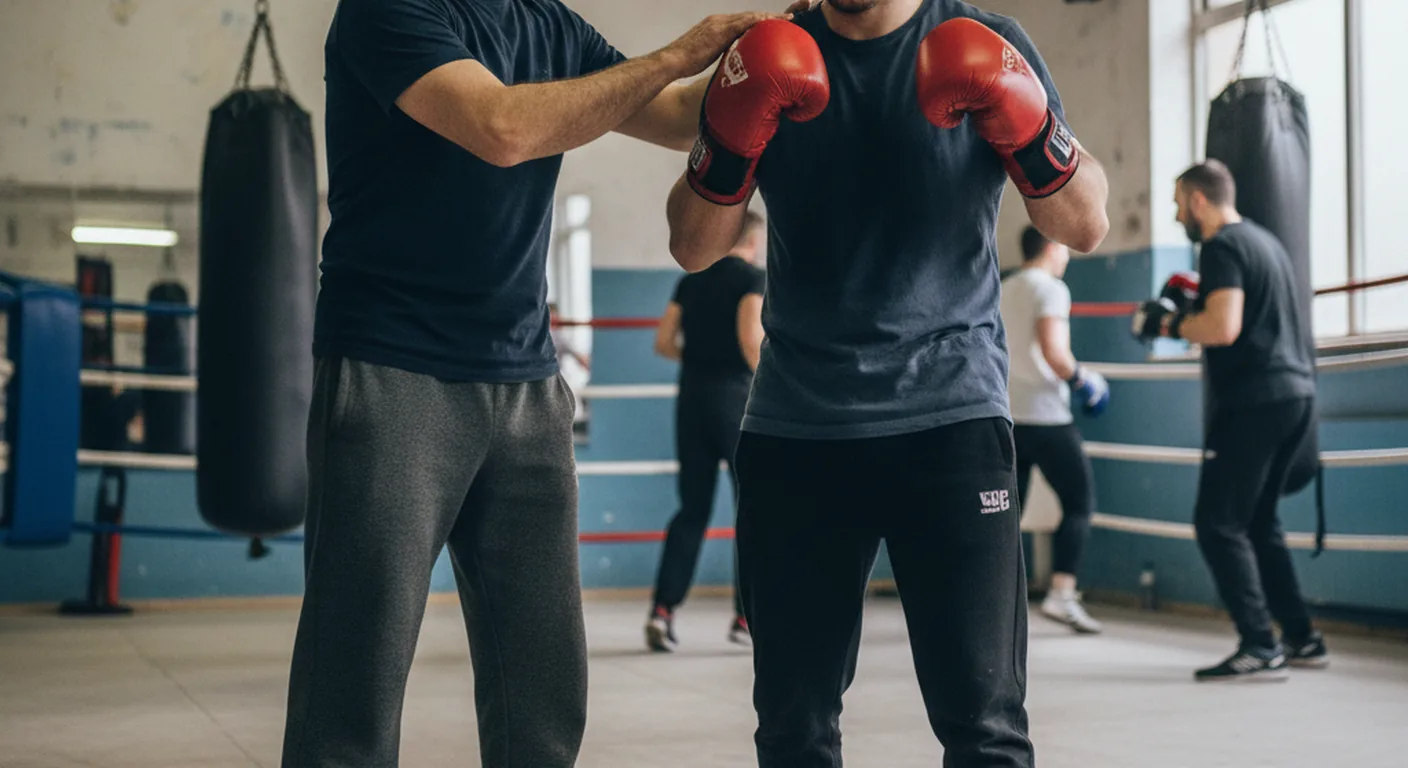
Neck pain after boxing is easy to explain badly.
Some people treat it as proof that boxing is dangerous. Others treat it as proof that they are tough. Both reactions miss the useful question. Why did the neck have to work so hard in the first place?
For most beginners, neck pain after boxing comes from four ordinary things: a tense guard, poor posture, overreaching punches, and bracing badly when the round gets uncomfortable. Contact can matter too, especially in sparring, but a lot of sore necks are created before anybody lands a clean shot.
That does not mean neck pain should be ignored. Combat sports carry real head and neck risks, and a 2024 review of combat sports injuries says suspected neck injuries need prompt medical attention because cervical spine stability matters (Cureus / PMC). The point is not to panic. The point is to separate normal training soreness from warning-sign pain, then fix the habits that are making your neck do work it should not need to do.
Most beginner neck pain starts with tension
The short answer is this: beginners often box with their neck switched on for the whole round.
Watch a nervous first-timer and you will usually see the same pattern. Chin tucked too hard. Shoulders lifted. Jaw clenched. Hands squeezed shut. Every instruction processed as if a mistake will be fatal. The neck becomes part of the panic system.
That is tiring. It also changes how the rest of the body moves. If the neck is stiff, the shoulders stiffen. If the shoulders stiffen, the guard becomes heavy. If the guard becomes heavy, the jab slows down and the boxer starts forcing shots from the upper body.
This is why neck pain often appears alongside shoulder burn. If your shoulders cook early, read our guide on why your shoulders burn in boxing. The same tension pattern is often sitting underneath both problems.
A stiff guard can pull the neck into the round
A good guard protects you. A rigid guard exhausts you.
Beginners often hear "keep your hands up" and turn it into a permanent shrug. The hands stay high, the shoulders climb towards the ears, and the neck quietly carries the bill. That might look disciplined for the first thirty seconds. After that, it usually becomes slow, tight boxing.
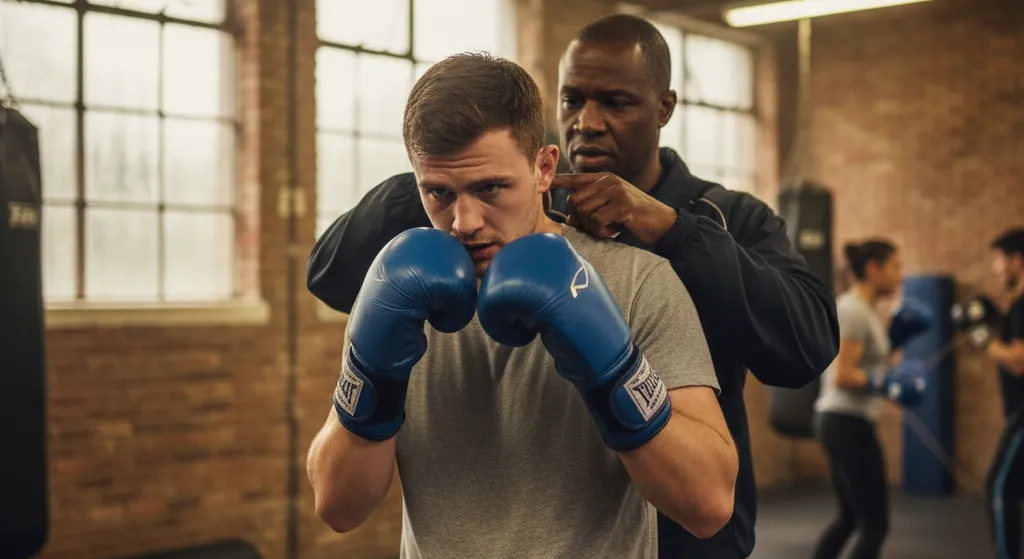
The guard should be ready, not frozen. Your chin should be protected, but not jammed so hard into your chest that your neck is locked. Your shoulders should help, but not sit beside your ears for three minutes.
There is a useful coaching cue here: bring the hands home without wearing the guard like armour. The difference is small, but your neck will know.
Punching from the upper body makes the neck pay
Bad punching mechanics often show up as neck tightness.
If you reach for the bag, lean your head past your lead knee, or throw every cross as an arm swing, the neck has to stabilise a messy position. It is trying to keep the head organised while the rest of the body is late.
That is why beginners sometimes say, "My neck hurts after pads," even when there has been no sparring. The pain did not come from a punch landing. It came from three rounds of overreaching, tensing, and yanking the head and shoulders through bad positions.
Cleaner boxing makes the neck quieter. Feet underneath you. Chin covered but relaxed. Eyes level. Punches returning to guard without a dramatic shrug. None of that sounds heroic, which is why beginners often skip it. It works anyway.
The shoulder blades matter more than people think
The neck is not an island. It shares the upper-body mess with the shoulders, shoulder blades, and upper back.
A study of 72 elite male boxers found scapular dyskinesis in 52.7 per cent of participants, and boxers with more obvious scapular dyskinesis showed more neck disability and shoulder malfunction (Medicina / PMC). That does not mean every beginner with a sore neck has the same issue as an elite boxer. It does show that repeated punching links the neck and shoulder complex in a very practical way.
In gym language, if your shoulder blades are not moving well, your neck may compensate. If your upper back is stiff, your neck may compensate. If your guard is tense, your neck may compensate again.
That is why the fix is rarely one magic neck stretch. It is usually better posture, calmer breathing, cleaner punching, and a guard that does not turn every round into a three-minute shrug.
Sparring changes the conversation
Neck soreness after controlled pads is one thing. Neck pain after head contact is another.
If you spar, the neck has to manage impact, surprise, and defensive reactions. Even when nobody is being reckless, the head and neck system is doing a different job from bag work. That is one reason neck training gets discussed seriously in collision and combat sports.
A 2025 British Journal of Sports Medicine systematic review and Delphi study says neck training may help reduce the magnitude of head acceleration events in sport, but the authors also stress that evidence is still developing and training should follow proper strength and conditioning principles (British Journal of Sports Medicine). Sensible takeaway: neck strength can matter, but random neck bridges copied from old fight clips are not a plan.
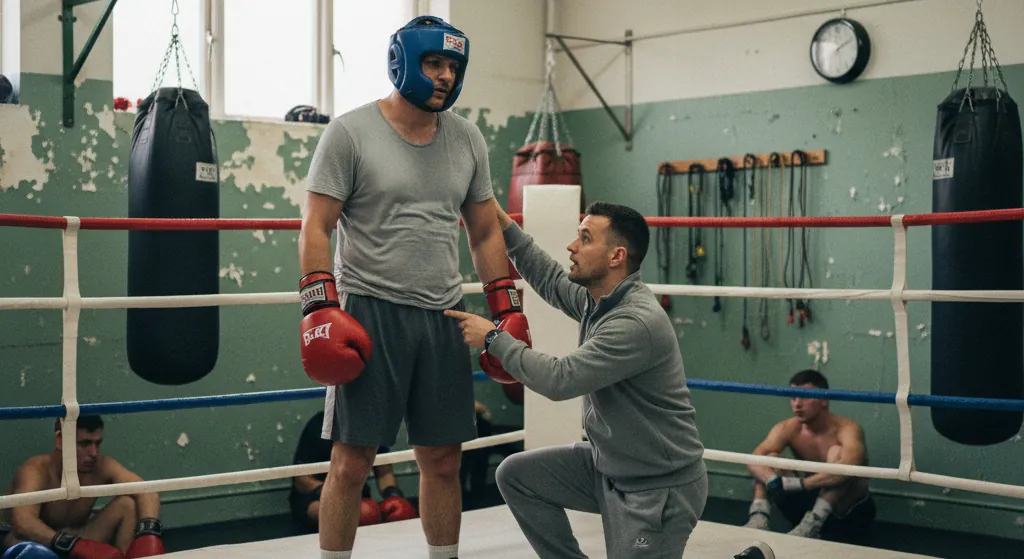
At Honour and Glory, beginners do not need to prove anything with hard sparring. They need good habits first. If your neck hurts after sparring, tell the coach. Do not hide it because you want to look game.
What to fix first
Start with the boring fixes. They are usually the right ones.
Relax the jaw
A clenched jaw often drags the neck with it. Keep the mouthguard controlled if you are sparring, but do not grind your teeth through every drill.
Drop the shoulders between actions
Hands back to guard. Shoulders not welded to the ears. The guard should protect you without turning into a static hold.
Stop reaching with your head
If your head is arriving before your feet, your neck is doing emergency work. Step into range properly, punch, then recover your shape.
Exhale when you punch
Breath-holding stiffens the upper body. A short exhale helps the shoulders and neck stay looser.
Reduce power until the shape improves
If the neck only hurts when you try to smash the bag, that is not a mystery. You are putting force through a position that cannot handle it yet.
If you also notice your wrists complaining, our guide on why your wrists hurt after boxing is worth reading. The same beginner pattern often appears in both places: effort before alignment.
When neck pain is not normal
Normal training soreness is broad, mild, and settles. Warning-sign pain is different.
NHS inform says urgent help is needed if neck pain comes with worsening numbness, pins and needles, weakness, hand clumsiness, balance problems, walking problems, or a severe headache (NHS inform). It also says many new neck problems improve over several weeks, but that does not apply neatly after a direct blow or worrying symptoms.
In boxing terms, take these seriously:
- neck pain after a direct head or neck impact
- pain shooting into the arm
- numbness, tingling, or weakness
- dizziness, visual changes, or severe headache
- pain that changes how you move or sleep
- pain that is worse the next day rather than settling
Coaches can fix stance, guard, breathing, and bad punching habits. They are not a replacement for medical advice when symptoms look neurological or traumatic.
How beginners should think about it
A little neck stiffness after new training is not unusual. Boxing asks people to hold posture, move the head, defend, punch, and think under fatigue. If you are new, your body is learning a job it has not done before.
But repeated neck pain is not a badge. It is feedback.
The better question is not, "Can I tolerate this?" It is, "What is making my neck work so hard?" Most of the time, the answer is visible: tense guard, poor breathing, reaching punches, bad posture, or trying to win every drill with brute force.
If you are in Greenwich or nearby, our Recreational Adults boxing classes are built for this exact stage. You will learn how to stand, punch, breathe, and protect yourself without turning every round into a wrestling match with your own upper body.
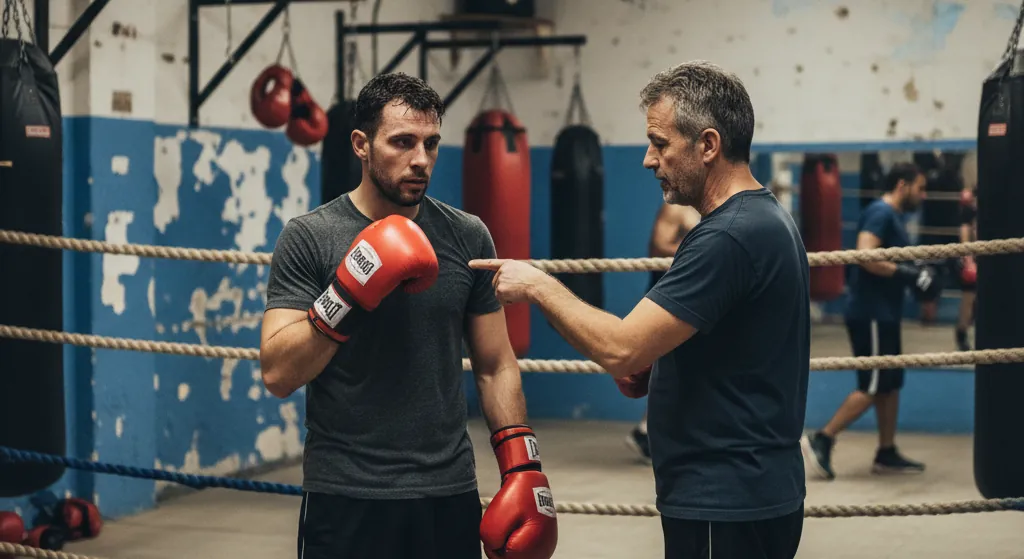
Neck pain after boxing usually has a reason. Find the reason early and you can often fix it before it becomes the thing that ruins training.
H&G Team
Writer at Honour & Glory Boxing Club, a community boxing gym in Kidbrooke, South East London.
Rate this article
Your feedback helps us write better content
Got questions about what you just read?
ASK OUR AI ASSISTANT ✨MORE LIKE THIS



WANT TO JOIN US?
Book a free trial session and see what we're all about.
Claim a Free Trial