How Often Should You Do Boxing Personal Training
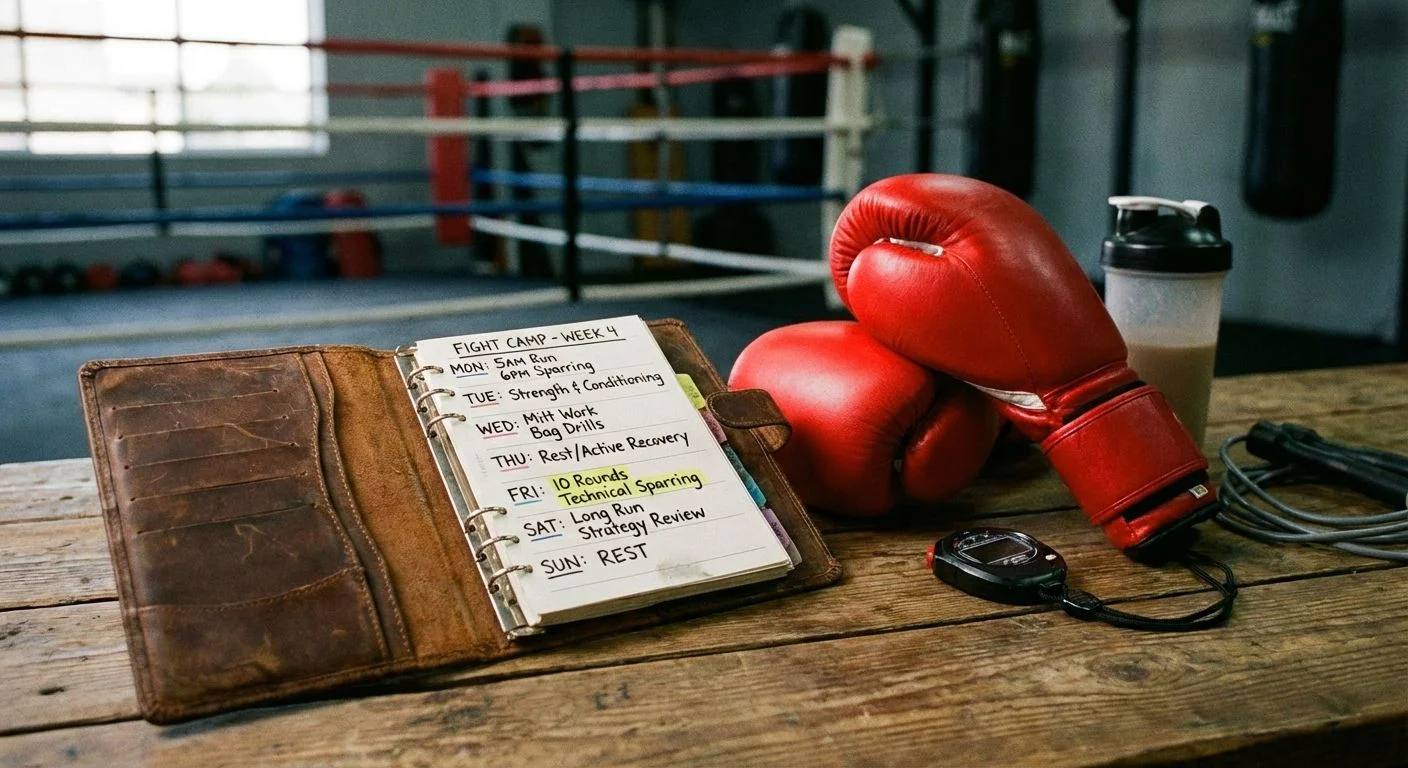
The question coaches hear most often from new personal training clients is some version of: "How often should I be coming?" The honest answer depends on what you are trying to achieve, how well you recover, and what your schedule allows. But there are evidence-based guidelines worth knowing.
The Minimum Effective Dose
For skill development in boxing, one session per week is sufficient to make progress, but only barely. At one session per week, most of the session is spent re-establishing what you established in the previous session. You spend the first 20 minutes getting back to where you left off a week ago, then the remainder of the session building on it.
The research on motor learning is clear on this point. Skills encoded in procedural memory require repetition within a shorter timeframe to consolidate properly. Research published in the Journal of Motor Behavior found that distributed practice (spreading sessions across time) is effective for retention, but the gap between sessions should not exceed the time it takes for the motor pattern to begin degrading.
For most beginners, that degradation begins after five to seven days. One session per week keeps you at the edge of this window. It works, but slowly.
Two Sessions Per Week: The Sweet Spot
Two boxing PT sessions per week is the most effective frequency for most people. The sessions are close enough together that skills from the first session are still sharp when the second begins. You build on the previous session rather than rebuilding it.
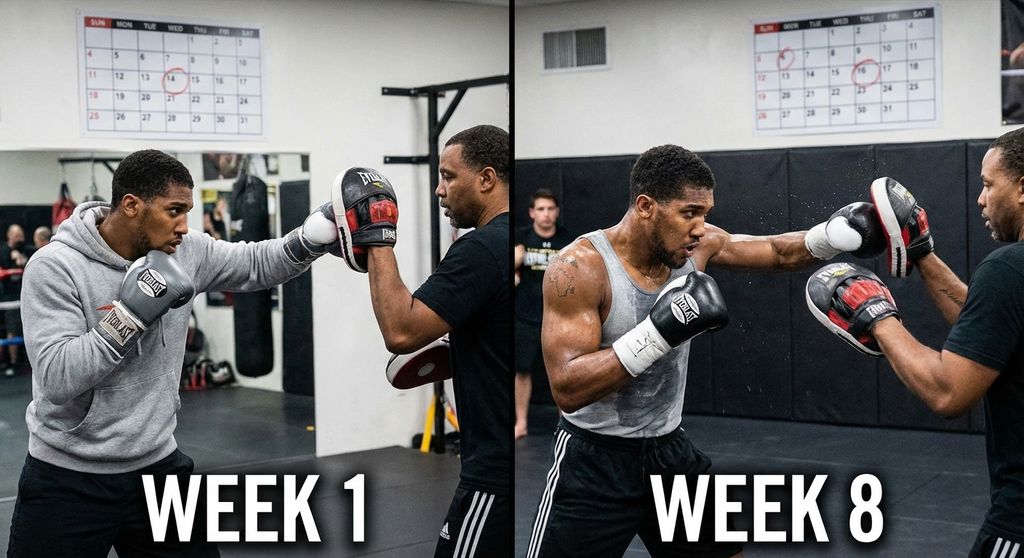
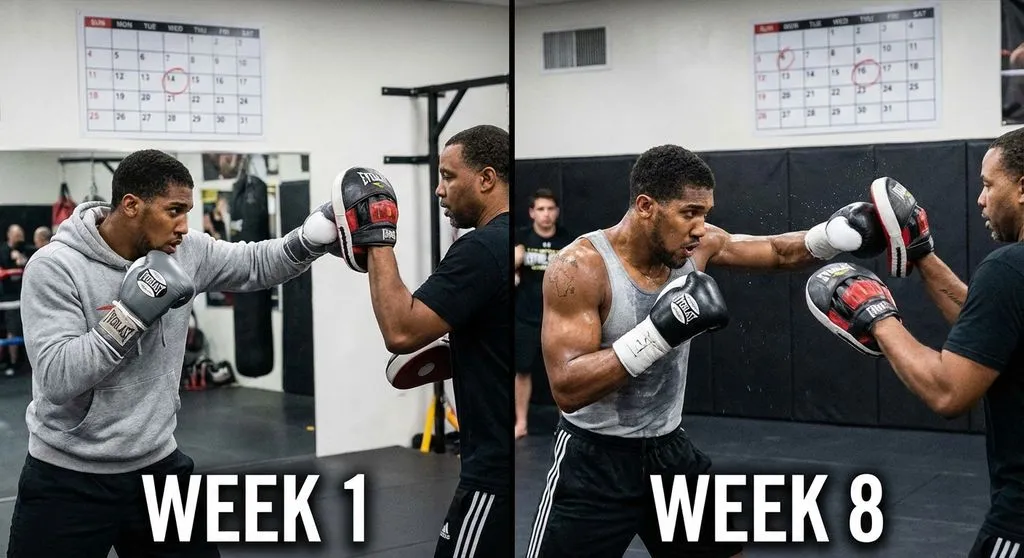
At two sessions per week, most people progress from complete beginner to confident basic technique within eight weeks. That means clean jab and cross, controlled guard, basic footwork, and the ability to follow a straightforward combination without pausing to think.
Two sessions per week also allows adequate recovery. Boxing PT works the hands, wrists, shoulders, and core hard. These structures need 48-72 hours between sessions to recover effectively. Two sessions per week, separated by two or three days, stays within that recovery window.
Three Sessions Per Week: Serious Development
Three sessions per week produces significantly faster technical development than two. Each session builds on the previous in real time. The coach can introduce more complex technique because the foundation is more secure.
The trade-off is recovery. Three sessions per week requires attention to hand care (wrapping correctly, not training through soreness), shoulder maintenance, and adequate sleep. If you are also doing other physical training, such as running or gym work, three boxing PT sessions per week may be too much volume for the joints to handle without management.
For people who want to progress toward competition or achieve a high technical level quickly, three sessions per week is the target. For most people using boxing PT for fitness and skill development, two sessions per week achieves the goal without the recovery management complexity.
Fitness Gains: Different Timescale to Skill
Cardiovascular fitness from boxing training develops faster than technical skill. Two sessions per week is enough to produce measurable cardiovascular adaptation within four to six weeks. You will notice your recovery between rounds improving, your heart rate staying lower during the same work, and your stamina increasing through the session.
Body composition changes take longer. Three months of consistent twice-weekly boxing PT sessions, combined with appropriate nutrition, can support visible changes for some people. Research on high-intensity interval training from the British Journal of Sports Medicine found meaningful body composition improvements in eight to twelve weeks of twice-weekly HIIT. Boxing PT, which functions as a HIIT modality, follows a similar trajectory.
The Recovery Equation
New boxing practitioners often underestimate recovery requirements. The hands and wrists are not accustomed to the impact forces of punching. The shoulders work in ways most gym training does not prepare them for. The hip rotation required in every punch loads the core and lower back in a novel pattern.
The soreness from early boxing sessions is real. It resolves within 24-48 hours for most people and disappears entirely after four to six sessions as the muscles adapt. Until then, respect the recovery time.
Signs you may be training too frequently:
- Persistent grip soreness that does not resolve between sessions
- Shoulder fatigue that affects your guard position
- Technical regression: you are making errors in session three that you had corrected in session one
If any of these appear, discuss with your coach. Frequency may need adjusting, or recovery protocols may need attention.
Combining PT Sessions With Group Classes
Many clients at Honour and Glory combine personal training sessions with group recreational adult classes. This is an effective combination. Personal sessions build technique. Group classes provide the social environment, higher volume of rounds, and the experience of training alongside others.
A typical combined week might look like: one personal training session, two group classes. This gives you the technical focus of 1-to-1 coaching and the volume and community of group training. Many coaches recommend this approach for people who want to develop toward competition.
To plan the right paid PT frequency, message us about boxing personal training or compare Solo, Duo and Trio options. If you only want to sample the gym first, use the free class trial.
Frequently Asked Questions
How many sessions per week is too many for a beginner?
For most beginners, three boxing PT sessions per week is the practical upper limit. Above that, recovery becomes difficult without specific conditioning and hand care protocols.
Can I do boxing PT every day?
Technically yes, but practically inadvisable without experienced coaching guidance on recovery, nutrition, and progressive load management. Most coaches recommend a maximum of four boxing sessions per week, with at least one full rest day between consecutive sessions.
Does session length matter as much as frequency?
A common view on r/amateur_boxing: "The individual training sessions are worth it if it is with a quality boxing coach." The frequency matters less than the quality and consistency of each session.
Both matter. Sixty-minute sessions are the standard and provide enough time for warm-up, technical work, conditioning, and cool-down. Shorter sessions (45 minutes) can work if frequency is higher. Longer sessions (90 minutes) become counterproductive for beginners as technique degrades with fatigue.
How long before I am good enough for sparring?
Most people who train twice per week for three to six months develop sufficient technical foundation for controlled sparring. Your coach decides when you are ready, not the calendar.
Related Boxing PT Guides
If you are new to private boxing coaching, read Boxing PT for Complete Beginners. To understand what frequency produces over time, read Boxing PT Results: A Realistic Timeline. For shared sessions, read Boxing Personal Training for Couples.
Find a Boxing Personal Trainer Near You
H&G covers south and south-east London:
H&G Team
Writer at Honour & Glory Boxing Club, a community boxing gym in Kidbrooke, South East London.
Was this page helpful?
Your feedback helps us improve this page
Got questions about what you just read?
ASK OUR AI ASSISTANT ✨MORE LIKE THIS

WANT TO JOIN US?
Book a free trial session and see what we're all about.
Claim a Free Trial