Calorie Density: The Nutrition Concept Every Boxer Should Understand
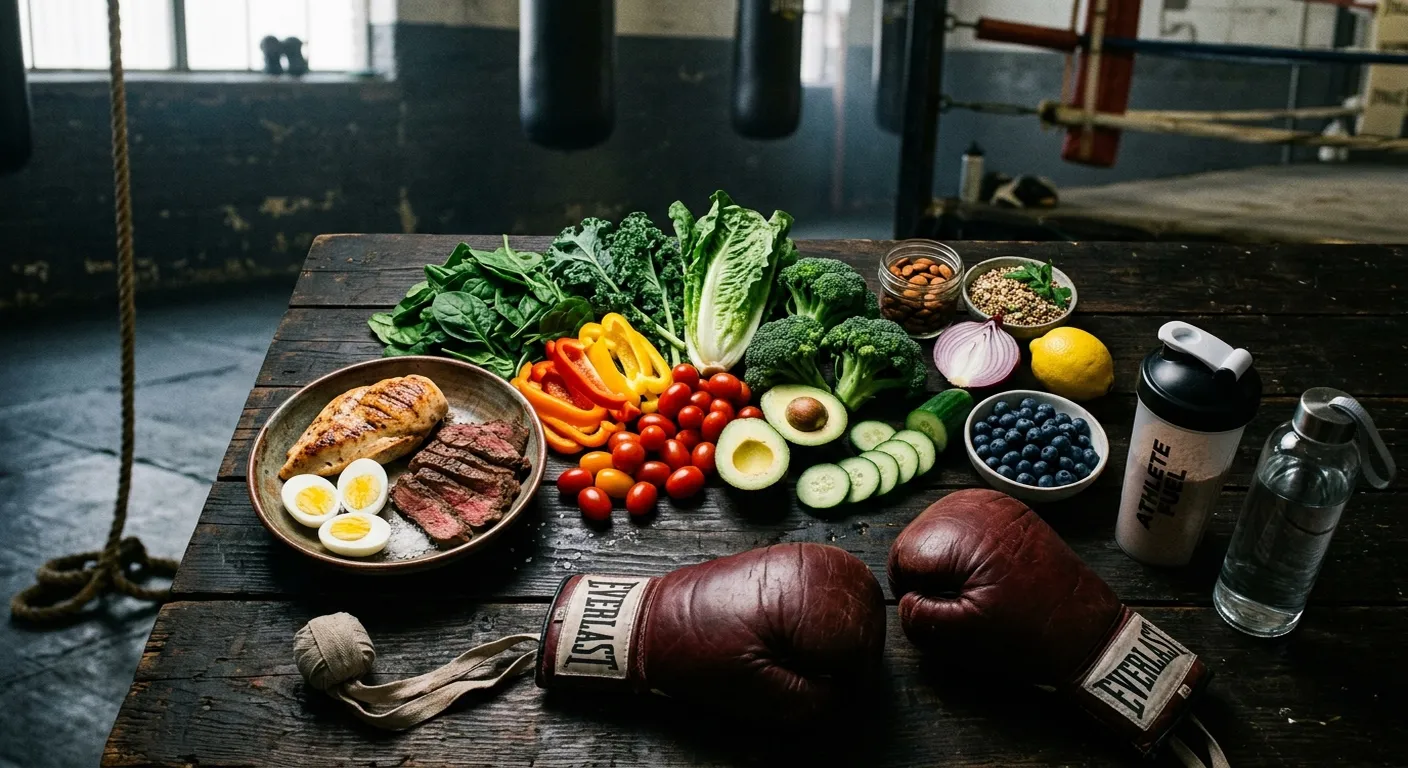
There is a short video doing the rounds that illustrates something most people have never had explained to them clearly. Watch it here - it shows the same number of calories presented as different foods. The difference in volume is striking.
That concept - calorie density - is the single most useful nutritional idea for people who train boxing. Not macros, not meal timing, not supplements. This.
It is baked into our food rankings too: foods with a lower calorie density tend to score higher for making weight, and you can see where any food sits in the full rankings. If you want to see how those rankings behave when variety is deliberately restricted, read our only-eat-5-foods thought experiment.
What Calorie Density Actually Means
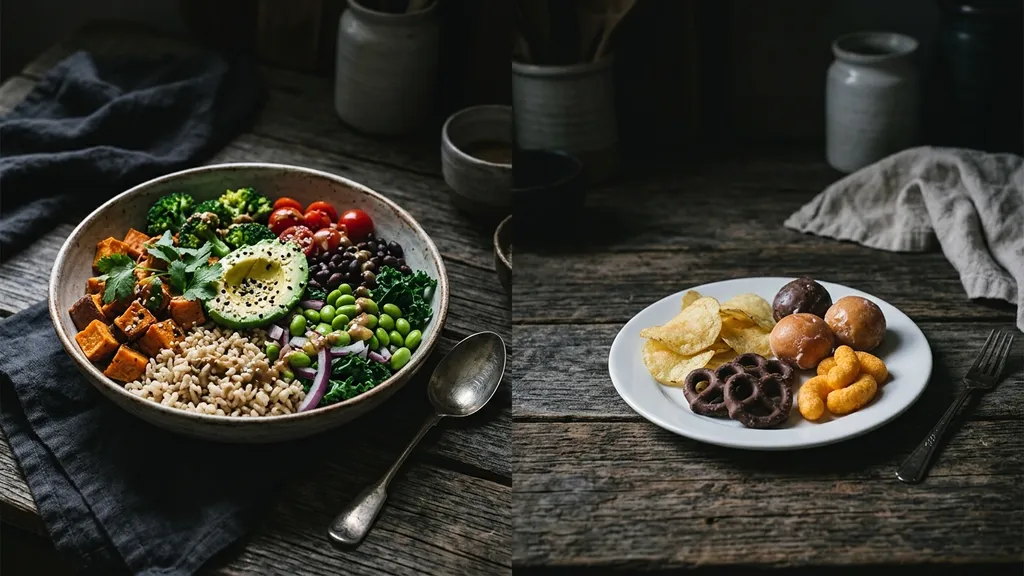
Calorie density is the number of calories per gram of food. A gram of oil contains about 9 calories. A gram of cucumber contains about 0.15 calories. Both are food. The difference in density is about 60:1.
The practical implication: you can eat a large bowl of vegetables, a chicken breast, and a portion of rice and consume fewer calories than a small bag of crisps. The volume of food your stomach registers is far higher in the first option. The calorie total is far lower.
Research published in Physiology and Behavior confirms what common sense suggests: people who eat lower calorie density diets consume significantly fewer total calories without reporting increased hunger. The stomach responds to volume and weight, not calories.
Why This Matters for Boxers
Most people who train boxing are doing one of three things nutritionally:
Trying to lose weight while maintaining training intensity. The calorie density approach is the most practical tool available. Eating more vegetables, lean protein and whole grains - and less processed food, oil and refined carbs - naturally reduces calorie intake without requiring you to feel deprived. You eat similar quantities of food and consume fewer calories.
Trying to maintain weight across a training week. This is harder than it sounds. Three to four boxing sessions per week burns significant energy. Many recreational boxers find they are either gaining weight (eating back more than they burn) or losing condition (undereating and feeling drained). Understanding calorie density helps calibrate intake - knowing which foods refuel without overshooting.
Preparing to compete at a specific weight. Competitive boxers managing weight for a bout need to control calories precisely without compromising training quality. Low calorie density foods allow them to eat enough volume to train hard while keeping the calorie total where it needs to be.

High and Low Density: The Practical Breakdown
- Leafy vegetables: spinach, rocket, kale - around 20-30 calories per 100g
- Cucumbers, courgettes, celery - 10-20 calories per 100g
- Berries - 30-50 calories per 100g
- White fish, chicken breast - 100-120 calories per 100g
- Oats (cooked) - around 70 calories per 100g
- Nuts - around 600 calories per 100g
- Oils and butter - 700-900 calories per 100g
- Cheese - 350-400 calories per 100g
- Bread - 250-270 calories per 100g
- Chocolate and biscuits - 500-550 calories per 100g
None of the high density foods are bad. Nuts are nutritionally excellent. Olive oil is good for you. The point is not to avoid them but to understand them. Two tablespoons of peanut butter contains roughly 190 calories. That same calorie total is about 700g of cucumber. The peanut butter is not wrong. But knowing the difference means you can make deliberate choices rather than accidentally overeating on foods that seem small.
The Common Mistake Boxers Make
Training hard creates appetite. A tough boxing session burns 400-700 calories depending on intensity and bodyweight. The problem is that hunger after hard training does not reliably match calories burned - it often significantly overshoots it.
As a result, many people who take up boxing to lose weight do not lose weight. They train hard, feel hungry, eat freely because they feel they have earned it, and end up in a net calorie surplus. Research on exercise-induced appetite compensation confirms this is common and is not a personal failing - it is physiology.
The calorie density approach handles this naturally. If your post-training meal is high volume and low density - a large bowl of food based on vegetables, lean protein and some carbohydrate - you can eat until genuinely satisfied and still be in a reasonable calorie position.
What This Looks Like in Practice
The H&G Boxing Nutrition Programme applies calorie density principles across a structured 10-week framework. Rather than counting calories or following rigid meal plans, it works from the principle that the composition of your plate - the ratio of high to low density foods - is what matters.
The broad framework for a training day:
Pre-training: Moderate calorie density meal 90-120 minutes before. Oats, banana, eggs. Enough carbohydrate to fuel the session without feeling heavy.
Post-training: Lower density, higher protein meal. Chicken, fish or eggs with a large volume of vegetables. Replaces protein, restores glycogen, manages calorie total.
Rest of the day: Fill volume with low density foods. Vegetables at every meal as a base. Protein at every meal. Carbohydrates calibrated to training intensity - more on hard days, less on rest days.
This is not complicated. It does not require an app or a food scale. It requires understanding which foods are dense and which are not, and building meals accordingly.
For the full structured programme - meal plans, timing guidelines, and week-by-week progression - see the H&G Boxing Nutrition Programme.
If nutrition is something you want to get right alongside your training, book a free trial and come down. The coaching at Honour and Glory covers more than what happens in the ring.
Fitness and weight-loss route
If you want the main H&G route for this goal, start with boxing for weight loss. If you want a broader class-based workout, use fitness boxing. If you want paid one-to-one accountability, compare boxing PT for weight loss.
H&G Team
Writer at Honour & Glory Boxing Club, a community boxing gym in Kidbrooke, South East London.
KEEP READING
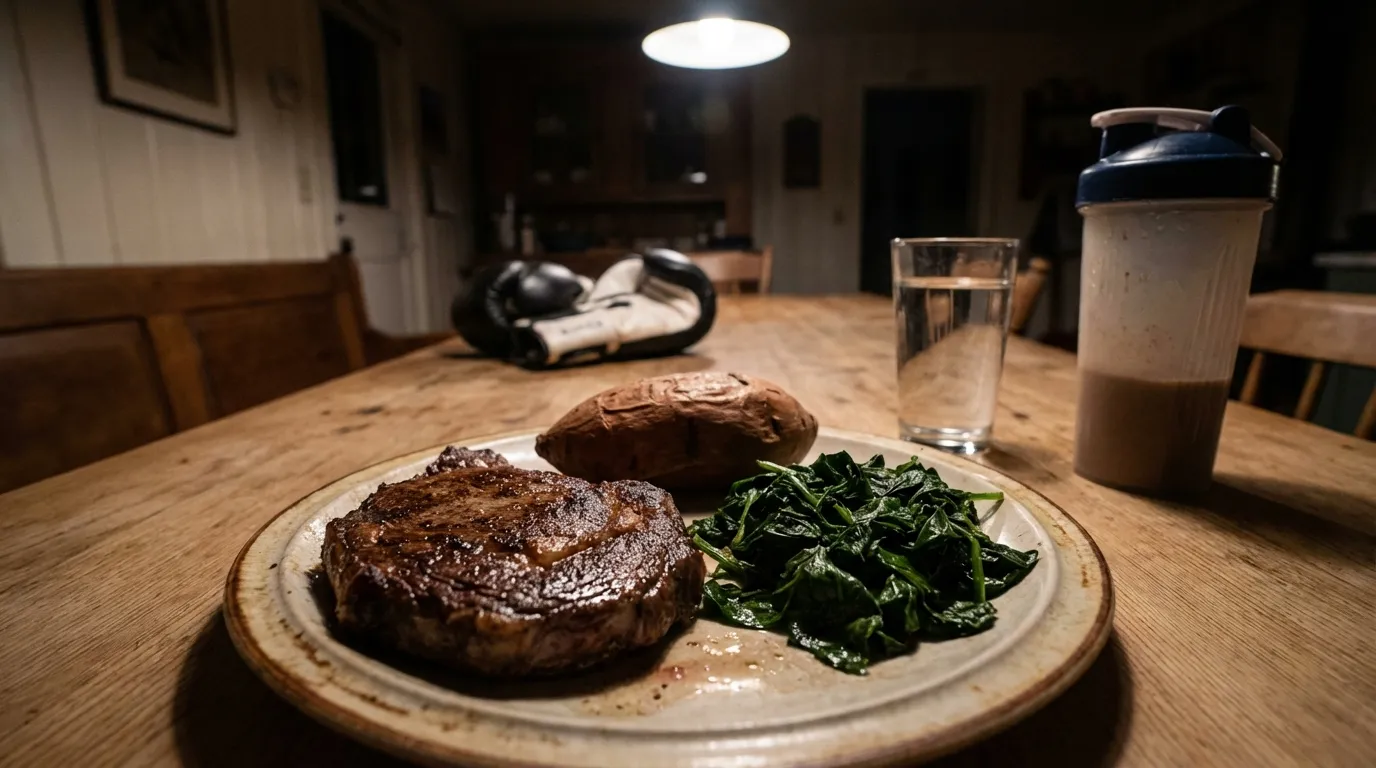
The Boxing Diet - What Boxers Actually Eat
Forget the Hollywood montages of raw eggs. Here is what boxers really eat to fuel training, make weight, and perform at their best.
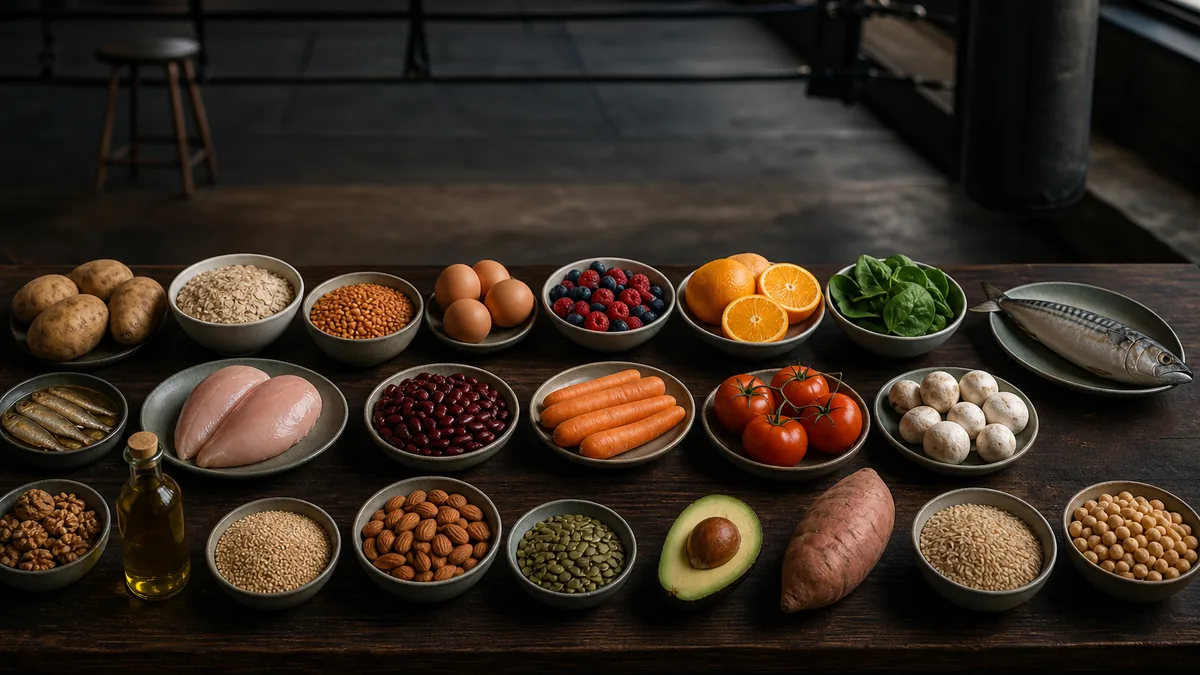
If You Could Only Eat 5 Foods for Life
The five-food answer first, then the boxing nutrition stress test: what one, ten and twenty-five foods fix or still leave missing.
What Do Professional Boxers Eat?
Ever wondered what professional boxers eat to stay in fighting shape? Here is a detailed look at the diets behind elite fighters.
Was this page helpful?
It takes one tap, and it genuinely helps.
Choose your next step
Turn this article into the right action
Some readers are ready to book. Some need the class route first. Pick the route that matches what you actually want.