Boxing vs Football Training
Football is the most popular sport in the world. Boxing is one of the most effective full-body workouts available. If you are choosing between the two for fitness, or if you play football and want better conditioning, here is the honest comparison backed by injury data and London costs.

The Core Difference
Boxing
Individual skill discipline. You need yourself, a gym, and ideally a coach. Available year-round, rain or shine.
- • Full-body workout every session
- • Develops upper and lower body equally
- • Train alone or in a group
- • Indoor, climate-independent
- • No minimum number of participants
Football Training
Team sport requiring coordination with others. Dependent on weather, pitch availability, and enough players turning up.
- • Primarily lower body and cardiovascular
- • Minimal upper body development
- • Requires 10-22 people for a proper game
- • Outdoor, weather-dependent
- • Seasonal (many leagues run Sept-May)
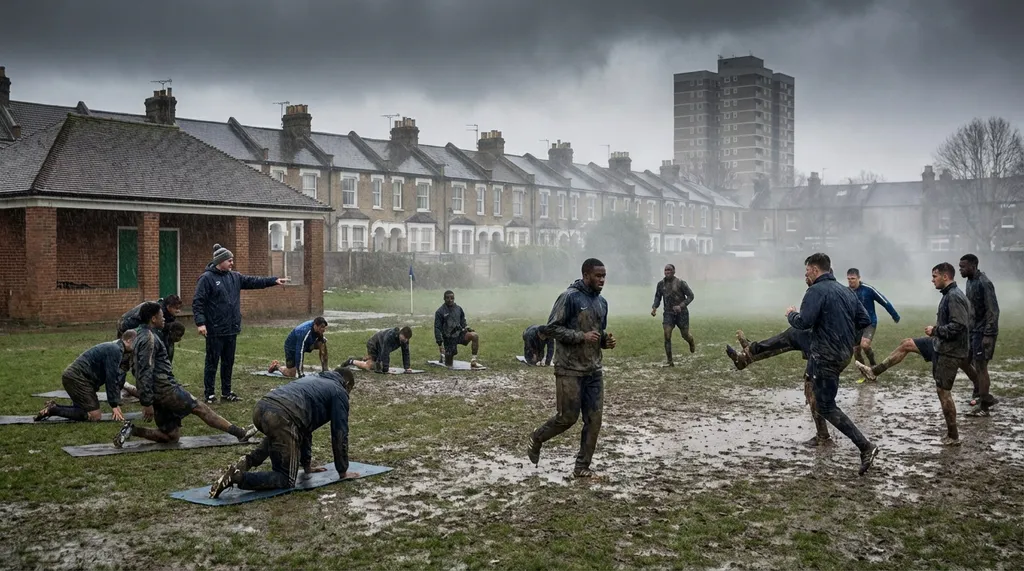
Football is brilliant for what it is: a team sport with social bonds, tactical thinking, and cardiovascular fitness. But as a reliable fitness tool, it has significant practical limitations. If one person drops out of your 5-a-side, the game might not happen. If it rains heavily, the pitch is waterlogged. If you travel for work, you miss the team session and there is no solo alternative.
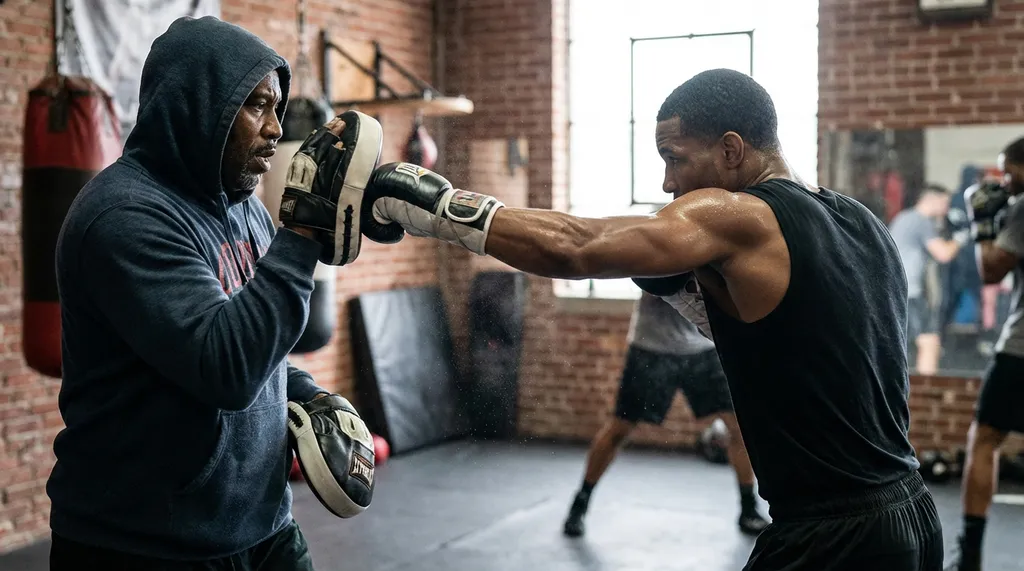
Boxing removes all of those dependencies. You can train alone (shadow boxing, bag work), with a partner (pad work), or in a group class. The gym is open regardless of weather. You never need to coordinate with nine other people to get your workout done.
Calorie Burn: The Numbers
Calories per hour (70 kg / 11 stone person)
Sources: Coach Magazine (Forza study), Harvard Health Publishing
The peak calorie burn is similar during intense play. But football involves significant standing time: waiting for the ball, watching set pieces, standing during stoppages, and the half-time break. A competitive 90-minute football match includes roughly 55-65 minutes of actual movement. The rest is dead time.
A boxing session maintains high intensity throughout. The round structure eliminates standing around. Over the full session duration, boxing burns more total calories because there is simply no downtime built into the format.
Full-Body Development
This is where boxing wins decisively. Football develops almost zero upper body strength or muscle. The sport is entirely lower-body and cardiovascular. Professional footballers who want upper body development train separately in the gym. For amateur players, that second gym session rarely happens.
Boxing builds the entire body in a single session. Punching develops shoulders, arms, chest, and back. The rotational force of hooks and uppercuts builds core strength. Footwork and movement patterns develop leg endurance and calf strength. After three months of regular boxing, you will notice changes across your entire physique, not just your legs.
Many amateur footballers supplement their training with boxing for exactly this reason. The upper body conditioning and core strength carry over directly to the pitch: stronger tackles, better balance, more resilience in physical challenges.
Injury Risk: The Data
Recreational football has a genuinely high injury rate. Recent data presented at the Isokinetic Football Medicine Conference highlights ACL injuries as a persistent and serious problem in the sport, with incidence rates that have not declined despite decades of prevention research. Ankle sprains, knee ligament injuries, and hamstring tears are the most common issues. The combination of sprinting, sudden direction changes, and contact with other players creates multiple injury mechanisms in every single match.
Most adults who play regular 5-a-side or 11-a-side football will sustain an injury that requires time off at some point. The over-30s leagues are particularly brutal. Tendons and ligaments that handled Sunday football at 22 do not respond the same way at 35.
Recreational boxing (non-sparring) has a significantly lower injury rate. The movements are controlled. The impact is on bags and pads, not on other people. There are no awkward tackles, no studs-up challenges, no collision injuries. The most common boxing injuries are minor wrist and hand strains, almost entirely preventable with proper hand wrapping and technique coaching. At Honour and Glory, beginners learn hand wrapping on day one.
Practicality and Cost in London
London prices as of 2026. 5-a-side from PowerLeague, Goals, and local council facilities.
The per-session cost is similar when football costs are split between players. But football has hidden costs: boots (£50-£200), shin pads (£10-£30), kit, and the frequent missed sessions when numbers fall short or weather intervenes. The real cost of football is the inconsistency. You budget for three sessions a week but actually manage one or two because of cancellations.
Boxing is consistent. The gym is open. The session runs. You turn up. If you are in Eltham, Blackheath, or Charlton, Honour and Glory is a short journey away with sessions running multiple days per week.

The Crossover: Why Footballers Box
Professional footballers have used boxing training for decades. The benefits transfer directly: improved hand-eye coordination, better balance, stronger core, enhanced cardiovascular endurance, and the mental toughness that comes from sustained high-intensity work. Wayne Rooney, Rio Ferdinand, and dozens of Premier League players have trained boxing alongside football.
For amateur footballers, boxing during the week fills the gaps that football leaves. You get the upper body work, the core conditioning, and the year-round consistency that football cannot provide on its own. The combination is genuinely excellent.
Rate this article
Your feedback helps us write better content
Which Should You Choose?
Choose boxing if:
- • You want reliable, year-round training
- • Full-body development matters to you
- • You prefer lower injury risk
- • You want independence from team schedules
- • You are over 30 and your knees are telling you something
- • You want to learn a real skill alongside fitness
Choose football if:
- • You love the sport and the team dynamic
- • You have a reliable group to play with
- • Competition and league structure motivate you
- • You accept the injury risk as part of the game
Best combination: Box during the week for consistent full-body conditioning. Play football at weekends for the social, competitive element. Many footballers at Honour and Glory use boxing as their primary off-pitch fitness.
If you can only pick one for pure fitness, boxing gives you more: a full-body workout, a real skill, self-defence ability, year-round availability, and lower injury risk. Football gives you the team experience and competitive structure that boxing does not. Want to see for yourself? Book a free session and find out.
See also: Boxing vs Rugby Training | Boxing vs Running | How Many Calories Does Boxing Burn?
The best way to decide? Come and try it.
Your first session is free. No contract, no commitment.
Book Your Free Boxing Session
Your first session is free. No contract, no joining fee, no catches.
📍 122 Broad Walk, SE3 8ND · Pay as you go from £5