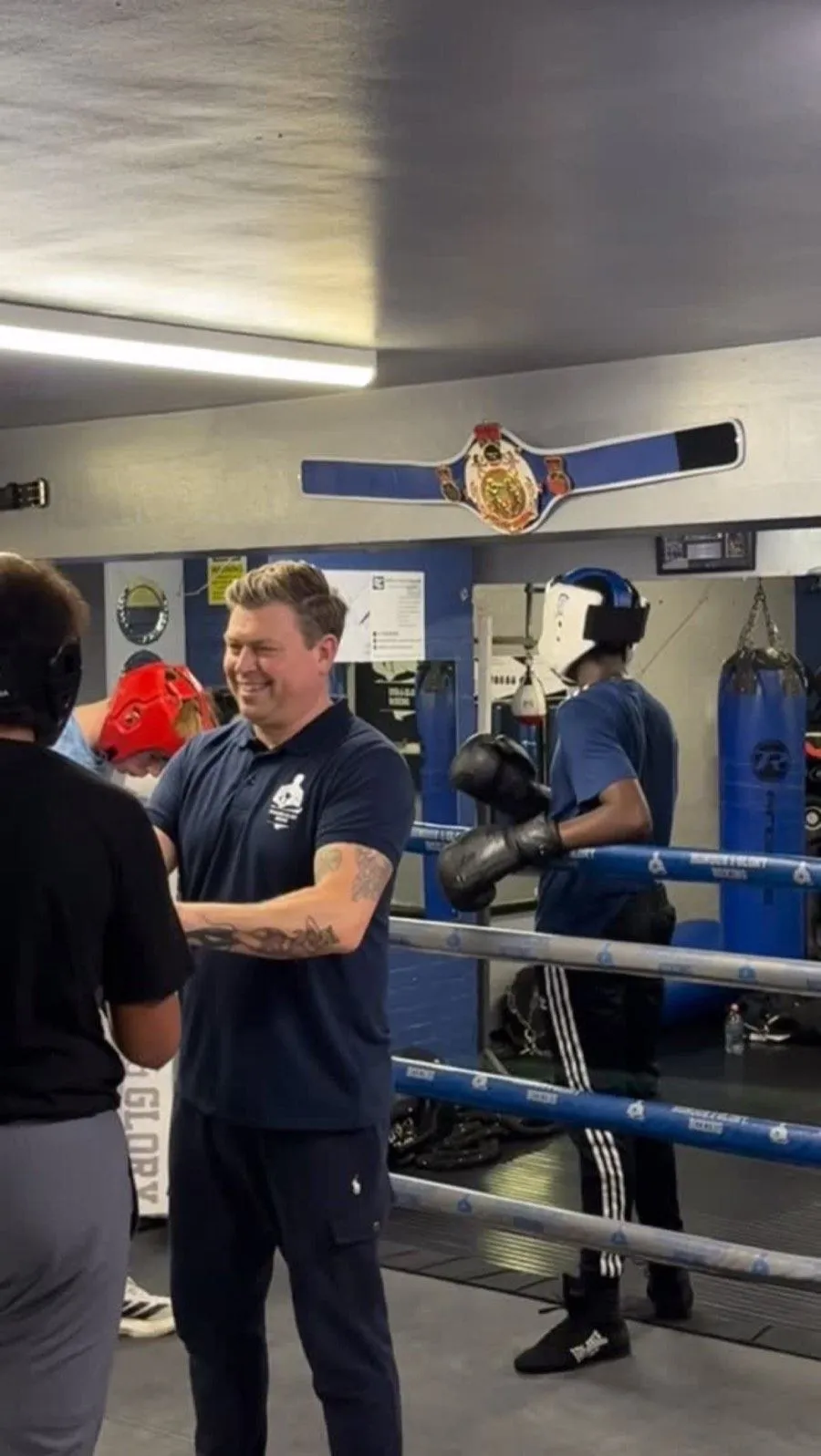
England Boxing's safeguarding documents set out what affiliated clubs are expected to have in place for children and young people. The NSPCC's guidance on safeguarding in sport is useful because it looks at the issue from a parent's side rather than a club's side.
Parents often ask the wrong first question about junior boxing.
They ask whether boxing is safe. That matters, obviously. But the more useful question is whether this particular club is safe, well run, and emotionally steady around children. Boxing itself is not the problem. Bad adults, poor standards, and ego-led coaching are the problem.
A good junior boxing club is structured, calm and clear. Children know what is expected. Parents get straight answers. Coaches act like adults who understand that they are shaping young people, not just filling an hour.
A bad club often tells on itself quickly.
Red Flag 1: Vague Answers on Safeguarding
If you ask whether coaches are DBS checked, what safeguarding policy they follow, or who deals with child welfare concerns, the answer should be immediate and confident.
- "Yes, all sorted"
- "We have been doing this for years"
- "Do not worry about that"
- "We are basically covered"
Parents should expect specifics.
Who is the welfare officer? Are all child-facing coaches DBS checked? What governing-body framework does the club follow? Can they explain how concerns are raised and handled?
A decent club does not treat these questions as annoying admin. It treats them as normal. If a club gets defensive when you ask, that is information.
Red Flag 2: Adults Speaking to Children Like They Are in an Adult Gym
This is one of the clearest signals.
Good coaches correct children firmly when needed, but they do not humiliate them. They do not posture, mock, belittle, or use intimidation as a teaching style. They do not confuse ego with authority.
Listen to the language in the room.
Are children being coached, or are they being talked down to?
There is a difference between discipline and adult immaturity. A strong junior coach can stop nonsense instantly without turning the session into theatre. That matters because the tone of the gym becomes the tone children absorb.
A parent does not need to overthink this one. If the coach sounds like the kind of adult you would not want your child around outside sport, trust that instinct.
Red Flag 3: Pressure to Spar or Compete Too Early
Children do not need to spar to benefit from boxing. They do not need to compete to be taken seriously. They do not need to be rushed onto a pathway because a club likes the idea of building fighters quickly.
A good club makes sparring earned, controlled and optional until there is a clear reason for it. A good coach knows that some children will train for years without ever wanting a bout, and that this is completely fine.
If a club talks about fighting before it talks about basics, listening, movement, balance and consistency, something is off.
- When does sparring start?
- Is it optional?
- How do you decide who is ready?
- How do you match children by age, size and temperament?
If the answers sound casual, move on.
Red Flag 4: Chaotic Sessions With No Clear Structure
Children thrive on structure. That is one of the reasons boxing works so well when it is coached properly.
- a clear start
- a warm-up with purpose
- technical work
- supervised drills
- controlled bag or pad work
- a clear finish
A chaotic room where some children are wandering, some are hitting bags without instruction, and the adults are half-engaged is not a serious youth programme. It is childcare in boxing gloves.
Parents should watch the whole room, not just their own child.
Are children being seen? Are coaches moving around and correcting? Do the younger or quieter children get attention, or only the loud and talented ones?
A club does not need to look polished to be good. Some excellent gyms are rough around the edges. But they are never directionless.
Red Flag 5: No Clear Separation by Age and Readiness
A seven-year-old and a fifteen-year-old should not simply be thrown into the same coaching environment and left to sort it out. Even where clubs use broader age bands, sensible coaching still means grouping children by maturity, confidence and ability inside the session.
This is not just a physical issue. It is emotional and developmental too.
Younger children need a different pace, different instruction, and different expectations. Older juniors need more technical challenge and more responsibility. A club that cannot explain how it handles that probably is not handling it very well.
Red Flag 6: Parents Are Treated as a Nuisance
Parents do not need to run the session. But nor should they be made to feel like a problem for wanting clarity.
At a good club, parents can ask sensible questions, watch where appropriate, and get a clear explanation of what their child is doing. The atmosphere feels open. Not performative. Not defensive. Just normal.
A club that resents scrutiny around children is a club to be wary of.
This does not mean coaches need to justify every drill. It means they should be comfortable behaving like there is nothing to hide.
Red Flag 7: Pressure Selling, Lock-Ins, or Evasive Pricing
Parents should know what something costs.
That sounds obvious, yet many clubs rely on pressure, vague membership language, or "speak to us after the session" pricing because they know clarity makes sales harder.
- here is the price
- here is what is included
- here is whether there is a contract
- here is how a trial works
If a club pushes hard for commitment before your child has even settled, ask yourself why. Good youth programmes think in years, not in panicked same-day closes.
Red Flag 8: Public Behaviour That Does Not Match the Family-Friendly Pitch
This one matters more than many parents realise.
A club's public behaviour is part of its culture. How adults behave online, how they handle criticism, how they talk about rivals, how they deal with disagreement, and how they present themselves when challenged all tell you something real.
A club can have polished branding and still show poor judgement in public. Parents should notice that.
If a gym markets itself as a place for children but behaves in a petty, volatile or bullying way when things do not go its way, that is relevant. It tells you something about the adults in charge. It tells you how they regulate themselves. It tells you what kind of environment your child is entering.
That does not mean parents need a club to be bland. It means they should expect adult standards from adults.
Red Flag 9: No Clear Route for Concerns or Complaints
Problems happen in every organisation. The real test is whether there is an obvious, sane route for dealing with them.
- Who do I speak to if I am uncomfortable about something?
- What happens next?
- Who can I escalate to if needed?
The CPSU guidance on responding to concerns in sport makes the point clearly: clubs working with children need a defined way to receive and respond to welfare concerns. That is not bureaucracy for its own sake. It is basic adult competence.
If the answer is effectively "just talk to whoever is around", that is weak.
What Good Looks Like Instead
A good junior boxing club does not feel chaotic, macho, secretive or salesy.
- structured
- respectful
- clear
- technically serious
- emotionally steady
Children are corrected without being embarrassed. Parents get direct answers. Pricing is clear. Safeguarding is normal, not treated as a special inconvenience. Competition exists as a route for the right children, not as an obsession imposed on everyone.
That is the standard parents should look for.
If you want to see how our junior sessions work, start with our kids boxing page, read our guide on how to choose a boxing club for your child, or go straight to a free trial session.
H&G Team
Writer at Honour & Glory Boxing Club, a community boxing gym in Kidbrooke, South East London.
Rate this article
Your feedback helps us write better content
Got questions about what you just read?
ASK OUR AI ASSISTANT ✨MORE LIKE THIS
WANT TO JOIN US?
Book a free trial session and see what we're all about.
Claim a Free Trial